

When sourcing from a nail clipper manufacturer, the first question is usually not about style. It is about whether the tool will cut cleanly, hold up in daily use, and arrive looking consistent from batch to batch. For a small item, nail clippers create a surprising number of downstream problems if the geometry is off, the hinge feels loose, or the finish looks cheap on shelf. That is why buying decisions in this category tend to be more technical than they appear at first glance.
The product itself is simple enough: a compact, handheld stainless-steel grooming tool with a pivoted lever, curved cutting jaws, and a textured grip area for thumb pressure. But the simplicity is deceptive. The difference between a low-friction, dependable clipper and a frustrating one often comes down to metal forming quality, rivet assembly, jaw alignment, and how the surfaces are finished. If you are comparing suppliers for retail packs, hotel amenity kits, salons, or personal care lines, those details matter more than glossy product photos.
Quick takeaways for sourcing teams
Before getting lost in samples and quotation sheets, it helps to sort the category into a few practical buying questions. Not every nail clippers manufacturer will handle the same mix of product styles, packaging needs, and finishing expectations. Some factories are optimized for high-volume, price-sensitive retail SKUs. Others are better suited to tighter visual standards or multi-piece grooming sets.
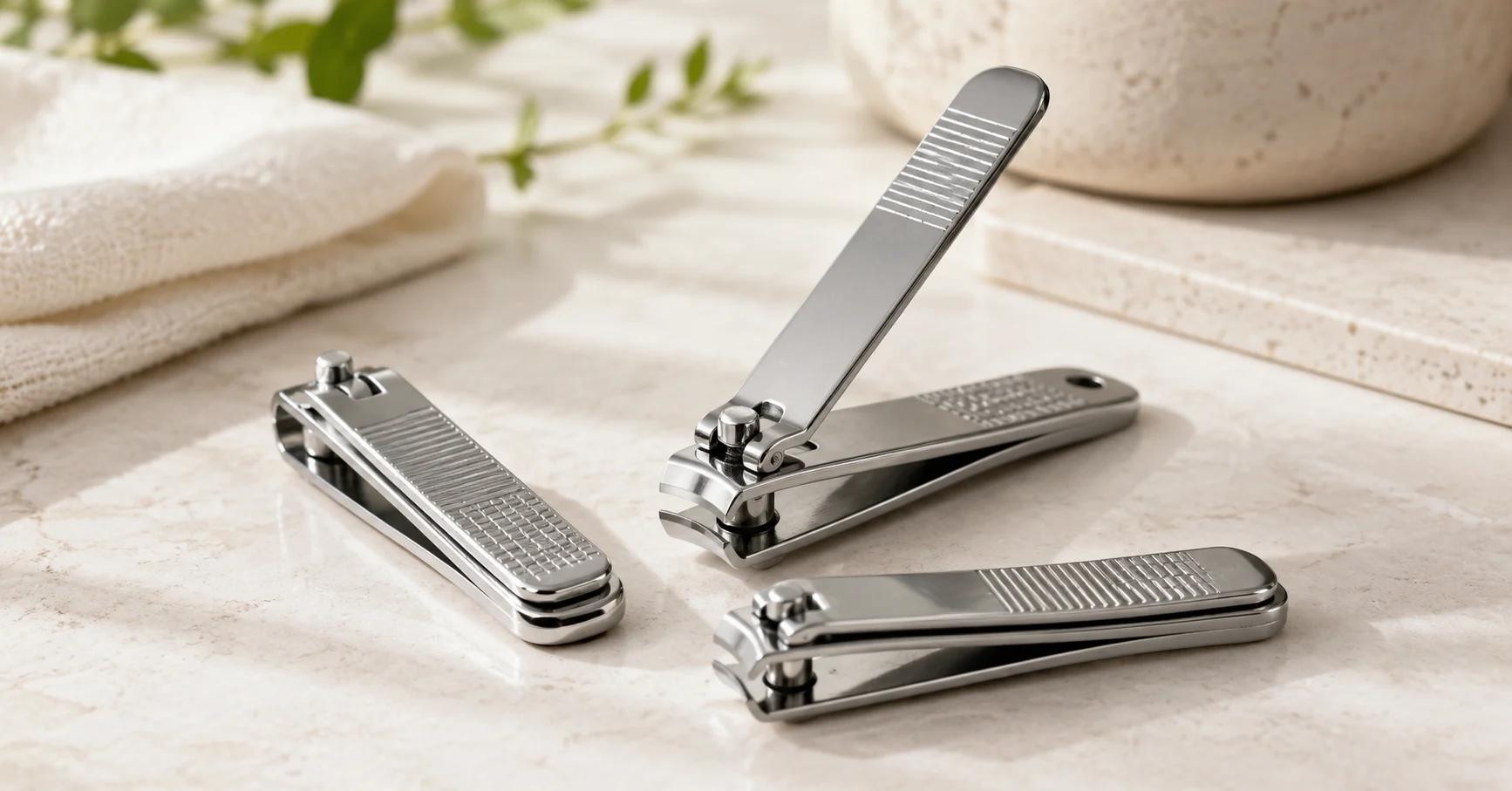
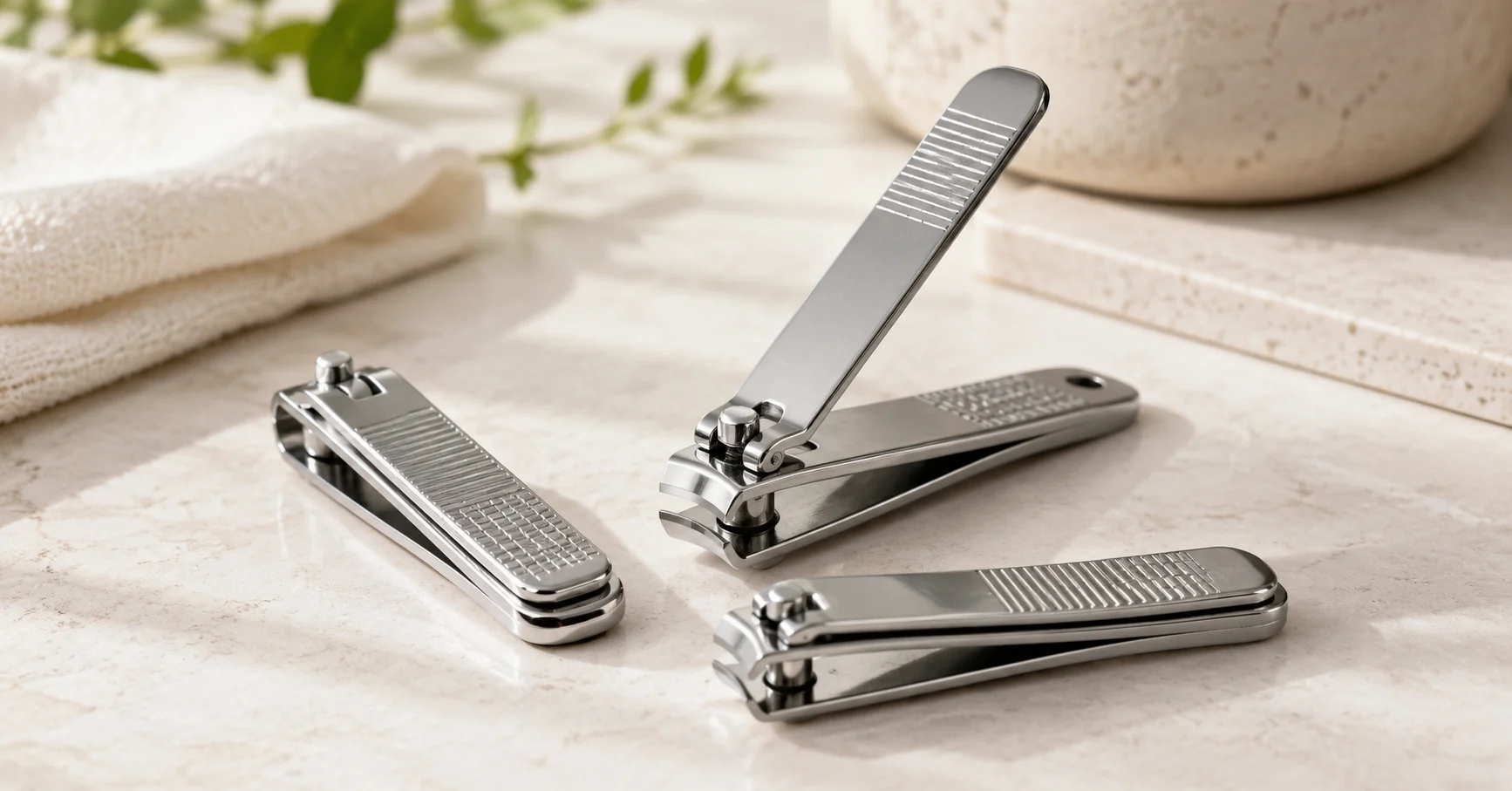
For this product type, the main things to check are straightforward: material appearance, mechanism feel, consistency of the cutting jaws, and whether the tool presents well in hand. The polished stainless-steel finish shown here suggests a classic all-metal clipper, which is common in home grooming and travel kits. A hanging hole at the rear end can also be useful for display or storage, though not every design includes it.
How the clipper is built and why that matters
A nail clipper factory typically works with a few recognizable structural elements: the main body, the hinged lever, the pivot pin or rivet, and the curved jaws that do the cutting. In this category, the body is usually stamped and formed from metal sheet, then assembled with a lever that folds over the top. The visible ridges or grip texture on the lever help the user apply pressure without slipping, which is a small detail that becomes noticeable fast in everyday use.
The unit shown appears to be polished stainless steel with a bright reflective finish and no painted coating. That matters because buyers often want a clean, durable look that does not depend on decorative layers. Still, the exact stainless grade, heat treatment, edge finishing, and corrosion behavior are not visible from appearance alone, so it is better to ask the supplier directly than to assume. A good sample can look right while still feeling off in the hand.
Closed and open states tell you more than packaging photos
One practical sourcing habit is to review the clipper in both open and closed positions. In the closed state, you can judge compactness, alignment, and whether the lever sits neatly against the body. In the open state, the cutting action mechanism becomes clearer. If the pivot feels loose or the lever does not seat smoothly, that tends to show up later in customer complaints, even if the item looks fine on a blister card.
This is especially important for a nail clipper factory producing mixed formats for fingernails and toenails. Buyers should not assume a single style performs equally well across all use cases. The geometry may be suited to personal grooming at home, or it may be better matched to travel toiletry sets and low-cost retail packs. The safest approach is to test the sample in the context where it will actually be sold.
What a buyer should evaluate in samples
When reviewing a sample from a nail clipper manufacturer, the goal is not to admire the shine. It is to check whether the item behaves like a controlled mechanical tool. That means looking at practical points: does the lever move predictably, does the pivot feel stable, do the jaws close evenly, and does the grip surface give enough thumb control? These are mundane questions, but they separate acceptable consumer goods from returns waiting to happen.
For sourcing managers, a simple inspection routine can save time later. Check the surface for visible burrs or rough edges. Look for symmetry across the jaws. Make sure the hanging hole, if present, is punched cleanly and does not deform the rear end of the body. Then handle several units, not just one. In mass-produced personal care tools, unit-to-unit variation is often more revealing than the first sample in the box.
Common mistakes buyers make
One common mistake is treating all nail clippers as interchangeable. They are not. A compact clipper for bathroom kits will not necessarily meet the expectations of a salon buyer or a retail brand that wants a more substantial hand feel. Another mistake is over-focusing on polished appearance and under-testing the mechanism. Bright metal sells, but poor cutting action gets noticed faster than a small cosmetic flaw.
Buyers also sometimes fail to define whether they need a general grooming tool or one intended mainly for fingernails, toenails, or both. That distinction may sound minor, but it affects size, leverage, and customer satisfaction. If your downstream users are travelers or hospitality suppliers, compactness may matter more than heavy-duty feel. If the product goes into a consumer grooming set, presentation and storage format may matter more than size alone.
Material and finish: what can be confirmed, and what cannot
The visible material here is polished stainless steel. That gives the clipper a classic look and makes it suitable for a broad range of personal care applications. It also supports the common market expectation that a grooming tool should be easy to clean and should not look flimsy on the shelf. Beyond that, the exact alloy, surface treatment, and edge preparation are unknown from the image alone, and buyers should avoid assuming more than they can verify.
If you are sourcing from a nail clippers manufacturer for private label or retail packaging, ask for the practical details that affect quality control: material specification, assembly method, finish consistency, and sample variation limits. Even a basic tool benefits from disciplined manufacturing notes. It is the kind of item that can be made very cheaply, but the cheapest version is not always the one that supports repeat orders.
Matching the product to the channel
Not every sales channel wants the same clipper. Home bathroom kits usually need an all-purpose grooming tool that feels familiar and easy to use. Travel toiletry sets need compactness, low bulk, and reliable folding action. Salon or professional grooming packs may place more weight on visual quality and consistent performance. Retail accessory packs often care about shelf appeal and the ability to show the product clearly through packaging.
That is where communication with the nail clipper factory becomes important. If the factory understands the intended channel, it can better align details like lever shape, polishing level, hanging-hole placement, and packaging format. Those are modest choices individually, but together they shape how the product is judged at first touch.
Buyer-facing questions to ask before placing an order
There are a few questions worth asking every supplier, even if the sample already looks acceptable. What stainless-steel appearance is used across the batch? How is the lever assembled to the body? Is the grip texture standardized across production runs? Can the factory keep the closed form consistent enough for packaging inserts or hang cards? The answers help you judge whether the supplier is set up for stable repeat manufacturing or just a one-off quote.
It is also sensible to ask how the clipper is checked before shipment. You do not need a laboratory report for every low-cost grooming tool, but you do want to know whether the factory screens for obvious mechanical defects, surface damage, or mismatched parts. For a product as small as this, a tiny assembly issue can become a big retail problem once hundreds or thousands of pieces are boxed.
Why the small details influence perceived value
In this category, consumers often judge value by feel. A clipper that opens smoothly, closes neatly, and has a solid metal presence tends to seem more trustworthy than one that rattles or flexes. The polished finish helps, but it is the mechanism and hand feel that shape the lasting impression. That is true whether the buyer is a consumer, a hotel amenity manager, or a brand manager building a basic grooming kit.
There is a practical caution here: the market sometimes rewards visual similarity too much. Two clippers can look nearly identical in a photo and behave very differently in use. That is why sourcing from a nail clipper manufacturer should always include sample handling, not just spec sheet review. The differences are small, but in personal care products small differences are exactly what customers notice.
FAQ for sourcing nail clippers
Is polished stainless steel a good choice?
It is a common and sensible choice for a handheld grooming tool because it gives a clean appearance and fits many retail and travel applications. That said, buyers should still confirm the actual material specification and production consistency with the supplier.
Should I choose one clipper style for fingernails and toenails?
Not automatically. Some designs work across both uses, but intended use should be confirmed before ordering. A compact clipper that feels right for fingernails may not suit buyers looking for a stronger toenail tool.
What is the most important sample check?
The most important check is how the mechanism feels in hand. The lever, pivot, and jaws should work together smoothly. Cosmetic polish matters, but functional alignment usually matters more.
Next step when evaluating suppliers
If you are shortlisting a nail clippers manufacturer, start with a sample comparison rather than a catalog comparison. Put the clips in hand, open and close them, inspect the finish, and confirm the intended use case for your market. Then ask the factory to explain the manufacturing approach in plain terms: body forming, pivot assembly, finishing, and packing. A supplier that answers clearly is often easier to work with once production starts.
For a small grooming tool, the commercial decision is rarely about one dramatic feature. It is about whether the product feels dependable, looks clean, and fits the channel you are selling into. That is the real test, and it is worth doing carefully before the order is signed.
Tag: