

Why branded cosmetic hand tools are more than packaging
Buying logo printed beauty tools is less about decoration than about whether the set will support a retailer’s brand promise after the box is opened. For sourcing teams, the real question is not simply whether a logo can be added, but whether the tool set still feels precise in the hand, clean in presentation, and credible on a shelf or in a salon kit.
That matters because beauty accessories are judged fast. A customer picks up a tweezer set, glances at the finish, notices the case, and makes a decision in seconds. If the logo looks sloppy, the packaging feels flimsy, or the tips do not line up well, the product is downgraded immediately. On the other hand, a well-executed private-label set can sit comfortably between a low-cost impulse buy and a giftable premium item.
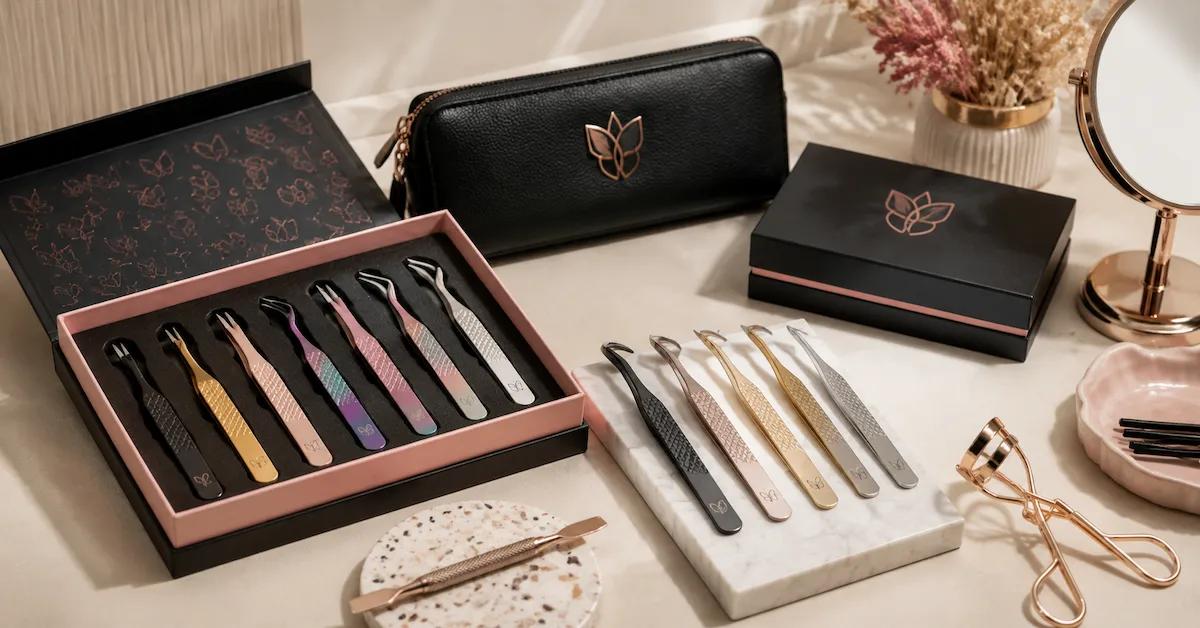
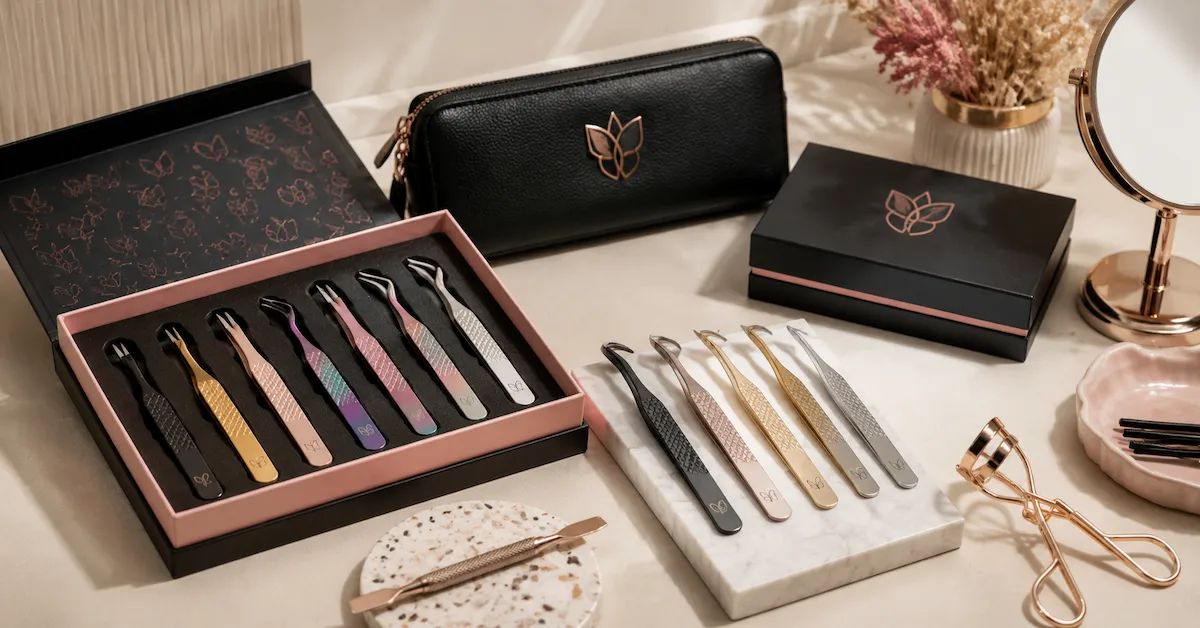
The image behind this topic points to a practical category: cosmetic hand tools that appear to be tweezers in several tip styles, packaged in a rigid presentation box with a foam insert and a zip pouch or case. That combination tells you a lot about how these products are usually sold. They are not just utility items. They are also display items, travel items, and sometimes promotional items.
What buyers are really comparing
When sourcing custom logo beauty tools, most buyers are comparing three things at once: function, presentation, and brand fit. Function is the obvious one. The tool has to grip hair or fine material cleanly, close properly, and feel controlled. Presentation is what the customer sees first: finish, case, print quality, and how the set sits in the box. Brand fit is the part many teams underestimate. A high-gloss rainbow finish may suit one cosmetic label and look completely wrong for another.
In the set shown here, the visible variations in color and tip shape suggest a line built for more than one task. That is useful for retail and gift sets because it gives the buyer a reason to choose a bundle rather than a single tool. Multiple styles can support eyebrow shaping, stray-hair removal, and precision pickup. In practice, that often helps a product move from a commodity mindset into a small set with perceived value.
What the product details suggest about manufacturing
The tools appear to be made from metal, likely a stainless steel or plated tool substrate, though the exact grade is not provided. The body shape looks narrow and flat, with textured grip sections and tip geometries that include angled, slanted, and curved forms. That pattern usually points to a manufacturing route that combines forming or stamping with tip grinding, followed by surface finishing or coating. Logo marking may be printed on the packaging, laser-marked on the tool, or applied through another marking method; the image does not confirm which one was used.
This is where buyers should slow down. A pretty finish does not guarantee good alignment, and good alignment does not guarantee a finish that will survive handling. If you are ordering logo printed beauty tools for private label retail, you need to separate appearance from performance. Ask how the tips are aligned during assembly, what finishing process is used, and whether the logo method is compatible with the surface treatment. A print that looks sharp on day one can wear badly if the coating is not stable.
The packaging details also matter. A rigid box with a foam insert generally signals a more presentation-led product than a simple card-backed blister pack. The visible carry pouch adds a travel-friendly angle, which is useful if the set is intended for home use, travel kits, or salon resale. For buyers, that means the package is part of the product specification, not just the shipping container.
Choosing the right style for the market
Tip shape and use case
Different tip shapes are not a design flourish; they solve different problems. Slanted tips are common for eyebrow shaping because they give a useful compromise between coverage and control. Straight tips can help with general pickup work. Curved or specialized tip styles may appeal to users who want finer access or more angle options. If you are building a set, the mix should feel intentional rather than random.
For salon and spa channels, buyers often expect a practical mix with a professional look. For retail gifting, visual harmony can matter just as much as technical variation. A set that includes black, gold, rose gold, silver, and iridescent finishes may look attractive in a range display, but only if the colors are coherent with the brand story. Too many mixed finishes can make the product look like a sample pack instead of a curated line.
Grip and handling
Textured grip sections are a small feature that can make a large difference. Beauty tools are often used in awkward lighting, with wet hands, or during travel. A grip that gives better control improves the user’s sense of precision, even if the tool itself is not especially complex. That is one reason these details deserve attention during sampling.
If possible, test the set in the same conditions your customers will use it. A tweezer that feels fine in a showroom may feel slick after lotion, hand cream, or basic everyday wear. It is a mundane point, but it is the sort of thing that separates repeat purchase products from one-off novelty buys.
Logo placement: print, engraving, or packaging only?
For many buyers, the logo decision is really about risk. Packaging-only branding is easier to change and can be cheaper to refresh for seasonal programs. Tool-level branding, whether printed or engraved, feels more permanent and usually looks more premium. The trade-off is that it asks more of the supplier’s process control.
With printed logo cosmetic tools, the main concern is durability and visual sharpness on metal or coated surfaces. With engraving, the concern is whether the mark stays clean after finishing and whether the tool surface still looks refined. Because the exact marking method is not confirmed here, the safest buying approach is to request samples showing the actual logo application on the final finish, not just on a blank prototype.
It is also worth checking logo scale. Too small, and the mark disappears under retail lighting. Too large, and it can crowd the tool or cheapen the look. This is where many custom logo beauty tools lose their polish. The branding should support the design, not sit on top of it like an afterthought.
Common mistakes buyers make
The first mistake is treating all tweezers as interchangeable. They are not. Tip geometry, tension, surface finish, and edge quality all affect how a tool behaves. If the sourcing brief does not specify the intended use, the sample may look fine and still disappoint the end user.
The second mistake is over-focusing on color. Attractive finishes can sell the first order, but the underlying metal work carries the reputation. If the tips do not meet well or the spring force feels inconsistent, the customer will blame the brand, not the factory.
The third mistake is ignoring packaging fit. A rigid presentation box with foam can elevate the product, but only if the set nests properly and the tools do not shift. A loose fit creates a rattling sound and a cheap impression, even when the tools themselves are acceptable. Small detail, large effect.
The fourth mistake is assuming the same item can serve every channel. A salon buyer, a gift shop buyer, and an e-commerce buyer may all want beauty tools, but they do not want the same balance of price, finish, and packaging. One size rarely works cleanly across all three.
A practical buying checklist
Before placing a purchase order, ask for samples that reflect the final finish, final packaging, and final logo method together. Do not approve a blank tool and assume branding will fix everything later. Check alignment, grip feel, and tip consistency. Examine the box closure, insert fit, and pouch material. If the product is meant for travel or gifting, confirm that the presentation still holds up after the box is opened and closed a few times.
For procurement teams, it helps to write the brief in plain language. Say whether the set is for eyebrow grooming, general beauty use, promotional gifting, or retail resale. Say whether the branding should feel premium, minimal, or colorful. Say whether the packaging is supposed to travel well or sit on a shelf. Clear intent saves time and reduces the odds of getting a technically acceptable product that is commercially wrong.
FAQ for sourcing teams
Are these tools only for eyebrows?
Not necessarily. The visible product category suggests eyebrow grooming and hair removal, but similar tools are often used for other fine-detail beauty tasks and small pickup work. The exact intended use should be stated in the product brief.
Is a mixed-finish set better than a single-color set?
It depends on the brand. Mixed finishes can make a set feel broader and more giftable. A single-color set can look more disciplined and premium. The right choice depends on whether the buyer wants visual variety or a tighter brand language.
Should the logo go on the tool or the box?
Ideally, both if the budget and process allow it. Tool branding strengthens the product identity, while packaging branding supports shelf presence. If only one is possible, decide based on channel: packaging branding is easier to update, while tool branding tends to feel more durable.
What this category is best suited for
Logo printed beauty tools work well for private-label cosmetic lines, salon retail counters, spa gift bundles, travel kits, and promotional product programs where the item has to look more considered than a commodity accessory. The set shown here, with its multiple tip styles, textured grip surfaces, rigid box, and carry pouch, fits that use case well.
If you are comparing suppliers, the most useful next step is to ask for a finished sample with the actual logo treatment, final color, and final packaging structure. That single sample will tell you more than a dozen renders. It will also show whether the supplier understands the difference between a cosmetic accessory and a branded product.
For sourcing custom logo beauty tools, start with the end user, not the decoration. Once the function is right, the branding becomes much easier to judge. And if the first sample feels good in the hand and looks right in the box, you are probably close to a product worth putting on a retail shelf.
Tag: