Why spa buyers care about the right foot file
When a salon or spa sources foot files for spa suppliers, the decision is not just about price or appearance. It affects treatment speed, client comfort, hygiene routines, and the consistency of the finish a technician can achieve. A good metal foot file should remove rough skin and calluses without feeling flimsy, clogging too quickly, or forcing the therapist to overwork one area. That matters in a busy treatment room, where a tool that saves a minute on every service can change the day.
For buyers, the real question is usually simple: which pedicure foot files are suitable for professional foot-care treatment, and which ones will hold up in regular spa use? The answer depends on the construction of the file, the shape of the head, the surface pattern, and how the tool fits into a larger pedicure workflow. A callus remover foot file is not just a small hand tool; it is part of the service standard the client feels on the chair.
What these metal foot files are designed to do
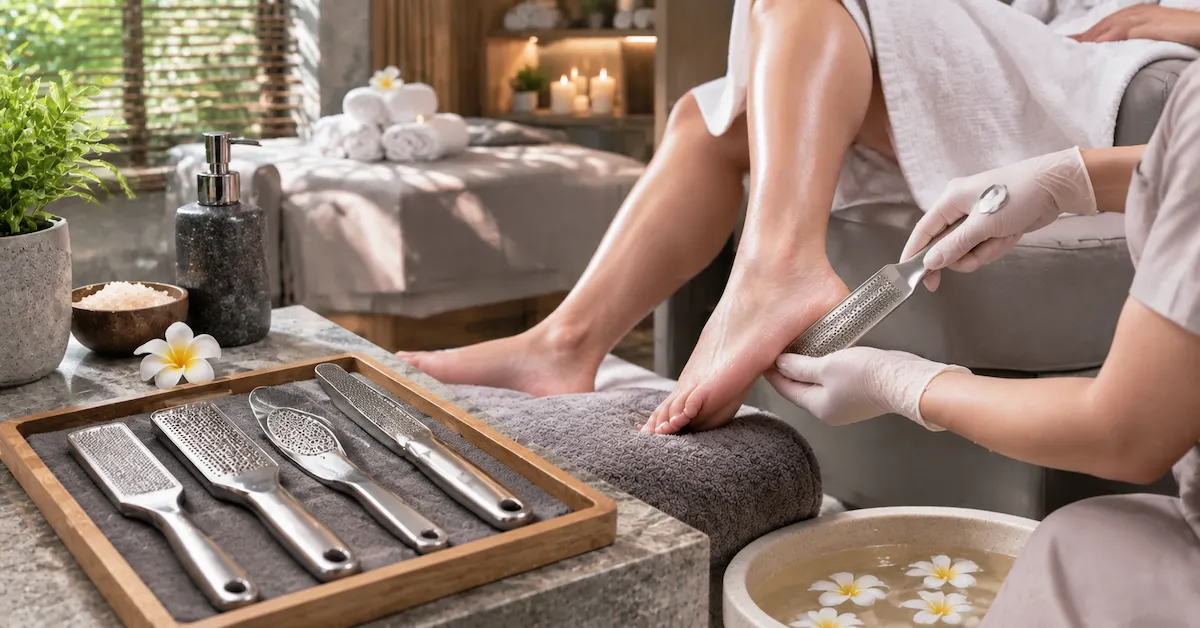
The product category here is metal foot files and foot rasps for pedicure use. Based on the supplied product details, these tools appear to be handheld, reusable, and built with a stainless steel or similar corrosion-resistant finish. The working faces show a perforated or textured metal surface that helps scrape away rough skin, dead skin, and thickened callus areas from heels and other parts of the foot.
That construction is important. In spa environments, a metal file is often preferred when the operator wants firm, controlled abrasion and a surface that can be cleaned carefully between services. Compared with softer disposable abrasives, a metal foot file gives a more durable feel in the hand and may be better suited to repeated professional use. Of course, the exact performance still depends on the pattern cut into the file face and on the technician’s technique. A more aggressive surface is not automatically better; it just changes how quickly material is removed.
Quick reference: what buyers should look at first
If you are comparing foot files for spa suppliers, start with the practical details that affect daily use rather than the marketing language.
First, look at the filing surface. The visible patterned metal face suggests a stamped, etched, laser-cut, or otherwise formed abrasive surface. That can be effective for callus reduction, but the finish should be consistent and free from rough edges that might scratch the skin outside the intended working area.
Second, look at the shape. The supplied product information mentions flat handheld files with elongated handles, wider rectangular heads, and at least one more curved or oval form. Different shapes suit different treatment styles. A broad rectangular head may cover heel areas efficiently, while a curved profile can help follow the contour of the foot more comfortably.
Third, think about the client workflow. For a spa, the file needs to fit into soaking, exfoliation, and finishing steps without becoming awkward in the hand. The ergonomic handheld form matters more than many catalogs admit.
How metal foot files fit into professional pedicure routines
Most technicians use a foot file after softening the skin, often following a soak or other preparation step. That is where metal foot files for spa suppliers can make sense: softened callus is easier to remove with fewer passes, which can improve control and reduce fatigue. The file is then used on rough areas such as heels, edges of the foot, or other thickened skin zones, always with care not to over-file healthy skin.
In practice, the best results come from a measured touch. A callus remover foot file should not be treated like a kitchen scraper. Over-aggressive use can make the skin look temporarily too thin or leave the client sore. That is why spas often want a tool that feels balanced and predictable rather than one that simply looks heavy-duty.
There is also a retail angle. Many salons and spa suppliers bundle pedicure foot files into home foot-grooming kits. For consumer use, the advantages are similar: a reusable metal construction, compact size, and a shape that is easy to guide across the heel. The buyer concern is usually whether the tool feels comfortable and whether the surface pattern is suitable for routine maintenance rather than intensive work only.
Material and construction: why the metal finish matters
The supplied product information points to stainless steel or a similar corrosion-resistant metal with a brushed or satin silver finish. That is a sensible choice for a salon environment. Metal holds its shape well, resists the flexing that can make cheaper tools feel imprecise, and generally supports a more premium impression at the point of service.
Still, buyers should not assume all metal files are identical. The quality of a foot rasp often comes down to how the surface is formed and finished. A cleanly made face should have a uniform texture and a handle that feels stable in the hand. If the file has sharp edges, inconsistent perforation, or a finish that traps residue, it may be more trouble than it is worth in real use. That is a small caveat, but an important one.
The data provided does not verify exact manufacturing steps, so it is safer to describe these as likely stamped, laser-cut, etched, or electroformed sheet-metal products rather than claim one process as fact. For sourcing teams, the process matters because it can influence repeatability, cost, and how the surface feels during use. Yet the end user usually notices only the practical result: how smoothly the tool removes rough skin and how easy it is to keep it in service.
Choosing between file shapes and styles
Rectangular heads
Wider rectangular filing heads are useful when the technician wants coverage. They can reduce time on larger heel areas and make the tool feel more like a standard salon implement. For busy treatment rooms, that efficiency can be valuable, especially when the service menu includes quick maintenance pedicures.
Curved or oval heads
A curved or oval shape can be more forgiving around the contours of the foot. It may help the operator work with the heel’s natural curve rather than against it. Some technicians prefer this kind of profile because it feels more controlled, particularly when finishing edges or working around sensitive areas.
Flat handheld rasps
Flat handheld rasps remain the most familiar style for many buyers. They are straightforward, easy to explain to staff, and usually simple to integrate into existing pedicure stations. If your team moves between spa work and retail packaging, this is often the least complicated format to source.
Common mistakes when sourcing foot files
One common mistake is focusing only on appearance. A brushed silver surface looks professional, but the real test is whether the tool performs consistently after repeated use. Another mistake is assuming that a more aggressive surface is always better. In a spa setting, control often matters more than speed. If the file removes too much too quickly, the technician has less room to correct the touch.
Buyers also sometimes overlook hygiene workflow. Even if the file is reusable, the spa still needs a clear cleaning and storage process. The product data does not state sterilization rating, so that should not be assumed. Ask how the supplier recommends cleaning and whether the tool design avoids trapped residue in seams or corners. That is not glamorous sourcing work, but it saves problems later.
Finally, do not ignore hand feel. A file that looks compact and ergonomic on paper can still feel awkward after several treatments. For salons, one or two sample units can tell you more than a polished spec sheet.
What spa and salon teams should ask suppliers
Before placing an order, a buyer should ask a few direct questions. What is the metal grade, if it can be disclosed? Is the tool intended primarily for professional pedicure use, home use, or both? What cleaning method is recommended? Are there multiple filing head styles available in the same family?
It is also worth asking whether the surface pattern differs across versions. The supplied information shows multiple file head styles and a visible raised pattern for scraping, but the exact grit level is not provided. That means buyers should request samples if they need to compare texture against their treatment standards. In this category, a sample is worth more than a long product description.
Practical buying advice for spa suppliers
If your business supplies salons, beauty retailers, or foot-care kits, think in terms of use case. A professional spa may want a more durable, polished-looking reusable file. A retail kit may need a shape that feels friendly and easy to understand. In both cases, the tool should look clean, feel solid, and support controlled use on heels and other rough areas.
The biggest value of these foot files for spa suppliers is versatility. They can serve salon treatment rooms, retail shelves, and bundled foot-care sets. Because the construction appears fully metal, the product also fits a market that values reusable tools and a more premium presentation than disposable plastic alternatives. That said, sourcing teams should still verify packaging, cleaning guidance, and any handling instructions before committing to volume.
FAQ
Are these foot files suitable for professional spa use?
Based on the provided product information, yes. They are described as metal foot files / foot rasps for pedicure or spa foot-care treatment, which makes them relevant for professional use.
Can they be used at home?
Yes, they also fit retail foot-grooming kits for home use. The compact handheld form and reusable metal construction make them practical for maintenance routines.
Do they replace all callus care methods?
No. They are one tool in a broader routine that may include soaking, exfoliation, and careful finishing. A callus remover foot file works best when used with proper technique.
Next step for buyers
If you are sourcing foot files for spa suppliers, compare samples by feel, surface consistency, and how the tool fits your treatment process. Ask for the construction details you need, but do not over-interpret what is not stated. In this category, the best buying decisions usually come from a mix of hands-on testing and straightforward supplier questions. That is the most reliable way to choose pedicure foot files that actually perform in the chair, not just in a catalog.