What spa buyers really need from foot files
Foot files for spa suppliers sit in an odd but important corner of the professional beauty market. They are simple tools, but they do a very visible job: smoothing rough skin, reducing hardened calluses, and helping a pedicure finish look clean rather than hurried. For spa owners, salon distributors, and retail buyers, the question is rarely whether a foot file works at all. The real decision is which style holds up in professional use, looks appropriate on the treatment cart, and fits the way a spa handles hygiene and replenishment.
That matters because a foot file is not just a consumable accessory. In a treatment room, it becomes part of the client experience. If the handle feels awkward, the abrasive face clogs too quickly, or the tool looks worn after a few sessions, the whole service feels less polished. That is why buyers comparing spa foot file wholesale options tend to focus on durability, cleanability, grip, and the overall presentation of the tool, not just the price tag.
Quick takeaways before you source
A few practical points are worth keeping in mind before you place an order.
Professional foot files are usually chosen for repeated use, so reusable metal construction is a meaningful selling point.
A matte or satin metallic finish can look more professional than a glossy one, especially in a treatment setting where tools are expected to appear clean and orderly.
An elongated handle is not a minor detail. For technicians, it affects leverage, control, and fatigue during longer pedicure sessions.
The working face matters as much as the handle. A patterned or perforated abrasive surface is often preferred because it helps manage debris while smoothing rough skin.
If you are buying for retail, display presentation matters more than many suppliers expect. Customers often judge a foot care tool by feel and appearance before they think about performance.
What the product appears to be, and why that helps sourcing
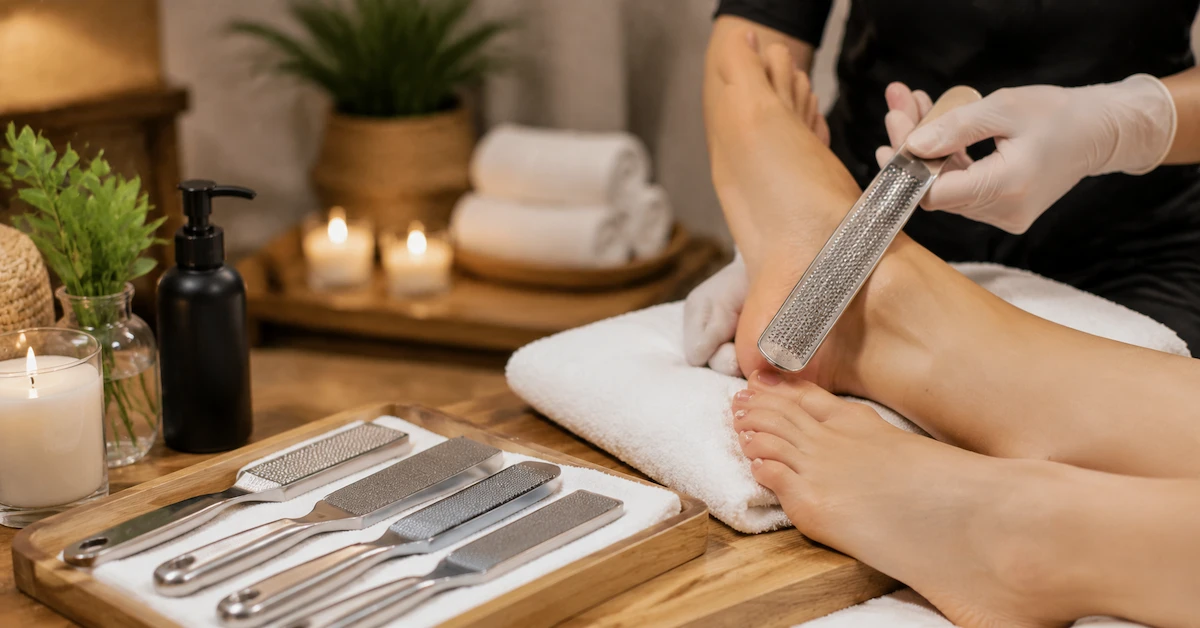
The product information here points to a metal foot file or foot rasp used for pedicure and callus removal. The visible structure is a long, narrow, flat file head with rounded corners and a handled grip. That shape is familiar in salon work because it gives technicians a broad working area without making the tool cumbersome.
The surface appears to be stamped or formed metal with a textured abrasive face, possibly perforated or patterned to support abrasion and debris release. That is a useful feature in practice. A clogged abrasive face loses effectiveness quickly, and in a spa setting that means more passes, more time, and a less consistent result. Buyers should be careful, though, not to assume too much from appearance alone. Exact metal grade, grit size, coating, and sterilization compatibility are not provided here, so those details should be confirmed with the supplier before any procurement decision.
Why spas and salons still use metal foot files
There is no shortage of foot care tools on the market, including disposable boards, pumice-style options, and electric devices. Metal foot files keep a place in the professional kit for a few reasons.
First, they are straightforward. A technician can see and control the action immediately, which is useful when working on heels, soles, and callused edges. Second, they tend to feel robust in the hand. Many spa teams prefer tools that can withstand daily handling without looking flimsy. Third, they are easy to explain to clients. A metal foot file is a familiar object; there is no learning curve for the end user.
That said, a metal tool is only as useful as its finish and shape. A file that is too aggressive can make the treatment feel harsh. One that is too smooth may look attractive but perform poorly. For professional use, the right balance is usually somewhere in the middle: efficient abrasion without the tool becoming a nuisance to clean.
How to compare spa foot file wholesale options
When you are comparing suppliers, it helps to break the decision into a few concrete checks rather than relying on sample photos.
1. Handle design and ergonomics
A good handle should give the technician control without forcing an awkward wrist angle. An elongated grip is often a plus, especially in busy spas where staff may use the same tool repeatedly across a full day. If possible, ask for a physical sample. Photographs can hide the small details that matter, such as edge comfort and overall balance.
2. Abrasive face behavior
The working face should be able to remove dry skin effectively while remaining usable after cleaning. If the patterned surface is too fine, the file may not feel productive. If it is too aggressive, it may be more tool than spa client wants. Since grit and exact pattern are not specified here, buyers should request close-up images and product handling notes from the supplier.
3. Clean appearance and maintenance
In spa environments, easy-to-clean visual design matters almost as much as technical function. A matte metallic finish can make the tool look less slippery and more professional. More importantly, the surface should not trap residue in obvious ways. Buyers should ask whether the tool is intended for repeated use in salon settings and what cleaning methods the manufacturer recommends.
4. Packaging and presentation
If the foot file will be sold at retail or included in a client take-home kit, packaging becomes part of the product. Salon-style presentation can make a simple tool feel more premium. Multiple similar files shown together may indicate a range of sizes or finishes, which can help a distributor build a tiered assortment for spa and beauty supply channels.
Common sourcing mistakes with foot care tools
One common mistake is treating all foot files as interchangeable. They are not. A file meant for casual personal grooming may not stand up to the pace of a professional treatment room. Another mistake is focusing only on the abrasive surface and ignoring the grip. A comfortable working face is of little use if the technician dislikes the way the tool sits in the hand.
Buyers also sometimes overlook cleaning practicality. A tool may look sturdy in a catalog and still be inconvenient in real spa use if its surface traps product residue or shows wear too quickly. And while price matters, the cheapest option can become expensive if it has to be replaced often or creates an inconsistent service experience.
There is also a retail caution worth mentioning: do not assume a product with a professional look is automatically suitable for salon disinfection routines. Confirm the care instructions instead of guessing. That is the kind of small oversight that causes trouble later.
What spa suppliers should ask before ordering
Before you commit to a wholesale order, ask for the basics that are often left vague in product listings:
What metal is used, if the supplier can specify it?
Is the working face etched, perforated, or otherwise formed to create the abrasive pattern?
Is the tool intended for repeated salon use, retail sale, or both?
What cleaning guidance is provided by the manufacturer?
Are there size variations or related tools in the same product line?
Those questions are simple, but they save time. A supplier who answers clearly is usually easier to work with than one who hides behind vague language.
Who this kind of foot file fits best
This product category fits spa and salon buyers who want a durable, reusable foot care tool with a professional appearance. It also suits distributors serving beauty supply accounts that need practical grooming items with broad appeal. In retail, foot files can move well when they are presented as reliable maintenance tools rather than novelty accessories.
For home care, the same general design may appeal to customers managing dry heels and calluses between salon visits. Still, buyers should be careful not to position the tool as a medical device or overpromise results. It is a grooming aid, not a cure-all.
A sensible next step for buyers
If you are evaluating foot files for spa suppliers, start with a sample, not a spec sheet alone. Hold the tool, look closely at the abrasive face, and check whether the handle feels natural during a few minutes of use. Then confirm cleaning guidance, packaging options, and whether the supplier can support spa foot file wholesale purchasing in the quantities you need.
For professional buyers, that small amount of due diligence usually separates a satisfactory tool from one that disappears into a drawer after the first month.
FAQ
Are professional foot files different from personal grooming files?
Usually, yes. Professional foot files are typically expected to withstand more frequent use and present a cleaner, more durable appearance in salon settings.
Why is metal construction attractive to spa suppliers?
Metal construction often suggests reusability, a solid hand feel, and a more premium presentation. It is not automatically better in every use case, but it is a strong fit for professional environments.
Should wholesale buyers prioritize abrasive strength or ergonomics?
Neither should be ignored. A file that works well but feels awkward will frustrate technicians. A comfortable handle with weak performance is no better. The best choice balances both.
Can the same foot file be used for spa service and retail?
Sometimes, yes, if the product presentation and handling instructions suit both channels. Buyers should confirm whether the supplier intends it as a salon tool, a retail accessory, or both.