

If you are sourcing from a manicure tools supplier, you are usually not just buying a few loose implements. You are deciding how the end product will feel in the hand, how it will present on a shelf, and whether it will survive ordinary use without looking tired after a few weeks. That matters whether you are building a retail grooming line, putting together hotel amenity kits, or buying for a salon, spa, or promotional program.
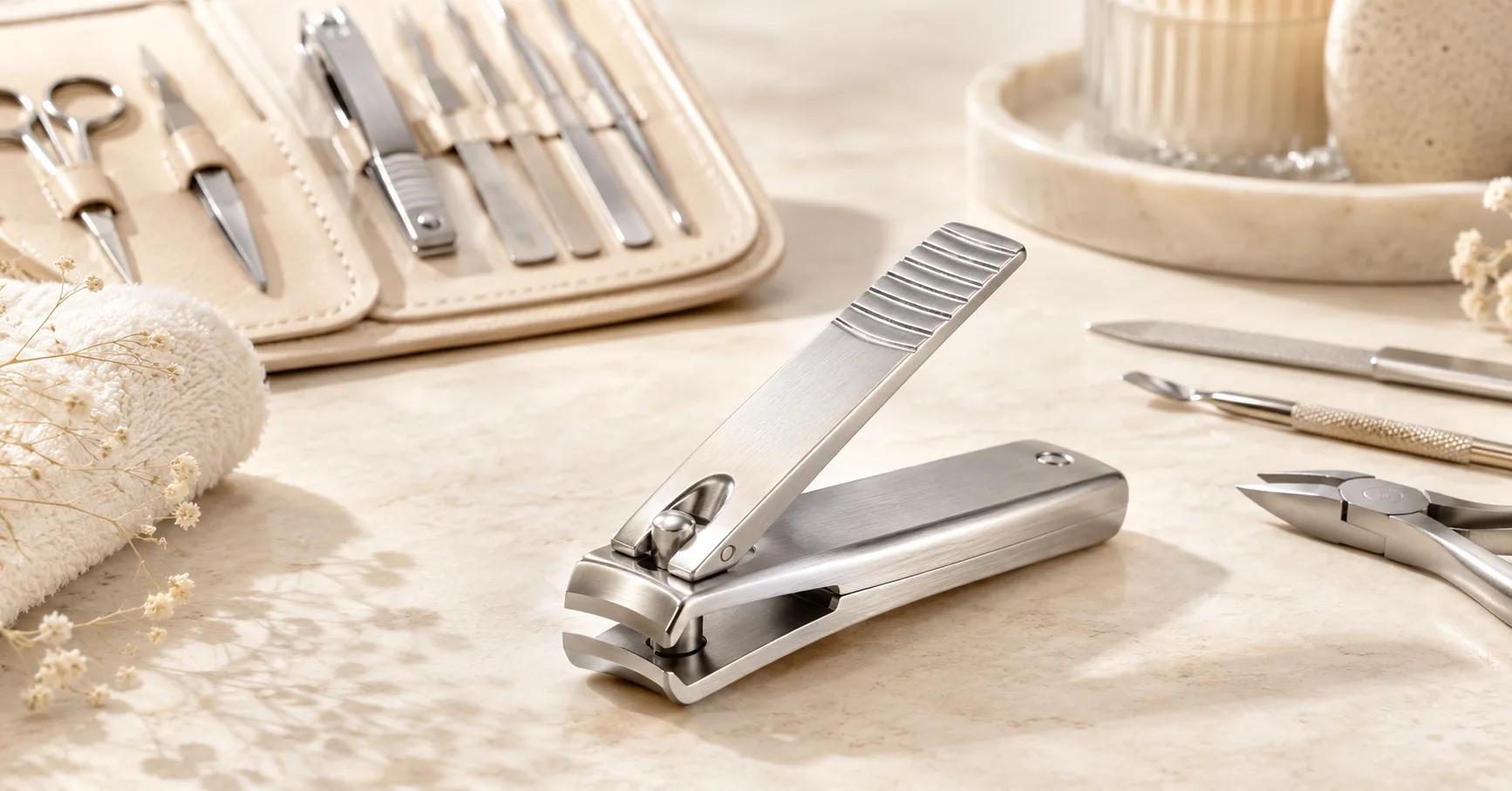
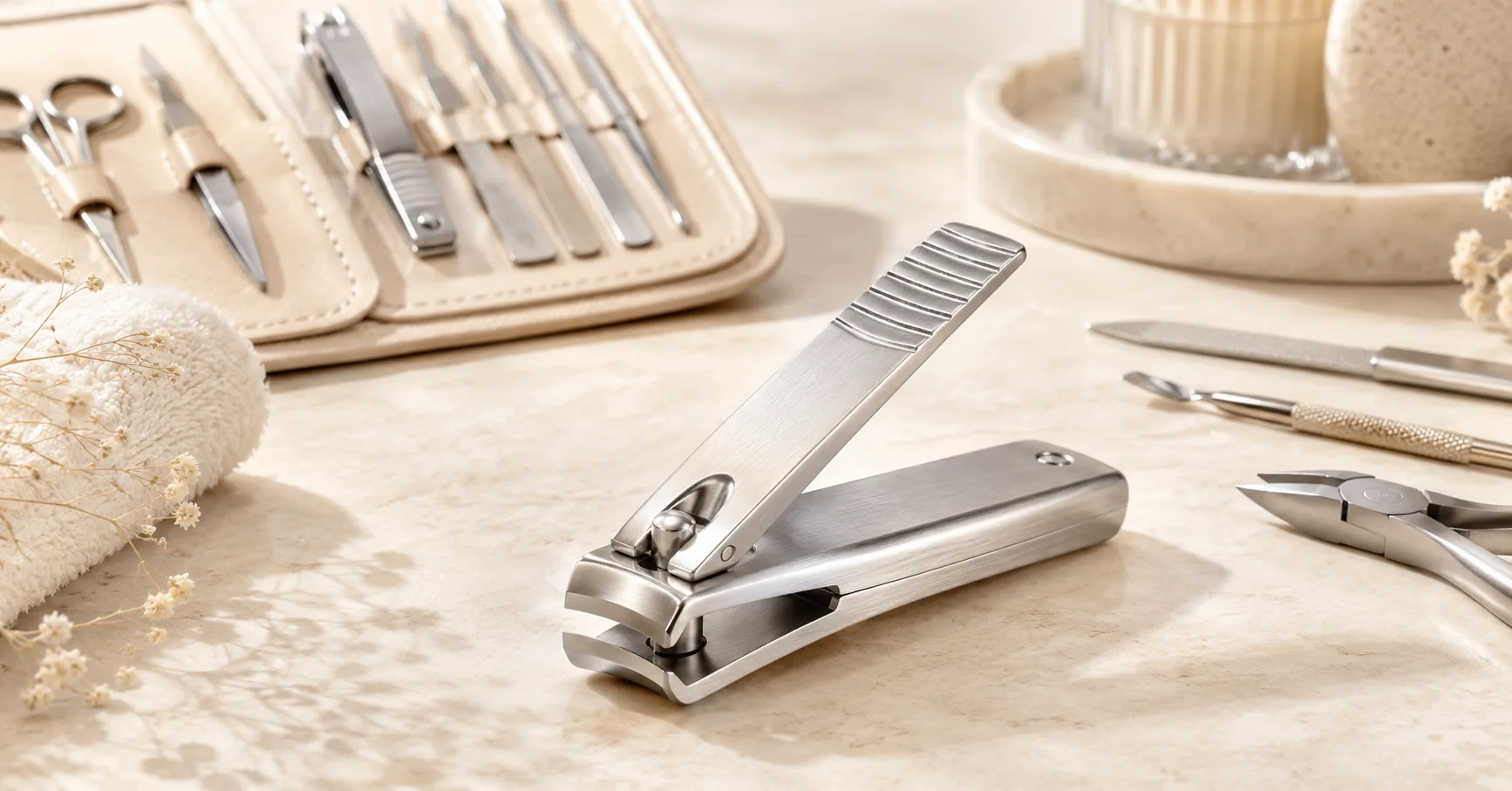
The visible product here is a compact manicure/pedicure kit built around a metal nail clipper, with supporting nail-care tools such as scissors, tweezers, a cuticle pusher or file, and possibly a small trimmer or knife, all stored in a stitched pouch or case. It is a straightforward format, but there are a lot of sourcing decisions hidden inside that simplicity. Buyers often underestimate the difference between a kit that looks presentable in photos and one that feels dependable after repeated use.
Why this category is harder to source than it looks
On paper, nail care tools seem like commodity items. In practice, the category lives or dies on finish quality, tool alignment, portability, and how the set is packaged. A clipper that binds, tweezers that do not close evenly, or a cuticle tool with rough edges can quickly turn an affordable kit into a customer complaint. The end user may not use these tools daily, but they will notice poor execution immediately.
This is why a nail care tools supplier should be judged on more than catalog variety. The buyer needs to understand where the metal tools come from, how they are made, what kind of surface finish they carry, and how the pouch or case is assembled. Small differences in stamping, polishing, and final assembly show up directly in the customer’s hand.
What is visible in this kit
The most obvious component is the metal nail clipper with a lever-arm design and a curved cutting jaw. The body appears rectangular and compact, with a brushed silver-toned finish rather than a glossy chrome look. Behind it, the set appears to include scissors, tweezers, a cuticle pusher or nail file, and a compact blade-like grooming tool. All of it sits in a beige stitched pouch or case that suggests a travel-friendly format.
That mix tells you the kit is designed for basic manicure grooming rather than a highly specialized treatment set. It is the kind of package that can work for home use, travel, simple salon retail, spa resale, or gift packaging. For some buyers, that versatility is the main appeal. You can sell the same format in different channels by changing the case design, branding, or outer packaging.
Typical manufacturing route for these tools
For this product type, the manufacturing path usually starts with metal forming and stamping, then moves through machining, grinding, polishing, brushing, and assembly. The clipper body, for example, must be shaped accurately enough for the lever mechanism to function smoothly. The cutting edge also needs careful finishing so the jaws meet properly. Even when the components are simple, the fit between them is what separates a usable tool from a frustrating one.
The brushed finish on the visible metal pieces is practical as well as aesthetic. It tends to hide minor handling marks better than a mirror polish, and it gives the kit a more restrained, professional look. For the pouch or case, stitching quality matters more than buyers sometimes expect. A neat exterior is only part of the story; the interior layout has to hold each tool securely so they do not rattle around or puncture the lining during transport.
Quick buyer takeaways
If you are comparing suppliers, these are the first points worth checking:
Tool set completeness: Does the kit include the right mix of clipper, scissors, tweezers, and cuticle-care tools for your market?
Metal finish: Is the surface brushed, polished, or coated, and does that finish suit your brand positioning?
Clipper action: Does the lever feel firm and controlled, or loose and uneven?
Case construction: Is the pouch stiff enough to protect the tools, and is the stitching clean?
Portability: Will the kit fit travel, retail gift, or salon resale use cases without feeling bulky?
How to choose the right manicure tools supplier
The best supplier for this category depends on what you are optimizing for. A retail brand may care most about presentation and packaging consistency. A salon buyer may care more about practical handling and whether the tools feel durable after repeated cleaning. A promotional buyer may care about visual appeal and compact size. The product itself can be similar, but the sourcing priorities are not.
1. Ask how the tools are manufactured
You do not need a factory lecture, but you should know whether the supplier controls the stamping, polishing, and assembly stages or simply sources finished items. Control over the process usually helps with consistency. If the supplier cannot explain how the clipper body is made or how the edges are finished, that is worth a pause.
2. Check alignment and edge quality
For clippers and scissors, alignment is not a cosmetic issue. Poorly aligned jaws or scissor blades affect cutting performance immediately. Likewise, any burrs, sharp transitions, or rough metal edges can become a usability problem. A buyer should always request samples and inspect them under normal light, not just in a product photo.
3. Look closely at the pouch or case
The case is part of the product, not an afterthought. In a travel kit, the pouch has to keep tools organized. In a retail set, it has to communicate value. In a gift item, it can determine whether the kit feels premium or merely functional. A stitched faux leather or leather-like case can work well, but the supplier should be clear about the material instead of leaving buyers to guess.
4. Match the kit to the channel
A consumer sold through online retail may accept a broader kit as long as the presentation is strong. A salon or spa buyer may prefer simpler, easier-to-clean tools. A hotel or amenity program may prioritize compactness and low-profile branding. This is where a generic set can be adapted without changing the core tooling.
Common mistakes buyers make
The most common mistake is treating all nail kits as interchangeable. They are not. A compact manicure set meant for a travel pouch is not the same thing as a heavy-duty professional set, and a promotional giveaway should not be specified like a surgical instrument. Over-specifying in one area and under-specifying in another is a classic sourcing error.
Another mistake is ignoring packaging durability. A tool set can arrive looking polished and still create problems if the pouch wears quickly, the stitching loosens, or the tools move around inside. That kind of defect rarely shows up in a single inspection photo. It shows up after shipping, retail handling, and repeated opening and closing.
Some buyers also focus only on the metal and forget the user experience. A clipper with a wide jaw opening may be useful for thicker nails, but if the lever action feels stiff or awkward, the end user will notice. The same goes for tweezers and cuticle tools. They should feel like part of one coherent set, not a bundle of unrelated parts.
Where this type of kit fits best
These kits are especially practical for home grooming, travel, retail gifting, and beauty promotional programs. They are small enough to package economically and familiar enough that buyers do not need a long explanation. That said, the category also works in spa and salon environments when the buyer wants a neat, portable backup kit rather than a specialized professional system.
For sourcing teams, the appeal is that one base design can serve several markets with modest adjustments. Change the outer packaging, adjust the pouch color, add branding, or refine the tool mix, and the product can move from entry-level retail to giftable mid-market positioning fairly quickly. That flexibility is useful, but it only works if the supplier can keep the same quality standard across repeats.
Practical questions to ask before placing an order
Do the tools sit securely in the case during transport?
Can the supplier provide samples of the exact tool combination you plan to sell?
Is the brushed finish consistent from piece to piece?
How is the pouch stitched, and what material is actually being used?
Can the supplier support branded packaging or altered kit contents?
These are simple questions, but they tend to reveal whether a supplier understands the realities of B2B buying or just the appearance of the product.
FAQ for sourcing teams
Is this kind of manicure set suitable for retail?
Yes, especially if the presentation is clean and the tools feel coherent as a set. Retail buyers will care about the case, finish, and overall perceived value.
Can it work for travel programs?
Yes. The compact pouch format is one of the main strengths of this product type.
Should buyers assume the pouch is genuine leather?
No. The material is not confirmed from the image alone, so it should be verified directly with the supplier.
Is this a professional salon-grade set?
Not enough information is available to make that claim. It may suit salon or spa retail use, but professional-grade suitability should be confirmed through samples and specification review.
What to do next
If you are evaluating a manicure tools supplier, start with samples, not promises. Look at the clipper action, the finish on the metal, the way each tool sits in the pouch, and whether the set feels ready for the channel you sell into. A good supplier in this category should be able to explain the tool mix, the material choices, and the assembly process without hiding behind generic descriptions.
For sourcing managers and product teams, the best next step is to compare a few sample kits side by side under real handling conditions. Open them, close them, carry them, and inspect the edges. That simple exercise usually tells you more than a long catalog ever will.
Tag: