

A nail nipper manufacturer is not just a vendor of a small hand tool. For salons, podiatry-adjacent supply channels, and beauty-tool distributors, the source matters because the difference between a decent nipper and an unreliable one shows up quickly in the hand: poor cutting action, rough edges, misaligned jaws, and handles that feel fine on day one but tire operators after a few dozen uses. In a category as familiar as a stainless steel nail nipper, buyers often assume the product is interchangeable. It usually is not.
If you are sourcing for manicure, pedicure, or general grooming lines, the decision is rarely about the tool’s silhouette alone. It is about how the manufacturer controls metal forming, pivot assembly, edge finishing, and final inspection. That is especially true for compact nippers used on thick, hard, or ingrown nails, where a slight defect can turn into a service complaint. A good supplier should help you understand what the tool is meant to do, not simply push a polished sample across the table.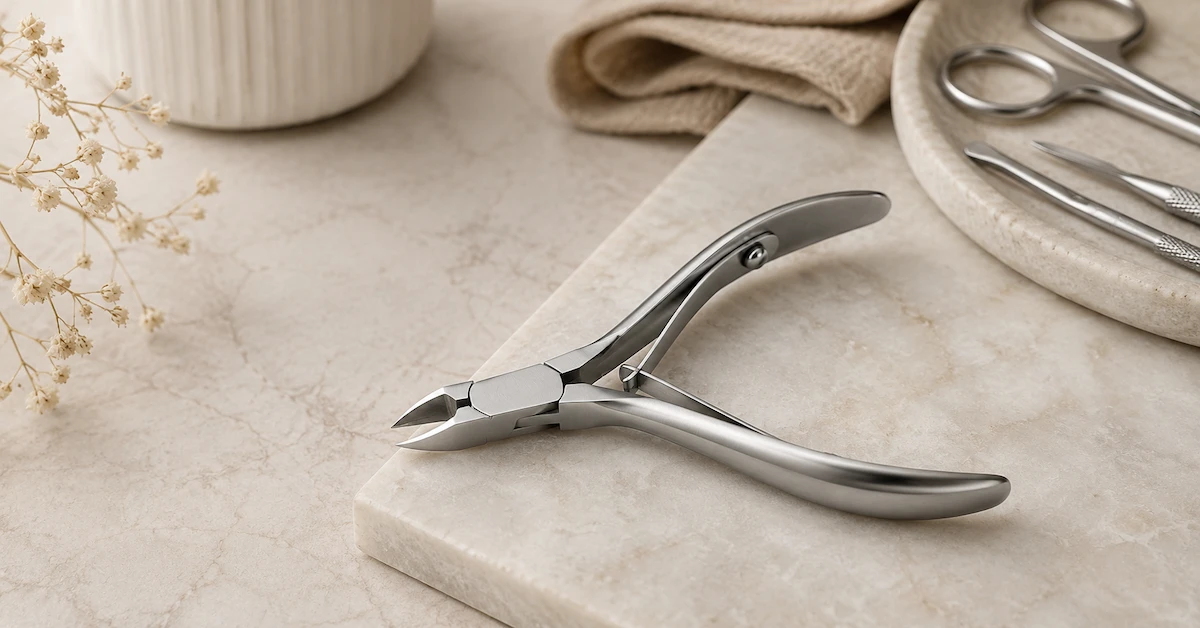
What a stainless steel nail nipper is designed to do
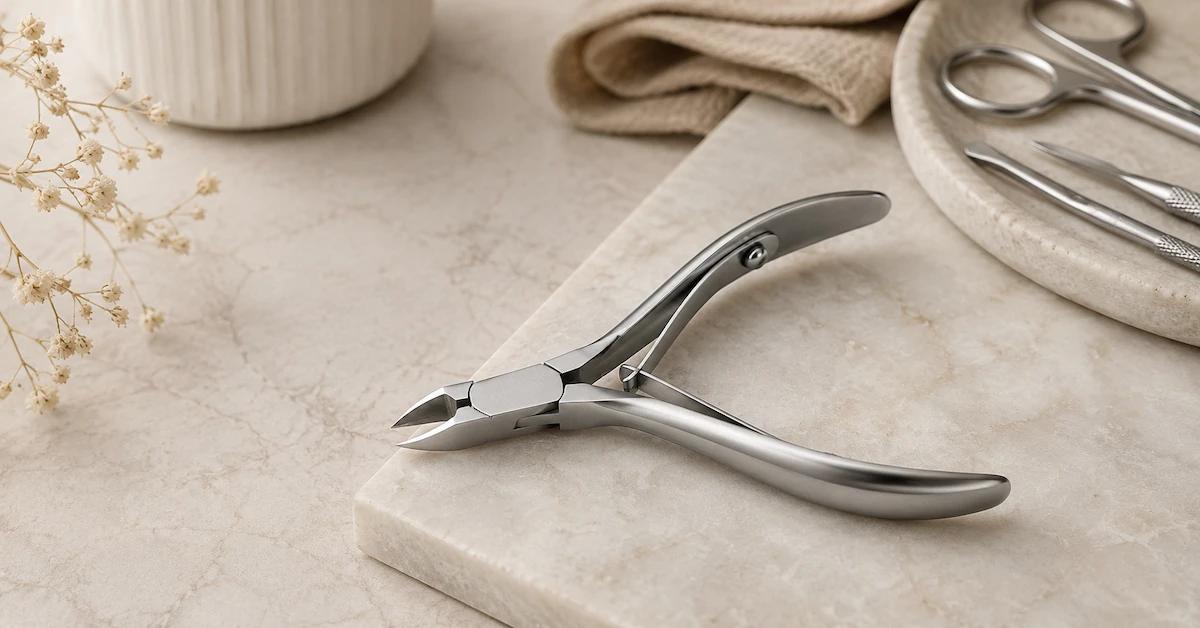
The product in question is a compact metal hand tool with curved handles, a central pivot, and short angled cutting jaws. That geometry is familiar in professional nail care because it offers leverage in a small frame. The short cutting head gives the operator control, while the spring-action or tensioned linkage helps the tool reopen smoothly between cuts. For many users, that feel matters as much as raw sharpness.
In practical terms, nail nippers are commonly used for:
Trimming thick toenails that standard nail clippers handle poorly
Managing rough nail edges during pedicure work
Cleaning up corners on nails that tend to catch or split
Supporting grooming kits sold through beauty or foot-care channels
The tool is not a one-size-fits-all solution, and buyers should be careful not to oversell it. Some users want a cosmetic grooming tool; others expect something closer to a professional foot-care implement. The manufacturer should be clear about intended use, because that affects design choices and, later, customer expectations.
Quick comparison: what to look at before placing an order
When evaluating a nail nipper factory or nail nipper supplier, the fastest way to reduce risk is to inspect the features that affect handling and consistency.
1. Cutting head geometry
A narrow, pointed jaw gives access to tight nail corners, but it also demands better alignment. If the jaws do not meet cleanly, the tool can crush rather than slice. That is a defect buyers should check early, not after the first bulk shipment.
2. Handle feel
Curved handles are common because they follow the shape of the hand and improve grip control. The benefit is obvious in salon work, where repeated use can fatigue the wrist. If the handles feel too stiff or too slippery, operators notice fast.
3. Pivot action
The joint is the heart of the tool. A visible spring or levered action can make opening and closing smoother, but only if the assembly is consistent. Loose pivots feel cheap; overly tight ones frustrate users.
4. Surface finish
The polished, reflective stainless look is more than cosmetic. A smooth finish helps the tool present cleanly in retail and professional settings, and it reduces the impression of low-grade fabrication. Still, a shiny surface alone tells you little about long-term performance.
How a nail nipper is typically made
The exact process depends on the factory, but precision metal forming is usually involved. For a stainless steel nail nipper, the likely production chain includes forming or stamping the handle and jaw components, machining or grinding the cutting edges, assembling the pivot, and then polishing the finished tool. Some manufacturers may also use forging in parts of the process, especially when they want a more robust feel in the hand. The image alone cannot confirm the route, so buyers should not assume a specific method without asking.
This matters because the manufacturing route affects consistency. A tool can look polished and still cut poorly if the edge geometry is not controlled. Likewise, a solid-feeling handle can mask a weak joint. If you are comparing multiple suppliers, ask where the critical dimensions are checked and whether edge finishing happens before or after assembly. That small detail often separates a dependable run from a shipment full of “almost right” tools.
Selection criteria that matter in real purchasing
For sourcing teams, the buying decision usually comes down to four questions.
Does the tool suit the intended user? A salon technician, a personal grooming buyer, and a foot-care specialist may all want different balance and cutting behavior. The same product can be acceptable in one channel and frustrating in another.
Is the material appropriate? Stainless steel is a sensible default for this category because it supports a clean appearance and generally fits grooming-tool expectations. But the buyer should still ask what steel grade or finishing approach is being used rather than assuming all stainless is equal.
Can the supplier keep the geometry consistent? Nail nippers are unforgiving of poor alignment. A small mismatch at the jaws shows up immediately in use.
Does the factory understand packaging and channel needs? A wholesale beauty-tool line may need simple bulk packaging; retail programs may need more careful presentation. The manufacturer should be able to support both if that is part of the brief.
Common mistakes buyers make
The most common mistake is treating all nail nipper manufacturers as interchangeable. They are not. One supplier may be strong on appearance and packaging but weak on cutting precision. Another may produce a competent metal body but struggle with pivot consistency.
A second mistake is over-focusing on finish. A bright polish is easy to notice in a sample photo, but a buyer should spend more energy on jaw alignment and handle ergonomics. Those are the traits the end user actually feels.
A third mistake is assuming that a tool intended for general grooming is suitable for all nail-care uses. If a customer expects heavy-duty nail trimming and receives a light cosmetic cutter, complaints are predictable. That mismatch can damage a brand faster than a visibly rough surface.
There is also a practical caution here: if the channel includes professional foot-care or medical-adjacent buyers, make sure the intended use is stated carefully. Do not blur cosmetic and clinical claims unless the supplier can substantiate them.
What to ask a nail nipper factory before sampling
A short, direct question list usually works best:
What is the intended application: salon, personal grooming, or broader foot-care use?
How is the pivot assembled and checked?
What finish is applied to the stainless steel surface?
How do you confirm jaw alignment and cutting action?
What packaging options are available for wholesale and retail programs?
These are not theoretical questions. They quickly reveal whether the factory understands the product as a working tool or merely as a shaped piece of metal.
Practical buyer advice for distributors and product teams
If you are building a nail-care assortment, the safest approach is to define the use case first and then source to that brief. A compact stainless steel nipper with curved handles and a spring-loaded feel may be exactly right for one market segment and merely average for another.
Also, inspect samples under use, not just on a desk. Open and close the tool repeatedly. Check whether the handles track smoothly. Cut a range of test materials that reflect your channel’s reality, keeping in mind that you should not claim performance numbers unless the supplier has provided them. Even a basic hands-on test often tells you more than a polished sales sheet.
If your business sells into wholesale beauty-tool supply, consistency across batches may be more important than any single standout feature. If you sell to end users directly, first impressions and hand comfort may carry more weight. A capable nail nipper supplier should understand that difference and be able to discuss it without overselling.
FAQ for sourcing teams
Is stainless steel the standard choice for nail nippers?
Yes, it is a common and practical choice for this category, especially when buyers want a durable metal look and a tool that fits grooming and salon settings.
Should I prioritize sharpness or ergonomics?
Both matter, but if you must choose a starting point, prioritize jaw alignment and cutting behavior first, then assess handle comfort. A comfortable tool that cuts badly still disappoints.
Can one model serve salon and personal-use markets?
Sometimes, but not always. The more demanding the application, the more important it is to verify the tool’s feel, leverage, and finish.
What is the biggest red flag in a sample?
Poor jaw alignment or a pivot that feels inconsistent. Those problems often point to broader control issues in production.
Choosing the right supplier for the long term
For sourcing managers, the best nail nipper manufacturer is the one that can repeat the same product behavior across orders, not merely produce a good-looking sample. That means clear communication on materials, an honest description of the intended use, and a willingness to discuss assembly and inspection in plain terms.
If you are comparing a nail nipper factory against a nail nipper supplier role in the market, remember that the title matters less than the capability behind it. Ask for samples, verify the feel, and make sure the product description matches the channel you plan to sell into. Small tool, yes—but in this category, small defects travel quickly.
If you are reviewing options for a stainless steel nail nipper line, start with the actual use case, request samples that reflect it, and push for manufacturing details that go beyond the shiny surface.
Tag:
Related articles
- Beauty Tools Sourcing Guide
- OEM & Private Label
Private Label Grooming Kit Manufacturer: How Brands Build Custom Personal Care Sets
- Beauty Tools Sourcing Guide
- Lash & Brow Tools
Tweezers for Eyrow Grooming Supplier: B2B Buying Guide for Beauty Brands
- Beauty Tools Sourcing Guide
- OEM & Private Label