











If you are sourcing an eyelash curler supplier, you are probably not buying a glamorous accessory so much as a small mechanical product that has to feel right in the hand, close cleanly, and hold up in everyday use. That sounds simple until you start comparing samples. A curler that looks similar on a spec sheet can feel very different on a production line, on a store shelf, or in a salon kit.
For sourcing managers and product teams, the decision usually comes down to a few practical questions: can the supplier deliver consistent metal forming, stable pad placement, acceptable cosmetic finish, and packaging that fits your channel? If you are building a private-label beauty line, those details matter as much as the silhouette. A buyer can forgive modest styling changes; they usually do not forgive a hinge that feels loose or a clamp that looks uneven out of the box.
What the product is, and why the construction matters
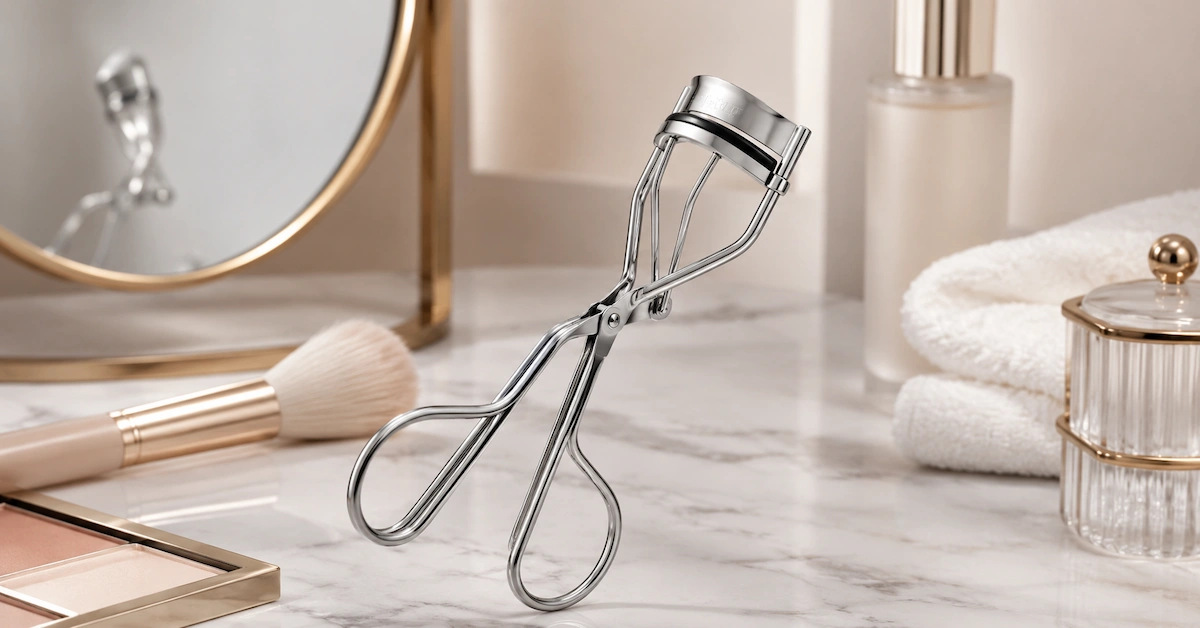
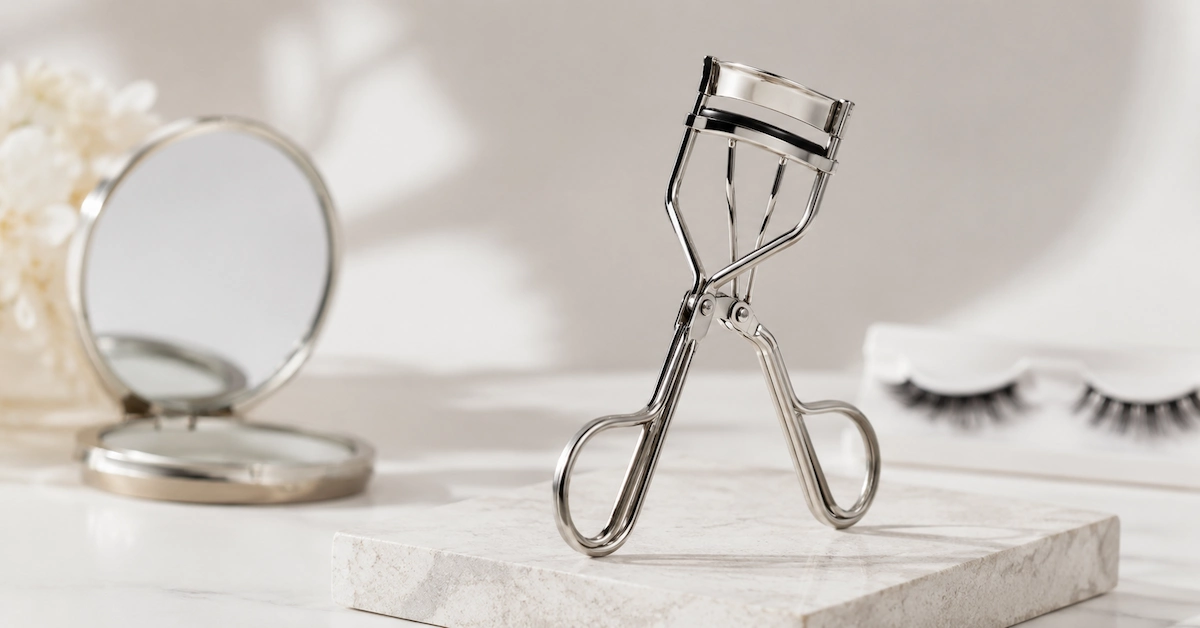
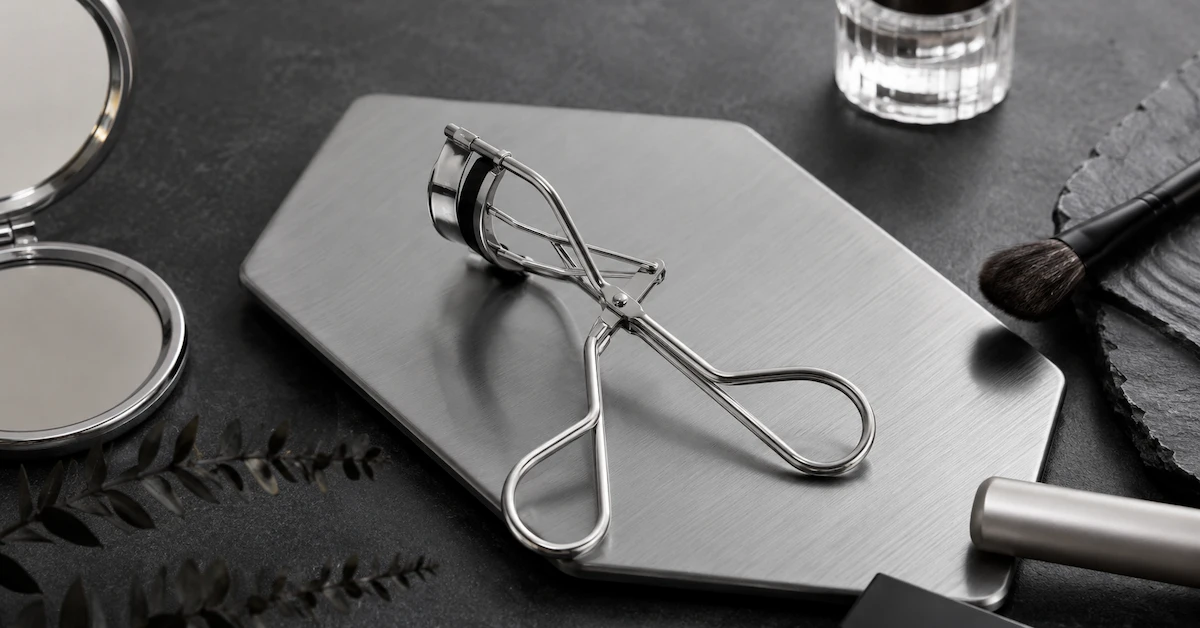
An eyelash curler is a hand-operated beauty tool with a scissor-style frame, finger loops, a central pivot, and a curved clamping head lined with a dark silicone or rubber pad. The visible geometry is important: the arc has to follow a lash-curving shape, the joint has to move smoothly, and the contact surface needs to be neat and repeatable. On a shelf, the product is compact and familiar. In production, it is a combination of metal forming, assembly, and careful finishing.
The metal body is typically polished to a chrome-like or stainless-steel appearance, which gives a clean cosmetic look and helps the tool feel more substantial than a lightweight stamped accessory. That is not just aesthetic. A more rigid frame can improve perceived quality, while a soft or inconsistent hinge can make the tool feel cheap even if the packaging is strong. The dark pad at the clamp is a small part, but it is one of the first things a customer notices after opening the box.
Quick buyer takeaway: what to compare across suppliers
When comparing a wholesale eyelash curler offer from several factories, do not stop at unit price. The better comparison is usually a mix of construction, finish, and supply reliability. In practice, buyers often check:
• Metal body consistency from sample to sample
• Smooth pivot movement without wobble
• Pad fit and alignment at the clamping head
• Surface finish quality, including visible marks or rough edges
• Packaging suitability for retail, salon, or kit assembly
• Whether the supplier can support private-label requests or OEM/ODM sourcing
That is the short version. The longer version is that beauty tools live or die by touch. A tool can be technically functional and still feel wrong in a customer’s hand.
How an eyelash curler is typically made
Exact factory methods vary, and you should not assume one process from a product photo alone. Still, the likely manufacturing path is familiar across hand tools: metal forming for the arms and frame, bending or stamping to achieve the curved geometry, assembly at the central pivot, and insertion of the cushion at the clamping head. The visible silver finish suggests a polished metal surface, though the coating or plating method cannot be confirmed from appearance alone.
Metal body and frame
The frame has to resist bending during repeated use, so consistency in the forming stage matters. If the curves are off, the jaws will not close evenly. That creates not only a functional issue but also a presentation problem, especially for retail buyers who inspect products before shipping.
Pivot and moving joint
The hinge is the most mechanically sensitive part. Too much play, and the tool feels sloppy. Too tight, and the action becomes awkward. A good supplier should be able to maintain a repeatable closing feel across batches. This is one of those details buyers sometimes overlook when approving a first sample; later, it becomes the main complaint from downstream customers.
Pad or cushion insertion
The dark insert at the clamp is the contact point that supports the lash area. It should be seated neatly and stay in place during handling and routine use. Buyers should confirm replacement-pad availability if the product line is positioned as a higher-value beauty tool set. Even for basic tools, a pad that shifts or looks uneven can make the whole product appear lower grade.
Choosing between factory types and supply models
Not every supplier is the right fit for every buying program. An eyelash curler manufacturer focused on tooling and assembly may be well suited for OEM or private-label work, especially if you need custom packaging or brand-specific details. A trading-oriented source may offer flexibility and smaller order coordination, but it may have less control over process consistency. That does not automatically make one better than the other; it depends on your priority.
If you need a simple catalog item for broad retail distribution, your main concern may be price stability and packaging readiness. If you are building a branded grooming collection, you may care more about consistent finish, logo placement, and how the tool sits beside other beauty accessories in the line. A salon buyer may focus on durability and ease of cleaning. The same tool category serves all three channels, but the acceptance criteria should not be identical.
Selection criteria that help avoid expensive mistakes
There are a few checks that save trouble later. First, look at the closure symmetry. The curved heads should meet cleanly and evenly. Second, inspect the surface under light; polished metal can hide small marks in photos that become obvious in person. Third, test the finger-loop comfort if samples are available. The loops may seem secondary, but they affect user comfort during repeated handling.
Buyers should also ask practical questions about pack-out. Will the product be sold individually, in a makeup kit, or as part of a retail set? The answer affects packaging dimensions, labeling, and whether the supplier can maintain clean presentation during transit. For imported beauty tools, cosmetic appearance often matters almost as much as functionality because end customers judge quickly and visually.
One caution: do not over-specify features that the product line does not need. For example, if a basic retail assortment is the goal, an overly complex request can increase cost without giving the buyer any real advantage. On the other hand, if the brand is moving into mid-tier cosmetics accessories, thin documentation and vague sample approval can become a problem later. There is a balance, and it is usually set by channel expectations rather than by the supplier’s sales pitch.
Common sourcing mistakes with beauty hand tools
The most common mistake is treating a small grooming tool like a commodity with no variation. In reality, small geometry differences show up immediately in user experience. Another frequent issue is focusing only on the outer finish while ignoring the hinge and pad. A shiny tool that does not close properly will still get returned.
Buyers also sometimes underestimate the value of sample comparison. One sample can look excellent; the second sample, made after a different production run, may not match it. That is why sourcing teams should ask for more than one sample where possible, and they should note the exact approval reference rather than relying on memory. It is a plain administrative habit, but it prevents a surprising number of disputes.
Questions to ask before placing a wholesale order
Before confirming a wholesale eyelash curler order, ask the supplier how they control frame alignment, how the pad is installed, and whether they can support branded packaging or kit assembly. If you are building a private-label beauty accessory line, ask what customization options are available for the metal finish, logo marking, or retail pack design. Keep the conversation practical. Fancy language helps no one if the jaw alignment varies by batch.
You should also clarify what the supplier can and cannot document. Since exact certifications, material grades, and performance claims are not always available from a catalog page, it is better to request verifiable production information directly. A serious buyer knows the difference between a confident sales description and a controlled manufacturing detail.
FAQ for sourcing teams
Is this product mainly for retail or professional use?
It can serve both. The same basic tool is used in personal makeup routines, beauty salons, and cosmetic kits. The key difference is usually packaging and quality expectation, not the underlying product category.
What should I inspect first in a sample?
Start with hinge feel, jaw alignment, pad placement, and visible finish. Those four checks reveal more about production quality than a quick glance at the overall shape.
Can this be sourced as part of OEM or ODM programs?
Yes, that is a common use case for this category. The extent of customization depends on the supplier’s capabilities and the order structure, so buyers should confirm early whether branding, packaging, or product modifications are supported.
Next step for buyers
If you are evaluating an eyelash curler supplier, ask for samples, production photos if available, and a clear explanation of how the factory handles metal forming, pivot assembly, and pad insertion. Then compare not only price but also feel, finish, and packaging readiness. For a simple beauty tool, those three factors often decide whether the product becomes a routine reorder or a problem shipment.
In this category, the best supplier is usually the one that can keep a small product looking and working consistently. That sounds obvious, but it is the point most buyers end up paying for later if they skip it at the start.