

When procurement teams search for a grooming kit manufacturer, they are usually not looking for a generic catalog page. They are trying to solve a practical problem: how to source a compact, well-finished personal grooming set that looks retail-ready, survives travel, and keeps a small group of metal tools organized without rattling around in a drawer or suitcase. That sounds simple until you compare the range of options on the market. One supplier may focus on low-cost promotional sets, another on premium travel cases, and a third on assembled personal care kits for gift channels or hotel amenities. The differences matter.
A grooming kit is often judged in seconds. The zipper should run smoothly. The case should hold its shape. The tools should not feel flimsy. And once the buyer opens the set, the layout has to make sense. That is why choosing the right grooming kit supplier is less about finding the cheapest source and more about finding a partner that can consistently assemble, finish, and package a kit that customers will actually keep and use.
What is typically inside a portable grooming kit
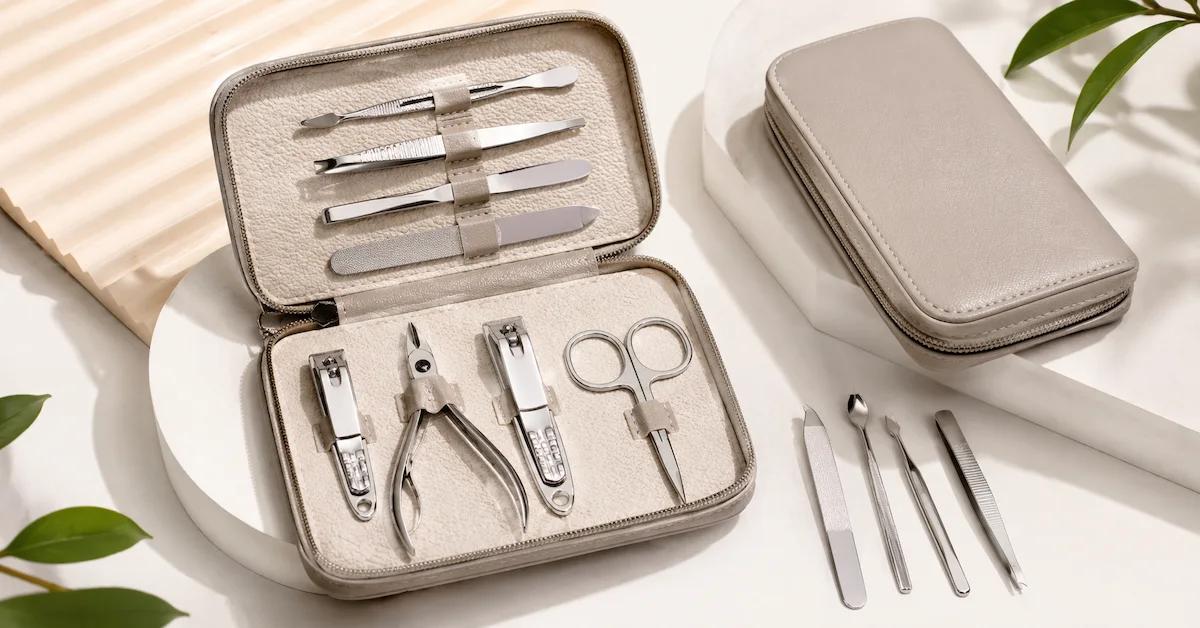
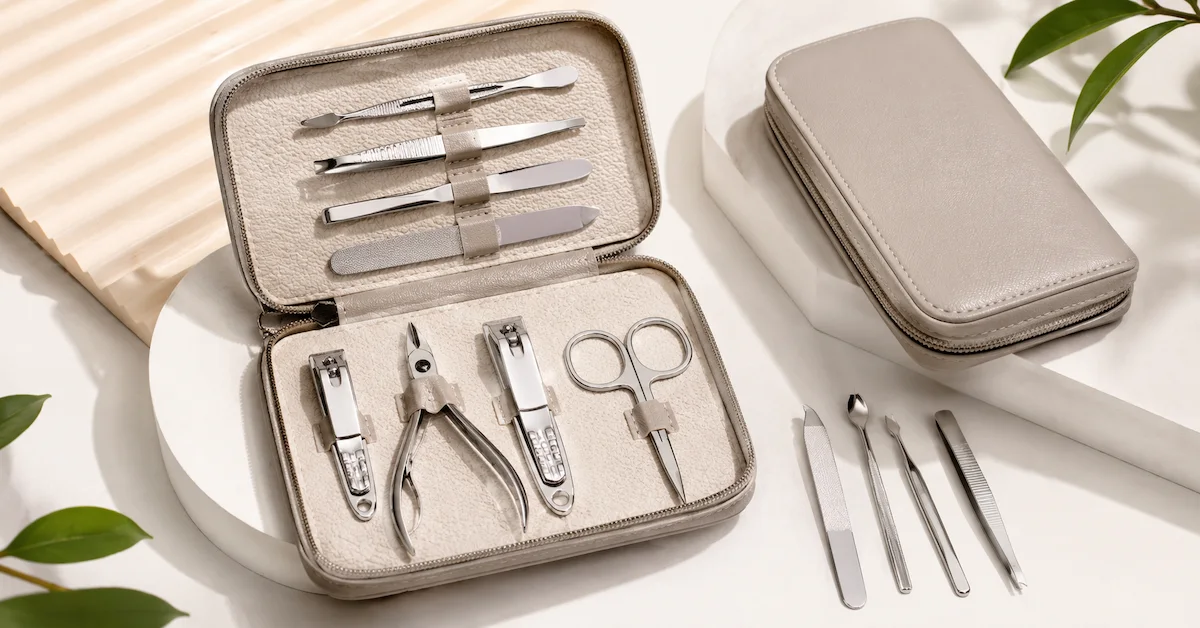
A portable grooming kit, especially the manicure-pedicure style set often seen in travel retail and gifting, usually combines a small group of personal care tools in a compact zippered case. Based on the product details provided, the set may include nail clippers, a cuticle nipper, scissors, tweezers, a nail file, and several small grooming implements or spatula-like tools. That mix is typical because it covers the basic jobs users want from a travel grooming set: trimming, shaping, cutting, and tweezing.
The case itself matters almost as much as the tools. In the described product, the structure is a two-part clamshell-style case with rounded corners, a full zipper closure, and internal elastic or tool loops. That arrangement is practical for both retail presentation and daily use. The upper and lower compartments help separate tools, which reduces scuffing and keeps everything visible. A rigid or semi-rigid shell also gives the buyer a sense that the contents are protected, even when the kit is tossed into a backpack or carry-on.
Why the case design affects perceived quality
A soft pouch can work for some applications, but it often reads as disposable. A structured case, especially in a light beige or greige faux-leather finish, signals more care in assembly. It is also easier to merchandise. For hotels, gift packs, men’s toiletry ranges, and salon retail, presentation is part of the value proposition. Buyers are not just purchasing tools; they are purchasing the impression the kit gives at first touch.
Manufacturing considerations that matter to sourcing teams
A personal grooming kit manufacturer has to solve two different manufacturing problems at once: the tool set and the case. The tools are typically metal, often stainless steel in this category, with polished or satin finishes. The visible operations may include cutting, stamping, forming, polishing, and assembly. The case usually involves wrapping, sewing, lining, and zipper installation. In a bundled product, tolerances are not the only concern. Fit and feel matter too.
That is why buyers should ask how the kit is assembled. Are the tools inserted after the case is finished, or is the layout built around pre-defined tool dimensions? Are the elastic loops designed for stable retention, or are they loose enough that tools shift during shipping? The answers influence return rates and customer complaints more than many spec sheets admit.
A useful caution here: do not assume that a neat-looking sample tells you everything about mass production. Hand-built samples can hide problems that appear when the order scales up. If the tools are slightly oversized, the zipper may become harder to close. If the case lining is too soft, small implements can move around and mark the surface. These are not dramatic failures, but they do show up in buyer feedback.
How to compare grooming kit options without getting lost in features
For sourcing purposes, the cleanest comparison is not between glossy catalog descriptions but between the functions the kit must serve.
If the kit is meant for travel, portability and closure security matter most. A compact shape, rounded corners, and a full zipper are useful features because they reduce snagging and keep small parts contained.
If the kit is meant for retail gifting, appearance and layout matter more. The case finish, interior lining, and how the tools are arranged can influence perceived value.
If the kit is meant for hospitality or amenity programs, durability and consistency become the priority. Buyers usually want a product that can be packed neatly, shipped in volume, and opened without embarrassment.
If the kit is meant for promotional bundles, there may be flexibility on tool count, but the product still needs to look intentional. A random assortment of tools in a weak case feels cheap, even if the per-unit cost is attractive.
What to ask a personal grooming kit manufacturer before ordering
A good buying conversation should go beyond “Can you make this?” and move toward “Can you make it consistently?”
Ask whether the supplier can provide:
The exact tool set configuration, with clear confirmation of what is included and what is not.
Case material options, especially if you need a faux-leather or leather-like finish in a specific color family.
Layout drawings or packing diagrams showing how the tools are held inside the case.
Sample photographs from different angles, including the zipper, lining, and tool retention points.
Packaging options for retail, gifting, or bulk shipment.
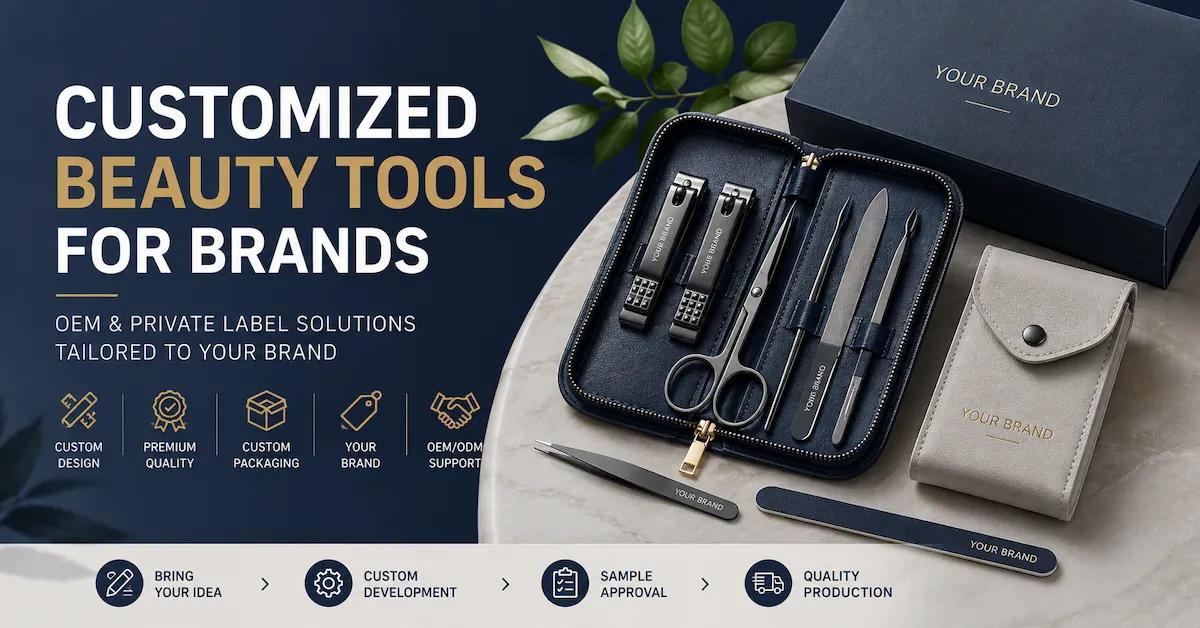
If the buyer needs a grooming kit supplier for private label work, branding method matters as well. Some cases may accept debossing, embossing, printed labels, or other decoration methods. The right answer depends on the material and the visual standard you want to maintain. It is better to clarify early than to discover that the logo treatment looks awkward once the sample arrives.
Common mistakes buyers make with assembled grooming sets
One of the most common mistakes is treating the tool count as the main quality indicator. More tools do not automatically make a better set. A bulky kit with redundant implements can be less useful than a smaller, better-organized one. In this category, practicality usually wins.
Another mistake is overlooking case structure. If the shell is too soft, tools can press into each other. If the zipper is weak, the whole kit loses credibility fast. The same is true for interior layout. Internal elastic loops should hold the tools securely without making them difficult to remove.
Buyers also sometimes assume that a polished metal finish means the tools are equal in performance. Finish and performance are not the same thing. Surface appearance may indicate care in polishing, but it does not by itself confirm edge quality, jaw alignment, or long-term durability. If the kit is intended for a demanding retail channel, that distinction matters.
Where this kind of product fits in the market
A portable grooming kit sits in a useful middle ground. It is small enough for travel but complete enough to feel like a real care item. That makes it a fit for several channels:
Travel accessories and carry-on essentials
Salon retail and impulse purchase displays
Gift sets and seasonal bundles
Hotel amenity programs
Men’s grooming collections and women’s toiletry kits
Promotional products where the brand wants utility instead of disposable swag
That versatility is part of the appeal for buyers, but it also means the product has to be evaluated in context. A hotel amenity version may need a simpler finish and lower cost. A premium retail version may need a more refined case and better tool presentation. The same basic format can serve both, but not without adjustment.
Practical buyer advice before you place a production order
Before you commit to a large order, request a sample that reflects the final build as closely as possible. Check whether the case closes cleanly with every tool in place. Open and close the zipper more than once. Look at the edges of the faux leather or leather-like shell. Inspect how firmly the tool loops hold each implement. Small flaws here are often the first signal that production control may be inconsistent later.
Also consider the end user. A home user wants convenience and a pleasant unboxing experience. A travel buyer wants compactness and security. A salon or retailer wants a product that looks credible on a shelf. Those are different priorities, and a good manufacturer should be able to discuss them without forcing every customer into the same template.
If your sourcing plan includes a branded version, ask how the product will be packed for shipment to avoid scuffs or zipper damage. Small metal tools and finished cases can mark one another if the packing is careless. That is the sort of detail that rarely shows up in a brochure, but it is exactly what separates a smooth program from a headache.
FAQ buyers tend to ask
Is a grooming kit the same as a manicure set?
Often the terms overlap. In practice, a grooming kit may cover broader personal care use, while a manicure set is more specific to nail care. The exact naming depends on the tool mix and how the product is marketed.
Can these kits be used for gifting and hotel amenities?
Yes, this format is commonly suited to gifting, travel retail, and hospitality programs because it is compact and neatly packaged.
Should I focus on tool count or case quality?
Both matter, but case quality is often underestimated. A well-organized case with secure retention and a reliable zipper can lift the perceived value of the entire product.
Choosing a source that fits the product, not just the price
The best grooming kit manufacturer is the one that can make the product feel coherent: the tools, the layout, the case finish, and the closure system all working together. That is what buyers are really paying for in this category. The product may be small, but the sourcing decisions behind it are not.
If you are comparing options, start with the intended channel, then test the structure, the packaging logic, and the overall presentation. A supplier that understands those priorities is usually a better long-term partner than one that only quotes the lowest number.
For teams planning a private-label or retail program, the next step is straightforward: request a sample specification, confirm the included implements, and review the case construction before moving into production. That small amount of discipline upfront tends to save a lot of argument later.
Tag:
Related articles
- Beauty Tools Sourcing Guide
- OEM & Private Label
Private Label Grooming Kit Manufacturer: How Brands Build Custom Personal Care Sets
- Beauty Tools Sourcing Guide
- Lash & Brow Tools
Tweezers for Eyrow Grooming Supplier: B2B Buying Guide for Beauty Brands
- Beauty Tools Sourcing Guide
- OEM & Private Label