

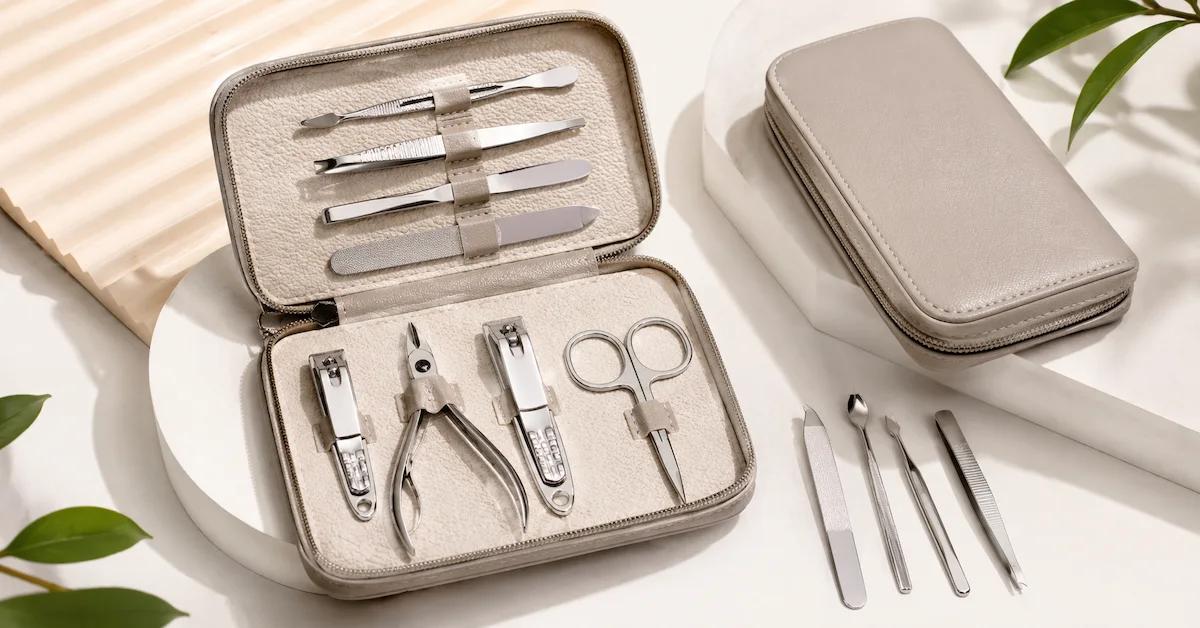
If you are sourcing a nail care kit manufacturer, you are usually trying to solve more than one problem at once: packaging, product consistency, and retail appeal. A manicure set is not just a bundle of tools. It is a compact consumer product that has to open and close cleanly, hold its shape in transit, look presentable on a shelf, and make the buyer feel the set is complete enough to use right away.
That sounds simple until you start comparing suppliers. The metal tools may be fine, but the case may feel flimsy. Or the case looks premium, but the tool layout is awkward and the customer cannot get the clippers out without disturbing everything else. For sourcing teams, those small details matter because they affect return rates, shelf appeal, and how well the kit performs as a gift, travel item, or salon resale product.
This article is meant to help you decide what to look for in a supplier, how to judge an assembled personal care kit, and where the common sourcing traps tend to show up.
What a travel manicure kit actually needs to do
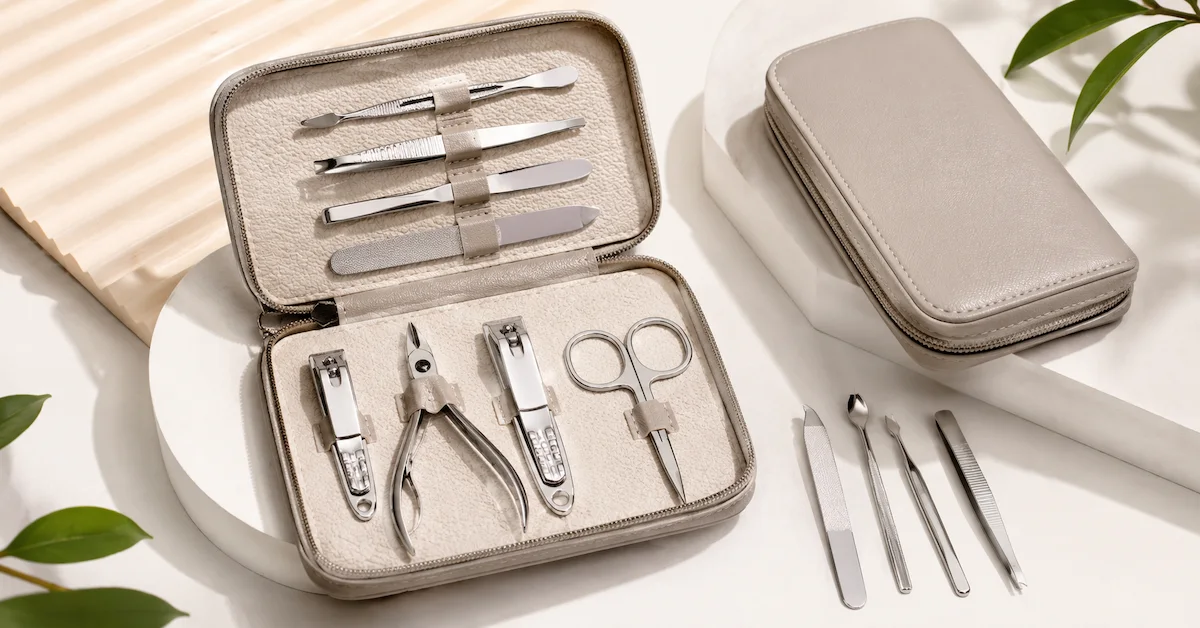
The product type here is a travel nail care/manicure kit in a zippered clamshell case. In practical terms, that means the set has to do three jobs well.
First, it has to organize. The visible construction suggests elastic holders and fitted compartments, which is exactly what a buyer wants in a portable grooming set. Tools should stay separated, easy to identify, and less likely to scratch one another.
Second, it has to protect. A compact clamshell case with a zipper is useful because it keeps the contents closed during travel, but the case itself needs enough structure to prevent the tools from rattling around or pressing through the shell.
Third, it has to present well. For retail, hotel amenities, gift sets, and promotional use, the case is part of the product story. A faux leather or leather-like exterior in a beige or gray finish can read as more polished than a simple pouch, even before the customer looks at the tools.
Typical tool mix buyers expect
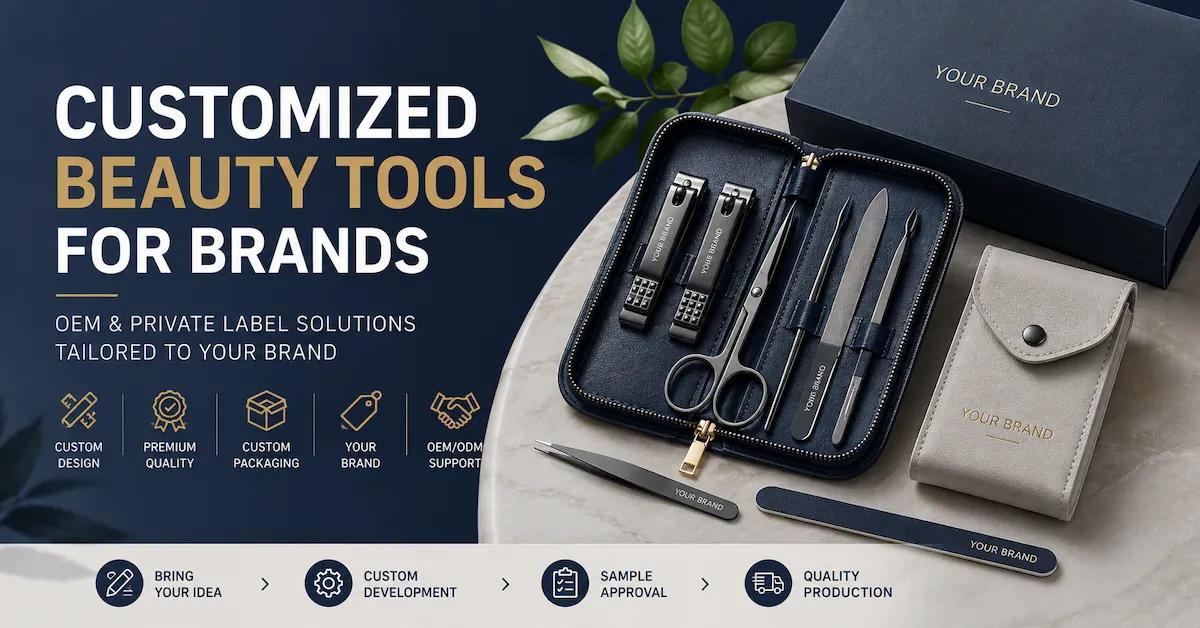
Based on the kit style described, the set appears to include stainless steel or polished metal tools such as nail clippers, a cuticle nipper, scissors, tweezers, cuticle pushers or spatulas, and nail files. That combination covers the main maintenance tasks most users expect from a manicure set.
For sourcing purposes, the key is not just which tools are included, but whether the assortment is coherent. A kit with too many near-duplicate tools can look crowded. A kit with too few tools may feel incomplete. Buyers often want a balanced mix that supports home nail care, travel grooming, and basic salon touch-ups without making the case bulky.
One practical caution: visible tool count is not always the full set count. If you are evaluating a sample or product image, do not assume the shown pieces represent the final assortment unless the supplier confirms it in writing.
Quick comparison: what separates a workable kit from a weak one
Case construction
A zippered clamshell case with stitched edges and a structured outline tends to be more reliable than a soft sleeve. The outer shell may be faux leather or a similar leather-like material; that is not just cosmetic. It helps the set feel more substantial and can improve display value.
Interior layout
Elastic tool holders and fitted compartments are a good sign. They reduce movement and make the set easier to use. If the interior is too loose, the tools can shift and the overall impression drops quickly.
Metal tool finish
Stainless steel or polished metal tools are common in this category, but finish consistency matters. Buyers should check that edges are clean, moving parts operate smoothly, and the visual finish is even across the set. Small burrs or mismatched sheen levels are the sort of details that end up visible on a retail shelf.
Portability
The compact rectangular form factor is useful for travel and gift sets. If the case is too thick, it loses the advantage of being a convenient everyday carry item. If it is too thin, the tools may not be stored safely.
What a nail care kit supplier should be able to explain clearly
When you speak with a nail care kit supplier, you want more than a price quote. You want evidence that they understand both the metal tools and the assembled product.
Ask how the tools are fabricated, finished, and assembled into the case. In this category, the final quality often depends on coordination between different manufacturing steps: metal tool production, case cutting and sewing, compartment layout, and final packing. A supplier that can only answer one of those pieces may not be the best fit for a branded program.
You should also ask whether the case and tools are standardized or can be adapted for private label programs. For example, a private label nail care kit may need custom logo placement, a different exterior color, a modified interior layout, or a selected tool mix for a specific retail channel. Those are normal requests, but they should be discussed early because they affect assembly and presentation.
Selection criteria that matter to sourcing teams
Not every buyer will need the same specification. A hotel amenity program, for example, will care more about compact size and cost control. A premium gift retailer will care more about appearance and the feel of the case in hand. A salon-resale customer may care most about the usability of the tools themselves.
Here are the factors that usually deserve the most attention:
Tool usability: The clippers, nippers, tweezers, and scissors should open and close smoothly. The ends should be functional, not just decorative.
Case durability: A zippered clamshell case should not deform easily. Stitched edges and a neat closure line are worth inspecting closely.
Organization: Dedicated slots are not just nice to have. They help keep the set presentable over time.
Retail appearance: Neutral tones such as beige or gray can work well for broad-market personal care sales, while other programs may want a more distinctive finish.
Channel fit: The same kit may work differently in e-commerce, in-store retail, hotel amenities, or promotional distribution. A product that looks good in a photo can still be inconvenient in a travel bag if it is too rigid or too bulky.
Common sourcing mistakes
The first mistake is treating the kit as a commodity package and ignoring assembly quality. A manicure set is easy to describe, but not always easy to build cleanly. Misaligned holders, loose fittings, and uneven tool placement can make a product feel cheaper than it is.
The second mistake is assuming all metal tools are equivalent. They are not. Even when the material is broadly described as stainless steel or polished metal, buyers still need to confirm surface finish, edge quality, and whether the tools feel balanced in hand.
The third mistake is overlooking how the set will be used after purchase. A travel set needs to open quickly and store cleanly. A gift set needs visual harmony. A salon retail item needs enough perceived value to justify shelf space. If the kit does not fit the channel, the sourcing decision will come back as a merchandising problem.
And a small but real caution: product photos can make a compact case look larger or more premium than it is. Ask for measurements, internal layout details, and packing confirmation before you commit to volume.
How to think about private label programs
A private label approach makes sense when you want the kit to look like your brand, not just your supplier’s generic stock item. In this category, private labeling usually involves some mix of exterior branding, color selection, packaging design, and tool assortment control.
That said, customization should be handled carefully. Too many changes can raise complexity without improving sell-through. A better approach is often to focus on the elements customers actually notice: the case exterior, the zipper feel, the tool set balance, and the neatness of the interior presentation.
If your market is price sensitive, keep the structure simple and spend where it shows. If your market is gift-oriented, the case finish and presentation box may matter more than adding one extra tool nobody uses.
Practical buyer checklist before you place an order
Before you finalize a manicure kit program, confirm a few basics with the supplier:
What tools are included in the final kit, and are they all visible in the sample?
What is the case made of, as far as the supplier can verify?
How are the tools secured inside the clamshell case?
Can the supplier support a private label nail care kit variant if needed?
Is the product intended more for home use, travel grooming, retail gifting, or salon resale?
What parts of the assembly are standardized, and what can be customized?
These are straightforward questions, but they often surface the real capabilities of a manufacturer faster than a generic RFQ.
FAQ
Is this type of kit suitable for everyday home use?
Yes, especially if the tool mix includes the basics and the case keeps everything organized. Many buyers choose this format precisely because it is easy to store and simple to carry.
Can a manicure kit be sold as a gift item?
Absolutely. A tidy zippered case with a structured layout often performs well as a gift or retail accessory, provided the finish and tool presentation are consistent.
What should I verify first with a nail care kit manufacturer?
Start with the tool list, case construction, and assembly method. Those three points usually determine whether the product is a practical purchase or just a nice-looking sample.
Are custom designs possible?
Often yes, but the level of customization depends on the supplier’s assembly setup. Logo work, case color changes, and layout adjustments may be possible, but they should be confirmed early.
The next decision
If you are comparing suppliers now, the best next step is to ask for a sample or a detailed spec sheet and judge the set as a finished consumer product, not just a list of tools. That means looking at the case structure, zipper action, interior organization, and the feel of the metal components together.
In this category, the most reliable manufacturer is usually the one that understands the whole package: tool fabrication, case assembly, and the way the product will actually be sold. For sourcing teams, that is where the difference between a merely acceptable kit and a repeatable retail item tends to show up.
Tag:
Related articles
- Beauty Tools Sourcing Guide
- OEM & Private Label
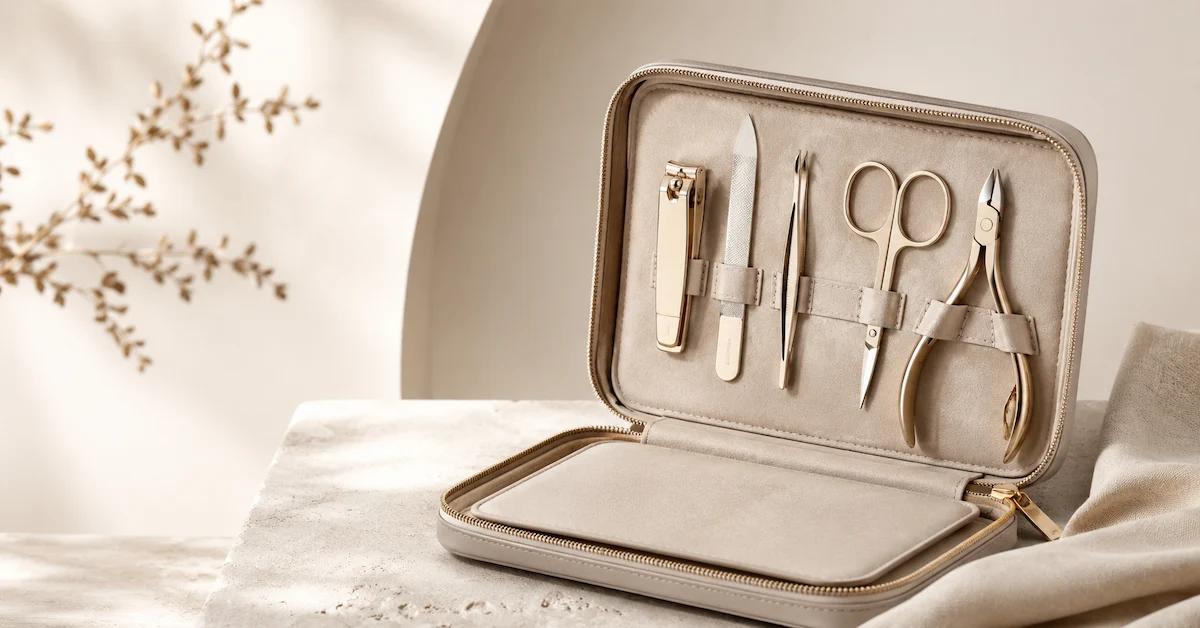
Private Label Grooming Kit Manufacturer: How Brands Build Custom Personal Care Sets
- Beauty Tools Sourcing Guide
- Lash & Brow Tools
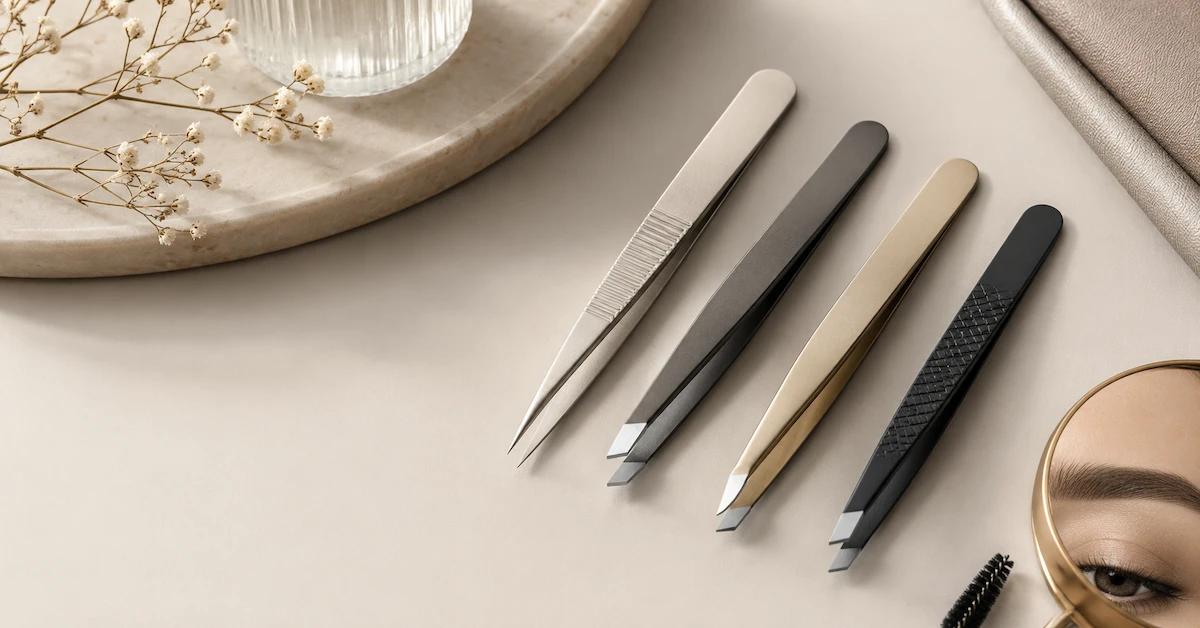
Tweezers for Eyrow Grooming Supplier: B2B Buying Guide for Beauty Brands
- Beauty Tools Sourcing Guide
- OEM & Private Label