

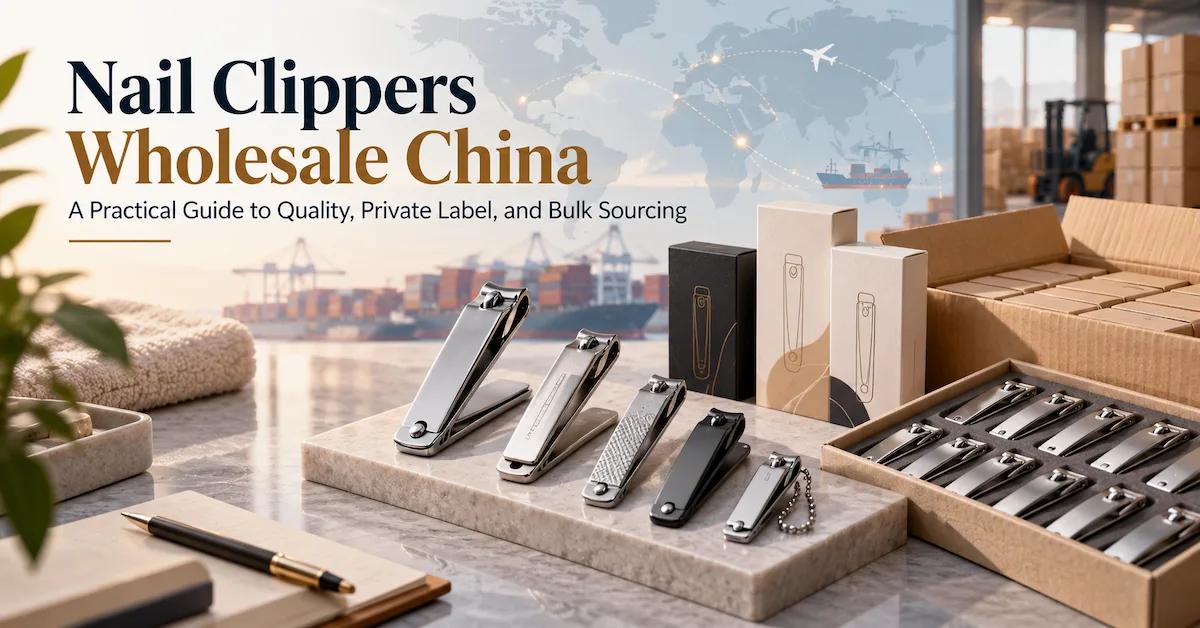
Buyers searching for nail clippers wholesale China are usually not looking for a single grooming tool. They are trying to solve a sourcing problem: how to obtain a commercially viable nail clipper at the right cost, with dependable cutting performance, acceptable cosmetic quality, suitable packaging, clear branding, and enough production consistency to support repeat orders.
That distinction matters.
A low quotation can look attractive during supplier comparison, but the final cost of a wholesale program is shaped by much more than the quoted unit price. Poor blade alignment, inconsistent lever pressure, scratches on polished surfaces, loose assembly, incorrect logo placement, weak packaging protection, or changes between production batches can create additional inspection, repacking, returns, complaints, and lost retail opportunities.
For B2B buyers, a better sourcing strategy is to evaluate the entire product system.
That means defining the product before requesting quotations, understanding which characteristics control performance, approving samples against measurable requirements, matching packaging to the sales channel, and confirming how the supplier will keep future production consistent with the approved standard.
Buyers exploring OLIMOR nail clippers can use the same approach when selecting a model for wholesale, OEM, ODM, or private-label development.
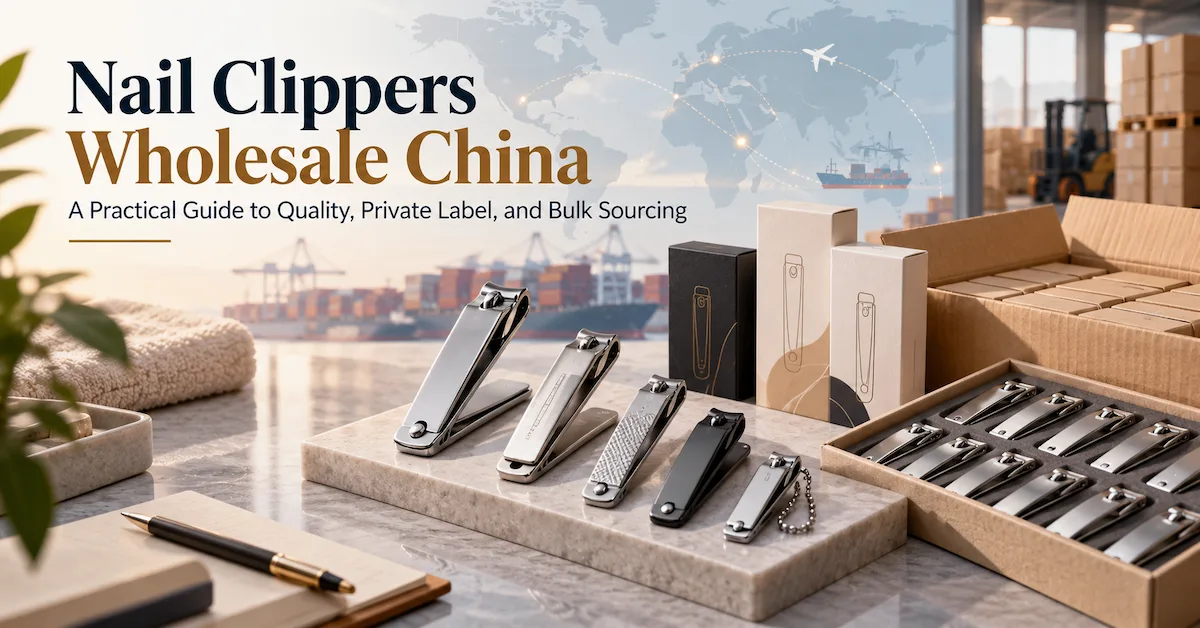
What Does “Nail Clippers Wholesale China” Actually Mean for a B2B Buyer?
The phrase covers several very different purchasing situations.
A distributor may be looking for standard nail clippers in larger quantities with neutral packaging.
A retail chain may want an existing clipper structure with custom card packaging, barcode labels, and a specific finish.
An e-commerce brand may need a visually distinctive private-label model with stronger packaging protection and consistent product appearance for customer reviews.
A beauty brand may want to build a coordinated nail-care collection including clippers, nail files, nippers, tweezers, and manicure tools.
An importer may be less concerned with visual differentiation and more focused on stable supply, mixed-SKU purchasing, repeat-order consistency, and shipment coordination.
These buyers may all search “nail clippers wholesale China,” but they should not evaluate suppliers in exactly the same way.
Before asking for pricing, determine which sourcing route fits the project:
- standard wholesale;
- private label;
- ODM modification;
- OEM production;
- multi-product nail-care collection.
This first decision changes almost everything that follows: sampling, MOQ, development time, packaging, inspection requirements, and quotation structure.
Who Is Wholesale Nail Clipper Sourcing From China Best Suited For?
China sourcing can make sense when a buyer needs more than a few pieces and wants to manage a repeatable B2B product program.
Typical buyers include importers, wholesalers, beauty brands, retailers, drugstore suppliers, e-commerce sellers, grooming-product companies, promotional suppliers, hotel and travel-product companies, and salon distribution businesses.
It becomes particularly useful when the buyer needs several capabilities around the same product.
For example, a nail clipper project may involve:
metal forming, cutting-edge preparation, finishing, polishing, assembly, logo application, packaging development, inspection, and export coordination.
A supplier that can manage these activities as one project may be easier to work with than a sourcing structure involving several disconnected vendors.
However, wholesale sourcing is not necessarily the best route for every buyer.
If you need only a handful of finished retail units, have no intention of developing packaging or branding, or require immediate delivery from local inventory, domestic retail or distribution channels may be more practical.
B2B sourcing becomes valuable when scale, customization, product consistency, or long-term supply justifies the development effort.
Start With the Nail Clipper Specification, Not the Supplier Price
One of the most common procurement mistakes is requesting prices before defining the product.
A message such as:
“Please quote stainless steel nail clipper with logo, 10,000 pieces”
does not contain enough information for a meaningful comparison.
Two suppliers can respond with very different prices while actually quoting different products.
A useful specification should identify the characteristics that influence cost, performance, appearance, and inspection.
| Specification Area | Questions to Define |
|---|---|
| Product type | Standard clipper, compact clipper, larger clipper, set |
| Dimensions | Length, width, jaw opening, overall size |
| Material | Material required for the selected model |
| Cutting area | Geometry, edge contact, expected cutting action |
| Lever | Shape, length, grip, movement |
| Finish | Polished, satin, matte, colored or other approved finish |
| Branding | Logo method, size and location |
| Packaging | Box, card, pouch, set, gift package or bulk pack |
| Quantity | Trial quantity and forecast volume |
| Market | Retail, e-commerce, distributor, travel, gift |
| QC | Functional and cosmetic acceptance criteria |
| Shipment | Destination and packing expectations |
Without this information, quotation comparison becomes unreliable.
The lower price may come from a smaller product, lighter material, simpler finish, basic packaging, different assembly method, or reduced inspection scope.
A professional sourcing process compares equivalent specifications, not just prices in a spreadsheet.
Why Stainless Steel Is Common but Should Not Be the Only Buying Criterion
Many wholesale nail clippers are promoted simply as “stainless steel.”
That description is useful, but it is not enough to predict product quality.
A nail clipper is a mechanical product. Performance depends on the interaction of multiple components and manufacturing stages.
Material is only one part of the result.
Other factors can include:
- metal thickness;
- component geometry;
- forming accuracy;
- cutting-edge preparation;
- heat treatment where applicable;
- grinding;
- deburring;
- polishing;
- pivot assembly;
- lever geometry;
- surface finishing;
- final adjustment;
- inspection.
Two products carrying the same broad material description can therefore behave differently.
One may cut smoothly with balanced lever pressure.
Another may require excessive force or fail to make complete contact across the cutting edge.
For buyers sourcing stainless steel nail clippers, the better question is not simply, “Is it stainless steel?”
Ask:
Which specification applies to this actual model, and how does the manufacturer control the features that affect performance?
Specific material grades, hardness requirements, coatings, or treatment parameters should be confirmed for the selected SKU instead of being assumed across an entire category.
The Five Nail Clipper Features Buyers Should Check First
When comparing wholesale samples, five product areas deserve particular attention.
1. Cutting-Edge Alignment
The upper and lower cutting edges need to meet correctly.
If contact is uneven, the clipper may cut properly at one side while performing poorly at another.
This can create:
- incomplete cutting;
- excessive user force;
- pulling rather than clean clipping;
- uneven cutting feel;
- complaints about “dull” blades even when edge sharpness is not the only problem.
Alignment is therefore one of the most useful functional checkpoints in nail clipper QC.
2. Cutting Action
A buyer should test how the product actually clips.
Does it operate smoothly?
Does the cut feel controlled?
Is excessive pressure required?
Does performance remain similar between several samples?
A supplier should not rely only on visual inspection for a functional product.
3. Lever Movement
The lever determines much of the user experience.
Its geometry affects mechanical advantage and hand comfort.
Problems may include:
- excessive resistance;
- unstable movement;
- looseness;
- rough contact;
- inconsistent leverage.
Retail consumers may not describe the issue as “lever geometry.” They will simply perceive that one clipper feels better than another.
4. Assembly and Pivot Stability
A nail clipper contains several parts that have to work as a single mechanism.
Poor assembly can result in rattling, uneven movement, excessive play, poor cutting contact, or inconsistent feel.
The product should therefore be tested through repeated opening and closing rather than evaluated only in its closed position.
5. Surface Quality
Beauty and personal-care products are highly visual.
A clipper can function properly and still generate customer dissatisfaction because of:
- scratches;
- stains;
- rough edges;
- inconsistent polishing;
- coating defects;
- visible assembly marks;
- poor logo appearance.
For retail and e-commerce programs, cosmetic inspection deserves almost as much attention as mechanical function.
How Wholesale Nail Clippers Are Typically Manufactured
The exact manufacturing route varies according to the product structure and factory. Buyers should not assume that every model follows an identical process.
A typical metal nail clipper program can include several stages.
Material and Component Preparation
Production begins with the specified metal and supporting components.
Incoming checks help confirm that the production batch starts with the intended material and parts.
This is especially important if springs, pins, lever components, packaging items, or other parts come from different production sources.
Stamping and Forming
Metal components are shaped to the required geometry.
Small variation at this stage can influence later assembly.
If body geometry is inconsistent, the manufacturer may face problems with:
- cutting contact;
- pivot positioning;
- lever movement;
- visual symmetry;
- component fit.
For this reason, manufacturing precision affects both function and appearance.
Edge Preparation
The cutting area needs to be processed according to the design.
The buyer does not necessarily need to dictate how the factory performs every grinding or edge-preparation step.
What matters commercially is that the finished result matches the approved standard.
A clear sample and functional inspection method are therefore extremely useful.
Heat Treatment Where Applicable
Certain designs and cutting components may involve controlled heat-treatment processes.
This should be discussed on a model-specific basis.
Buyers should avoid assuming that every product uses the same treatment or that a general factory capability automatically applies to every SKU.
Grinding and Deburring
Metal components may require grinding or deburring to remove unintended roughness and prepare the product for finishing.
Poor deburring can create uncomfortable edges or visible defects.
Polishing and Surface Finishing
This stage has a significant effect on perceived quality.
Polished, satin, matte, coated, or colored surfaces each have different visual expectations.
For private-label programs, the approved sample should clearly establish what the buyer considers acceptable.
Assembly
The body, pin, lever, and related components are assembled.
At this stage, individual manufacturing tolerances combine into one finished mechanism.
The factory should verify that movement and cutting contact remain consistent after assembly.
Branding
Private-label programs may add laser marking, engraving, printing, labels, or other branding depending on the product design and finish.
The logo should be approved on the real product whenever appearance is important.
Packaging
The finished clipper may move into retail, e-commerce, bulk, gift, pouch, case, card, or set packaging.
Packaging is not simply decoration.
It also prevents scratches and product movement before the customer receives the item.
Final Inspection
Functional, cosmetic, branding, packaging, and order-identity checks should take place before shipment according to the confirmed specification.
What Does Good Nail Clipper Quality Control Look Like?
A vague statement such as “strict quality control” does not tell a buyer much.
A stronger supplier should be able to explain what is inspected and when.
A useful nail clipper quality-control framework can include five stages.
Incoming Checks
Confirm critical materials, purchased components, packaging, and accessories before they enter production.
First-Piece Approval
When a production run starts, the first finished pieces can be checked before the process continues at full volume.
This becomes especially important after:
- tooling changes;
- material changes;
- process changes;
- component changes;
- new product development.
In-Process Inspection
Critical product characteristics can be checked while production is still running.
This helps detect drift before the whole order is completed.
Finished Product Inspection
Finished clippers can be evaluated for:
- cutting-edge contact;
- cutting action;
- lever movement;
- assembly;
- finish;
- logo;
- packaging.
Shipment Checks
Before release, verify:
- correct model;
- correct quantity;
- correct packaging;
- carton identification;
- shipment condition;
- agreed order requirements.
For B2B sourcing, this structured approach is more useful than relying on one inspection at the very end.
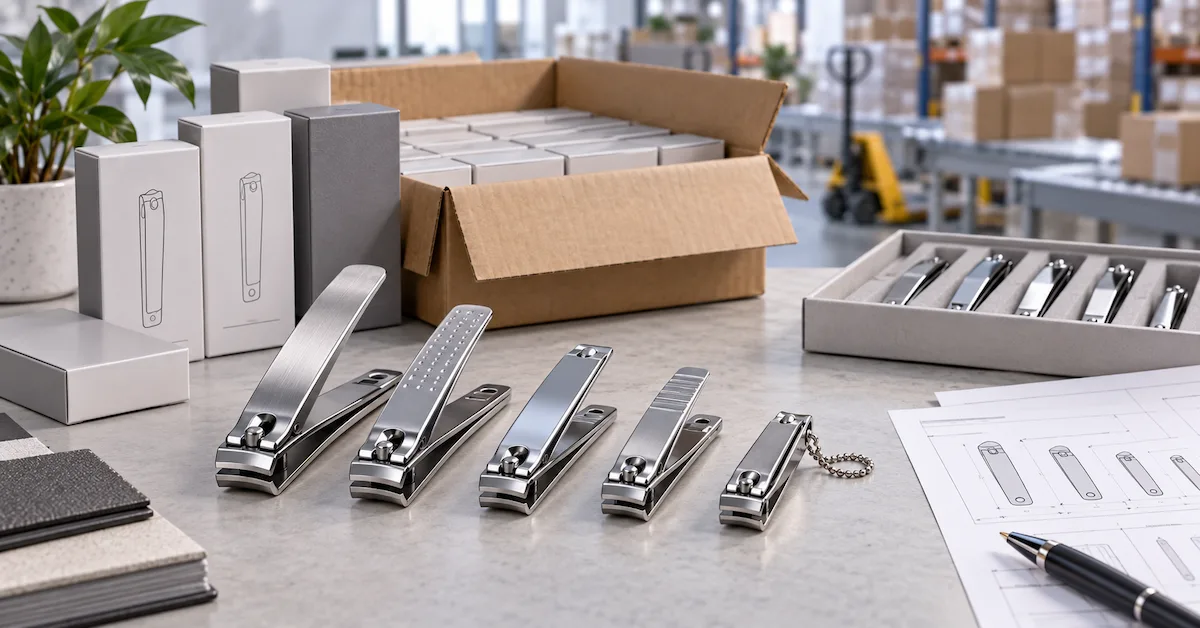
A Practical QC Checklist for Nail Clippers Wholesale China Orders
Use a model-specific checklist rather than a generic factory inspection.
| Inspection Point | What the Buyer Should Confirm | Typical Risk |
|---|---|---|
| Cutting alignment | Edges meet correctly | Partial or uneven clipping |
| Cutting action | Smooth, controlled cut | Poor customer experience |
| Lever movement | Stable and consistent | Excessive force or looseness |
| Pivot assembly | Appropriate movement and stability | Rattling or misalignment |
| Surface | Consistent finish without unacceptable defects | Retail complaints |
| Edges | No unintended burrs | Handling discomfort |
| Logo | Correct size, location and appearance | Brand inconsistency |
| Packaging | Correct pack and protection | Scratches or wrong presentation |
| SKU identities | Correct model and finish | Mixed shipments |
| Quantity | Matches order | Inventory discrepancy |
The exact acceptance standard should be defined for the chosen product.
“Looks fine” is not a robust QC requirement.
Sample Approval Is Where Wholesale Risk Can Be Reduced Early
A good sample is more than something a sales representative sends to win an order.
It should become a control reference.
For nail clippers wholesale China projects, buyers can divide sample approval into three areas.
Functional Approval
Test:
- cutting action;
- blade contact;
- lever movement;
- opening and closing;
- assembly stability;
- handling.
If multiple samples are available, compare them.
A single good sample cannot demonstrate manufacturing consistency.
Cosmetic Approval
Inspect:
- polish;
- finish;
- visible marks;
- scratches;
- edges;
- color;
- logo;
- overall appearance.
Use appropriate lighting because reflective metal surfaces can hide defects in casual inspection.
Packaging Approval
Confirm:
- box or card structure;
- fit;
- insert;
- labels;
- barcode;
- product orientation;
- protection against movement;
- artwork;
- carton configuration where required.
Once approved, preserve the final sample and revision information.
That reference becomes valuable during both mass production and repeat orders.
Standard Wholesale, Private Label, ODM, or OEM?
Not every buyer needs a fully custom product.
Choosing the correct development route can reduce unnecessary cost and delay.
Standard Wholesale
This is suitable when the buyer accepts an existing product and needs minimal customization.
The focus is typically:
- quantity;
- price;
- standard packing;
- delivery;
- consistency.
Private Label
Private label is useful when the buyer wants to sell an established product under its own brand.
Customization can involve:
- logo;
- finish;
- color options where applicable;
- packaging;
- labels;
- set combinations.
This route is often practical for retailers, e-commerce sellers, distributors launching house brands, and new beauty brands.
ODM
ODM can begin with an existing product platform while making more meaningful adjustments.
Changes can involve product appearance, selected structural details, finish, accessories, packaging, or other approved features.
OEM
OEM becomes more relevant when the buyer already has a sample, specification, drawing, or clearly defined product.
The manufacturer then needs to evaluate manufacturability, tooling, process requirements, sampling, and quality criteria.
If you are not sure which route fits your program, browsing the wider OLIMOR product range can help determine whether an existing platform already matches most of your needs.
How Private Label Changes a Wholesale Nail Clipper Project
Adding a logo may sound simple, but private-label development changes the project in several ways.
You now need to control:
- logo artwork;
- method;
- location;
- size;
- visual consistency;
- surface compatibility;
- packaging;
- product identification;
- repeat-order reference.
The logo should ideally be reviewed on the actual material and finish.
A polished reflective surface behaves differently from a matte surface.
A curved or narrow section may also limit the usable branding area.
The correct branding method therefore depends on the product, not just the graphic.
For this reason, buyers should avoid assuming that one logo process is suitable for every nail clipper.
Packaging Is Part of Product Quality
Wholesale buyers sometimes leave packaging discussions until the end of development.
That can be a mistake.
Packaging affects:
- product protection;
- shipping efficiency;
- retail display;
- customer perception;
- barcode management;
- unboxing;
- gift positioning;
- fulfillment.
A polished metal nail clipper can arrive scratched if it moves inside the package.
Similarly, a premium tool in weak packaging can feel inexpensive even if the product itself is well manufactured.
Retail Packaging
A retail program may require:
- clear product visibility;
- hanging capability;
- shelf efficiency;
- barcode location;
- branding;
- customer instructions;
- anti-scratch protection.
E-Commerce Packaging
Online sellers should consider:
- parcel movement;
- surface protection;
- compact size;
- customer opening experience;
- resistance to handling during fulfillment.
Gift or Premium Packaging
Premium collections may use:
- pouches;
- cases;
- rigid boxes;
- inserts;
- coordinated sets.
The packaging decision should follow the sales strategy rather than being selected only by lowest cost.
What Determines Wholesale Nail Clipper Pricing?
The phrase “China wholesale price” can create the impression that there is one standard market price.
There is not.
Price depends on specification.
Important variables include:
Size and Weight
Different clipper formats use different quantities of material and may require different production setups.
Product Construction
More complex structures or added functions may increase manufacturing and assembly requirements.
Material
Material specification affects cost and should be compared consistently between suppliers.
Surface Finish
A basic finish and a high-cosmetic decorative finish may require very different processing and inspection.
Logo
Branding can add setup and processing depending on:
- technique;
- size;
- number of positions;
- surface;
- quantity.
Packaging
Bulk packaging, printed card packaging, retail box packaging, and gift packaging are not directly comparable.
Quantity
Higher quantities may improve production efficiency and spread setup costs across more units.
However, buyers should not assume that every model follows the same MOQ structure.
Inspection
Additional sorting, inspection, reporting, or packaging checks can influence commercial terms.
Development and Tooling
Custom structural projects may involve engineering or tooling costs that standard private-label projects do not.
Why the Cheapest Nail Clippers Wholesale China Quote Can Become Expensive
A useful purchasing concept is total sourcing cost, not merely unit cost.
Suppose Supplier A is cheaper by several cents per unit.
That saving looks attractive until the shipment arrives with inconsistent cutting action.
Now the importer may need:
additional inspection, sorting, rework, replacement, customer service, repacking, credits, or return handling.
The commercial loss can exceed the original savings.
Other hidden costs can include:
- late production;
- incorrect packaging;
- artwork errors;
- mixed SKUs;
- scratched finishes;
- poor repeat-order matching;
- excessive sample rounds;
- communication mistakes.
Supplier selection should therefore balance:
price + product quality + process control + communication + repeatability + delivery risk.
How to Compare Three China Nail Clipper Suppliers
Use the same specification for every supplier.
Then compare them systematically.
| Evaluation Area | Supplier A | Supplier B | Supplier C |
|---|---|---|---|
| Model / product reference | |||
| Material confirmed | |||
| Size / weight | |||
| Cutting performance | |||
| Lever movement | |||
| Surface finish | |||
| Sample consistency | |||
| Logo method | |||
| Packaging | |||
| QC process | |||
| MOQ | |||
| Production basis | |||
| Communication | |||
| Repeat-order control | |||
| Price |
Do not score price first.
Start with product equivalence.
If the three quotations refer to different specifications, the comparison is not meaningful.
MOQ: Why There Is No Single Correct Number
“Wholesale” does not automatically mean one fixed minimum order.
MOQ can vary with:
- product model;
- finish;
- custom color;
- logo;
- packaging;
- carton printing;
- component procurement;
- production schedule;
- customization depth.
An existing model with straightforward branding may have a different commercial threshold from a new OEM design requiring tooling and custom components.
That is why responsible suppliers confirm MOQ after understanding the project.
Buyers can review OLIMOR's FAQ page for general purchasing information, but final quantity requirements should be discussed for the selected product and configuration.
Lead Time Should Start With Approval, Not Guesswork
A production timeline is meaningful only when the starting point is clear.
A project may involve:
- product selection;
- specification confirmation;
- logo artwork;
- sample preparation;
- functional approval;
- cosmetic approval;
- packaging artwork;
- packaging approval;
- bulk production;
- inspection;
- shipment.
If the buyer changes finish or packaging after sample approval, the schedule may change.
For accurate planning, separate:
sample lead time from mass-production lead time and shipping time.
Do not treat them as one number.
Common Risks When Buying Nail Clippers Wholesale From China
Wholesale sourcing is manageable when the main risks are identified early.
Risk 1: Vague Specification
Problem: Buyer and supplier have different ideas of the product.
Control: Use samples, photos, measurements, finish references, and written specifications.
Risk 2: Good Sample, Different Production
Problem: Mass production does not match the sales sample.
Control: Keep an approved master sample and define critical inspection items.
Risk 3: Cosmetic Variation
Problem: Reflective metal surfaces show scratches, marks, or inconsistent polishing.
Control: Define acceptable appearance during sample approval.
Risk 4: Poor Cutting Consistency
Problem: Some units cut better than others.
Control: Establish functional checks for cutting-edge contact and cutting action.
Risk 5: Packaging Damage
Problem: Tools rub against packaging or other components during shipping.
Control: Test fit and product movement before mass production.
Risk 6: Logo Variation
Problem: Logo size, location, contrast, or appearance changes between batches.
Control: Retain artwork and an approved physical reference.
Risk 7: Specification Drift on Reorders
Problem: Second or third production run feels different.
Control: Maintain revision records and confirm whether components, materials, processes, or packaging have changed.
Risk 8: Unverified Claims
Problem: Buyer assumes a material grade, certification, or compliance status from generic sales language.
Control: Request project-specific documentation and verify requirements for the target market.
Compliance: What Buyers Should Verify
Nail clippers are relatively straightforward consumer grooming tools, but that does not mean compliance can be ignored.
Requirements may vary depending on:
- destination country;
- packaging;
- material;
- labeling;
- retail channel;
- product claims;
- age positioning;
- packaging materials.
Buyers should avoid asking only:
“Do you have certificates?”
Instead ask:
Which document applies to this exact product, material, market, and order?
A factory-level management certificate is not the same as a product-specific compliance document.
Likewise, a certificate covering one product should not automatically be assumed to cover an unrelated SKU.
If a retailer or importer has its own testing protocol, share it before order confirmation.
The Importance of Repeat-Order Consistency
Many sourcing decisions focus on the first shipment.
Experienced buyers think about the fifth shipment.
A private-label brand can invest substantial resources in:
- product photography;
- listings;
- retail distribution;
- packaging;
- reviews;
- marketing;
- inventory systems.
If later batches change unexpectedly, the brand absorbs the consequences.
Repeat-order control should therefore include:
- approved product sample;
- packaging reference;
- logo artwork;
- specification revision;
- finish reference;
- key inspection criteria;
- change communication.
Ask the supplier a simple question:
If I reorder this product next year, how will you know what must stay the same?
The answer reveals whether the supplier is managing a product program or simply processing isolated purchase orders.
What a Professional RFQ for Wholesale Nail Clippers Should Include
A strong RFQ shortens quotation time and reduces misunderstanding.
Include the following information.
Product Reference
Provide an image, current sample, competitor reference, drawing, or existing SKU.
Product Size
State approximate dimensions if they are important.
Material
Provide a confirmed requirement if you have one.
If you do not, ask for the supplier's model-specific material information.
Quantity
Include:
- trial quantity;
- target purchase quantity;
- annual forecast if relevant.
Sales Channel
Explain whether the clipper will be sold through:
- retail;
- e-commerce;
- distribution;
- salon supply;
- travel;
- gift programs.
Target Market
Tell the supplier where the product will be sold so that market-specific requirements can be discussed early.
Finish
Provide photos or physical references for appearance-sensitive finishes.
Logo
Send vector artwork when available.
Include target location and approximate size.
Packaging
State whether you need:
- bulk packing;
- retail card;
- printed box;
- pouch;
- case;
- gift package;
- kit packaging.
Quality Priorities
Identify the areas you care about most.
For nail clippers, these might include:
- cutting alignment;
- cutting feel;
- surface appearance;
- lever movement;
- logo consistency;
- packaging protection.
Timeline
State required launch or delivery timing.
This helps the supplier identify whether the schedule is realistic before development begins.
How to Build a Multi-SKU Nail Care Collection
Some buyers begin with one nail clipper but eventually want a full collection.
Possible complementary products include:
- nail files;
- cuticle nippers;
- cuticle tools;
- tweezers;
- beauty scissors;
- manicure sets.
OLIMOR's beauty tool product categories provide a broader view of products that can support a coordinated personal-care line.
The goal of multi-SKU sourcing should not be to collect unrelated products.
A stronger collection shares visual and commercial logic.
For example:
- consistent metal finish;
- coordinated colors;
- matching logo placement;
- common packaging design;
- similar price positioning;
- repeatable quality standards.
This creates a more coherent brand experience.
Nail Clippers for Retailers
Retail buyers need to think beyond function.
The product must also work on the shelf.
Questions include:
- Can customers understand the product immediately?
- Is packaging compact enough?
- Does the finish match the price position?
- Is the barcode easy to scan?
- Does the package protect polished metal?
- Can the supplier reproduce the same presentation across reorders?
A retailer may prefer a proven product structure with strong private-label packaging rather than a completely new clipper design.
That reduces development complexity while still creating brand differentiation.
Nail Clippers for E-Commerce Brands
E-commerce changes quality priorities.
Customers often see:
- close-up photography;
- magnified product details;
- customer review images;
- unboxing videos.
Small cosmetic inconsistencies can become visible very quickly.
Online sellers should pay particular attention to:
- surface appearance;
- scratch protection;
- product consistency;
- packaging fit;
- logo quality;
- bundle opportunities;
- return risk.
A small improvement in product consistency can be more valuable than a small reduction in unit cost if it supports better reviews and fewer complaints.
Nail Clippers for Distributors and Importers
Distributors tend to care about operational stability.
Their priorities often include:
- dependable replenishment;
- multiple product options;
- mixed-category sourcing;
- clear specifications;
- carton consistency;
- export communication;
- repeat-order control.
For this buyer group, supplier capability across a broader range of beauty tools may be commercially useful.
Instead of managing separate suppliers for every grooming accessory, a distributor may prefer to consolidate several compatible categories when quality and pricing are suitable.
Nail Clippers for Gift, Travel, and Grooming Kits
A nail clipper can also be part of a larger set.
Common applications include:
- travel manicure kits;
- grooming sets;
- promotional gifts;
- hotel-related personal-care kits;
- retail gift packs.
In these programs, the buyer must evaluate not only the clipper but also the relationship between tools.
Do they fit correctly inside the case?
Are finishes consistent?
Is the set visually balanced?
Does the insert hold every tool securely?
Is the kit compact enough for the intended use?
OLIMOR's product range includes multiple grooming categories that can be considered when developing coordinated sets.
Supplier Red Flags B2B Buyers Should Not Ignore
A sourcing conversation can reveal problems before a purchase order is issued.
Be cautious when a supplier:
cannot explain the selected product material;
provides price before understanding the specification;
uses “high quality” without defining inspection points;
does not distinguish sample approval from mass production;
cannot explain blade alignment or cutting checks;
promises the same MOQ for every customization;
offers unrealistic delivery without reviewing artwork or packaging;
cannot provide clear product dimensions;
changes specifications during quotation;
does not discuss packaging protection;
treats certifications as generic marketing claims;
cannot explain how repeat orders are controlled.
One weak answer does not automatically disqualify a supplier.
A pattern of vague answers should.
A Better Way to Score a Nail Clipper Supplier
A weighted supplier scorecard can make internal purchasing discussions more objective.
| Area | Example Weight |
|---|---|
| Product performance | 20% |
| Quality control | 15% |
| Sample consistency | 10% |
| Manufacturing capability | 10% |
| Customization | 10% |
| Packaging support | 10% |
| Communication | 10% |
| Repeat-order control | 10% |
| Commercial terms | 5% |
Price can be considered inside commercial terms, but it should not dominate the entire decision.
A premium beauty brand may increase the weighting for appearance and packaging.
A wholesale distributor may increase the weighting for delivery reliability and repeat production.
The scorecard should reflect the buyer's business model.
Why Buyers Consider OLIMOR for Wholesale Nail Clipper Programs
OLIMOR focuses on beauty and personal-care tools and supports buyers across product selection, sampling, customization, branding, packaging, production, quality inspection, and repeat supply.
For nail clipper projects, the most useful discussions are usually not about generic marketing claims.
They are about the actual product:
- cutting-edge alignment;
- cutting performance;
- lever movement;
- assembly;
- finish;
- logo;
- packaging;
- repeatability.
Buyers can begin by reviewing the current nail clipper collection, then compare the closest existing models against their target product and sales channel.
If a suitable platform already exists, private-label development may be more efficient than starting with a fully custom structure.
If the project requires deeper modifications, the specification can be reviewed to determine whether an ODM or OEM path is more appropriate.
You can also review OLIMOR's company information to understand its broader beauty-tool positioning before beginning supplier discussions.
What to Send OLIMOR for a More Useful Wholesale Quotation
A detailed inquiry produces a better answer than:
“Send me your best price.”
If you are preparing a nail clippers wholesale China project, send:
product photo or reference;
preferred size;
target material if known;
quantity;
target market;
sales channel;
finish;
logo artwork;
packaging concept;
quality priorities;
required timeline.
If you already have a physical sample, say so.
If you are replacing an existing supplier, explain what problem you want to solve.
Examples include:
- inconsistent cutting;
- weak finish;
- high return rates;
- slow delivery;
- unstable packaging;
- limited customization;
- lack of repeat-order consistency.
This information helps the manufacturer understand the commercial objective rather than quoting an isolated SKU.
For project discussion, buyers can submit these requirements through the OLIMOR contact page.
Frequently Asked Questions About Nail Clippers Wholesale China
Is China a good place to source wholesale nail clippers?
China can be suitable for B2B buyers who need bulk supply, private labeling, packaging development, product customization, or multi-SKU beauty-tool sourcing. Supplier capability and quality control still need to be evaluated on a project-by-project basis.
What should I check before buying wholesale nail clippers?
Start with product specifications, material, cutting-edge alignment, cutting action, lever movement, assembly, finish, sample approval, packaging, QC processes, and repeat-order control.
What material is commonly used for wholesale nail clippers?
Stainless steel is common in nail clipper manufacturing, but buyers should confirm the actual material and specification for the selected model rather than assuming all products use the same grade or construction.
Can I order private-label nail clippers from China?
Yes, many wholesale programs can include private-label elements such as logo, finish, packaging, labels, or sets. Available customization should be confirmed for the selected model.
What is the MOQ for nail clippers wholesale China orders?
There is no universal MOQ. It can depend on model, finish, branding, packaging, customization, material procurement, and production planning. Confirm MOQ after defining the specific project.
How should I test a nail clipper sample?
Evaluate cutting action, cutting-edge contact, lever movement, assembly, finish, dimensions where relevant, logo, and packaging. Where possible, compare multiple samples rather than relying on a single unit.
How can I reduce quality problems in mass production?
Use a confirmed specification, approved master sample, artwork approval, packaging reference, first-piece inspection, in-process checks, final inspection, and clear change-control rules for repeat orders.
Is the lowest wholesale price usually the best option?
Not necessarily. A lower quote may reflect different material, size, finish, packaging, inspection, or product construction. Compare suppliers on the same specification and consider total sourcing risk.
Can nail clippers be combined with other beauty tools?
Yes. Nail clippers can be combined with files, nippers, tweezers, scissors, cuticle tools, and other grooming items to create manicure, travel, gift, or personal-care sets. You can review OLIMOR's complete product range for related categories.
What information should I include in a wholesale inquiry?
Provide the product reference, dimensions if known, target material, quantity, market, sales channel, finish, logo, packaging, quality requirements, timeline, and any current sourcing problems you want the new supplier to solve.
Conclusion
Searching for nail clippers wholesale China should be the beginning of a supplier evaluation process, not the end of it.
The success of a wholesale nail clipper program depends on how clearly the product is defined and how consistently that definition can be reproduced.
For professional buyers, the most important factors are usually not complicated:
the cutting edges must align correctly;
the clipper must cut consistently;
the lever and pivot must operate smoothly;
the surface must meet the approved cosmetic standard;
the branding must stay consistent;
the packaging must protect and present the product properly;
and repeat orders must match the agreed reference.
The challenge is making those expectations measurable before mass production.
A good sourcing process therefore moves in a clear sequence:
product requirement → supplier evaluation → sample → functional review → cosmetic review → packaging approval → mass production → quality inspection → repeat-order control.
Price remains important, but it becomes useful only after buyers know they are comparing equivalent products.
The same principle applies to MOQ, delivery, customization, and certifications: they should be confirmed against the actual product and project rather than accepted as generic website claims.
For importers, distributors, retail chains, private-label beauty brands, and e-commerce sellers, this approach reduces sourcing uncertainty while creating a stronger foundation for long-term purchasing.
If you are currently evaluating nail clippers wholesale China suppliers, begin with your target product rather than a request for a generic price list. Prepare a reference photo or sample, target quantity, sales channel, finish, logo, packaging concept, and the functional requirements that matter most to your customers.
Then ask the manufacturer to explain how those requirements will move from sample approval into repeatable production.
That conversation will tell you far more about a supplier than a low quotation alone.
Buyers who want to evaluate an existing nail clipper model, develop private-label packaging, compare customization routes, or build a broader nail-care collection can review the OLIMOR nail clipper category and send project requirements through the contact page for product-specific discussion.
Tag:
Related articles
- OEM & Private Label
- Nail Care Tools Guide
anicure Pedicure Set Manufacturer: How to Source Complete Hand and Foot Care Kits for Retail and Salons
- OEM & Private Label
- Nail Care Tools Guide
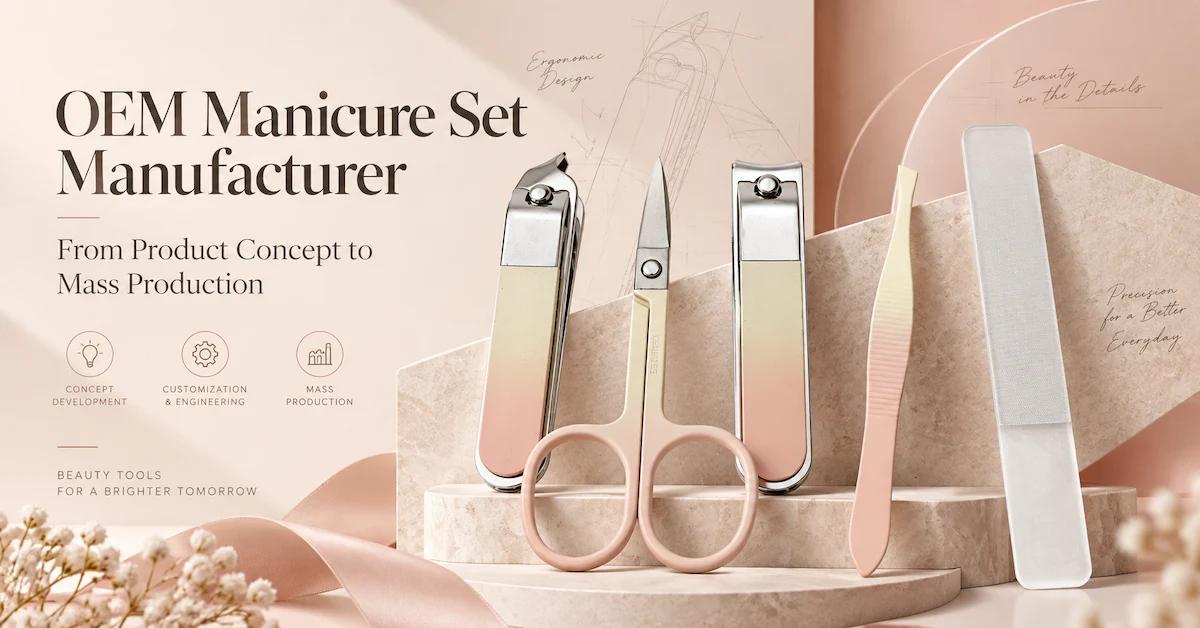
OEM Manicure Set Manufacturer: How Beauty Brands Move from Drawings to Approved Mass Production
- OEM & Private Label
- Nail Care Tools Guide