

A reliable manicure pedicure set manufacturer should help a B2B buyer build a kit that works for both hands and feet without pretending they are the same grooming task. The manufacturer must identify which tools belong in the assortment, how each working end should perform, whether a file is intended for nails or rough foot skin, how the parts will be cleaned or replaced, and how the finished set will be inspected, packaged, and repeated. A long tool list or a low sample quotation does not answer those questions.
For a beauty brand, retail chain, importer, salon distributor, or spa supplier, the practical decision is to choose the kit around the end user and the environment. A home manicure and pedicure set may prioritize accessible nail clippers, a nail file, a gentle foot-care accessory, and tidy storage. A salon supply program must consider the actual treatment workflow, which implements are reusable, which are single-use under the rules that apply, and how tools move between cleaning, service, and storage. A gift-oriented kit may prioritize coordinated presentation but still needs credible function.
The simplest buying principle is this: approve the manicure tools, pedicure tools, sanitation or care instructions, and the complete package as separate but connected specifications. Then combine them into one approved master kit. This guide explains how to do that with the OLIMOR manicure set range, its foot file category, and related nail-care tools as product references. Product-specific materials, branding methods, minimum quantities, certifications, and lead times must be confirmed for the selected configuration.
What Does a Manicure Pedicure Set Manufacturer Actually Supply?
A manicure and pedicure set is sold as one retail product, yet it may bring together several production disciplines. A nail clipper involves cutting-edge alignment, lever movement, and assembly. A tweezer depends on tip contact and tension. A nipper requires appropriate jaw geometry and a stable joint. A foot file adds a different performance dimension: abrasive-surface design, grip, edges, cleaning requirements, and contact with skin. The case or packaging introduces retention, protection, accessibility, and product-identification requirements.
A capable supplier therefore has to do more than offer finished metal tools. It should explain which components are existing models, which can be adapted, who makes or sources each part, and how the parts become a reproducible finished kit. That includes the bill of materials (BOM), sample approval, tool-by-tool testing, loading order, inspection, carton configuration, and repeat-order controls.
The same manufacturer may offer wholesale, private label, ODM, or OEM cooperation. Those descriptions reflect different development scopes, not different grades of quality. A standard set can be well controlled; a bespoke set can fail if its requirements remain vague. Buyers should evaluate documentation and product evidence, not simply the words used in a supplier brochure.
OLIMOR BEAUTY presents itself as a manufacturer and development partner for professional beauty tools, with product selection, OEM support, and checks against approved samples described on its About Us page. Those are company-level statements. They do not establish that every pedicure component can be disinfected, that every SKU has identical material, or that any fixed MOQ applies across the range.
The Difference Between Manicure Tools and Pedicure Tools
Manicure usually centers on the hands and fingernails: trimming, shaping, suitable cuticle care, and routine grooming. Pedicure concerns toenails and may also include the careful smoothing of rough or dry foot skin, depending on the product and setting. A buyer should not assume that a tool suitable for a thin fingernail, delicate working area, or brief home session automatically suits a thicker toenail or the sole of the foot.
That difference should influence the tool combination. A fingernail clipper and a toenail clipper may differ in size, opening, geometry, and leverage, depending on the selected models. A nail file refines the nail edge; a foot file is intended for a different surface and uses different textures and handling. Cuticle tools require particular care near living skin and should not be presented as an invitation to aggressively remove tissue.
For a manufacturer, those are not simply marketing distinctions. They affect sample tests, tool labeling, instructions, packaging, and the BOM. A set described as an all-in-one manicure pedicure kit should actually support the advertised hand and foot routines. If the assortment contains only ordinary nail clippers and a nail file, the buyer should question whether broad pedicure claims are justified.
A supplier that recognizes these differences is more useful to a serious purchaser than one that offers the largest number of shiny accessories. It may recommend one well-chosen foot file and fewer redundant precision tools, rather than inflating piece count for a package headline.
Choose the Kit by Application: Home, Retail, Spa, or Salon
There is no universal ideal manicure and pedicure kit. The assortment should follow how the tools will be used, by whom, and under what cleaning and storage conditions. The following is a decision framework for buyers rather than a list of OLIMOR's guaranteed preassembled SKUs.
| Buyer or use environment | Primary product goal | Tool choices to consider | Main sourcing risk |
|---|---|---|---|
| Home nail-care brand | Convenient hand and foot grooming | Nail clippers, nail file, selected cuticle tool, suitable foot file | Excessive abrasion, confusing instructions, loose tools |
| Beauty retailer / pharmacy | Clear product proposition and attractive shelf pack | Familiar core tools in a coherent case | Wrong piece-count claim, weak packaging, uncertain material claims |
| E-commerce / DTC brand | Product that photographs and ships consistently | Distinctive essentials with controlled finish and protective insert | Scratches, returns, reviews about inaccurate contents |
| Spa retail counter | Take-home care that complements services | Home-appropriate tools and packaging with clear limitations | Professional-looking claims that exceed actual intended use |
| Salon supply distributor | Suitable tools for an organized professional workflow | Task-specific nail tools plus hygienically appropriate foot-care options | Reuse and disinfection assumptions, replacement planning |
| Hotel / travel / gift program | Compact storage and recognizable utility | Essential tools, protective pouch or case | Oversized case, unnecessary pieces, travel restriction assumptions |
The same tool can need a different sourcing decision in different channels. A home user may keep a personal file in a case. A salon may need to decide whether its file or buffer is single-use, cleanable, or subject to a local regulatory restriction. An item that is attractive and acceptable for personal use may be inappropriate for repeated services between clients.
Ask suppliers to recommend configurations only after they know your sales market, sales channel, user profile, intended services, and labeling obligations. This prevents costly mismatches between a retail kit and a professional tool package.
Build a Useful Tool Assortment: Essential, Supporting, and Optional
Start by listing tasks, not counting pieces. A quality set should let the customer understand why every tool belongs there. Use the three-level structure below to keep the assortment useful and the cost manageable.
Essential tools for hands and nails
An everyday set may need a nail clipper and a file appropriate for nail shaping. A more complete program might include a carefully chosen cuticle pusher or another grooming accessory. The exact combination depends on how the brand describes its routine. Do not add sharp or specialized tools solely because they make the set look professional.
Essential tools for the pedicure promise
If foot care is central to the product, discuss the intended foot-file type and the target user before choosing the surface. A nano-glass style, an abrasive rasp, or a double-sided file represents a different product proposition; these should not be swapped without confirmation. A toenail-care component may also be relevant, but it should be evaluated independently for the specific user and task.
Supporting and optional accessories
Tweezers, small scissors, spare clippers, brushes, cases, and other grooming tools can be helpful when they extend the advertised routine. Optional accessories should be justified by the buyer's market. A gift set may accommodate additional presentation-oriented pieces; a travel set may benefit from fewer parts and simpler storage.
Where the budget is tight, remove low-value duplication before reducing core quality. A set with fewer correctly specified tools, safe storage, and clear instructions can be easier to sell and reorder than a complicated case with many unrelated accessories.
Foot Files Deserve Their Own Supplier Qualification
Model-specific options and feasibility confirmed after inquiry
Foot-care files are a major reason this topic should not be treated as a duplicate of a manicure-only manufacturer guide. Different foot-file constructions can have visibly different working surfaces, edge behavior, handling, and maintenance expectations. A supplier should not sell all of them as equivalent simply because they are listed under “foot care.”
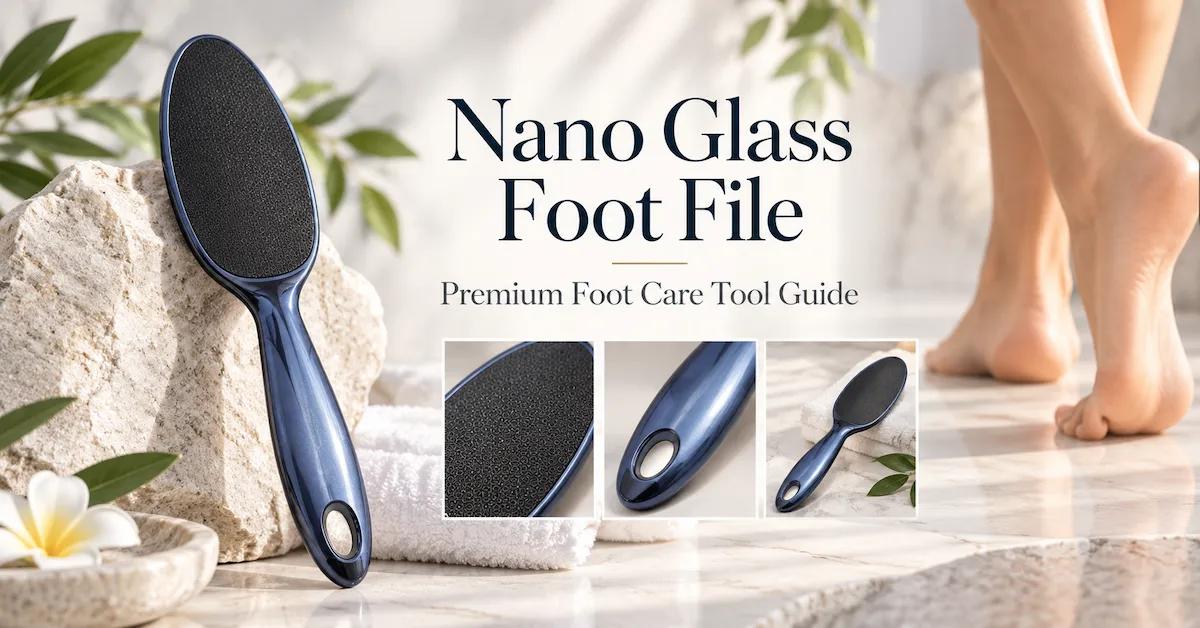
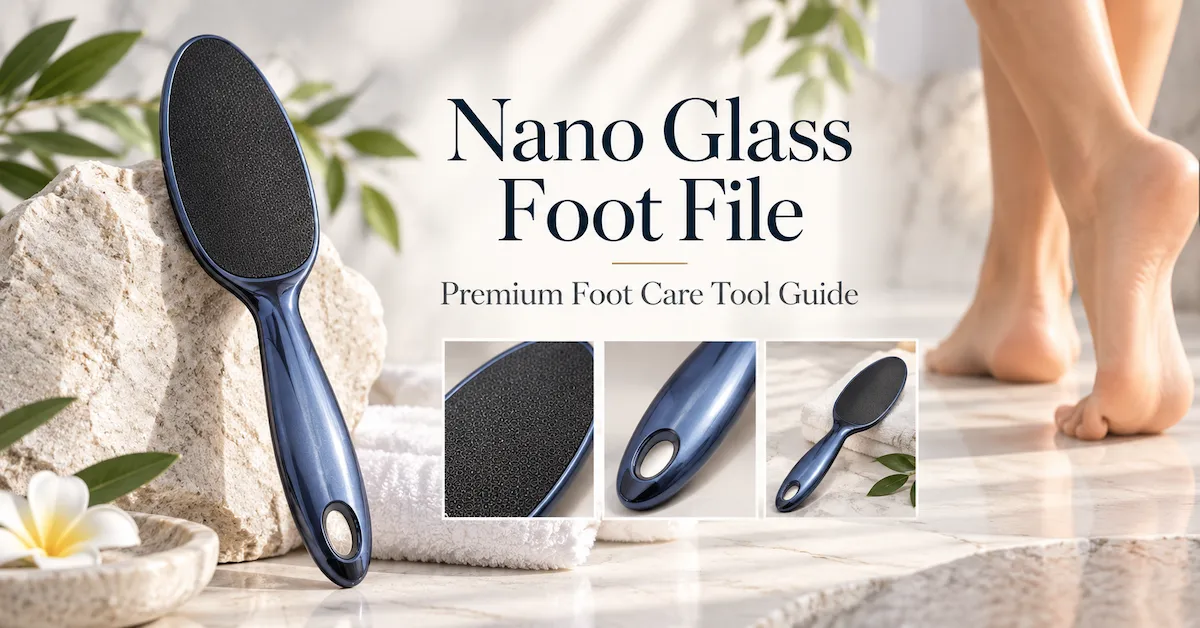
OLIMOR currently lists nano glass foot files, double-sided manual foot files, and rasp-style products. These are real catalog references, not a promise that all three formats are interchangeable, approved for professional disinfection, or available in every custom set.
Buyers should inspect a foot file for surface uniformity, unwanted sharp edges, grip, material construction, and the kind of contact the product is intended to make. The goal for ordinary personal care should be controlled smoothing of appropriate dry or rough skin, not aggressive removal of living tissue. A home grooming product should not be positioned as a treatment for wounds, infections, diabetes-related complications, or other medical conditions.
Special caution is warranted around scraper blades, skin knives, and aggressive rasp designs. Their availability in a catalog is not evidence that they are appropriate for untrained home users or lawful in every professional setting. Ask the supplier for the intended user, care instructions, and market suitability. If the proposed tool is difficult to explain safely to the intended customer, consider a gentler format or exclude it.
A practical foot-file comparison table
| Type under consideration | What to evaluate on a sample | Where it may fit | What not to assume |
|---|---|---|---|
| Nano-glass-style foot file | Working-surface consistency, edge finish, grip and cleaning guidance | Personal foot-care retail, selected spa retail programs | Universal reusability or compatibility with every disinfectant |
| Double-sided foot file | Differences between working surfaces, handling, wear and labeling | Buyers wanting two distinct surface options | That both sides serve the same purpose or need the same use instructions |
| Metal or grater-style rasp | Abrasive openings, unintended sharp points, hand protection and user competence | Carefully defined pedicure products where appropriate | That an aggressive tool is suitable for routine home skin care |
| Disposable abrasive component | Surface specification, replacement cost, single-use instructions | Service settings where local rules require disposal | That reusable-looking construction permits cross-client use |
For RFQs, ask the factory to label each file with its intended contact surface, cleaning status, replacement approach, and cosmetic reference. This information is part of the finished SKU; it should not be added after mass production by a copywriter unfamiliar with the tool.
Cleaning, Disinfection, and Single-Use Rules Are Product-Design Questions
Salon buyers sometimes ask whether a manicure and pedicure set is “sterilizable.” That is not a question a supplier should answer with a blanket yes. The answer depends on the specific tool material and construction, the intended process, the manufacturer's validated instructions, the disinfectant or sterilization method, and the rules of the place where services are performed.
In the United States, requirements vary by jurisdiction. As an example, Nevada's cosmetology regulations distinguish nonporous instruments that must be cleaned and disinfected from porous and other single-use items that must be discarded. Guidance from the U.S. Environmental Protection Agency also emphasizes following the label directions for disinfectants used with salon foot-spa basins. Those examples show why material type, cleanability, and local rules must be checked before a supplier markets a kit for repeated client services.
For professional purchasing, ask the factory which parts are intended for multiple uses and whether appropriate cleaning and disinfection instructions can be supported. Separate that from consumables or tools that cannot be effectively cleaned under applicable rules. A case supplied for transport or personal storage is not automatically an approved container for disinfected salon implements.
Buyers should avoid publishing unsupported claims such as “autoclavable,” “hospital-grade,” “sterile,” “medical-grade,” “antibacterial,” or “safe for every salon” merely because a tool is made from metal or glass. If such claims are commercially necessary, obtain relevant evidence for the exact product and intended process. Where the evidence does not exist, use accurate, narrower product language.
For home-use sets, provide appropriate care and drying instructions and keep used or soiled tools from damaging the other components. For salon-use programs, work with local licensing and infection-control requirements to determine storage, cleaning, disinfection, disposal and documentation practices. The manufacturer can supply product information, but the professional operator remains responsible for applying the rules that govern its services.
Create a Complete BOM for the Manicure and Pedicure Functions
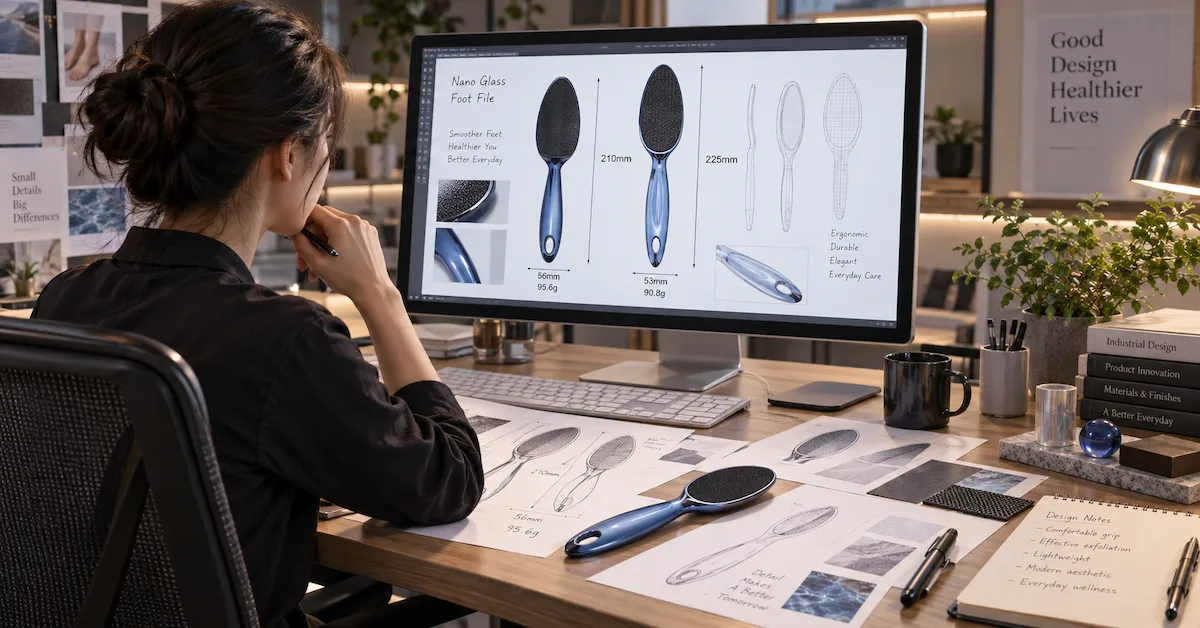
A bill of materials is the contract between an attractive kit concept and what the factory must actually supply. For a dual-purpose set, it must make the hand-care and foot-care functions visible, not simply list “beauty tools × 10.” One manufacturer may interpret “foot file” as a small abrasive accessory while another quotes a larger glass-style file; their prices, packing volume, customer use, and product claims will differ.
The template below is illustrative. It is a proposed buyer checklist, not a statement about the contents of an existing OLIMOR kit.
| BOM element | Required specification fields | Production / inspection concern |
|---|---|---|
| Fingernail clipper | Exact model, size, material, finish, lever type | Edge meeting, clipping action, assembly |
| Toenail-care tool if included | Intended nail type, jaw shape, dimensions, leverage | Suitability for user, cutting behavior, exposed edges |
| Nail file | Working surface, dimensions, grit or texture where applicable | Surface uniformity, nail-edge performance |
| Cuticle-care tool | Working-end geometry, length, handle, finish | Smoothness, control, correct labeling |
| Foot file | Substrate, working face, handle, edges, use and care instructions | Abrasive consistency, cleanliness, handling |
| Other grooming tool | Model, function, amount and applicable finish | Correct tool identity and useful function |
| Case / storage | Materials, outer dimensions, closure, internal positioning | Fit, rubbing, tool access, closure |
| Protective insert | Retention style, compartment allocation | Prevents tool-to-tool damage or movement |
| Retail pack | Dieline, printed statements, barcode, languages | Accurate product claims and SKU identity |
| Master carton | Quantity, dimensions, weight and marking | Reorder and shipment verification |
Add a version number and physical approval reference for each item. If a foot file changes material or working-surface construction, do not approve the substitution solely because it still fits the case. The changes may affect cleaning information, use instructions, package weight, claims, and consumer expectations.
In a strong sourcing process, the BOM supports quotation comparison, tool-sample approval, kit assembly, final QC and repeat ordering. The next shipment should reference the approved configuration rather than an informal message asking for “the same manicure pedicure set as last time.”
Essential Technical Checks for Nail Clippers, Nippers, and Files
No amount of decorative packaging can solve an unreliable working end. Each component should have inspection points that correspond to the task it performs. The exact tolerance and test method depend on the approved model; the following are topics to clarify, not invented values.
Nail clippers and toenail-care cutters
Check cutting-edge contact, alignment across the intended cutting width, lever movement, joint stability, hand comfort and smooth external surfaces. A product that looks sharp in a photograph may cut poorly if the edges do not meet correctly. Ask the manufacturer how sample cutting performance will be demonstrated and what reference production inspectors will use.
If the proposed set includes different clippers for fingernails and toenails, document what makes their roles distinct. Do not claim a particular product is appropriate for difficult nails, medical conditions, or specialist treatment without product-specific evidence and suitable guidance.
Nippers and detailed cuticle tools
For cuticle nippers, inspect jaw relationship, spring movement, handle control, joint stability and edge finish. Working near skin requires care, and a retail tool should not be described in ways that encourage aggressive trimming or treatment of damaged areas. For cuticle pushers or cleaners, review the geometry, smoothness, grip and maintenance requirements of the working end.
Nail files versus foot files
A nail file should be evaluated for consistency of its nail-shaping surface and how the edge of the tool is finished. A foot file should be inspected for the texture, shape and condition of the skin-contact working area. These should not share one vague “file quality” inspection, because they serve different purposes and may require different handling or care information.
Case, packaging and finish
Look for burrs, scratches, stains, coating variation, poor logo reproduction, pressure on moving parts and inserts that rub against abrasive or polished surfaces. A file should not be allowed to damage a neighboring clipper during shipment. Finished appearance and tool operation are separate approval subjects.
A well-written specification gives the supplier sufficient detail to establish an actual test method and acceptance criteria. It does not merely demand “sharp tools,” “premium grade,” or “strict QC.”
Why Case Engineering Matters More for a Hand-and-Foot Set
A mixed manicure and pedicure kit can contain tools with sharply different sizes, textures, and storage needs. A small nail file might sit comfortably inside an elastic loop, while a larger foot file may require a dedicated pocket, sleeve or separate compartment. Forcing both into one standard case is often a false economy.
Begin with the actual dimensions and thickness of the approved components. Lay them out in an arrangement that allows ordinary use and re-storage. Check the case in the open and closed positions, with its fullest intended assortment loaded. Test whether metal pieces touch one another when the case is handled or turned, whether a rough abrasive face contacts a polished tool, and whether the closure puts excessive pressure on the contents.
For home-use programs, the case can support organized storage, but users should be able to distinguish items intended for hands from those used on feet. A simple internal division, icon, or instruction insert may be more useful than elaborate decoration. For professional-use supplies, the buyer may decide that tools requiring different cleaning or replacement workflows should not share an ordinary personal-grooming pouch at all.
A manufacturer's useful response should include a loaded-case sample, a layout drawing or photograph, and a revised case specification if the tool lineup changes. If a longer foot file or stronger toenail clipper is added, the supplier must check packaging fit again rather than assuming the original prototype remains valid.
The case also influences parcel size, shelf space and freight economics. A bulky gift box can contribute more to transport volume than the metal tools. Ask for packed-unit and carton measurements when comparing alternative structures, but never trade away safe retention merely to achieve a smaller shipping cube.
OEM, ODM, Private Label, or Standard Wholesale?
A manufacturer may use several cooperation models. Buyers should identify which part of the set they want to control before asking for a price.
Standard wholesale uses an available configuration with few changes. It can be appropriate for importers validating a category or retailers that prefer familiar, repeatable products. The key risks are specification clarity and actual product consistency.
Private label generally uses established products but adds approved branding, color or finish where available, set composition or packaging. A private-label hand-and-foot kit may use a standard nail-care core with a selected foot file and a branded gift box. That still requires sample and package approval; a new logo is not a waiver of function testing.
ODM begins with an existing supplier concept or platform that the buyer wants adapted. Changes might involve the tool assortment, decorative scheme, selected case, insert geometry or an accessory. Ask which options already exist and which require new sampling or development.
OEM becomes appropriate when the buyer brings controlled drawings, physical references, specific geometries or a new case concept. A manufacturer should review manufacturability, tooling, test methods, samples, and revision ownership before promising volume production. “OEM” should not be used as shorthand for every product with a printed logo.
If a brand wants a custom dual-purpose kit, it can reduce uncertainty by first evaluating existing models in OLIMOR's manicure set collection and foot-care range, then documenting which aspects genuinely need to change. This gives the supplier a practical basis for recommendations and quotation.
Quality Control for a Complete Manicure Pedicure Kit
The correct quality plan covers the individual tools and the finished kit. A clipper can pass function testing but be packed in the wrong position; a foot file can have an acceptable surface yet be shipped with incorrect cleaning claims; a set can be mechanically sound but missing an accessory. Each is a distinct failure.
A buyer should agree on controls at incoming parts, first-piece, in-process, component completion, kit assembly, finished-pack, and shipment stages, as appropriate to the project. The following table can become the starting point for a purchase-order inspection annex.
| QC area | Example acceptance question | Why the distinction matters |
|---|---|---|
| Nail clipper | Do the edges meet and does the lever work as approved? | Prevents partial cutting and inconsistent user feel |
| Nipper / cuticle tool | Are jaws, springs and working ends aligned and properly finished? | Checks different mechanisms from ordinary clippers |
| Nail file | Is the nail-shaping surface uniform and properly finished? | Separates nail-edge work from foot-skin filing |
| Foot file | Is the abrasive surface consistent and free of unacceptable sharp defects? | Controls skin-contact surface and handling |
| Material / finish | Does each component match its approved construction and appearance? | Prevents unsupported material claims or mixed finishes |
| Instructions / care information | Do claims match the exact tool and intended market? | Avoids inappropriate reuse or disinfection promises |
| Case / insert | Do tools fit without damaging one another? | Protects components between uses and during shipping |
| Assembly completeness | Are the correct components in the correct locations? | Prevents missing or substituted items |
| Packaging and carton | Do labels, barcode, packing list and SKU identity agree? | Reduces retail and importer errors |
AQL-indexed acceptance sampling may be considered where appropriate: ISO 2859-1:2026 addresses sampling procedures for inspection by attributes. It does not certify a manicure pedicure set, establish an automatic acceptable defect rate for your order, or replace product-specific criteria. If a buyer requests a sampling plan, agree in writing on which standard edition, inspection level, defect classes, sampling approach, and actions apply.
For professional or multiple-client settings, add a separate review of cleaning and reuse suitability. A tool's cosmetic condition does not prove that a material can withstand the intended cleaning or disinfection procedure. Confirm the manufacturer's relevant instructions and local legal requirements instead of inferring reuse status from the material's appearance.
Sample Approval: Five Gates Before Mass Production
A reliable development process reduces risk by approving different aspects in a logical order. Do not begin large-scale case printing while the tool list is still moving, and do not treat a beautiful presentation sample as proof that all components passed functional checks.
Gate 1 — Define two workflows and the kit promise
Approve who will use the kit, what it will do for hands, what it will do for feet, and which products are explicitly excluded. Confirm whether the set is for home resale, salon supply or a different application. Make the piece count and product claims consistent with this decision.
Gate 2 — Approve individual working tools
Evaluate representative nail clippers, nippers, files, pushers, and the selected foot file. Record material or construction information, appearance, functional reference, and any required care instructions. Where several variants are compared, do not combine approvals from unrelated samples without building a final controlled configuration.
Gate 3 — Validate case fit and product protection
Load the actual approved tools, close the case, handle it as a customer or warehouse would, and inspect for movement, pressure, exposed edges, scratches, and convenient access. Revise the case or insert if the different foot-care pieces do not fit safely.
Gate 4 — Approve decoration, instructions and retail packaging
Review the physical logo, finish, product photos, instructions, product contents, barcode, and any market-specific material or hygiene statements. Ensure the packaging does not claim professional disinfection suitability without supporting evidence.
Gate 5 — Release a complete packed master sample
Approve one final retail-ready reference with a BOM revision, case specification, finishing and artwork files, inspection criteria, packaging reference and authorized sign-off. Use that reference for production and reorders. If a subsequent component substitution changes functionality or cleaning status, repeat the affected checks before release.
This approach is practical for both simple private-label kits and complex OEM projects. The number of sample rounds will differ, but the buyer should always know what has been approved, what remains open, and what will be used to judge mass production.
What Determines Cost, MOQ, and Lead Time?
The price of a manicure pedicure set depends on more than the count of visible metal tools. The specific clipper and nipper mechanisms, foot-file material and working surface, case design, logo process, inserts, retail artwork, labeling requirements, inspection scope and order size all affect the quotation. A kit with one large abrasive accessory can have very different packaging and shipping costs from a compact manicure-only pouch.
Request a scope-aligned quotation. The quotation should show which components are standard and which are customized, what the case and retail pack include, and whether tooling or sample charges apply. A lower quote may exclude a foot file, a protective insert, a printed sleeve, or the inspections that matter for the target channel. Compare equivalent finished sellable units, not catalog descriptions that only sound similar.
MOQ may be established per model, component, surface finish, color, printed artwork, case design or completed SKU. A manufacturer may accept one quantity for an existing nail clipper but have a different threshold for a custom glass foot-file component or printed gift box. There is no verified universal MOQ for all OLIMOR manicure pedicure products. Request the actual requirement for your proposed BOM.
Lead time should be divided into product selection, samples, engineering or case changes where needed, decoration approval, materials, production, kit assembly, inspection, and shipping. One late foot-file component can prevent the full kit from being packed, even if the nail tools are ready. Ask which component sits on the project's critical path rather than assuming the entire schedule equals the manufacturing time of one clipper.
Finally, compare the landed cost per accepted sellable kit. That includes the relevant product and packing costs, freight and import charges according to your agreed terms, and any necessary inspection or rework. Do not treat an online displayed unit price as a wholesale quote or use illustrative cost numbers as if they were OLIMOR's commercial offer.
Compare Manufacturers Using Evidence, Not Marketing Claims
A buyer may be attracted to claims such as “professional manufacturer,” “strict quality control,” or “fully customizable.” Those phrases only become meaningful when the supplier shows how they apply to the proposed set. The best qualification questions ask for a working sample, a controlled document or an actual process decision.
Use a practical scoring framework, with weights adjusted for your channel:
| Evaluation dimension | Illustrative weight | Evidence to request |
|---|---|---|
| Fit for the hand-and-foot routine | 15% | Tool list mapped to manicure and pedicure tasks |
| Function of nail-care components | 15% | Clipper, nipper, file and cuticle-tool samples |
| Foot-file suitability and guidance | 15% | Actual working surface and intended-use information |
| Cleaning / replacement clarity | 15% | Component-specific care or professional-use documentation |
| Case and packaging quality | 10% | Loaded-case sample and packing test |
| Assembly and quality process | 15% | BOM, first-piece and final completeness checks |
| Reorder and communication control | 10% | Version records, substitution policy, review contacts |
| Commercial terms | 5% | Comparable quote, MOQ and milestone plan |
These weights are a proposed buyer tool, not an audited ranking of suppliers. A gift brand might give packaging greater weight. A salon distributor may increase the weight placed on cleaning or replacement suitability, user control, and ongoing supply of individual tools.
Ask whether the supplier controls or coordinates metal forming, grinding, finishing, assembly and packaging relevant to the exact SKU. If production steps are outsourced, ask who approves incoming components and who is accountable for failures. A factory tour can add context, but it does not replace a signed-off component list, usable functional samples and a concrete quality plan.
A particularly informative question is: “What happens when you can no longer obtain the exact foot file or nipper approved for our first order?” A credible response describes notification, replacement proposals, sample testing, and buyer approval—not quiet substitution.
Why Repeat-Order Control Is Especially Important for Mixed Kits
A mixed kit has more opportunities for drift than a single nail clipper. The metal finish may change, a file surface may be replaced, a case lining may become thinner, a printed insert may use an outdated claim, or a small tool may be omitted during loading. Each individual change can look minor, yet the finished retail product may no longer match photographs, instructions or customer expectations.
Keep a master file for each SKU containing the approved BOM, product photos, tool samples, foot-file type, cosmetic references, logo artwork, care instructions, loaded-case layout, printed packaging, carton data, and test requirements. Link customer complaints and corrective actions to the relevant production revision, not simply to the product name.
When a manufacturer proposes a substitution, evaluate function, material, surface, user guidance, fit, finish and cost. Do not approve it only because the proposed replacement has the same general category name. A different foot-file working surface may require a different user statement; a new clipper dimension may require a revised insert. Those related decisions belong in a simple engineering or commercial change record.
A pilot or trial order can test the whole process: samples, factory communication, assembly completeness, carton identity, transport handling and customer-facing presentation. Use results from the first shipment to improve the next order. The purpose of the pilot is not merely to negotiate a smaller quantity; it is to reduce uncertainty before committing to large repeat orders.
OLIMOR Product References for Manicure and Pedicure Set Buyers
Model-specific options and feasibility confirmed after inquiry
OLIMOR currently lists separate categories for Manicure Sets, Foot Files, Nail Care Tools, Nail Clippers, and Nippers. That makes it possible for a buyer to discuss hand and foot care in a coordinated product brief, rather than assuming a single catalog set already contains every desired accessory.
The Ultimate Pedicure Kit product reference is useful for discussing a pedicure-oriented assortment. Its current product page mentions nail nippers, a nail file, cuticle tools and nail clippers. Treat these as the published product direction; request the exact current BOM and physical sample before quoting a fixed retail piece count or material claim.
For a foot-care-specific option, the Nano Glass Foot File and Double-Sided Nano Glass Manual Foot File help illustrate different abrasive product formats. A manufacturer should confirm their actual surface construction, intended use, cleaning information, possible branding methods and suitability for the proposed kit.
For compact nail-care presentation, the Travel Manicure Kit provides a separate reference for how smaller tools can be organized in a case. It should not be presented as already including a large foot file without current model-specific confirmation. Buyers interested in an expanded set should ask how adding a foot-care component would change the case, labeling, quotation and inspection scope.
These product references are particularly valuable during the first sample conversation. A buyer can point to a suitable nail-care format, select a foot-care product direction, describe a preferred case, and ask the manufacturer to distinguish available combinations from designs that need development. The final assembled product, not the links themselves, becomes the release reference.
A Realistic Customization Plan for Three Buyer Scenarios
The following are hypothetical buyer scenarios, not claimed OLIMOR customer case studies or measured sales results. They show how to turn one broad keyword into different product specifications.
Scenario A: Home-care retail brand
The brand sells to people who want convenient routine nail grooming and modest rough-skin smoothing. It might start with an approved clipper, nail file, simple cuticle-care accessory and a carefully selected foot file. A compact case or separate protective sleeve can help keep the working surfaces apart. The product copy should clearly describe what each tool is for and avoid medical or aggressive skin-removal language.
Scenario B: Salon supply distributor
The buyer supplies nail salons and spas rather than one-time retail consumers. It should define the actual service menu and determine which tools can be used repeatedly under the destination's rules, which need approved cleaning and disinfection instructions, and which must be single-use or regularly replaced. A modular supply arrangement—reusable core tools plus separately controlled consumables—may make more sense than a consumer gift pouch. The manufacturer must provide credible component-level information rather than a broad “salon-safe” claim.
Scenario C: Gift-oriented beauty brand
The buyer wants an attractive hand-and-foot care present. Coordinated color, case quality and unboxing matter, but the assortment still needs credible function. A decorative coating that looks inconsistent between the nail tools and foot file may undermine the premium impression. The brand should approve a fully loaded case, physical finish references, printed packaging, tool protection and repeat-order artwork versions before production.
These different briefs illustrate why a manufacturer should ask who the end user is before recommending the same catalog set to everyone.
What to Send in a Manicure Pedicure Set RFQ
Model-specific options and feasibility confirmed after inquiry
A useful RFQ gives the manufacturer enough context to recommend a feasible assortment and identify unresolved points. Send the following information in one file or organized message rather than a series of disconnected screenshots:
- Business model and channel: beauty brand, importer, retailer, e-commerce seller, salon distributor, spa retail or promotional buyer.
- Destination market and user: home use or professional service, intended country, languages and applicable retail requirements.
- Hand-care tasks: intended trimming, filing and related nail-care functions, with preferred tool types.
- Foot-care tasks: nail care versus rough-skin filing, expected user experience and preferred foot-file format.
- Excluded uses and claims: anything the product must not suggest, especially medical claims or unverified professional sanitation suitability.
- Reference products: existing OLIMOR product links, photographs, competitor samples or controlled drawings where available.
- Component requirements: important sizes, materials, finishes, tool count and the degree of substitution the buyer would accept.
- Case and packaging: approximate dimensions, compartment needs, retail format, barcode, logo artwork and protective concerns.
- Quality and care information: critical function checks, file working-surface expectations, cleaning or replacement questions and inspection documentation.
- Quantity by variant: trial order, expected replenishment, colors and artwork versions.
- Commercial terms: delivery market, proposed shipment term, launch milestones and quotation breakdown requirements.
- Approvals: who will review functional samples, hygiene/care statements, artwork, the complete kit and pre-production units.
A focused first message might read: “We are developing a private-label manicure and pedicure set for retail in [market]. Our customer needs basic fingernail trimming and shaping plus gentle foot-care use. Please recommend an existing manicure set platform and suitable foot-file options. We need a component-level material and use description, a packed sample, finish and logo options, case-fit review, MOQ by SKU, sample timeline, and a quotation that separates tools from packaging. Please also advise which cleaning or replacement statements can be supported by product documentation.”
This gives the supplier a much stronger foundation than “Please quote a professional manicure pedicure set with the lowest price.” For an actual project, send the requirements to OLIMOR with reference images and target order quantities so the team can review feasibility and current product options.
Frequently Asked Questions About Manicure Pedicure Set Manufacturing
1. What is a manicure pedicure set manufacturer?
A manicure pedicure set manufacturer develops or supplies coordinated hand-and-foot grooming products for brands, retailers, importers, and distributors. Depending on the business and project, it may provide existing sets, private-label branding, OEM/ODM adjustments, case development, sampling, assembly and inspection. A buyer should confirm which processes are controlled by the supplier and what the finished SKU includes rather than assuming every factory makes all components internally.
2. Which tools should be included in a manicure and pedicure set?
Choose tools by the target user's tasks. Possible categories include nail clippers, nail files, appropriate cuticle-care tools and a foot file if skin smoothing is part of the product promise. Some programs add tweezers or scissors. A home set, salon supply program and gift kit may need different combinations. Do not choose the highest advertised piece count without checking the function and value of each component.
3. Are nail files and foot files interchangeable?
No. Nail files are designed to shape the nail edge, while foot files are intended for specified contact with rough or dry foot skin. Their working surfaces, shapes, handling and maintenance guidance can differ substantially. The buyer should approve each category separately and ensure packaging and instructions identify the intended use.
4. Can nano-glass foot files be included in private-label kits?
They may be considered where the selected product, case and project requirements allow it. OLIMOR lists nano-glass-style foot file products, but compatibility with a specific manicure kit, available branding methods, material details, cleanability, MOQ and price must be confirmed for the chosen model. Review a physical sample before approval and do not assume all glass-style products have the same surface or care requirements.
5. Can the same manicure pedicure set be sold for salons and home users?
Not automatically. The tool assortment may overlap, but professional settings can have different rules for cleaning, disinfection, disposal, storage and product documentation. A personal grooming pouch should not be described as suitable for repeated client use merely because the tools are metal. Confirm the intended channel and local requirements, then evaluate each component and product claim accordingly.
6. Are all tools in a manicure pedicure kit made of stainless steel?
No universal material assumption is appropriate. Different components can use different metals, abrasive surfaces, polymers, textiles, coatings or case materials. Ask for material descriptions or specifications for the exact items being quoted. A broad “stainless steel set” marketing phrase should not be used to claim that the foot file, case, lining and every other component share one grade.
7. What quality checks matter most for pedicure tools?
For foot files, consider the working-surface consistency, edges, grip, intended-use description, packaging protection and appropriate care information. For toenail-care cutters, check the geometry and cutting action for the approved model. For the full kit, inspect component identity, correct quantity, case retention and labeling. The final acceptance methods should be documented for the actual SKU.
8. What is the MOQ for a custom manicure pedicure set?
There is no fixed MOQ that applies to every configuration. Minimums depend on the selected tools, foot-file format, case, surface finish, logo, printed packaging, sourcing of components and planned quantity. Ask the manufacturer whether minimums are assessed by finished SKU or by specific variants or components, and request the basis of the quoted quantity in writing.
9. How long does it take to develop a private-label manicure pedicure kit?
Timing depends on whether existing products can be combined, whether a case must change, the number of functional and packaging samples, decoration, component readiness, inspection, order volume and shipping. Request separate milestone dates and do not treat the production time of one tool as the complete kit's lead time.
10. How can buyers avoid defects and substitutions on repeat orders?
Maintain an approved component-level BOM, functional samples, foot-file reference, case layout, decoration artwork, instructions and finished packed master sample. Define the quality checks and require review of proposed material, working-surface, tool or packaging changes. Reference the approved product revision on each purchase order and confirm the factory's component availability before repeating a large quantity.
Conclusion
A dependable manicure pedicure set manufacturer should be able to explain the difference between nail-care tools and foot-care implements, approve each working surface, and build a complete kit that matches the buyer's channel and care requirements. Prioritize task-based tool selection, realistic hygiene claims, protective packaging, model-specific QC and repeat-order control over an inflated piece count. To evaluate a hand-and-foot care program, share your intended market, tool list, foot-file reference, branding needs and quantity with OLIMOR for a project-specific sourcing discussion.
Tag:
Related articles
- OEM & Private Label
- Nail Care Tools Guide
OEM Manicure Set Manufacturer: How Beauty Brands Move from Drawings to Approved Mass Production
- OEM & Private Label
- Nail Care Tools Guide
Custom Manicure Set Manufacturer: From Brand Brief to Retail-Ready OEM Production
- OEM & Private Label
- Nail Care Tools Guide