

Grooming Tools Wholesale: Assortment and QC Buyer Guide
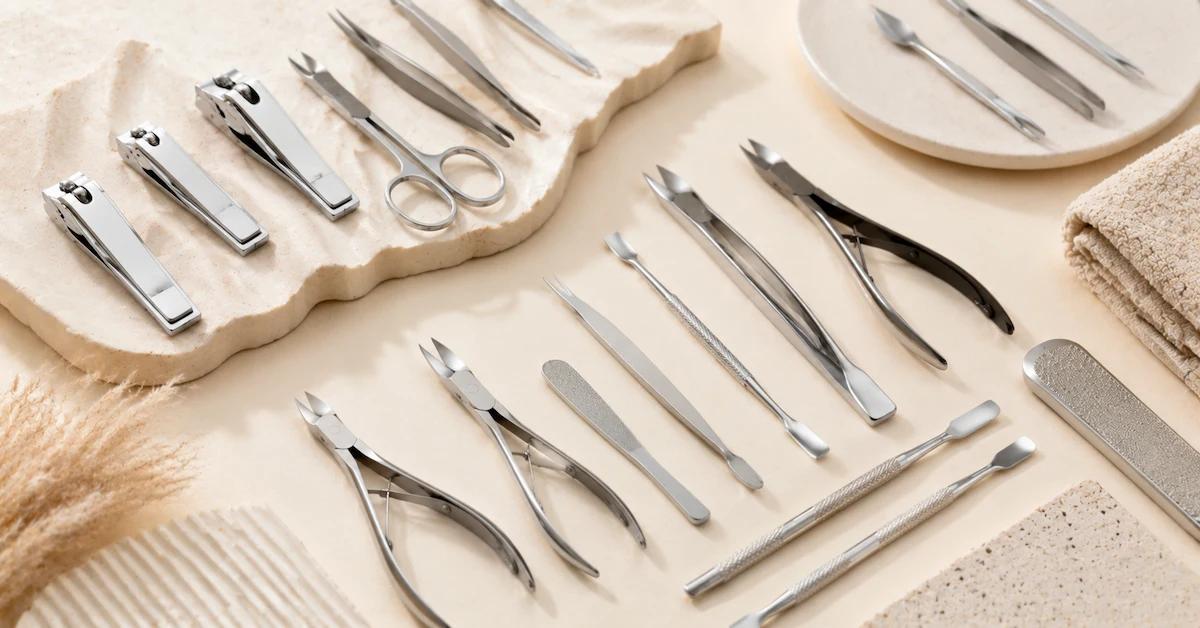
A grooming tools wholesale assortment should be built around customer tasks, sales channels and tool-specific approval, not the number of items in a catalogue. Give every SKU a distinct role, then compare the complete saleable configuration and its reorder controls.
Cutting, gripping, filing and spring-actuated tools cannot share one functional checklist. Use a common identity and packaging system across the range, but approve each working interface with a relevant sample method and retained reference.

Map Customer Tasks Before Selecting SKUs
List the grooming tasks and channels the assortment must support. A salon-supply line, brow retailer, travel program, gift range and training kit may overlap, but they do not need the same mix or pack architecture. Start with user needs rather than a supplier's longest product list.
| Channel | Assortment question | Control to retain |
|---|---|---|
| Salon or spa supply | Which tools support repeated professional workflows? | Task, handling and care record by SKU |
| Specialist brow or lash retail | Which tip, scissor or curler roles are genuinely different? | Working-geometry and audience reference |
| Travel or gift range | Which essential tools fit the pack without overlap? | Component list, case fit and pack proof |
| General retail | Can each SKU be understood, displayed and reordered? | Item code, barcode, instructions and unit pack |
| Distributor program | Can mixed products be identified through cartons and receiving? | SKU, case quantity and replenishment data |
Give Every SKU a Distinct Assortment Role
Classify each item as a core seller, specialist tool, kit component, trial SKU or replacement part. Keep two similar items only when the buyer can explain a different task, user, size, working geometry, price position or package.
Create an assortment matrix with model code, assigned task, user, dimensions, finish, pack, price position and reorder trigger. Mark which items can substitute for one another and which cannot. A replacement pad that looks similar but does not fit the approved curler is not interchangeable. A decorative finish may create a new inventory item without creating a new functional role.
Use the matrix to remove duplicated functions and expose gaps. A smaller range with clear roles is easier to sample, present, forecast and replenish than a broad mix of near-identical tools.
Apply QC by Working Interface
Use common checks for identity, visible finish, artwork, pack and carton data, then add a functional method for each product family. Review several samples from the quoted configuration and connect the result to the model code.
| Tool family | Product-specific checks | Evidence boundary |
|---|---|---|
| Clippers and scissors | Cutting contact, movement, pivot, tips and non-working edges | Do not infer sharpness life or suitability for every nail or hair type |
| Nippers | Jaw meeting, spring response, side movement and protective packing | Material and hardness require model-specific evidence |
| Tweezers | Tip meeting, symmetry, tension and the defined gripping task | One tip profile does not prove performance for every use |
| Files and abrasive tools | Surface consistency, attachment, perimeter and handle control | Do not claim wear life or sanitation compatibility without evidence |
| Eyelash curlers | Frame symmetry, pad fit, movement and contact pattern | Fit and replacement-pad compatibility are model-specific |
| Mixed kits | Component identity, case fit, retention, count and artwork | Approve tools and the complete packed set separately |
Design Packaging as Part of the Assortment
Packaging must protect working ends, preserve finished surfaces and make every SKU identifiable. A retail card, folding box, pouch and kit insert solve different commercial tasks. Approve the product in the actual pack, not only the flat artwork.
Record the unit-pack revision, barcode, label language, inner quantity, master-carton quantity and any permitted mixed-carton rule. For kits, confirm that components do not rub, shift or load a moving part. For individual tools, protect tips, edges and working surfaces through the intended distribution route.
Compare the Complete Saleable Configuration
Normalize quotations before comparing cost. Send the same model list, quantity by SKU, finish, logo, unit pack, case pack, destination, sample stages, inspection scope and requested documents to every candidate supplier.
Separate product, tooling, decoration, samples, inserts, labels, inspection, inner packs, master cartons and delivery assumptions. A lower unit price is not comparable when it excludes a required component or uses a different pack. Avoid invented landed-cost examples; use the current quotation, freight basis and destination charges for the actual project.
Separate Assortment Planning From Supplier Qualification
This page decides what belongs in the range. Supplier qualification is a separate decision that compares evidence, process control and change management across product families. Use the personal care tools supplier audit guide for that scorecard instead of repeating it here.
A complete manicure or pedicure set also needs a separate bill of materials, component approval and case-fit process. Use the wholesale manicure and pedicure set guide when several tools are sold as one packed unit.
Control Launch and Repeat Orders by SKU
Release every item with its model, sample, finish, artwork, pack and inspection revision. Require notice before a supplier changes a component, working geometry, material, finish, logo method, insert or carton. Review the effect and decide whether new sampling is needed.
At receiving, match purchase order, carton label, item code and pack revision before judging appearance. Track sales, returns and discrepancies by SKU and issue type. Set reorder triggers from actual sales, available stock, open orders and current supply timing rather than a fixed public lead-time claim.
Buyer FAQ
How large should a grooming tools wholesale assortment be?
Large enough to cover the defined customer tasks and price positions, but small enough that every SKU has a clear role, approval record and reorder path.
Can one QC checklist cover every grooming tool?
No. Identity and packaging controls can be shared, but cutting, gripping, filing, spring action and fit require different functional checks.
Should a buyer approve a kit and its tools separately?
Yes. Approve each working tool first, then inspect the complete packed set for identity, count, fit, retention, artwork and protection.
How should MOQ and lead time be handled?
Request current terms for the exact SKU mix, finish, packaging, quantity and destination. Keep project terms in the quotation instead of publishing an unverified fixed value.
Prepare the Mixed-Assortment Sourcing Brief
List the customer tasks, channels, SKU roles, quantities, finish direction, pack formats, destination, approval methods and evidence required. Then send the controlled grooming assortment brief to Olimor so confirmed options, assumptions and open project details can be separated in the response.
Tag:
Related articles
- Manicure & Nail Tools
- Retail & Wholesale Solutions
Travel Grooming Kits: Retail Buyer Evaluation Guide
- Manicure & Nail Tools
- Retail & Wholesale Solutions
Grooming Kits for Beauty Stores: Retail Positioning Guide
- Retail & Wholesale Solutions
- Beauty Tools Wholesale