

Buying bulk beauty tools sounds simple until you have to match them to actual use: salon retail, promotional kits, private-label e-commerce, travel bundles, or in-house grooming programs. A mixed kit can look attractive in a catalog and still miss the mark if the stainless steel finish feels flimsy, the case does not hold the tools securely, or the assortment is heavy on decorative pieces and light on practical ones. That is the real decision here. Not whether the set looks complete, but whether it supports the buyer’s channel, margin, and user expectations.
For sourcing teams, wholesale beauty tools are a category where presentation and function often sit side by side. A manicure and pedicure kit with eyebrow, eyelash, and facial-care accessories can sell well because it covers several routines in one portable package. But the same mixed format can also create quality questions. Which tools are essential? Which are value-add? Which parts are likely to generate complaints if the finish is inconsistent or the storage system feels cheap? Those are the questions that matter before placing a larger order.
What is typically inside a mixed grooming kit
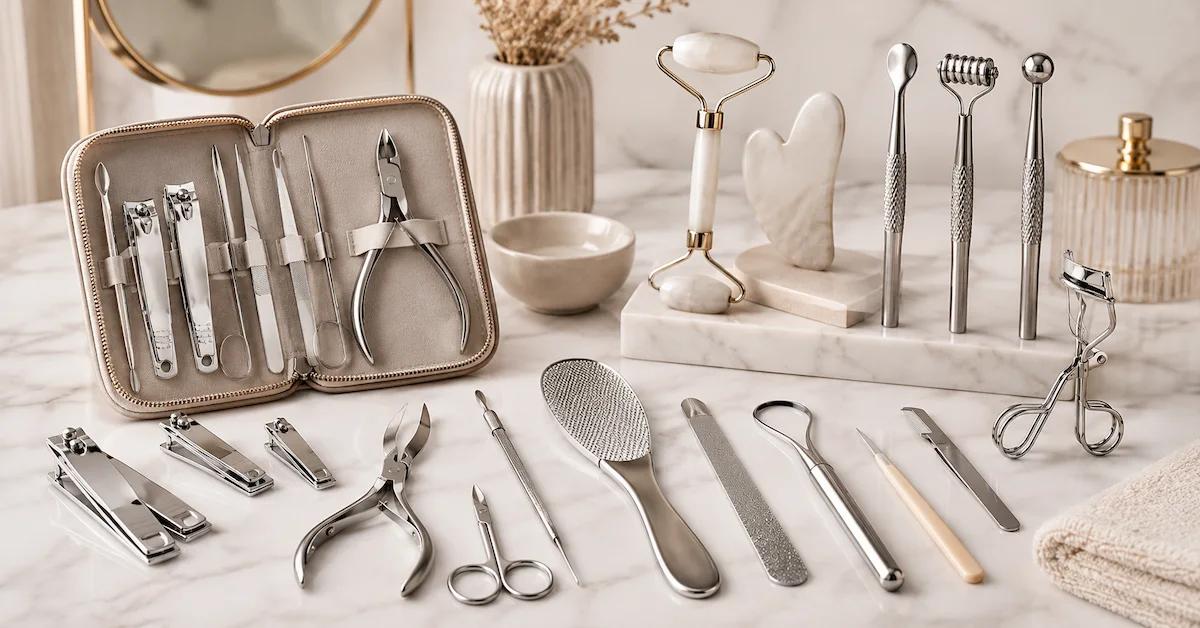
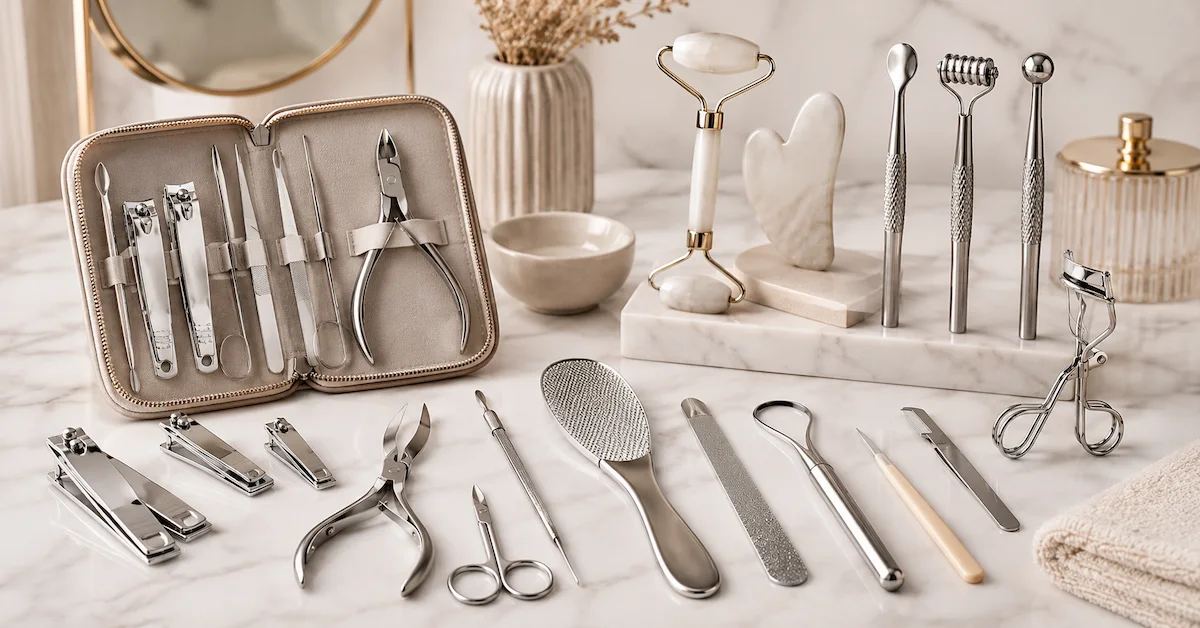
The product category here is a mixed beauty and grooming tool set centered on manicure and pedicure implements, with a few eyebrow, eyelash, and foot-care accessories added in. Based on the visible components, a buyer would expect items such as multiple metal nail clippers, cuticle pushers, tweezers, nail files, cuticle nippers, small scissors, an eyelash curler, a foot rasp or pumice-style file, a face or skin roller, and a pink Gua Sha-like facial massager.
That mix is commercially useful because it speaks to several user behaviors at once. Nail trimming and cuticle maintenance are routine. Eyebrow shaping and eyelash curling are frequent add-ons. Foot-care pieces address calluses and dead skin, which helps position the kit as more than a cosmetic set. Facial massage tools, even when they are secondary items, add a self-care angle that many retail buyers want for gifting or lifestyle assortments.
The case matters as much as the tools. In this product, the tools sit in fitted elastic slots inside a zippered carrying case, with separate display blocks visible as part of the presentation. That kind of organization helps with merchandising and portability. It also reduces the odds of small tools rattling around in transit, which is a practical issue buyers sometimes underestimate when comparing seemingly similar kits.
Materials and finishing: what to look for, and what to ask about
Most of the visible tools appear to be stainless steel with polished, brushed, and matte finishes. Some pieces also show plated rose-gold or pink-toned accents, while several handles look coated or plated in pastel pink, cream, and white. That combination is common in consumer-oriented grooming sets because it makes the kit feel giftable rather than clinical.
From a sourcing perspective, the finish tells you part of the story but not all of it. Polished surfaces look premium but can show fingerprints and small scratches. Matte finishes can hide wear better, though they may appear less “luxury” on a shelf. Plated color accents are attractive, but they also raise basic questions about scuff resistance and long-term appearance. If the product is intended for repeat handling at retail or inside a salon environment, appearance after shipping and shelf time should be discussed early.
The facial tools appear to be stone or resin-like material, but that is not confirmed, and it should not be assumed. For buyers, that uncertainty matters because stone-like accessories are often judged by feel, weight, and surface consistency. If your channel depends on a specific material story, you need that verified before building product copy or packaging claims around it.
Manufacturing basics buyers should understand
A set like this likely involves several common manufacturing steps for grooming instruments: metal stamping, grinding, sharpening, polishing, and assembly. Some parts may be plated or color-coated. That process chain is standard enough, but execution is what separates a dependable kit from a disappointing one.
For example, clippers and nippers need aligned jaws and clean cutting edges. Cuticle pushers and tweezers should feel balanced in the hand, not too springy or overly stiff. Scissors need smooth loop action and consistent closing. Files should have surfaces that perform predictably rather than feeling rough in an uncontrolled way. None of that is exotic, but all of it affects customer satisfaction.
A practical caution: mixed kits often contain one or two “hero” items and several accessory pieces. If the supplier only optimizes the hero items, the whole set can still underperform. Buyers should ask whether the less prominent tools were made on the same quality standard as the main manicure pieces. That question can reveal a lot about the real production priorities.
When a mixed kit is the right commercial choice
Bulk beauty tools work best when the buyer wants breadth, portability, and an easy gifting story. The shown kit has that advantage. It combines nail care, grooming, and light facial/self-care functions in one organized case, which makes it suitable for travel retail, promotional programs, online bundles, and starter kits.
If your business sells to consumers who prefer an all-in-one purchase, this format is easier to market than a single-purpose item. A customer who wanted only nail clippers may still appreciate the added tweezers, file, or foot-care tool. That extra utility can justify a stronger perceived value, even if not every piece is used weekly.
On the other hand, professional salon buyers may want more specialized instruments. A mixed kit is useful as a convenience item, but it may not replace higher-spec individual tools. That distinction should guide how you position the assortment.
How to evaluate wholesale beauty tools before ordering
When sourcing wholesale beauty tools, it helps to inspect the set from three angles: function, presentation, and consistency.
Function first. Check whether the clippers cut cleanly, tweezers align at the tips, and the file surfaces do what they are supposed to do without excessive roughness. Even in low-friction consumer goods, basic function is non-negotiable.
Presentation second. The case should close securely, the tools should sit neatly in their slots, and the colors should look deliberate rather than mismatched. Because this product includes pink and pastel accents, any finish inconsistency will be visible immediately.
Consistency third. Ask whether the supplier can maintain the same tool layout, finish, and case style across repeat orders. It sounds obvious, but this is where many private-label programs get frustrated. A buyer wants the same product arriving six months later, not a fresh surprise.
A buyer-facing warning
Do not assume that every polished metal grooming tool is equally suitable for the same market. Some customers care most about appearance, others about grip, and others about edge performance. If the kit is being sold as a premium lifestyle item, cosmetic finish matters more. If it is positioned as a practical grooming set, function and storage will matter more. The wrong emphasis can turn a decent product into a slow mover.
Common mistakes when sourcing bulk beauty tools
One common mistake is overvaluing quantity in the assortment. A larger tool count does not automatically mean a better kit. If the included pieces are redundant or decorative, the set may look full but feel weak in use.
Another mistake is ignoring the case. A zippered carrying case with fitted elastic slots adds real value because it supports storage and portability. If the case is poorly made, the set can feel like loose parts packaged together rather than a coherent product.
A third mistake is skipping clarification on the facial accessories. In this product, the roller and Gua Sha-like item are visually important, but their material is not confirmed. If your marketing depends on a stone-specific story, verify it rather than filling in the blanks.
Finally, some buyers treat plated or coated finishes as purely decorative. They are decorative, yes, but they also influence durability perceptions. A finish that chips or scratches quickly can make the whole kit look lower grade than the steel components actually are.
Practical buyer advice for private label and retail programs
If you are considering bulk beauty tools for your line, start with the channel. A gifting or lifestyle channel can support a more decorative presentation, such as pink-toned accents, mixed metal finishes, and a neat carry case. A more technical grooming channel may need simpler styling and stronger emphasis on tool performance.
Next, decide whether the kit is meant to be a full routine solution or a broad sampler. That choice affects how you describe it, how you package it, and which tools matter most. The visible assortment here leans toward a broad routine solution, which is useful but may not suit every buyer.
It also helps to ask for sample inspection focused on the small details: edge finish, hinge feel, slot retention, zipper smoothness, and whether the tools stay organized during movement. Those are small issues until they become returns.
FAQ buyers usually ask
Is this more of a salon tool kit or a consumer self-care set?
It reads more like a consumer-facing self-care and grooming set, though it can support light salon retail or promotional use.
Are the facial tools definitely stone?
Not confirmed. They appear stone-like or resin-like, but that should be verified before publication or purchase claims.
Why does the case matter so much?
Because organization sells. A secure zippered case with fitted slots improves portability, presentation, and perceived value.
What should buyers ask the supplier first?
Ask about material verification, finish consistency, tool alignment, and whether repeat orders will match the sample in layout and appearance.
Next step for sourcing teams
If you are comparing bulk beauty tools across suppliers, begin with a sample review rather than a spec sheet alone. Check the main manicure pieces, then the smaller add-ons, then the case and presentation. A mixed kit can be a strong commercial product, but only when the assortment is coherent and the execution is steady. For buyers, the smart move is not chasing the biggest bundle. It is choosing the set that will hold up in the channel you actually sell into.
Tag:
Related articles
- Beauty Tools Sourcing Guide
- OEM & Private Label
Private Label Grooming Kit Manufacturer: How Brands Build Custom Personal Care Sets
- Beauty Tools Sourcing Guide
- Lash & Brow Tools
Tweezers for Eyrow Grooming Supplier: B2B Buying Guide for Beauty Brands
- Beauty Tools Sourcing Guide
- OEM & Private Label