

Finding a wholesale beauty tools supplier is rarely just a matter of comparing a few catalog photos and chasing the lowest unit cost. For sourcing managers, salon buyers, private-label brands, and retail teams, the real question is whether the supplier can provide consistent grooming tools that look good, work cleanly, and fit the market you are trying to serve. That matters because beauty tools sit in a tricky category: they are small, usually metal, easy to underestimate, and unforgiving when the finish, edge quality, or hinge action is off.
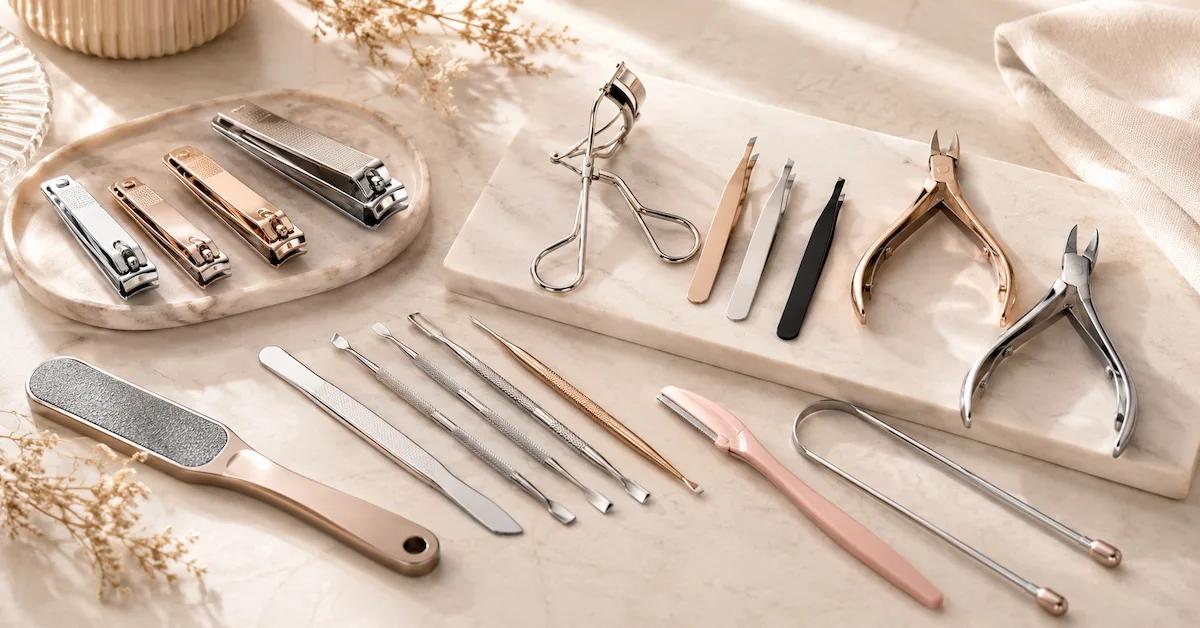
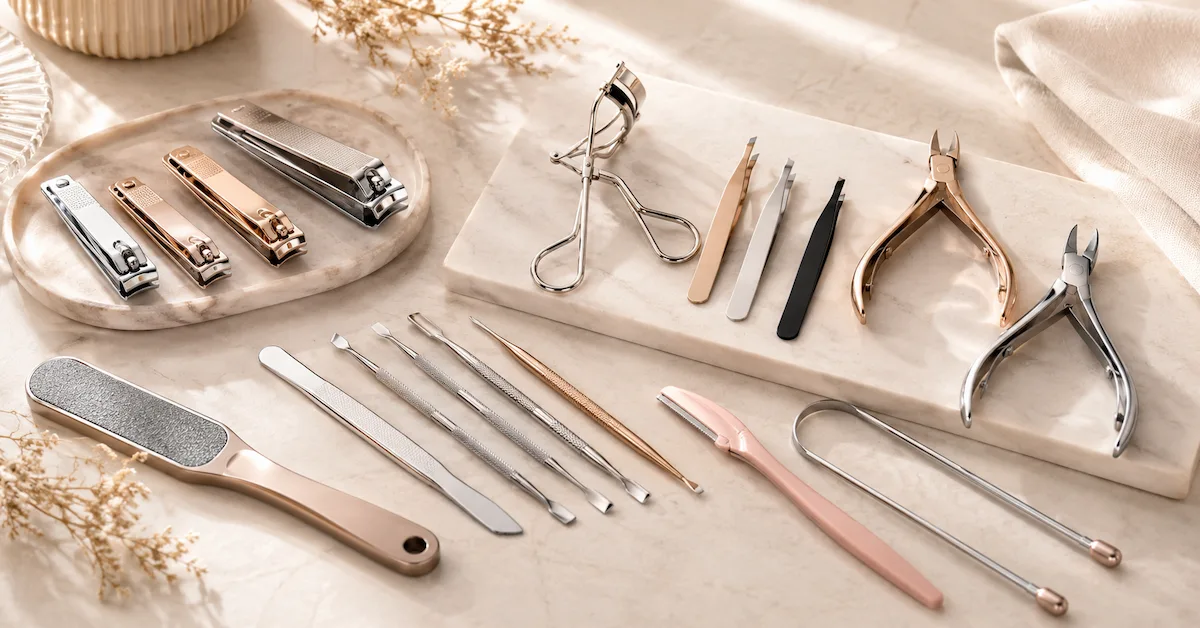
The assortment shown here points to a familiar wholesale mix: nail clippers in different sizes, tweezers with multiple tip styles, cuticle or nail nippers, an eyelash curler, a file or scraper-style grooming tool, and a double-loop facial or hair-removal tool. In other words, the kind of compact, reusable hand tools that move through salons, travel kits, pharmacy shelves, and e-commerce bundles. If you are buying wholesale beauty accessories, the decision is not only about variety. It is also about how the supplier handles metal forming, sharpening, surface finishing, and packaging consistency from batch to batch.
What the assortment tells you about the product category
One reason this category sells so well is that the products are practical and familiar. Nail clippers are obvious. Tweezers with pointed or angled tips are easy to explain. An eyelash curler has a specific beauty use but still reads as a standard grooming item. Put them together in one catalog grouping and you get a flexible retail offer that can be sold as a basic set, split into individual SKUs, or used to build promotional bundles.
The visible construction also tells a story. Most of these tools appear to be metal, likely stainless steel or plated steel, with finishes ranging from polished silver to rose-gold or gold-tone, matte black, and light pink coated handles. That is useful for buyers because finish variation can be the simplest way to create assortment depth without redesigning the tool itself. A supplier that understands this category will usually know how to support color variation, grip texture, and compact packaging without making the product feel cheap.
Quick-reference view: where the main tools fit
Nail clippers
Best for nail trimming and everyday grooming. Buyers should look closely at hinge action, cutting alignment, and how comfortable the body feels in hand.
Cuticle nippers
Used for cuticle trimming and detail work. These tools depend heavily on edge quality and consistent jaw closure. Small defects show up fast here.
Tweezers
Suitable for eyebrow shaping, stray hair removal, and fine-detail grooming. Tip style matters more than color here; angled, pointed, and slanted tips all serve different jobs.
Eyelash curler
More specialized, but still a strong retail item. Buyers should ask about spring action, pad replacement options if relevant, and how the frame is assembled.
Files, scrapers, and facial tools
These are often included in mixed beauty kits because they add perceived value and broaden use cases. They also need clear product labeling so consumers understand what each tool is for.
What a capable supplier should be able to handle
A true beauty tools wholesale supplier does more than collect products in a box. The category relies on a chain of basic but important manufacturing steps: metal forming, stamping, grinding or sharpening, polishing, plating or coating, and hinge assembly for clippers and nippers. Eyelash curlers add a spring-based assembly element. None of that is exotic, but each step can affect the buyer’s experience.
For example, polished surfaces can improve shelf appeal, but poor polishing can leave edge burrs or uneven shine. Matte coatings and colored handles can differentiate a line, yet they must still survive handling and packaging friction. Knurled or textured grips may improve control, which sounds minor until a user tries to trim a nail or pluck a brow with a slippery tool. Small details decide whether the product feels premium or merely decorative.
That is why sourcing teams should ask suppliers about process control in plain language: How are edges finished? How are hinges aligned? How is surface consistency checked across the batch? Those are practical questions, not technical theater.
Selection criteria that matter in wholesale buying
When comparing wholesale beauty accessories, it helps to separate visual appeal from functional requirements. A product can photograph well and still be awkward in use. Buyers often over-index on packaging and forget that end users care most about control, comfort, and repeatability.
Here are the points worth weighing before placing a larger order:
Tool mix: Does the supplier offer enough variety to support your channel, or are you buying a random assortment that only looks complete?
Finish options: Can you get silver, rose-gold, black, or pastel looks consistently, or do color differences drift from batch to batch?
Grip and geometry: Straight tweezers, angled tips, curved frames, and compact clipper bodies all serve different users. The best assortment reflects that, rather than repeating the same shape in different packaging.
Assembly quality: Hinged tools should open and close smoothly without wobble. Eyelash curlers need clean spring action and a frame that does not feel flimsy.
Retail readiness: If the supplier is meant to support shelf sales, the product should be packable, identifiable, and easy for the consumer to understand at a glance.
Common mistakes buyers make with these products
The first mistake is assuming all metal grooming tools are interchangeable. They are not. A tweezer that works for brow shaping may not be ideal for fine splinter removal, and a clipper that feels fine in hand may still produce poor cutting action if the edge alignment is off. The second mistake is asking for too many finishes before the core tool function has been approved. Bright plating or coating can hide a weak mechanism, at least in photos.
Another common issue is under-specifying the package. In beauty tools, presentation is not an afterthought. Mixed assortments can sell well, but only if the consumer can tell which tool does what. A plain assortment with no clear labeling can leave users guessing, and that is especially risky for facial or eyebrow tools.
Finally, some buyers focus on a single hero item and ignore the rest of the line. If your range includes clippers, tweezers, nippers, and curlers, the whole assortment should feel coherent. The products do not need to match exactly, but they should look like they belong in the same commercial family.
How to evaluate a wholesale beauty tools supplier before ordering
If you are shortlisting suppliers, use the sample stage to inspect more than just the front-facing finish. Open and close each hinged tool several times. Check whether the tweezer tips meet cleanly. Look at the handles under direct light for scratches, uneven coating, or rough grinding marks. These are small cues, but they reveal a lot about how the factory handles routine production.
It also helps to ask for clear product grouping. For mixed retail programs, you may want one supplier to support manicure tools, another to focus on brow and lash tools, or one partner to manage the complete assortment. There is no universal answer, but buyers should avoid fragmenting the line so much that packaging, finish, and naming all drift apart. That creates inventory headaches later.
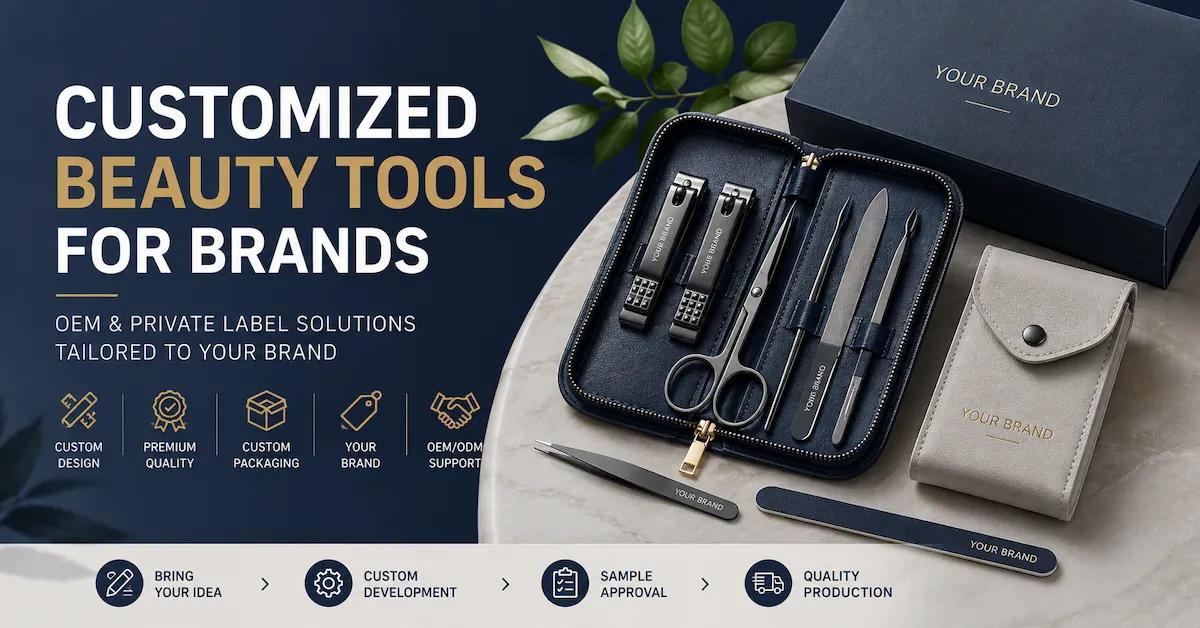
If you are sourcing for private label or resale, request plain details on materials, surface finish, and available color variations. Do not assume a rose-gold item uses the same coating method as a matte black item. The look may be similar on screen, but wear behavior can differ. If the supplier cannot explain those differences clearly, that is a sign to slow down.
Why these tools keep showing up in retail and salon channels
Beauty tools have staying power because they solve small problems that never really go away. Nails grow. Brows need shaping. Lashes are often curled for presentation. Unwanted hair appears at inconvenient times. These are everyday grooming tasks, which makes the category resilient and easy to merchandise. It also makes wholesale buying more strategic than it first appears.
Compact metal tools are especially attractive for travel kits and add-on retail because they take little space and offer a clear use case. A single clipped nail, a clean brow line, or a neat lash curl is easy for the end customer to understand. That clarity is valuable in a crowded marketplace where many beauty items depend on trend language rather than function.
Practical advice for sourcing teams and product managers
Before you place an order, decide whether you need a broad assortment or a narrow, highly consistent range. Broad assortments can help with merchandising and bundle creation, but they demand stronger control over labeling and presentation. Narrow ranges are easier to manage, yet they may not give retail buyers enough variety.
If the supplier can support multiple finishes, ask for those options to be grouped logically instead of scattered. A clean assortment might combine silver core tools with a limited set of accent finishes rather than mixing every color under the sun. That tends to look more deliberate on shelf. A little restraint helps, and it often makes the line feel more trustworthy.
Also, keep an eye on handling comfort. Beauty tools are small enough that customers notice every contour. A slightly better grip, a cleaner hinge, or a smoother edge can matter more than another decorative coating. That is easy to forget when reviewing product sheets, but it becomes obvious once the tools are in hand.
FAQ: short answers buyers usually need
Are all beauty tools in a wholesale assortment the same grade?
Not necessarily. Even within one assortment, some pieces may be better suited to retail gift sets, while others are more practical for daily grooming. Ask the supplier to clarify the intended use and presentation.
Can one supplier cover both manicure tools and brow tools?
Often yes, especially when the product range is built around metal handheld tools. The important part is whether the supplier can maintain consistent finishing and packaging across the different categories.
What matters more: appearance or function?
Function first. Appearance matters for retail, but a good-looking tweezer that misses the hair is still a problem. In this category, buyers should insist on both.
Next step for buyers
If you are building a grooming line, a salon assortment, or a retail bundle, start with the tools that define the category: nail clippers, tweezers, nippers, eyelash curlers, and a few utility items that broaden the set. Then compare suppliers on finish consistency, hinge quality, grip comfort, and how clearly they present the assortment. The right wholesale beauty tools supplier should make that process easier, not more confusing.
Ask for samples, review them in hand, and compare them under the kind of lighting your customers will actually use. That simple step catches more problems than a polished catalog ever will.
Tag:
Related articles
- Beauty Tools Sourcing Guide
- OEM & Private Label
Private Label Grooming Kit Manufacturer: How Brands Build Custom Personal Care Sets
- Beauty Tools Sourcing Guide
- Lash & Brow Tools
Tweezers for Eyrow Grooming Supplier: B2B Buying Guide for Beauty Brands
- Beauty Tools Sourcing Guide
- OEM & Private Label