

If you are evaluating a foot file manufacturer, you are not just comparing a hand tool with a smooth handle. You are deciding how the product will feel in use, how consistently it will remove rough skin, and whether it belongs in a spa kit, a salon backbar, or a retail personal-care line. A foot file looks simple on the surface, but buyers quickly discover that the details matter: the shape of the head, the grip, the way the filing face is finished, and whether the tool feels rigid enough to hold up through repeated use.
That matters because foot-care products are judged in seconds. A consumer will notice if the file slips in the hand, if the head feels too small, or if the filing surface seems weak or uneven. For sourcing teams, the decision is also commercial: do you want a basic private-label item, a premium-feel reusable tool, or a salon-grade accessory that sits comfortably alongside other grooming products? The right foot file supplier should help you balance those expectations without forcing you into a one-size-fits-all spec.
What the product is actually designed to do
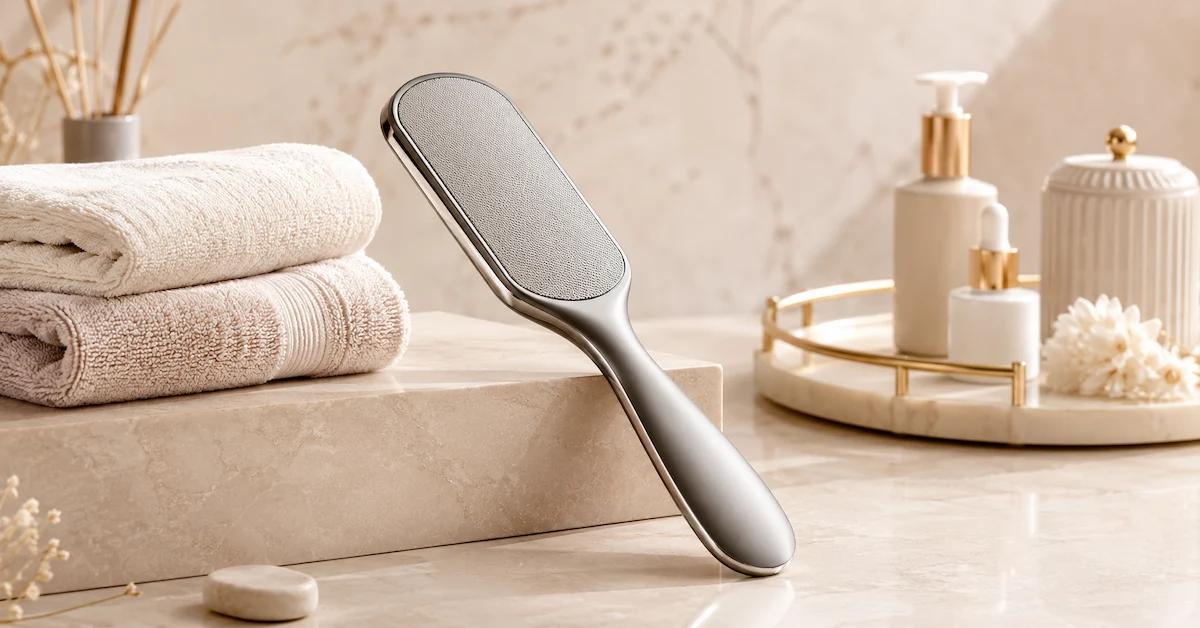
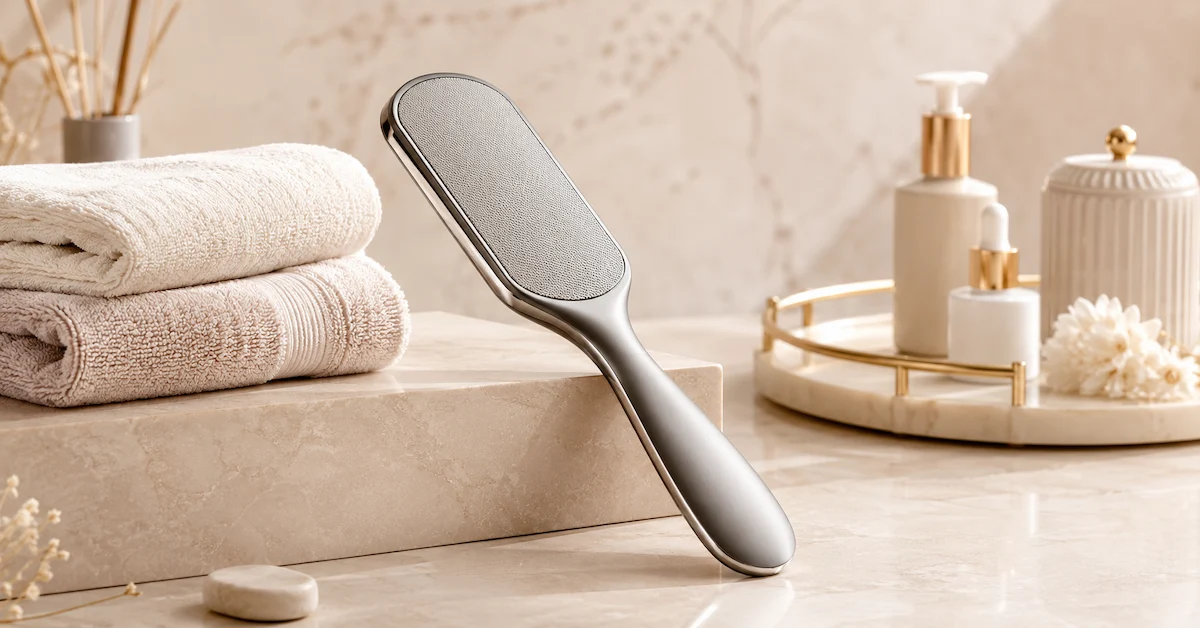
The product here is a handheld foot file, also commonly called a foot rasp, used to remove dead skin and smooth rough heels and soles. The visible form is practical: an elongated paddle-shaped head, a rounded-rectangle filing surface, and a contoured handle for grip. The head is larger than the handle and appears slightly angled relative to it, which is not a decorative choice. That angle helps the filing surface stay in better contact with the foot without making the user twist the wrist awkwardly.
From a buyer’s perspective, that shape tells you a lot. It suggests a tool meant for straightforward at-home care, spa treatment stations, and retail sets where the product has to look immediately understandable on the shelf. It also suggests that ergonomics are part of the value proposition. A tool that looks sturdy but is uncomfortable to hold will be returned to the drawer after one use.
Key construction cues buyers should examine
Body, finish, and filing face
The visible body appears to be metal or metal-look, with a matte silver or gray finish. The filing face seems to be a fine abrasive or micro-grit surface, likely etched or coated rather than a loose abrasive pad. That distinction is worth asking about during sourcing, because it affects how the tool is presented, how it wears, and how it should be positioned in the market.
For example, a rigid, reusable-looking construction generally feels more premium than a soft disposable pad. But if the abrasive surface is not specified clearly, you may end up with uncertainty in marketing copy, customer expectations, and quality control. A good manufacturer should be able to explain the manufacturing approach in plain language, even if the exact material grade is not being shared publicly.
Handle geometry and user control
The handle on this style of tool is not just for holding; it is part of the cutting action, so to speak. A contoured handle can reduce hand fatigue and improve control during heel and sole treatment. This is especially important for salon use, where repeated motions matter, but it also matters in home-care retail because the average consumer is often impatient and not especially patient with tools that feel fiddly.
One practical caution: a handle that looks ergonomic in photos may still be slippery in actual use if the finish is too smooth or the geometry is too narrow. Buyers should ask to see samples and, if possible, evaluate how the tool behaves when hands are wet or when the user is working at an awkward angle.
Common manufacturing paths and why they matter
In consumer personal-care tool manufacturing, a foot file like this is often produced from a formed metal handle or body with a stamped, laser-etched, or coated abrasive file surface. That is an inference based on the visible product style, not a confirmed specification, but it is the kind of process family sourcing teams typically need to understand.
Why does the process matter? Because it influences appearance, repeatability, and cost structure. Stamped or formed metal bodies can give a crisp, sturdy feel. Laser-etched or coated filing surfaces can create a fine, controlled texture. If the surface is inconsistent, the tool may feel patchy in use. If the body is too thin, the product can feel flimsy even when the abrasive area looks good.
For private-label buyers, the manufacturing process also affects branding options. A clean metal-look finish may support a minimalist beauty line. A more utilitarian treatment may suit a salon supply catalog. The right foot file maker should be able to align the product’s visual language with the intended channel.
Where this type of foot file fits in the market
This style of handheld foot file is versatile. It can be sold for at-home foot care, included in spa and pedicure kits, offered for salon use, or bundled into retail grooming sets. It also fits private-label beauty and personal-care lines because it has a familiar shape and a straightforward consumer promise: smooth the skin on feet without complicated setup.
That flexibility can be useful, but it can also blur positioning if you are not careful. A tool sold into a spa environment may need a more premium appearance and packaging. A mass retail version may need stronger shelf appeal and a lower landed cost. A private-label line may need room for logo placement and a packaging story that explains the product without sounding clinical.
How to evaluate a manufacturer before you place volume orders
When speaking with a foot file manufacturer, start with the basics and do not let the conversation drift immediately to artwork and box dimensions. Ask how the filing face is made, what the body material is, whether the tool is intended for reusable consumer use, and how the factory handles visual consistency across batches. Those are not glamorous questions, but they are the ones that protect you later.
It is also worth asking for product samples with clear handling instructions. A foot file is a practical tool, and the buyer experience depends on whether the tool is intuitive. If the head angle feels too aggressive or too flat, the user may not get the experience they expect. If the surface finish looks good in photos but catches too sharply in hand, that is a problem for customer satisfaction and for returns.
Selection criteria that deserve more attention than they usually get
Surface character: Ask whether the abrasive face is fine, medium, or otherwise specified, even if the seller cannot make performance claims.
Ergonomics: Check grip comfort, balance, and whether the angled head makes the tool easier to use on heels and soles.
Appearance: Confirm whether the matte silver-gray finish is part of the intended brand image or simply a manufacturing result.
Packaging fit: Make sure the tool size and shape suit the blister, carton, or kit format you are planning.
Channel alignment: Decide whether the item is meant for salon professional use, retail grooming, or both. The answer can change your sourcing priorities.
Typical buyer mistakes with foot files
The most common mistake is treating a foot file like a commodity with no meaningful differences. In reality, the product has visible tactile cues that affect sell-through. If the tool feels too cheap, customers may assume it is disposable even if that is not your intention. If it looks too clinical, it may not fit a lifestyle beauty assortment.
Another mistake is assuming the widest filing head is automatically the best choice. A larger head does cover more skin per pass, which is helpful, but only if the user can control it comfortably. For some consumers, especially those using the tool at home, control matters more than speed.
A third issue is overpromising on performance. Do not write copy that implies exact exfoliation speed, durability, or sterilization compatibility unless those claims have been confirmed. Buyers and brand owners are better served by accurate, restrained positioning than by fancy language that creates trouble later.
Questions to ask a foot file supplier
If you are shortlisting a foot file supplier, ask practical questions instead of broad ones. How is the filing surface produced? Is the body metal, metal-look, or a composite with a metallic finish? What customization options exist for branding, packaging, or handle decoration? Are samples representative of production quality, or are they pre-production displays?
Also ask about quality checks that matter to your channel. For consumer packaging, visual consistency may be the biggest concern. For salon use, handle strength and surface reliability may carry more weight. For private-label programs, the ability to repeat the same appearance across reorders is often the issue that makes or breaks a line.
Practical buying advice for engineers and product teams
For engineering teams, the product is a small object with surprisingly many variables. For sourcing managers, it is a low-cost item that can create high friction if the spec is vague. The safest approach is to define what the product must look and feel like, then confirm how the manufacturer achieves that result.
For product teams, it helps to think in use scenarios. A customer using the file after a shower wants grip and confidence. A spa technician wants a tool that feels efficient and presentable. A retail buyer wants something that can sit alongside other personal-care items without looking out of place. The manufacturer should be able to support those scenarios with the right finish, form, and packaging approach.
And if a supplier gives you overly polished answers without specifics, slow down. A foot file is not a complicated machine, but it still deserves a disciplined buying process. The best results usually come from clear expectations, physical samples, and a willingness to ask slightly annoying questions before you commit.
FAQ: short answers buyers usually need
Is this foot file suitable for private label?
Yes, the visible design and consumer grooming use case make it a plausible private-label item, assuming the manufacturer can support branding and packaging requirements.
Can it be used in salon kits?
Likely yes, at least from a product-positioning standpoint. Whether it fits a specific salon program depends on finish, ergonomics, and how you want to present the kit.
What should I confirm before ordering?
Confirm the body material, filing-surface construction, packaging dimensions, and any branding options. Do not assume features that are not clearly stated.
What to do next
If you are building a foot-care line or sourcing grooming accessories for an existing catalog, start by requesting samples and a clear process description from the manufacturer. Compare not only the look of the file, but also the balance, grip, and how the abrasive face is presented. That is usually where the real differences show up.
A good foot file manufacturer will not just quote a product; they will help you specify a tool that matches your channel, your brand, and the way your customers actually use it. That is the real sourcing decision here.
Tag:
Related articles
- Manicure & Nail Tools
- OEM & Private Label
Gift Business Manicure Kit Supplier Guide: Custom Nail Care Sets for Brands and Retailers
- Manicure & Nail Tools
- OEM & Private Label
OEM Nail Clipper Manufacturer: Complete Guide to Custom Nail Care Solutions
- Manicure & Nail Tools
- OEM & Private Label