

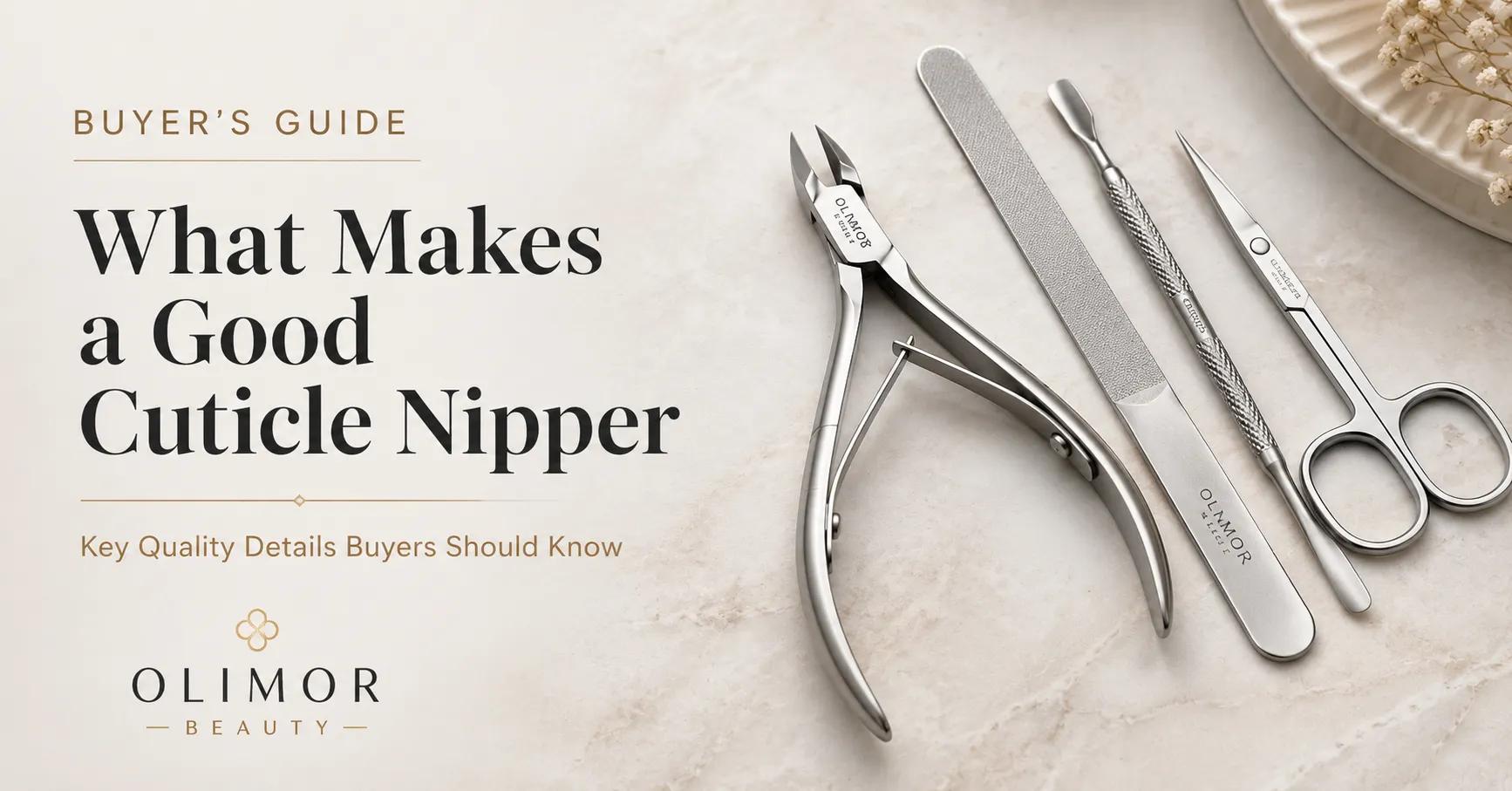
A cuticle nipper may look like a simple manicure tool, but its quality depends on many small details. For nail salons, beauty retailers, distributors, and private label brands, a good cuticle nipper can improve the user experience, reduce complaints, and support repeat orders. A poor one can feel rough, cut unevenly, lose spring tension, or arrive with scratches.
So, what makes a good cuticle nipper? The answer is not only sharp blades. Buyers should also check tip alignment, stainless steel quality, spring rebound, handle comfort, surface finishing, packaging protection, and whether the tool fits the final sales channel.
OLIMOR supplies manicure and beauty tools for global B2B buyers, including cuticle nippers, nail clippers, nail files, tweezers, manicure sets, eyelash curlers, eyebrow razors, foot files, and facial tools. You can explore related product categories here: https://www.olimor.com/products
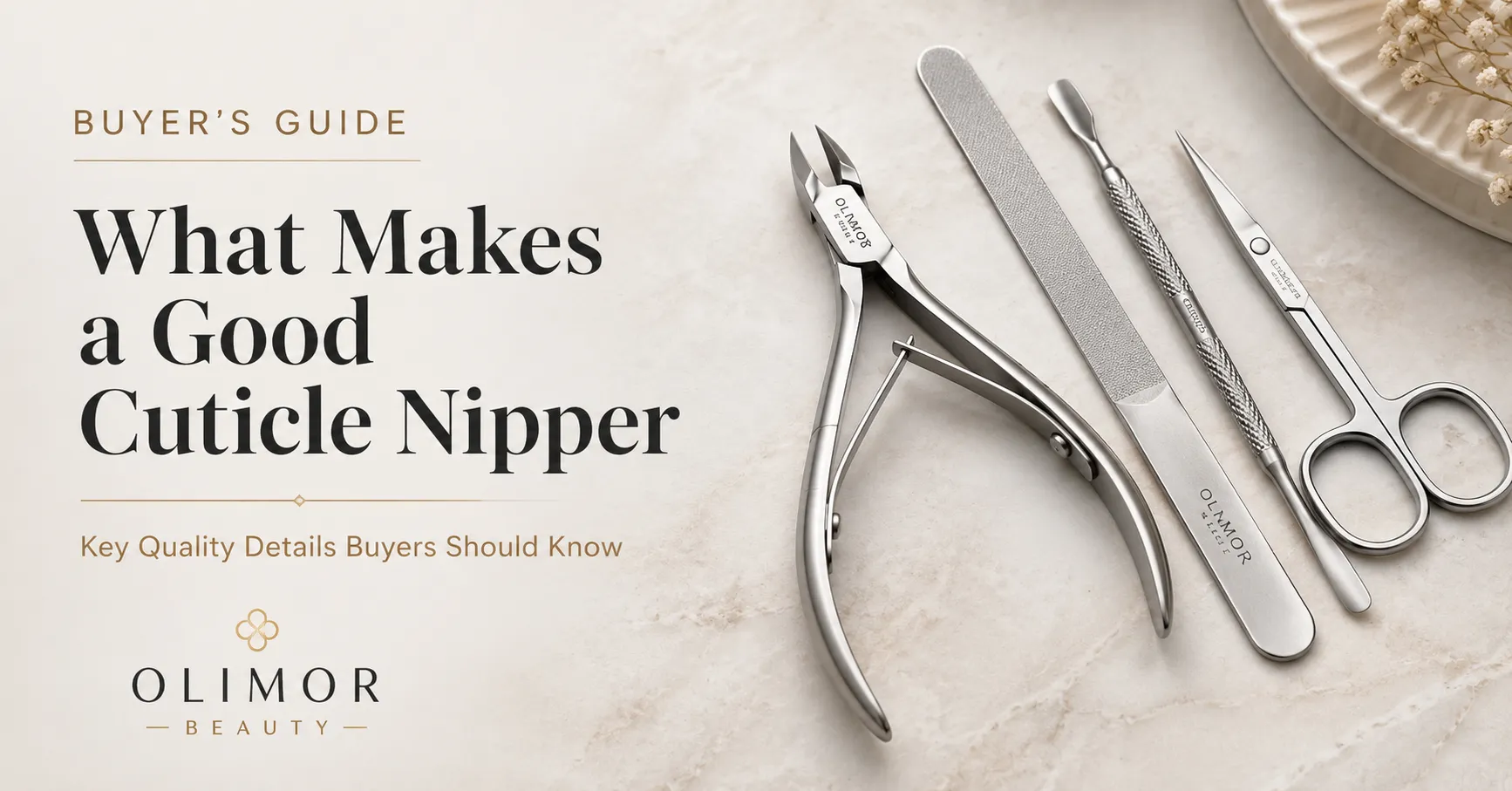
A Good Cuticle Nipper Starts with Clean Cutting
The first sign of a good cuticle nipper is clean cutting performance. The blade should trim small cuticle edges smoothly without pulling, tearing, or requiring too much pressure.
For professional users, this matters because nail technicians use the tool repeatedly throughout the day. If the blade is not sharp enough, the user needs to apply extra force, which reduces control and comfort. For retail buyers, poor cutting performance can quickly lead to negative feedback.
When checking samples, buyers should not only look at the blade shape. They should test how the nipper opens, closes, and trims. A good cuticle nipper should feel controlled and predictable.
Tip Alignment Is More Important Than Appearance
Many cuticle nippers look attractive in product photos, but the real difference is often found at the tip. The two blade tips should meet evenly and close without visible misalignment.
If the tip alignment is poor, the nipper may fail to cut cleanly in small areas. It may also pinch instead of trim. This is especially important for detailed manicure work, where precision matters more than tool size or color.
A simple inspection method is to close the nipper gently and check whether both tips meet at the same point. Buyers can also test whether the cutting edge feels even from the tip inward.
For B2B orders, tip alignment should be checked across samples, not only one piece. A single good sample does not guarantee stable bulk quality.
Stainless Steel Quality Affects Durability and Trust
Stainless steel is commonly used for cuticle nippers because it offers durability, a clean professional appearance, and better resistance for repeated handling than lower-grade materials. However, buyers should understand that not every stainless steel tool feels the same.
Material quality affects strength, polishing result, edge stability, and long-term product value. For salons, stronger material and stable cutting performance are especially important. For retail and ecommerce sellers, stainless steel also improves product presentation because customers often associate metal beauty tools with professional use.
When sourcing a professional cuticle nipper, buyers should ask about material options, finish options, and whether the tool is suitable for the target channel.
You can learn more about OLIMOR’s company background here: https://www.olimor.com/about-us
Spring Rebound Should Feel Smooth, Not Loose
The spring is a small component, but it strongly affects hand control. A good cuticle nipper should open and close smoothly. The rebound should not feel too loose, too stiff, or unstable.
If the spring is weak, the tool feels low quality. If it is too tight, long-term use becomes tiring. For nail salons, spring comfort is especially important because professionals may use the nipper many times in one day.
Buyers should check whether the spring returns consistently after repeated opening and closing. They should also check whether the spring structure feels secure and balanced.
Handle Comfort Decides User Control
A good cuticle nipper should feel stable in the hand. The handle should not be too sharp at the edges, too slippery, or too difficult to control.
For professional cuticle nippers, handle comfort affects precision. A stable grip helps users make small controlled movements. For retail users, a comfortable handle makes the tool feel safer and easier to use.
Different markets may prefer different handle shapes. A salon-focused product may prioritize grip and control, while a retail product may also need a polished appearance and attractive packaging.
Surface Finish Changes Product Value
Surface finish affects both appearance and user experience. A clean polished finish makes the tool look more professional. Rough edges, uneven coating, visible scratches, or weak polishing can reduce perceived value.
For private label buyers, finishing is also part of brand positioning. A mirror-polished nipper may look clean and classic. A matte finish may feel modern and minimal. A colored or plated finish may work better for gift sets or retail beauty kits.
Before bulk production, buyers should confirm finish expectations clearly. This includes color, shine level, logo position, and acceptable appearance standards.
Packaging Protects More Than the Product
Cuticle nippers are metal tools with sharp edges and polished surfaces, so packaging is not only about appearance. It also protects the tool during shipping and storage.
For different sales channels, packaging needs may vary:
| Sales Channel | Packaging Priority | Suggested Direction |
|---|---|---|
| Nail Salons | Easy storage and tool protection | Simple pouch, sleeve, or box |
| Retail Stores | Shelf appearance and product visibility | Card, blister, or retail box |
| Ecommerce | Shipping protection and review experience | Protective box or secure insert |
| Private Label | Brand image and consistency | Custom box, pouch, or set case |
| Gift Sets | Higher perceived value | Premium box or manicure kit case |
If packaging is too loose, the nipper may move during transport and become scratched. If packaging looks too basic, the product may feel cheaper than it really is.
Good Cuticle Nipper vs Poor Cuticle Nipper
A practical way to judge quality is to compare product behavior, not just product appearance.
| Quality Area | Good Cuticle Nipper | Poor Cuticle Nipper |
| Cutting | Smooth, clean, controlled | Pulling, uneven, rough |
| Tip Alignment | Tips meet accurately | Tips misaligned or weak |
| Spring | Stable rebound | Loose, stiff, or unstable |
| Handle | Comfortable and balanced | Sharp edges or poor grip |
| Finish | Smooth and clean | Scratches, rough polish |
| Packaging | Secure and protective | Loose or easy to damage |
This type of comparison is useful for beauty brands, wholesalers, and ecommerce sellers when reviewing supplier samples.
What Buyers Should Ask Before Ordering
Before confirming a bulk order, buyers should prepare clear questions for the supplier. This helps reduce risk and improves project efficiency.
Useful questions include:
- Can I review samples before bulk production?
- What material and finish options are available?
- Can the logo be added to the tool or packaging?
- How is blade alignment checked?
- Can the nipper be packed as a single item or inside a manicure set?
- What packaging is suitable for retail or ecommerce sales?
- Can the same quality be repeated in future orders?
These questions are especially important for private label brands and distributors who need consistent supply.
How OLIMOR Supports Cuticle Nipper Buyers
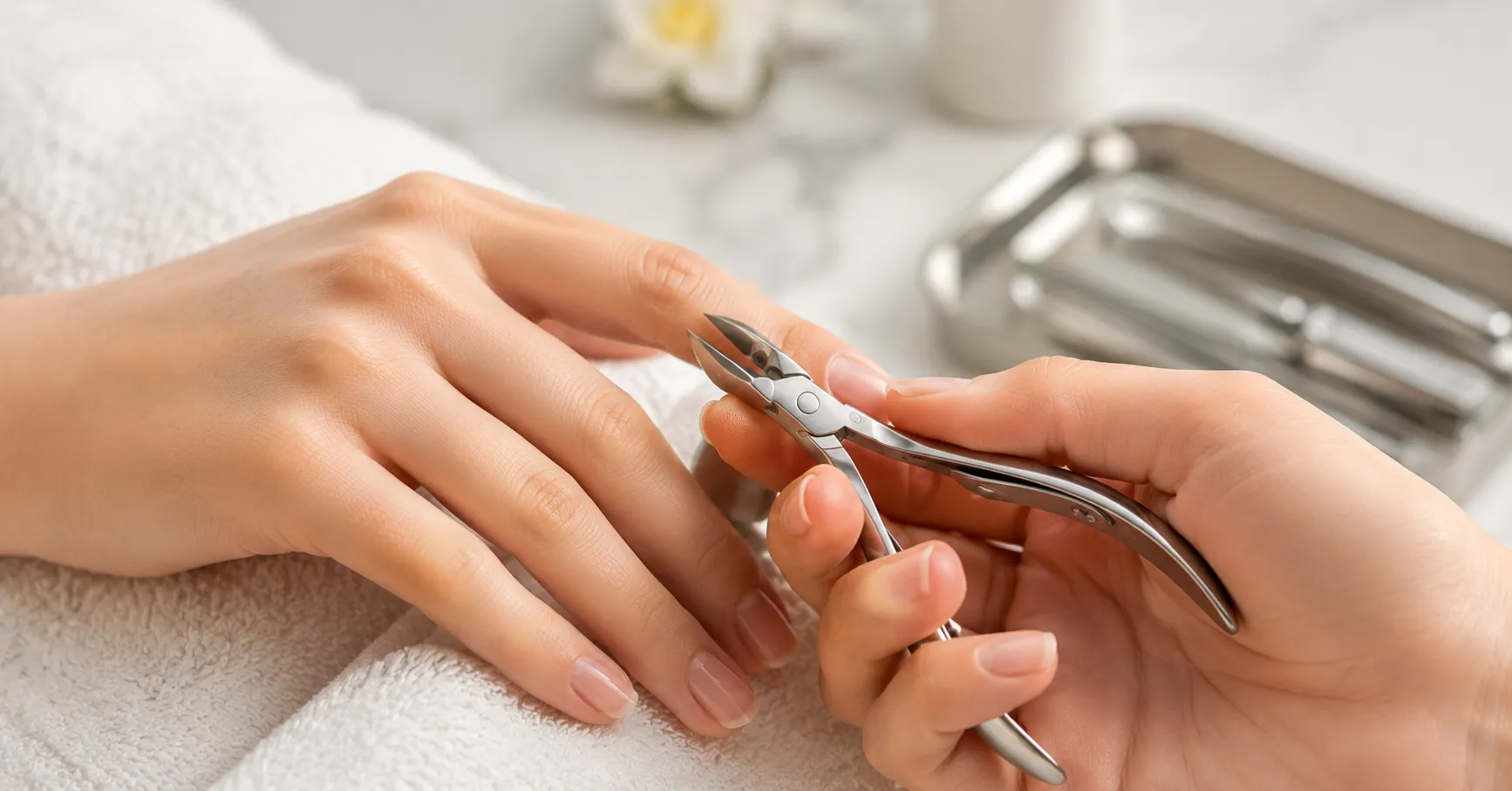
OLIMOR can support buyers who need cuticle nippers for salons, retail, ecommerce, wholesale, or private label manicure sets. Buyers can select standard models or discuss tool combinations with nail clippers, nail files, cuticle pushers, tweezers, scissors, and manicure cases.
A practical sourcing process may include:
- Confirm sales channel and target user
- Select cuticle nipper style and finish
- Review sample cutting feel and appearance
- Decide packaging and branding needs
- Confirm quality details before bulk production
- Arrange shipment and future reorder planning
For related manicure and beauty tool options, visit: https://www.olimor.com/products
For quotation or custom project discussion, contact OLIMOR here: https://www.olimor.com/contact-us
FAQ
What makes a good cuticle nipper?
A good cuticle nipper should have sharp blades, accurate tip alignment, smooth spring rebound, comfortable handles, clean finishing, and protective packaging.
Is stainless steel important for cuticle nippers?
Yes. Stainless steel is commonly used because it offers durability, a professional appearance, and better long-term value for manicure tools.
How can buyers check cuticle nipper quality?
Buyers should test cutting feel, tip alignment, spring rebound, handle comfort, surface finish, packaging protection, and sample consistency.
Can cuticle nippers be customized for private label brands?
Yes. Custom options may include logo branding, surface finish, packaging design, product set combinations, and manicure kit packaging.
Are cuticle nippers suitable for ecommerce sales?
Yes. They can be sold as single professional tools or included in nail care kits, manicure sets, travel grooming sets, and private label beauty bundles.
How do I request a cuticle nipper quotation from OLIMOR?
Send your target market, quantity, product style, packaging needs, logo requirements, and preferred finish through the OLIMOR contact page.
Choose Cuticle Nippers by Performance, Not Only Price
Understanding what makes a good cuticle nipper helps buyers avoid weak products, unstable quality, and poor customer feedback. The best choice should balance blade sharpness, tip alignment, stainless steel quality, spring comfort, surface finish, packaging, and supplier reliability.
If you need professional cuticle nippers for salons, retail stores, ecommerce, wholesale distribution, or private label manicure sets, OLIMOR can help you build a practical and consistent nail care tool solution.
Visit https://www.olimor.com/ to explore more beauty and personal care tools.
Tag: