How to Choose Cuticle Nippers for Professional Nail Techs
Choosing cuticle nippers for professional nail techs is less about finding the most reflective tool on the display and more about matching jaw geometry, control, maintenance, and hygiene requirements to daily salon work. A nipper may look simple, but small differences in the cutting head, pivot, spring, and handle action can affect trimming accuracy, technician fatigue, and the risk of removing more tissue than intended. This guide helps salon owners, nail technicians, trainers, and private-label buyers decide what to examine before purchasing.
Why the Tool Choice Matters
Cuticle trimming is a close-control task. The tool must reach small areas around the nail fold while allowing the operator to see the cutting point clearly. A bulky or poorly aligned head can make that work awkward. Excessive force may also encourage a technician to squeeze harder than necessary, particularly during a long day of manicures or pedicures.
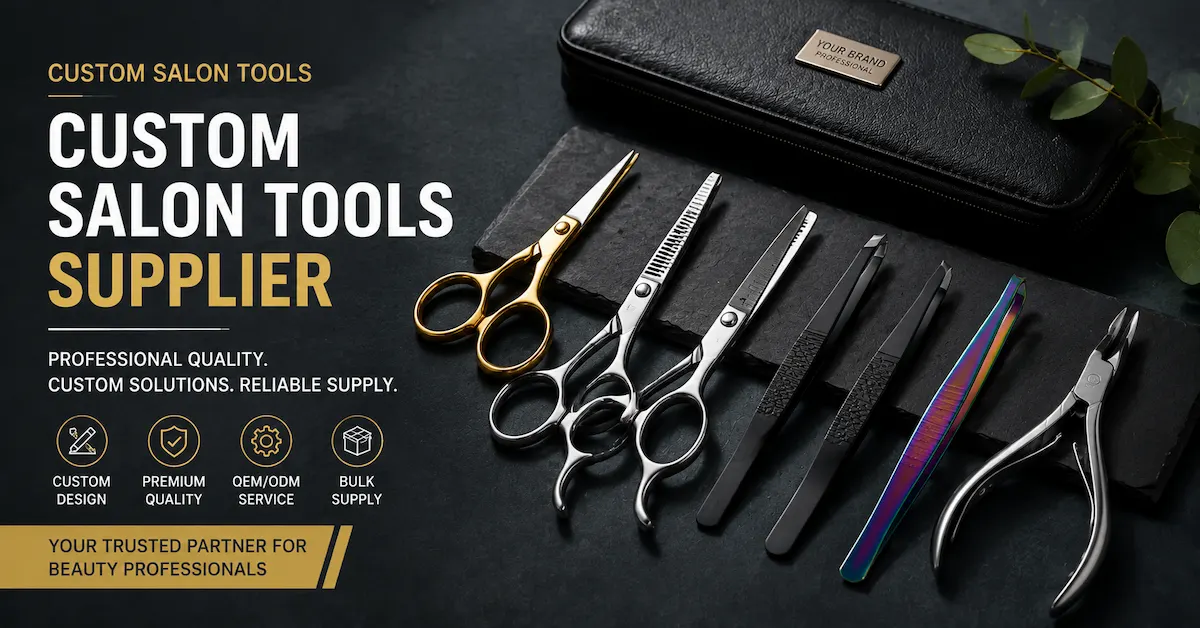
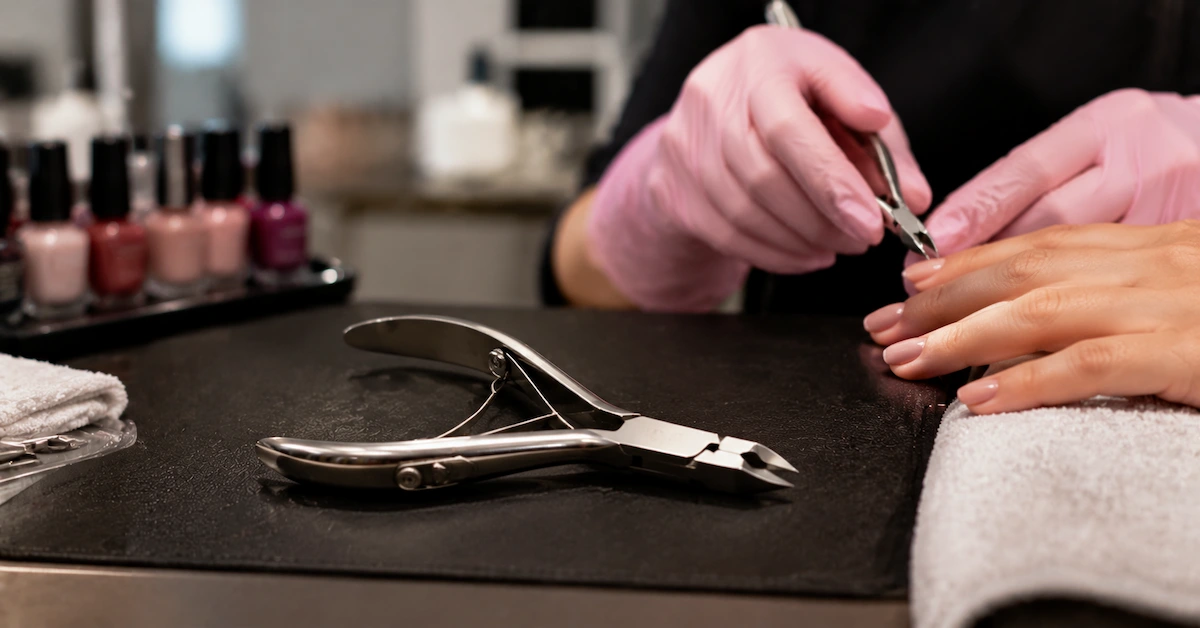
The product shown is a compact nail-care plier with two opposing handles, a central pivot, short pointed jaws, and a visible coil or wire-style return spring. Its narrow, angled cutting head is suited to localized trimming of excess cuticle or small areas of dead skin. The polished silver-metal appearance is consistent with polished stainless steel, although the exact material grade is not established from the available information.
That distinction matters for purchasing. Surface appearance can suggest a finish, but it does not confirm hardness, corrosion resistance, sterilization compatibility, or long-term edge performance. Buyers should ask for those details rather than treating a bright polish as proof of professional-grade performance.
Quick Reference: What to Evaluate
| Feature | Why it matters | What to check |
|---|---|---|
| Cutting jaws | Determine access and trimming control around the nail fold | Alignment, pointed profile, smooth opening, and clean closure |
| Pivot | Influences movement, stability, and serviceability | Consistent action without excessive looseness or binding |
| Return spring | Helps reopen the handles after each cut | Secure installation and a comfortable opening force |
| Surface finish | Affects cleaning convenience and visual presentation | Uniform polish without obvious burrs, pits, or rough transitions |
| Material information | Supports maintenance and sourcing decisions | Confirmed grade, care guidance, and any relevant use limitations |
Understanding the Main Design Elements
Jaw geometry and edge alignment
The cutting head is the business end of the tool. Short, pointed, angled jaws can provide access in tight areas, but they also demand controlled handling. The tips should meet cleanly along the intended cutting area. If one jaw sits higher than the other, or if the tips close unevenly, the tool may pinch rather than cut cleanly.
When reviewing samples, open and close the jaws slowly. Look at the tips from more than one angle. A visual check will not replace a production test, but it can reveal obvious misalignment, rough grinding, or inconsistent finishing. Buyers should also clarify whether the stated cutting performance applies to excess cuticle and dead skin only. It should not automatically be interpreted as suitability for thicker material.
Pivot, handles, and spring action
The pictured design uses two lever handles joined at a central pivot, with a visible spring between the handles. This arrangement is familiar in professional nail tools because it supports repeated hand operation and automatic opening after a cut. The practical question is whether the action feels controlled rather than loose, stiff, or abrupt.
A pivot that is too tight can make repetitive use tiring. Too much play can affect the relationship between the jaws. The spring should remain securely positioned and should not interfere with the technician’s fingers. Handle shape is also important, even when the tool appears compact. A narrow tool can be easy to maneuver, but it may not suit every hand or every working style.
Metal finish and cleanability
The smooth, reflective finish shown on these nippers appears easy to wipe down and gives the tool a professional presentation. However, buyers should inspect the transitions around the pivot, spring, and jaw roots. These areas can collect residue if they are poorly finished or difficult to access.
Do not assume that polished metal means autoclavable, medical-grade, or approved for a particular salon sterilization protocol. The exact material grade and sterilization compatibility are unknown here. A professional buyer should request written care and reprocessing guidance from the supplier and confirm that it matches the salon’s procedures.
Sharp Cuticle Nippers: What “Sharp” Should Mean
Search results often emphasize sharp cuticle nippers, but sharpness alone is not a complete buying criterion. A useful cutting edge must also be aligned, stable, and appropriate for the intended work. An aggressively sharp or poorly controlled edge is not necessarily safer or more productive.
For a salon evaluation, inspect several samples rather than approving one attractive unit. Check whether the jaws close consistently, whether the handles return smoothly, and whether the edge appears uniform under good lighting. If practical, have an experienced technician assess the sample on the type of work for which it is intended. Record observations about control and hand fatigue, not just the first impression of sharpness.
How to Assess High Quality Cuticle Nippers Before Ordering
High quality cuticle nippers should be evaluated as a working system, not as a single polished object. For a salon or distributor, a sensible review includes the following:
- Inspect jaw alignment in the closed position and confirm that the points do not visibly cross or leave a large gap.
- Operate the pivot repeatedly to identify sticking, roughness, or excessive side movement.
- Check that the spring is properly seated and does not rub against the handles.
- Examine the polished surface for scratches, burrs, pits, and unfinished areas around joints.
- Ask the supplier to identify the metal grade rather than accepting a generic stainless-steel description.
- Request available dimensional information, jaw specifications, care instructions, and packaging details before approving a production order.
- Confirm whether the design is intended for salon use, training use, retail sale, or another application.
Private-label buyers should be especially careful with sample approval. A photograph may show the general form—compact body, pointed jaws, spring-assisted opening—but it cannot verify batch consistency, edge durability, or the quality of the pivot assembly. Those points belong in the sample inspection and, where appropriate, in the supplier’s quality agreement.
Common Purchasing Mistakes
One common mistake is selecting solely by appearance. A bright finish can support shelf appeal, but it does not establish cutting performance. Another is choosing the narrowest jaw available without considering the technician’s technique. Compact geometry can improve access, yet it may require more precise handling.
Buyers also sometimes overlook maintenance instructions until after delivery. Ask how the tool should be cleaned, dried, lubricated, stored, and inspected. If a salon uses a defined sterilization process, compatibility should be confirmed in writing before the tool enters routine service.
A final warning for sourcing teams: do not publish claims such as medical-grade, autoclavable, corrosion-proof, or lifetime sharpness unless the supplier has supplied evidence that supports them. Those claims are not verified by the product image or by a polished appearance.
Practical Advice for Salon and Retail Buyers
Start with the work itself. If the main requirement is controlled trimming around the nail fold, prioritize a compact head, clear visibility, smooth spring action, and reliable jaw alignment. If the tool will be sold through retail or private-label channels, add packaging, finish consistency, care information, and inspection standards to the brief.
For training environments, a repeatable design is useful because students need to learn hand position and pressure without fighting an inconsistent mechanism. For busy salons, the technician’s feedback should carry more weight than a catalogue description. A tool that looks excellent but causes hand fatigue will not remain a good purchase for long.
Frequently Asked Questions
Are these nippers made from stainless steel?
The visible finish is consistent with polished stainless steel, but the exact grade is not provided. Confirm the material specification with the supplier before making claims about corrosion resistance or sterilization.
Are they suitable for professional salons?
The compact cutting head, hand-operated handles, pivot, and return spring are consistent with professional manicure and pedicure use. Suitability should still be confirmed through sample inspection and the supplier’s care guidance.
Can the nippers be autoclaved?
That is not verified by the available information. Do not assume autoclave compatibility from the metal appearance. Request specific reprocessing instructions and limitations.
What should a private-label buyer request?
Request the confirmed material grade, dimensions, jaw and pivot specifications, finish standard, inspection criteria, care instructions, packaging options, and any available documentation relevant to the intended market.
Next Step: Approve the Tool Against a Real Use Case
The right purchase decision should connect the tool’s physical design with the technician’s daily work. Review the compact jaws, spring-assisted opening, pivot action, and polished finish, then validate the details that cannot be seen in a photograph. Request samples, compare them under normal working conditions, and ask the supplier to document material, care, and inspection information. That process gives salon operators and sourcing teams a more reliable basis for choosing a professional nail-care tool—and avoids paying for appearance when the real requirement is controlled, repeatable performance.