How to Choose Cuticle Nippers for Professional Nail Techs
Choosing cuticle nippers for professional nail techs is less about finding the sharpest-looking tool and more about matching jaw geometry, handling, maintenance, and sanitation procedures to the work being performed. A nail technician may use the instrument dozens of times in a day, often around small, curved areas where excessive pressure or an awkward cutting head can affect control. This guide explains what to inspect before buying, what can be confirmed from a tool’s construction, and which supplier questions deserve a clear answer.
The decision matters because cuticle nippers are precision hand tools, not general-purpose pliers. They must allow a controlled trim of excess cuticle or small pieces of dead skin without encouraging the operator to pull, twist, or cut living tissue. For salons, schools, mobile technicians, and distributors, the practical question is not simply “Does the tool look professional?” It is “Can the tool be handled consistently, cleaned appropriately, and replaced or maintained without disrupting the service?”
Quick reference: what to evaluate first
| Evaluation area | What to inspect | Why it matters |
|---|---|---|
| Cutting head | Pointed opposing jaws, alignment, smooth opening and closing | Supports localized trimming and operator control |
| Handles | Finger clearance, comfortable curvature, predictable leverage | Reduces awkward hand positioning during repeated use |
| Pivot and spring | Centered joint, stable movement, reliable return after squeezing | Influences feel, consistency, and serviceability |
| Material information | Declared metal grade, finish, and care instructions | Helps buyers assess cleaning, corrosion, and purchasing risk |
| Supplier documentation | Dimensions, tolerances, testing, packaging, and warranty terms | Separates a repeatable product from an uncertain sample |
Understanding the tool’s construction
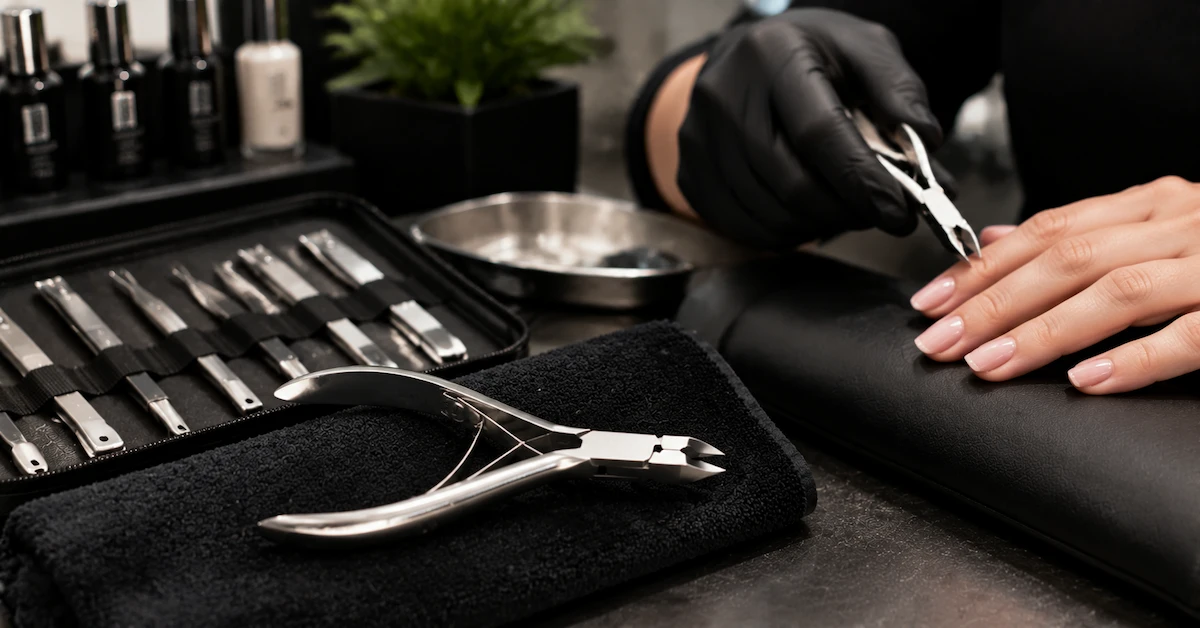
The typical design is a compact, hand-operated plier with two curved handles, a central pivot joint, and opposing pointed cutting jaws. A metal spring mechanism may return the handles after the operator releases pressure. This arrangement is simple in appearance, but small differences in alignment and edge preparation can change how the tool behaves in the hand.
The narrow pointed jaws are intended for localized trimming around the nail plate. That geometry can be useful when the technician needs to remove a small projection rather than cut across a broad area. It also creates a practical caution: pointed jaws demand deliberate positioning. They should not be used as a substitute for force, and they are not designed for cutting thick material, artificial nail products, wire, or packaging.
Curved handles provide finger clearance and leverage, but the correct shape is partly a matter of hand size and working style. A buyer selecting tools for a salon team should avoid assuming that one handle profile will suit every operator. If possible, technicians should hold evaluation samples through a realistic opening-and-closing cycle rather than judging comfort from a product photograph.
Materials and finish: what can be confirmed
A bright, reflective silver-metal appearance is reasonably consistent with polished stainless steel, but appearance alone does not identify the alloy. The exact stainless-steel grade, coating, hardness, and corrosion resistance should be obtained from the supplier. These details are especially important when the tool will enter a defined cleaning and disinfection workflow.
Polishing has both functional and visual value. A consistent surface is easier to inspect, while rough areas, deep scratches, burrs, or poorly finished joints may retain residue or make cleaning less predictable. That does not mean a mirror-like finish proves superior performance. Edge geometry, jaw meeting, pivot fit, and the supplier’s maintenance guidance still need to be evaluated.
Possible manufacturing operations may include stainless-steel forging or stamping, machining, grinding, precision alignment, edge sharpening, polishing, and pivot assembly. However, the precise production route cannot be confirmed from the visible design alone. For a sourcing program, ask whether the supplier can provide a process description and inspection plan rather than treating a polished exterior as evidence of a particular manufacturing method.
Cutting performance is more than sharpness
Buyers often focus on whether the jaws feel sharp when the tool is new. That is a reasonable starting point, but professional use also depends on how the jaws meet and how much control the operator has near the tip. Misalignment can cause the jaws to overlap unevenly, leave an uncut section, or require extra squeezing. Excessive force is undesirable because it can reduce hand comfort and make delicate work less controlled.
Inspect the cutting head under good lighting. The two edges should meet in a consistent manner, with no visible burrs or chipped areas. Open and close the tool slowly. The motion should feel stable rather than gritty or loose, and the pivot should not visibly wander. A sample inspection cannot establish long-term sharpness retention, but it can reveal basic assembly problems before a larger purchase.
Do not infer a cutting capacity from jaw appearance. No verified jaw opening, cutting width, blade hardness, or overall dimensions are supplied for the pictured type of tool. Those specifications should be requested directly if they affect a purchasing decision.
Sanitation and maintenance questions
The presence of gloves, a metal tray, and a manicure implement set in a storage case suggests use in a salon or professional sanitation workflow. It does not, by itself, verify sterilization capability, autoclave compatibility, or compliance with any specific local requirement. Those are separate questions and should be answered with supplier documentation and the procedures applicable to the workplace.
Before ordering, ask for the recommended cleaning and disinfection method, drying instructions, lubrication guidance, and restrictions on chemicals or equipment. Confirm whether the declared material and finish are intended for the process used by the salon. If instruments are processed repeatedly, ask how the pivot and spring should be inspected and whether replacement or repair parts are available.
Routine care should include removing visible residue promptly, drying the instrument thoroughly, checking the cutting edges, and storing the tool so the jaws are protected. A storage case can reduce contact with other implements, but it is not automatically a sanitation system. That distinction is easy to overlook in product listings.
Common purchasing mistakes
Buying from an image alone
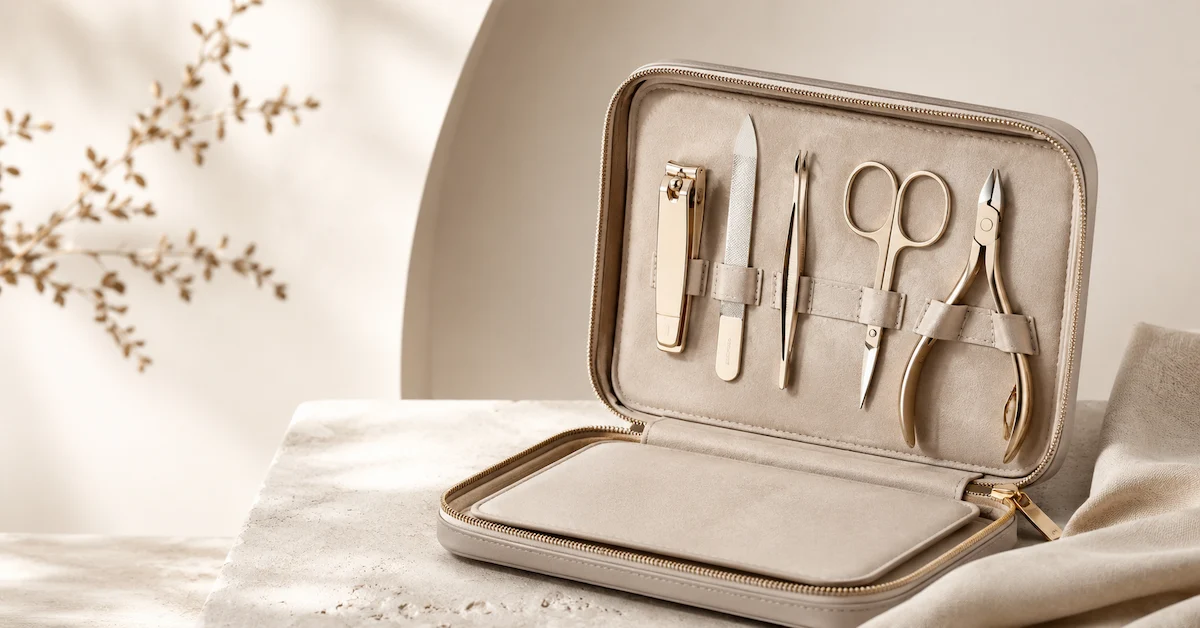
A product image may show the handheld format, pointed cutting head, polished metal appearance, and inclusion in a multi-tool manicure kit. It cannot confirm the alloy, dimensions, spring type, blade hardness, or manufacturing location. Treat visual information as a screening tool, not a complete technical specification.
Assuming a kit is always better value
A kit may be useful for a school, mobile service, or new workstation, but the other tools can distract from the performance of the nipper itself. Review the cutting instrument separately. Check whether the storage case protects the jaws and whether the set supports the cleaning process used by the intended operator.
Ignoring user fit
A nipper that feels acceptable for a short demonstration may become tiring during a full appointment schedule. Handle curvature, finger clearance, spring resistance, and total weight should be considered together. If the supplier offers several patterns, request samples for technician evaluation before standardizing across multiple workstations.
Using sharpness as the only acceptance criterion
A very sharp edge is not automatically the safest or most useful edge. Consistent jaw closure, controlled leverage, and a stable pivot are equally important. Buyers should define an acceptance check that includes visual inspection, repeated opening and closing, and a practical assessment by an experienced technician.
Practical buyer checklist
For a professional purchase, request a specification sheet covering the material grade, overall dimensions, jaw length, cutting width, weight, spring construction, pivot design, finish, and care instructions. If some items are not available, record that limitation rather than filling the gap with assumptions.
Request representative samples from the production lot or supplier range being considered. Compare jaw alignment, handle symmetry, surface finish, pivot movement, and packaging protection. For repeat orders, define the characteristics that must remain consistent. A simple incoming inspection can prevent a mixed shipment of tools with noticeably different jaw behavior.
Also clarify commercial details that affect operational risk: minimum order quantity, replacement policy, packaging format, private-label options if relevant, and the process for reporting defects. Exact lead times, prices, warranties, and certifications should come from the supplier and should not be inferred from the product type.
Frequently asked questions
Are pointed nail cuticle nippers suitable for every manicure?
They are intended for controlled trimming of excess cuticle and small pieces of dead skin. Suitability depends on the technician’s training, the condition of the surrounding skin, and the salon’s procedure. They should not be treated as a general cutting tool.
Does a polished silver appearance prove the tool is stainless steel?
No. The appearance is reasonably consistent with polished stainless steel, but the exact alloy cannot be identified visually. Ask the supplier for the material declaration and care guidance.
Can the tool be sterilized in an autoclave?
That cannot be confirmed from appearance or product photography. Verify autoclave compatibility and the approved reprocessing method with the supplier, then follow the requirements applicable to the workplace.
What is the most important inspection point?
Start with jaw alignment and controlled movement at the pivot. A tool that looks attractive but closes unevenly may create more problems than a less polished tool with consistent mechanical action.
Next step for sourcing teams
Shortlist tools based on the actual service, operator group, and sanitation process, then test samples under normal working conditions. Compare the cutting head, handle comfort, spring return, pivot stability, finish, and documentation as one package. For the pictured compact design, the visible construction supports professional manicure use, but important specifications remain unverified. A careful buyer should make those unknowns part of the supplier discussion before placing a production order.