

Why manicure tools for nail salons deserve more attention than they usually get
When a salon’s cuticle work looks clean, the polish sits better, the gel line looks sharper, and the whole service feels more controlled. That is why manicure tools for nail salons are not just a back-bar purchase; they shape speed, comfort, and the final appearance of the service. A good tool set helps a technician trim, push back, clean, shape, and refine without fighting the instrument or interrupting the client.
In practice, the difference shows up in small ways. A bent pusher slows down prep. A dull file leaves uneven edges. A grabby metal edge can make a routine manicure feel awkward. For owners and sourcing teams, the decision is not simply whether to buy tools, but which combination of tools supports consistent work across the team and holds up in a busy station.
What a practical salon set usually needs to do
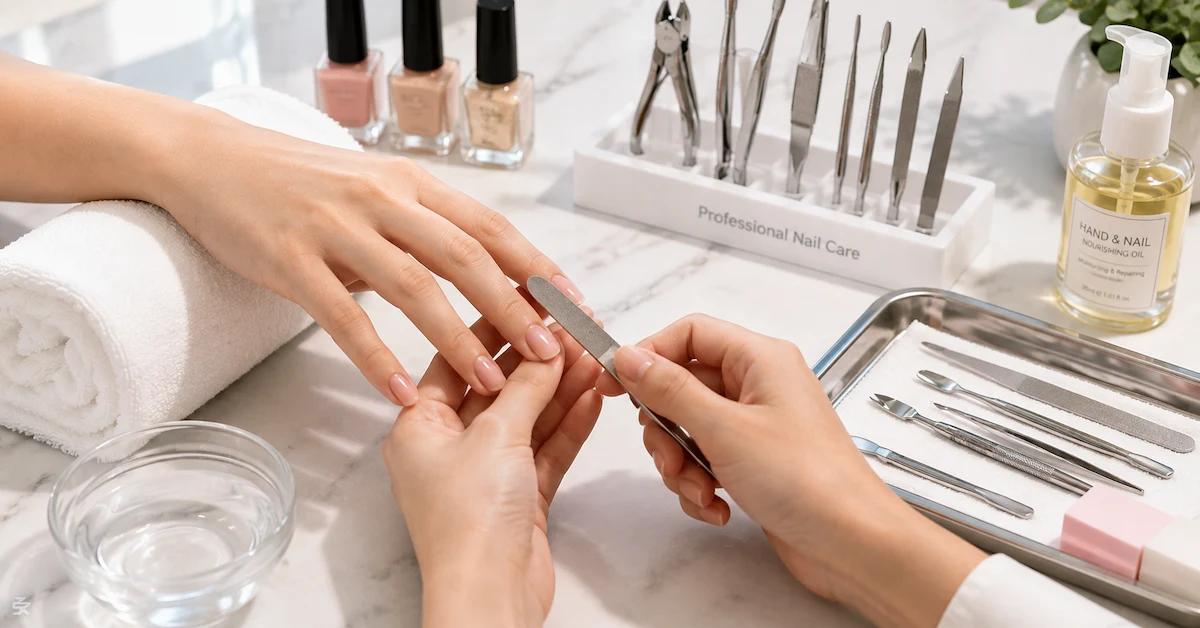
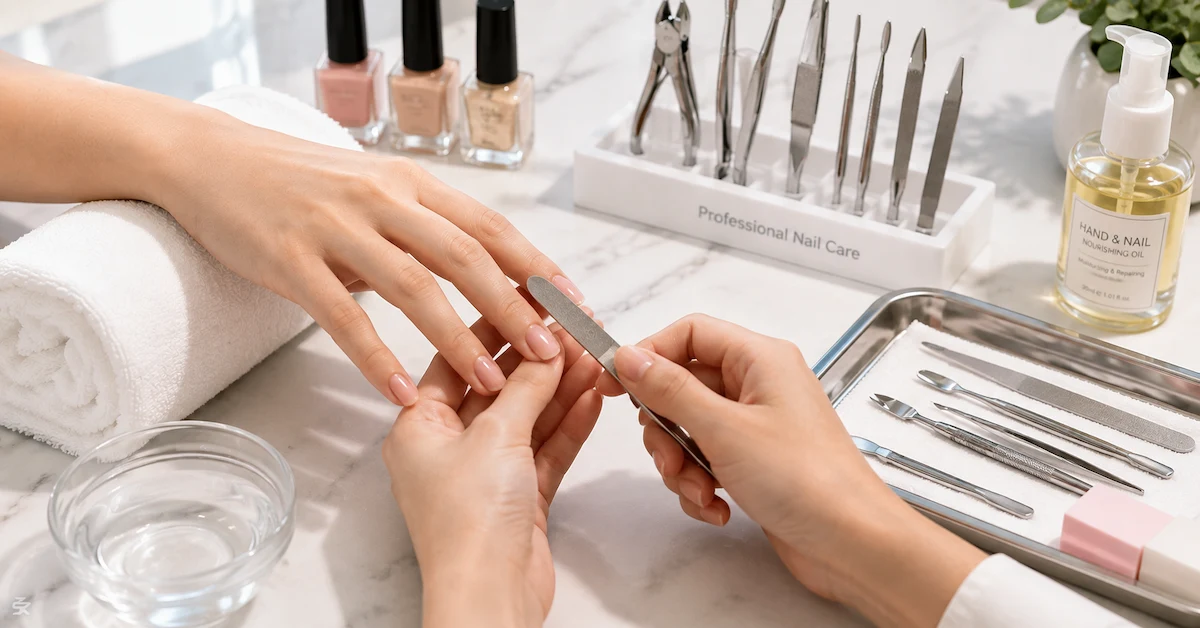
The visible product setup here points to a professional nail care and cuticle care tool set, arranged in a holder and tray for workstation use. That matters because salon work is repetitive and time-sensitive. A technician should be able to reach for the right tool without digging through a drawer or pausing mid-service. Organized tools are not a luxury in a high-turnover environment; they keep the station moving.
The set shown appears to include multiple hand tools for cuticle and nail prep, including nail files, cuticle pushers, tweezers or pliers, and small precision grooming instruments. The tools look metallic, likely stainless steel, with a silver polished or brushed finish. There are also abrasive nail files with a matte gray surface. Exact grade, sharpness, and sterilization capability are not visible, so any purchase decision should rely on supplier confirmation rather than appearance alone.
Quick reference: what each tool type is doing
Cuticle pushers
These help move softened cuticle tissue back before trimming or product application. The working end may be flat or angled, and the point is control rather than force. In salon work, a pusher that feels balanced in the hand reduces the tendency to press too hard.
Cuticle nippers or pliers
These are used for detail trimming around the nail fold. They should be handled carefully, especially in fast-paced service settings. A technician can do good work with a precise tool, but careless use turns a tidy service into a problem for both comfort and appearance.
Nail files
Files shape the free edge and refine rough spots. They matter more than many buyers expect because edge quality affects polish wear, comfort, and the overall finish. If the abrasive surface is inconsistent, the manicure looks hurried even when the rest of the service is strong.
Precision grooming tools
Small instruments for cleaning, lifting, or refining are often what separate a basic kit from a professional nail technician tools setup. These pieces are not dramatic, but they are the tools that solve awkward details near the nail margin.
The real problem salons are trying to solve
Most buyers are not shopping for a single glamorous instrument. They are trying to solve a workflow problem: how to keep services fast, accurate, and repeatable across different technicians and different clients. In a salon, that means equipment has to support both technique and hygiene practices, while also surviving frequent use.
A manicure kit for salons should help the technician do three things well. First, prepare the nail cleanly. Second, keep the workstation organized. Third, reduce the number of times the team has to replace tools because they were awkward, inefficient, or too fragile for professional use. That last point sounds obvious, but it is where many purchasing decisions go wrong. A cheap set may look complete, yet cost more over time if it slows appointments or gets retired early.
Material and construction: what to look for, and what not to assume
The tools shown appear to be metal, likely stainless steel, which is common in salon hand tools because it offers a clean look and a familiar working feel. Metal instruments can be made through stamping, grinding, polishing, and assembly. Those are standard manufacturing steps for this product category, though the exact process and steel grade are not visible here.
That uncertainty matters. Buyers often see a polished silver surface and assume the tools will behave the same way from one supplier to another. They will not. Two sets may look similar on a tray and still differ in edge quality, balance, and consistency. If the set is intended for frequent salon use, ask how the tools are finished, whether the working edges are hand-checked, and whether the supplier can explain maintenance requirements in plain language.
Also, be careful with claims that sound too broad. A reusable-looking metal instrument is not automatically suitable for every sanitation protocol unless the supplier states exactly how it should be cleaned and processed. In the salon world, vague statements create operational headaches later.
How salons should evaluate a tool set before buying
For sourcing teams and salon managers, the right question is not “Does it have enough pieces?” but “Does it fit the service flow?” A busy hand-care station needs tools that are easy to identify, easy to clean, and easy to replace if one item is lost.
Here are the practical checks that usually matter most:
Does the set cover preparation, trimming, shaping, and finishing without forcing the technician to reach for outside tools? Does the holder keep items visible and orderly on the workstation? Do the tool handles and working ends look proportioned for detailed hand work? Are the abrasive files suitable for the level of shaping the salon actually performs? And can the tools be maintained in a way that fits the salon’s cleaning routine?
None of those questions require a lab report, but all of them affect client experience.
Common mistakes when buying manicure tools for nail salons
The first mistake is buying a kit that looks complete but includes duplicates while missing a genuinely useful piece. A second mistake is focusing on appearance alone. A shiny finish can hide a mediocre edge. A third is overlooking ergonomics. If a technician has to twist their wrist to use a pusher or file, the pain shows up later in slower work and fatigue.
Another common issue is station clutter. The visible holder and tray solve a small but real problem: tools need a place to live during a service. Without that, a clean setup turns messy fast. The problem is not only visual; clutter increases the chance of grabbing the wrong tool or setting a used instrument near a clean one.
One more caution: not every salon needs the same level of tool variety. A high-volume nail bar, a spa treatment room, and a private technician suite may all use a manicure kit for salons, but the ideal mix of instruments is not identical. Matching the set to the actual service menu is usually smarter than chasing the biggest package.
What product teams and salon buyers should prioritize instead of hype
If the tools are for retail resale, station use, or both, think about consistency first. Are the pieces visually coherent? Do they read as professional on the counter? Are they compact enough for a small workstation? Those details sound minor until the tools are part of the customer-facing environment.
For team use, standardization matters even more. When every station uses similar manicure tools for nail salons, it is easier to train newer technicians, stock replacements, and maintain a predictable service routine. That does not mean every tool has to be identical across every room. It does mean the core items should behave predictably enough that one technician can move to another station without re-learning the kit.
FAQ for salon buyers
Is a metal set better than a mixed-material set?
Not automatically. Metal tools are common because they are durable and precise, but the real question is whether the edges, finish, and handling suit professional use. The material alone does not tell the whole story.
Do salons need a separate set for manicure and pedicure work?
Often they do. Some instruments overlap, but pedicure work can demand different sizes, angles, and cleaning routines. For many businesses, keeping dedicated sets reduces mix-ups and improves station discipline.
What is the biggest sign of a poor purchase?
Usually, it is a tool that looks fine in packaging but feels awkward in the hand or shows uneven finishing on the working end. In salon work, that kind of flaw becomes obvious quickly.
A practical next step for buyers
If you are comparing manicure tools for nail salons, start with the service flow rather than the product photo. Match the kit to the treatments your team actually performs, confirm the material and finishing details with the supplier, and pay attention to organization at the workstation. A well-chosen set should make cuticle prep more efficient, keep the station neat, and help the technician work with fewer interruptions.
For sourcing managers, the safest approach is to request clear specifications on the exact tool count, steel grade, edge finishing, cleaning guidance, and packaging configuration before placing volume orders. That is the unglamorous part of the job, but it is also the part that prevents avoidable disappointment once the tools are on the bench and the appointments begin.
Tag:
Related articles
- Manicure & Nail Tools
- OEM & Private Label
Gift Business Manicure Kit Supplier Guide: Custom Nail Care Sets for Brands and Retailers
- Manicure & Nail Tools
- OEM & Private Label
OEM Nail Clipper Manufacturer: Complete Guide to Custom Nail Care Solutions
- Manicure & Nail Tools
- OEM & Private Label