

A good foot file supplier is not just selling a small grooming tool. They are helping you source a product that has to feel safe in the hand, remove rough skin without looking cheap, and survive the realities of retail, spa use, or private-label resale. That sounds simple until you start comparing foot file manufacturers and notice how quickly the details diverge: metal versus plastic handles, different paddle shapes, surface textures that look similar but behave differently, and finishes that may or may not hold up once the product is used and cleaned repeatedly.
For sourcing teams, the real question is not “Can I buy a foot file?” It is “Which style fits my market, my price position, and the way my customers use the tool?” A salon buyer may care about grip, hygiene, and appearance. A distributor serving beauty supply stores may care more about shelf appeal and packaging. An ecommerce brand may care about whether the design photographs well and whether the product feels robust enough to avoid complaints. The right sourcing decision sits somewhere between those needs.
What the visible product styles tell you
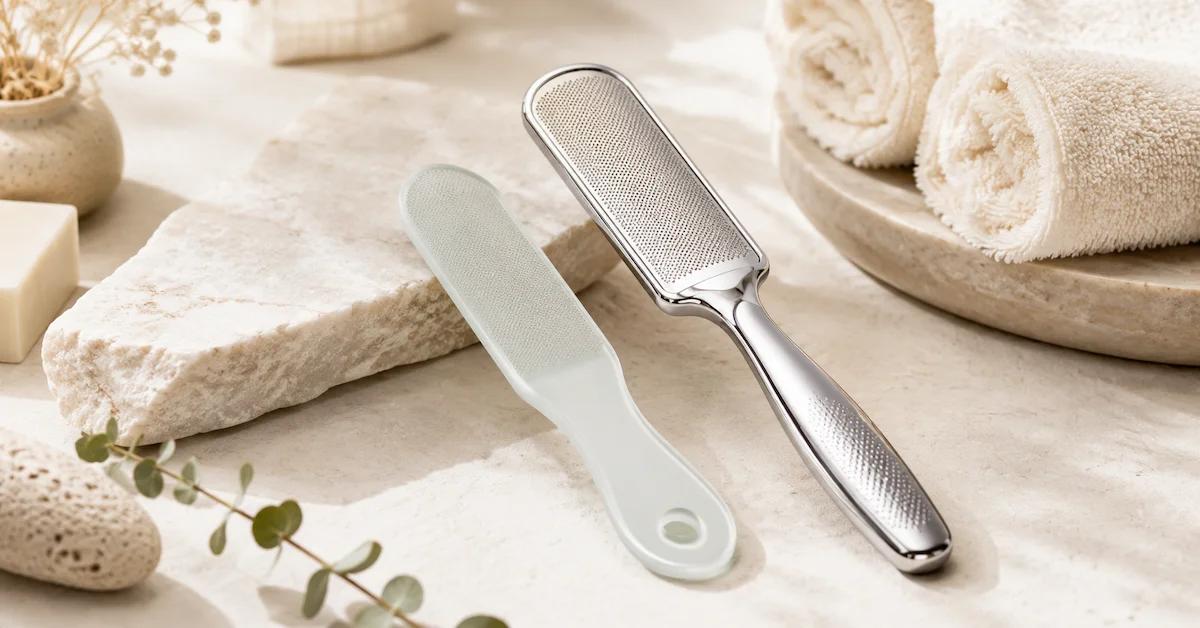
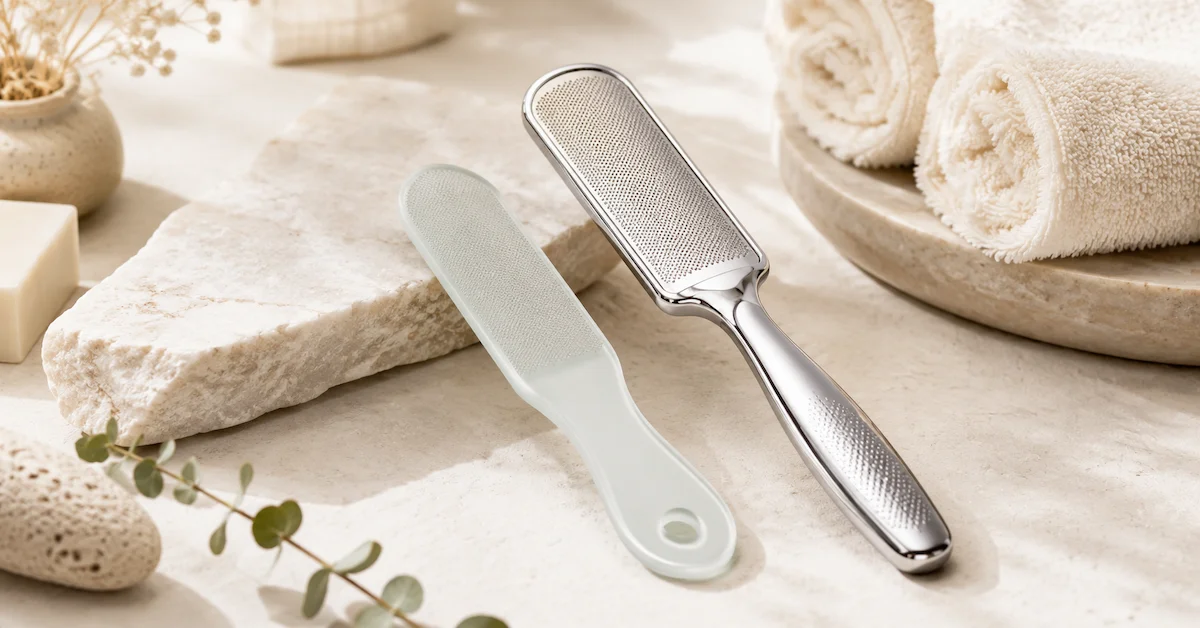
The foot files described here appear in two practical versions. One is a stainless-steel-looking metal rasp with a polished, reflective finish. The other has a white molded plastic handle with a similar elongated paddle head and a hanging hole at the end. Both use a wide working surface with a textured abrasive face and rounded corners. That matters because the head shape and edge treatment affect comfort as much as the abrasive surface does.
The metal version gives a more premium impression at first glance. It looks easy to wipe clean, and the reflective finish tends to read as durable in a retail setting, though the actual base material and coating should be confirmed rather than assumed. The plastic-handled model is more utilitarian, but it has a practical advantage for merchandising and storage thanks to the hanging hole. If you are building a broader personal-care line, that small detail can matter on peg hooks and in bundled sets.
Why shape matters as much as surface texture
A foot file is not a decorative item. The handle length, the taper, and the balance between handle and head all affect how confidently a user can work across the heel and arch. An elongated paddle head is useful because it spreads contact over a larger area, which helps the user smooth rough skin instead of digging into it. Rounded corners are also a quiet but important design point. Sharp corners are the kind of thing customers notice immediately, even if they do not know how to describe the problem.
How these tools are typically made
The exact process cannot be confirmed from the product image, but the visible construction points to two common manufacturing routes. A metal foot rasp often uses a stamped or etched abrasive plate assembled to a formed handle or body. The working surface may be a perforated or micro-textured sheet bonded or fitted into place. That approach can create a clean, repeatable look and makes the tool feel more substantial in the hand.
The white-handled version likely uses an injection-molded plastic handle with an attached abrasive pad. That route is common in mass-market grooming tools because it supports consistent shape, easier coloring, and lower unit cost at scale. It also gives manufacturers more freedom to add a hanging feature, logo area, or grip contour. None of that is unusual, but it does mean buyers should ask how the abrasive face is attached and whether the assembly is meant for light personal use or repeated professional handling.
Choosing between metal and plastic models
There is no universal winner here. The right choice depends on where the product will be sold and what the customer expects. Metal-looking foot files often sit better in premium beauty sets, spa assortments, and giftable personal-care collections. They can communicate sturdiness without extra explanation. Plastic-handled files may be better for mass retail, promotional packs, and budget-conscious lines where simplicity and hook display matter more.
From a buyer’s perspective, the decision often comes down to three questions. First, does the product need to feel premium on arrival? Second, will it be sold individually or as part of a set? Third, how important is storage convenience? A hanging hole, for example, is a small feature, but in retail and salon environments it can be the difference between tidy display and cluttered drawers.
What to ask foot file manufacturers before placing an order
When comparing foot file manufacturers, start with the basics that affect performance and customer satisfaction. Ask what the abrasive surface is made from, how it is attached, and whether the finish changes after repeated use. Ask whether the handle is molded, plated, or assembled from multiple parts. Those questions are more useful than generic requests for “best quality,” which tends to mean different things to different factories.
It is also sensible to ask how the product is cleaned in normal use. You do not need to assume sterilization compatibility or medical-grade performance unless the supplier states it clearly. A foot file is a grooming tool, not a clinical instrument, and buyers should avoid stretching the product beyond its intended category. That is one of those small but important procurement cautions that prevents awkward claims later.
Practical buyer checklist
Before you shortlist a foot file supplier, confirm the following:
1. Visible material composition of handle and working surface
2. Whether the abrasive plate is fixed, bonded, or replaceable
3. Grip comfort and balance for one-handed use
4. Edge rounding and overall finish quality
5. Packaging format for retail, salon, or wholesale distribution
6. Display options such as hanging holes or compact carton packing
Common sourcing mistakes with pedicure tools
The most common mistake is to focus on appearance alone. A polished surface photographs well, but if the handle feels awkward or the head is too narrow, the customer will know almost immediately. Another mistake is assuming that a similar-looking abrasive surface means similar performance. In grooming tools, small differences in texture and base construction can change the way the product feels against skin.
Buyers also sometimes overlook packaging and merchandising. A white plastic-handled file with a hanging hole may seem less sophisticated than a metal one, but it can be more practical in retail environments. Likewise, a metal-looking rasp may have stronger shelf presence but require more careful packaging to avoid scuffs. These are small issues until they hit your return rate or your store presentation.
Where foot file wholesale buyers should focus
Foot file wholesale sourcing works best when the buyer treats the item as both a functional tool and a consumer product. That means balancing cost, appearance, and usability. If you are buying for spa supply resale, usability and cleanup matter. If you are buying for private label, the area around the handle and the overall visual profile matter almost as much as performance. If you are buying for a broader foot-care assortment, consistency across the line matters, especially if this item will sit beside pumice stones, clippers, or nail tools.
Wholesale buyers should also pay attention to the language used by the supplier. A precise foot file supplier will describe the materials they can verify and will avoid overselling unconfirmed features. That is usually a good sign. Vague product copy, on the other hand, often hides a weak understanding of the item itself.
FAQ buyers usually ask
Is a metal foot file always better than a plastic one?
Not always. Metal-looking models often feel sturdier and more premium, but plastic-handled versions can be lighter, easier to display, and better suited to certain price points. The better choice depends on your market.
Can these be used for salon pedicures and home care?
Yes, based on the product type. They are positioned as foot care tools for removing calluses, smoothing rough skin, and supporting routine grooming. The exact usage expectations should still be aligned with your customer base and any local product claims rules.
What should I confirm before placing a wholesale order?
Confirm the actual materials, the abrasive construction, packaging, and whether the product is intended for single-user or repeated personal use. Those points affect both customer satisfaction and how you describe the item in your catalog.
What a sensible next step looks like
If you are evaluating a foot file supplier, start with samples that let you compare handle feel, head size, edge finish, and display presentation side by side. Ask for clear material descriptions and avoid filling in gaps with assumptions. The visible design already tells you a lot: the product is built around a wide paddle head, an ergonomic grip, and either a polished metal aesthetic or a simpler molded plastic format. What remains is deciding which version fits your channel, your margin, and your brand story.
For most buyers, that decision is less about chasing a perfect tool and more about choosing the version that your customer is most likely to keep using. In personal care, repeat use is the quiet metric that usually matters most.
Tag: