

If you buy or develop grooming products, choosing an eyebrow razor manufacturer is not just a matter of picking a supplier with a decent-looking handle and a low quote. The product may be small, but it sits at the intersection of cosmetics, personal care plastics, and metal blade assembly. That means a buyer has to think about usability, finish quality, blade integration, packaging expectations, and the realities of retail presentation all at once.
For brands, beauty distributors, salon chains, and private label teams, the real question is not “Can this be made?” It is “Can this be made consistently, safely enough for the intended market, and in a style customers will actually pick up?” That is where many sourcing projects get messy. A handle that feels light in the hand can still be visually appealing. A sharp-looking blade head can still be awkward if the geometry is off. And a colorful trim tool that works well in a consumer kit may not survive scrutiny if the mold finish, grip texture, or assembly alignment varies from batch to batch.
What this product category usually includes
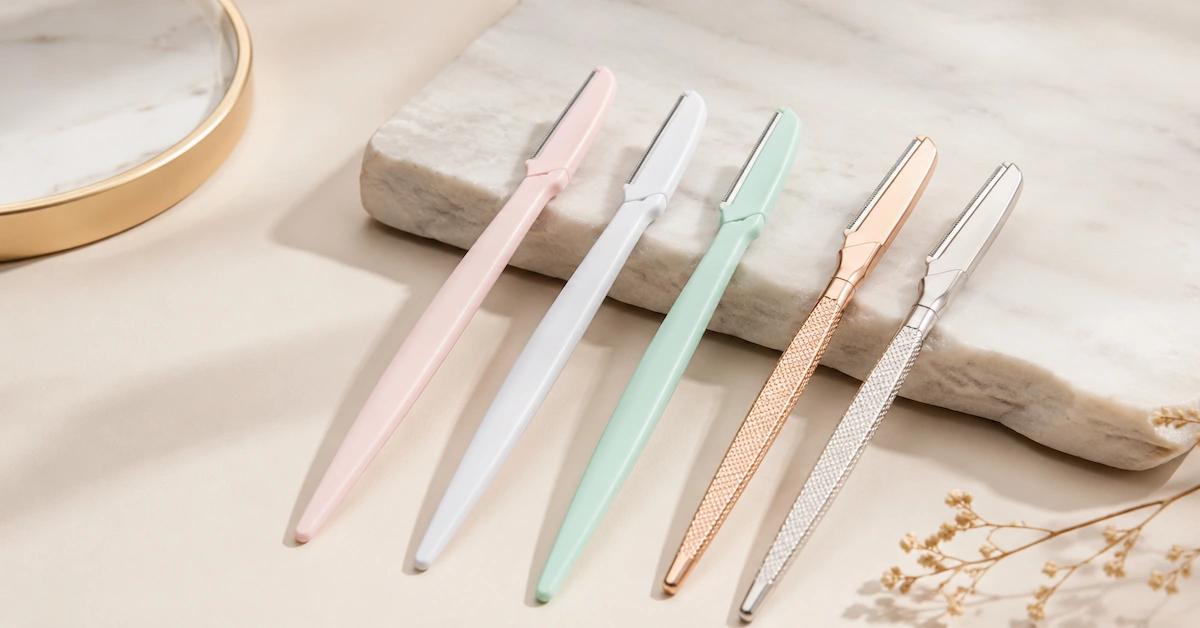
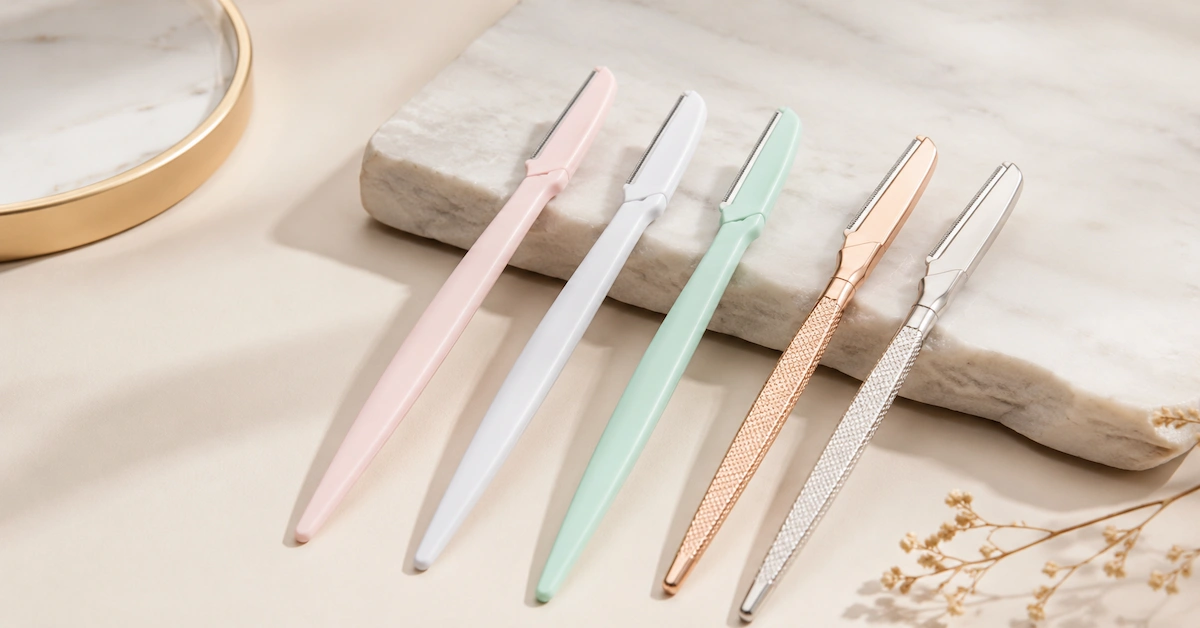
Eyebrow razors, also called facial hair grooming razors in some catalogs, are typically slim handheld tools used for eyebrow shaping, cleanup around the brow line, and light facial hair removal such as peach fuzz. The form factor is simple, but it is not generic. The typical product has a narrow handle, often disposable-style, with a small straight blade head at one end. Some versions use a long tapered handle; others have a more compact body with a textured lower grip section for better control.
The visible finish matters more than many sourcing teams expect. In the examples described here, the handles appear in pastel pink, white, mint green, and metallic rose-gold or silver tones. That tells you the market is paying attention to cosmetic appeal, not just function. For many beauty buyers, the product is sold as part of a self-care routine, a travel kit, or a salon retail bundle. A utilitarian look can work, but in this category appearance often helps move the product off the shelf.
Quick reference: what buyers usually compare
When evaluating an eyebrow blade supplier, most teams end up comparing a few practical points first:
Handle shape and grip feel
Blade head size and blade alignment
Color and finish consistency
Assembly quality at the neck and head
Packaging compatibility for retail or set-building
Basic manufacturing flexibility for custom colors or branding
That is the real short list. Everything else tends to follow from those decisions.
How an eyebrow razor is typically made
The likely manufacturing path combines plastic injection molding with metal blade assembly and finishing. That is common in personal care tools because the handle must be lightweight, inexpensive to produce at scale, and visually consistent. Plastic is also easy to color in small cosmetic-product-friendly shades, which matters for retail lines.
The blade area is metal, usually set into a compact head with a protective guard or frame. The exact blade material, coating, or sterilization process is not visible in the supplied data, so those details should be confirmed directly with the supplier rather than assumed. In practice, those choices can change the whole commercial profile of the item. They affect perceived quality, handling, and the claims a brand can responsibly make.
A good eyebrow razor factory usually has to manage both molding and assembly discipline. If the handle geometry is slightly off, the blade head can sit unevenly. If the grip texture is poorly formed, the tool feels cheap. If the color match drifts across lots, retail sets look inconsistent. None of these are dramatic failures on their own, but they add up quickly in consumer grooming products, where buyers notice small flaws.
What the visible design details suggest about market use
This product type is built for precision trimming, not heavy-duty shaving. The small straight blade head and narrow handle suggest controlled movement around the eyebrow line and other fine facial areas. That makes ergonomics more important than brute strength. A buyer who only thinks about unit cost may miss the real issue: a tool that is awkward to hold can create a poor user experience even if the blade itself is acceptable.
The textured grip on some variants is worth paying attention to. It is a modest detail, but it can make a real difference when users are working close to the face. In beauty tools, that kind of practical feature often gets overlooked in early sourcing discussions, then shows up later in customer feedback.
Color options are another commercial clue. Pastels and metallic finishes are common in beauty accessories because they help position the product as part of a personal care set rather than a plain utility item. That matters if you plan to sell through retail shelves, online beauty bundles, or salon counter displays. In those channels, the product must look intentional, not merely functional.
What to ask before you commit to a supplier
Selecting an eyebrow razor manufacturer is easier when you ask for information in the right order. Start with construction, then move to appearance, then to commercial fit.
Ask how the handle is formed and whether the plastic finish is stable across production runs. Ask how the blade is integrated into the head and what quality checks are used during assembly. Ask whether custom colors are possible and how closely the supplier can match a desired shade. If your product will be sold in sets, ask whether the manufacturer can keep the handle finish consistent across companion items.
You should also clarify what the supplier means by “eyebrow razor.” Some factories use the term loosely and may offer related grooming tools with slightly different shapes or blade configurations. That is where sample approval becomes important. A catalog photo is not enough, especially if your retail plans depend on a specific handle profile or head geometry.
Practical buying caution
Do not assume that a clean-looking sample tells you everything about production quality. On small grooming tools, the first sample often looks better than routine output. Ask for multiple samples if you can, and check the alignment of the blade head, the finish at the grip, and the consistency of the colored handle surface. Minor cosmetic variation may be acceptable, but it should be understood before purchase orders move forward.
Common mistakes buyers make
One common mistake is treating the product as a commodity with no user-experience risk. Yes, the tool is small. No, that does not mean all versions are equal. A slightly better handle shape can matter more than a marginally lower price, especially in consumer beauty goods where first impressions are visual and tactile.
Another mistake is over-specifying one part of the product while ignoring the rest. For example, teams may spend time debating blade features without checking the handle finish, or they may focus on color samples and forget to confirm assembly quality. The best sourcing process keeps the whole product in view.
A third mistake is failing to think about channel fit. The eyebrow razor that works in a salon retail pack may not be the one you want for travel kits or mass-market beauty sets. Compactness, color, and presentation all change depending on the channel.
How to judge factory capability without getting lost in jargon
If you are evaluating an eyebrow razor factory, you do not need a lab coat to ask the right questions. Ask for process clarity. Ask what parts are molded, what parts are assembled, and where quality checks happen. Ask whether the supplier is comfortable with multiple colorways or textured grip surfaces. Those questions tell you far more than a polished sales deck.
It also helps to request photos or samples from finished production, not just prototype units. The difference can reveal how a supplier handles batch consistency. For a product like this, small issues in color finish, blade seating, or handle symmetry can be surprisingly visible to consumers.
Where the real decision usually lands
Most sourcing teams eventually make their decision based on a blend of three things: visual appeal, tactile comfort, and supplier reliability. That sounds simple, but it is the right framework. The cheapest option is rarely the best if the handle feels awkward or the finish looks uneven. The most attractive sample may not be the one a factory can repeat efficiently. And the most technically detailed pitch may still leave open questions about actual production discipline.
For a brand building a grooming line, the ideal eyebrow razor manufacturer is the one that can handle plastic injection molding, clean assembly, and cosmetic-grade presentation without turning the product into an engineering exercise. This is a small item, but not a trivial one.
Buyer FAQ
Is an eyebrow razor only for eyebrow shaping?
No. These tools are commonly used for eyebrow cleanup and light facial hair removal, including peach fuzz and upper-lip touch-ups, depending on the design and user preference.
Why do some handles have grip texture?
Textured grip areas can improve control during close facial grooming. It is a modest feature, but useful for precision work.
Can these tools be sold in beauty kits?
Yes. The compact form, color variety, and grooming use case make them a natural fit for consumer kits, salon retail packs, and travel sets.
Should I ask about blade material and sterilization?
Yes. Those details are important, but they were not visible in the product description here, so they should be confirmed directly with the supplier rather than assumed.
Next step for sourcing teams
If you are shortlisting suppliers, start with a sample request and a short technical checklist. Confirm handle finish, blade-head geometry, color options, and the supplier’s ability to maintain consistency across batches. If the item will sit next to other beauty accessories, ask how the product line can be matched visually so the set looks deliberate rather than assembled from leftovers.
A reliable eyebrow blade supplier should make it easy to verify the basics without overcomplicating the conversation. That is often the best sign you are dealing with a factory that understands both production and the market it serves.
Tag: