

Cuticle Nipper Supplier Selection Guide for B2B Buyers
A cuticle nipper should remove only loose dead cuticle with controlled jaw contact and a stable return action. Buyers should compare jaw geometry, pivot feel, spring behavior, handle comfort and finish across several samples before approval.
A cuticle nipper supplier should provide samples that let buyers compare jaw contact, pivot feel, spring return and handle control.
What a Cuticle Nipper Is Designed to Do
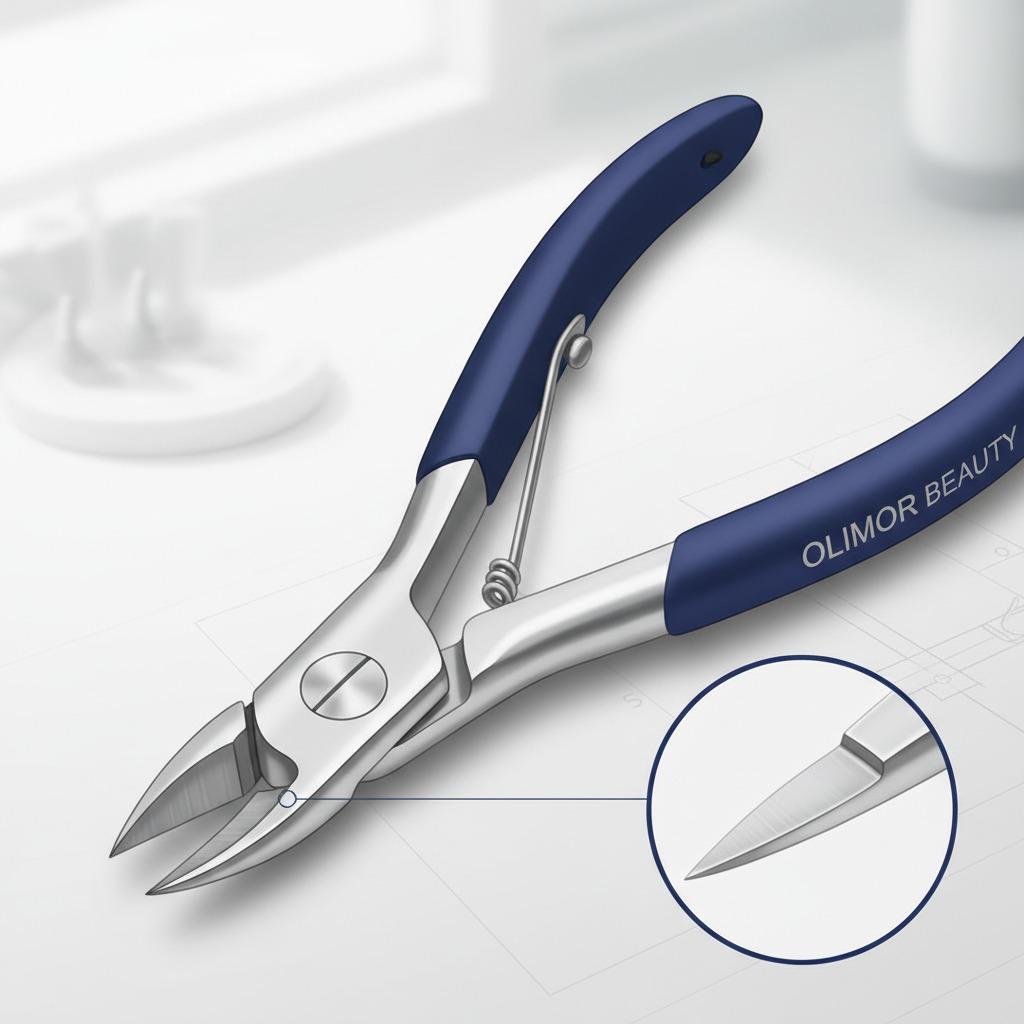
A cuticle nipper is a precision grooming tool used to trim loose cuticle tissue and hangnails around the fingernails or toenails. It is different from a standard nail clipper. Nail clippers are shaped to cut the harder free edge of the nail plate, while cuticle nippers have smaller angled blades intended for soft, narrow areas near the nail fold.
The best use case is selective trimming. A cuticle nipper should not be used to cut healthy attached skin or to remove large sections of living tissue. Instead, it is most effective after the cuticle area has been softened and gently pushed back. The user can then remove only the lifted, dry or ragged skin that would otherwise catch, split or make the manicure look unfinished.
For professional nail services, the tool supports a neat polish line and a tidy final look. For home care, it helps manage hangnails before they tear further. For pedicures, it can help with small bits of excess skin around toenails, provided the user works slowly and does not cut aggressively.
Key Product Details That Affect Performance
The value of a cuticle nipper comes from how its components work together. Blade sharpness, blade angle, handle return and tool weight all influence whether trimming feels controlled or clumsy.
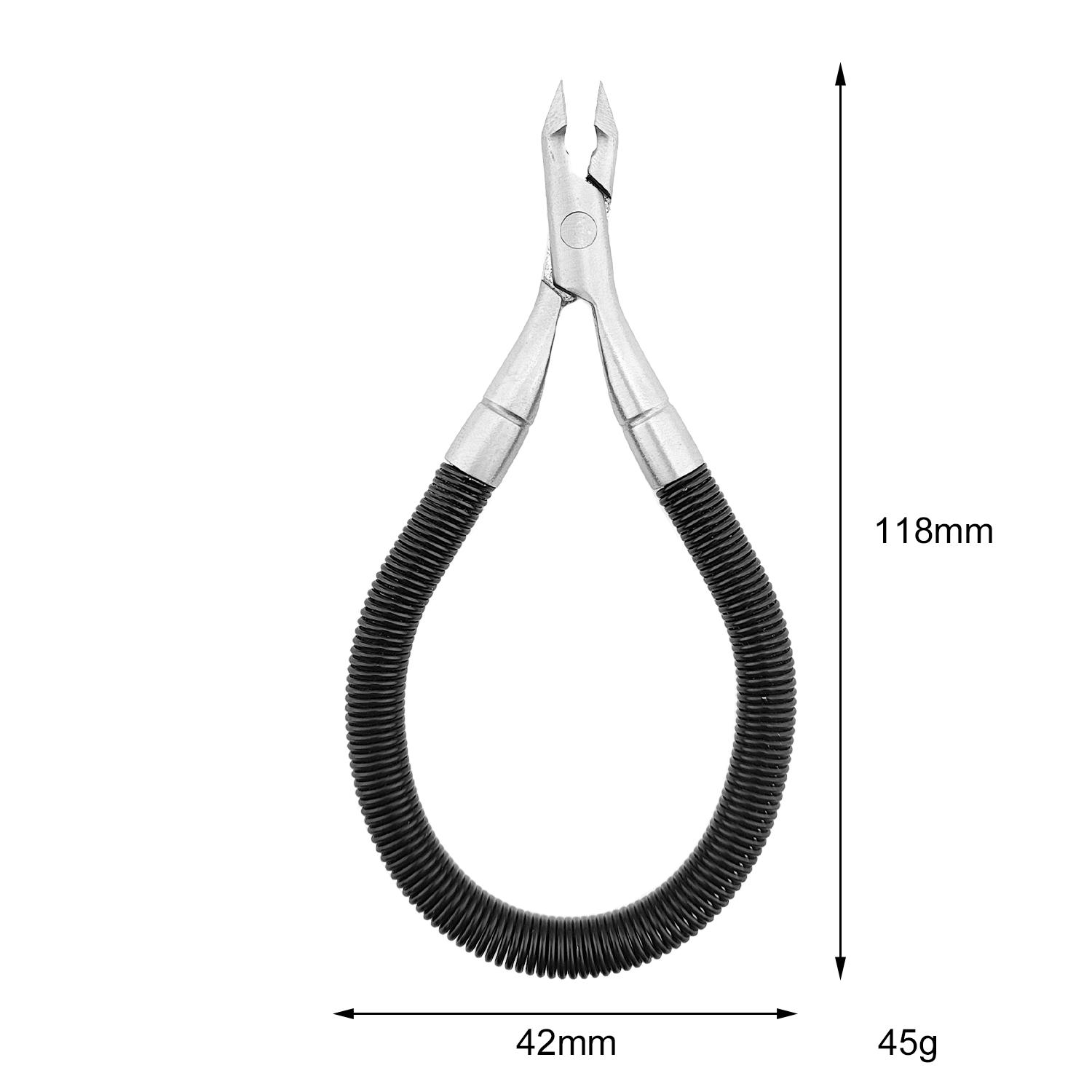
- Sharp angled blades: The stainless steel blades are shaped for accurate cuts in narrow spaces around the nail. Angled tips help the user approach the cuticle from the side without blocking the view.
- Stainless steel construction: Stainless steel is commonly used in manicure tools because it provides a polished appearance and durable cutting surfaces when properly maintained.
- Copper-colored coiled handle: The spring-like handle helps reopen the tool after each cut. This reduces repetitive finger effort and supports smoother work during full manicures or pedicures.
- Dimensions: Confirm the current length and width for the exact model, then test whether the body suits the intended users, kits and professional trays.
- Weight and balance: Request the current net weight and evaluate balance on physical samples instead of relying on an unverified legacy value.
- Polished finish: A smooth stainless steel finish gives the tool a clean professional look and makes routine wiping easier after use.
These characteristics are especially important for buyers who plan to supply the tool to salons, nail bars, beauty retailers or private label programs. A cuticle nipper is judged quickly by how it feels during the first few cuts. If the blades do not align cleanly, if the spring feels inconsistent or if the tool is too heavy at the tip, users will notice.
Who This Cuticle Nipper Is Best Suited For
This type of precision cuticle nipper fits several practical buying scenarios. A professional nail technician may need a reliable nipper for daily cuticle cleanup before gel polish, classic polish or natural nail care. A salon owner may include it in technician tool kits where comfort and predictable cutting action are priorities. A beauty distributor may add it to a stainless steel manicure tool range because it is a core item that pairs naturally with pushers, nail files, buffers and clippers.
For at-home users, the main advantage is control. A dedicated cuticle nipper is easier to manage than trying to use scissors or nail clippers around the nail fold. The angled blades allow careful trimming of hangnails after soaking, while the coiled handle helps the tool reopen without the user manually resetting it each time.
How to Use a Cuticle Nipper Safely and Effectively
Good results depend as much on technique as on the tool itself. Cuticle trimming should be slow, minimal and deliberate. The goal is a clean edge, not over-removal.
- Clean the tool and hands first. Wash hands or feet and ensure the nipper is clean before it touches the skin.
- Soften the cuticle area. Soak in warm water or use an appropriate cuticle softening product. Softened tissue is easier to trim cleanly.
- Push back gently. Use a cuticle pusher to move loosened cuticle from the nail plate. Do not scrape harshly or force the skin backward.
- Identify only loose tissue. Look for dry, lifted cuticle or hangnails. Avoid cutting skin that is attached, firm or painful.
- Trim with small cuts. Place the angled blade carefully and remove tiny sections at a time. Do not pull the skin after cutting.
- Check both sides of the nail. Hangnails often appear near the sidewalls. Trim only what is clearly loose.
- Moisturize after trimming. Apply cuticle oil, hand cream or lotion to reduce dryness and support a smoother appearance.
- Clean the nipper after use. Remove residue and dry thoroughly before storage.
A common mistake is trying to cut the entire cuticle line in one continuous motion. This increases the risk of over-cutting and uneven skin. Short, controlled snips are safer and produce a cleaner look.
Maintenance Tips for Longer Tool Life
Because a cuticle nipper is used close to the skin, maintenance is not optional. Regular cleaning protects the user, preserves blade performance and keeps the tool looking professional. After each use, wipe away visible residue and dry the tool carefully. Moisture left in the hinge or blade area can reduce smoothness over time.
Store the nipper in a dry pouch, case or tray where the blades do not strike other metal tools. Blade tips are small and should be protected from drops. If the blades become misaligned, dull or damaged, trimming will feel less precise and may pull at the skin. At that point, the tool should be replaced or serviced according to the buyer’s quality policy.
For salons, hygiene procedures should follow local requirements and the salon’s sanitation system. A tool intended for repeated professional use should be easy to clean and inspect. The polished stainless steel finish helps with visual inspection because residue is easier to see on a smooth reflective surface.
A polished surface does not prove that a nipper is compatible with an autoclave or any specific sterilization cycle. Professional buyers should verify the exact model, material and finish against supplier documentation, the equipment instructions and current local sanitation requirements before approving a reprocessing method.
Buyer Checklist for Sourcing Cuticle Nippers
When sourcing manicure tools, buyers often focus on appearance first. However, a cuticle nipper should be evaluated by function, consistency and packaging suitability. The following checklist can help when comparing samples or preparing an inquiry.
| Evaluation Point | Why It Matters |
|---|---|
| Blade alignment | The blade edges should meet cleanly so the tool cuts rather than pinches or tears. |
| Tip precision | Fine angled tips help reach small hangnails and tight nail corners with better visibility. |
| Spring return | The coiled handle should reopen smoothly after each cut without feeling loose or stiff. |
| Hand comfort | Confirm current dimensions and weight, then assess balance during repeated sample handling. |
| Surface finish | A polished stainless steel finish should be smooth, clean and suitable for beauty retail presentation. |
| Tip protection | A cap or insert should protect the fine jaws without pressing them out of alignment during packing or transit. |
| Packaging needs | Retail, salon kit and distributor packaging may require different protection and presentation. |
Compare several samples rather than one selected unit. Record jaw closure, pivot drag, spring return, burrs and handle comfort so the approved reference can be used again during incoming inspection.
For assortment planning, consider whether the cuticle nipper will be sold as a single tool, paired with a pusher, or included in a manicure set. It can also sit within broader product collections for nail care, grooming or travel beauty accessories. The right choice depends on the customer’s expected use: professional service, home manicure maintenance, giftable beauty kits or wholesale refill inventory.
Why Precision Matters in Nail Grooming
Cuticle care is one of the most visible details in nail grooming. Even when the nail shape and polish are attractive, ragged hangnails or uneven cuticle trimming can make the result look unfinished. A sharp stainless steel cuticle nipper gives the user a better chance of making clean, minimal cuts with less pressure.
The combination of angled blades, a coiled spring handle and compact lightweight dimensions makes this nipper practical for both professional and personal use. It is not a tool for rushing. Its strength is controlled trimming: softening first, pushing back gently, removing only what is loose and finishing with moisture.
For buyers, the most important question is whether the tool performs consistently in real hand use. Check the cut, the spring feel, the finish and the packaging fit for your market. A well-selected cuticle nipper can become a dependable part of a nail care range because it solves a specific grooming need with a simple, familiar design.
Beginner Handling and Over-Cutting Risks
The two merged articles add practical points that belong in one guide rather than separate pages. A beginner-friendly nipper needs predictable spring return, comfortable grip and enough visibility around the jaw. Users should soften and push back the cuticle first, then remove only lifted dead tissue with small cuts.
Redness, pulling or repeated cutting in the same spot indicates poor technique, an unsuitable jaw or a dull/misaligned edge. Buyers should include clear care and safe-use instructions in retail packaging and verify that those instructions match the selected model.
Prepare a Clear RFQ
Review the Olimor cuticle nipper range, compare the stainless steel cuticle nipper reference, and then discuss a cuticle nipper sourcing project. Include the intended user, target market, product dimensions or reference, finish, logo, packaging, sample quantity and inspection expectations so the response can be based on the actual project.
Buyer FAQ
How many cuticle nipper models should a new range carry?
There is no universal number. Begin with the fewest SKUs that cover distinct users, channels or pack roles, then add a model only when demand and a clear functional difference justify it.
Can buyers approve a cuticle nipper from one sample?
One sample cannot show variation. Review several units, use a documented functional test and approve the finish, logo and complete pack in separate stages.
Should a supplier quote one MOQ for every customization?
Do not assume so. Product, finish, marking and printed packaging may have different constraints. Request current terms for the exact configuration and record each assumption in the quotation.
Can I request samples before placing an order?
Yes, sample review is a practical step for cuticle nippers because appearance alone cannot confirm jaw alignment, spring feel, pivot smoothness, or handle comfort. Ask how samples relate to the final production specification.
Is there an MOQ for cuticle nipper orders?
MOQ depends on the product configuration, packaging, customization, and supplier arrangement. Buyers should confirm MOQ directly with the supplier before finalizing artwork, samples, or purchasing plans.
Can cuticle nippers be customized for private label?
Customization may include packaging, labeling, logo placement, finish preferences, or set configuration, depending on the supplier’s capabilities. Confirm feasible options, approval steps, and any documentation needed before production.
Is this tool only for professional use?
Not necessarily. The same style of nipper may be used in professional settings and home grooming, depending on the supplier’s positioning and the buyer’s intended market.
What material is it likely made from?
The reflective silver finish suggests a metal construction, often stainless steel for this category, but exact material should be confirmed with the supplier rather than assumed.
What should I inspect first in a sample?
Start with jaw alignment, spring feel, and handle comfort. Those three features tell you a lot about the underlying quality.
Are all cuticle nippers suitable for salons?
No. Tip geometry, handle control, care requirements and local professional expectations must match the service.
How should a buyer inspect the jaws?
Use a clean light background, close the jaws slowly and compare several samples to the retained reference.
Can a protective cap replace a good package?
No. The unit pack still needs to prevent movement, scratches and accidental contact in transit.
Specify the Working Geometry
Cuticle nippers use two jaws, a pivot, handles and a spring or return mechanism as one system. Jaw length alone does not define control. The profile, tip meeting, cutting-edge contact, pivot movement, handle span and spring response must work together.
Record the characteristics that matter for the selected model:
- jaw length and visible profile;
- tip alignment when closed;
- cutting-edge contact across the approved working area;
- pivot security and acceptable movement;
- spring type, seating and return behavior;
- handle shape, span and surface finish;
- non-cutting edges, burr control and tip protection.
Confirm the controlled dimensions and acceptance limits for each shortlisted Olimor nipper. Do not copy values from a different article or model.
Verify Material and Finish Evidence
"Stainless steel" is not a complete purchasing specification. Ask for the selected grade, relevant property target, finish process and supporting test method for each model. If hardness or corrosion performance matters, define how, where and how often it is checked.
A polished, coated or colored surface should be reviewed on actual samples. Check visible and recessed areas, moving joints and marked surfaces. Confirm care and cleaning compatibility for the selected finish rather than publishing one universal instruction.
Confirm the Olimor material, hardness, finish and care records for the approved models before release.
Use a Sample Ladder
A sample ladder keeps functional, visual and packaging decisions traceable.
- Reference sample: confirms general format and intended use.
- Functional sample: confirms jaws, pivot, spring, handles and cutting test.
- Appearance sample: confirms finish range and logo placement.
- Packaging sample: confirms fit, tip protection, labeling and removal.
- Production sample: confirms the released specification can be repeated with the approved production route.
Label and photograph each approved sample. The approval record should identify which characteristics are closed and which remain pending. If the supplier changes the material, spring, pivot, jaw geometry, finish or pack, determine which approval steps must be repeated.
Use Cases: Salon, Retail, Kit and Distributor Requirements
The right cuticle nipper specification depends on where the product will be sold and how it will be used. A professional salon buyer may prioritize cutting control and fatigue reduction. A beauty retailer may prioritize appearance, packaging, and broad consumer appeal. A grooming-kit supplier may need a tool that fits a complete set with consistent visual styling. A distributor may need a balanced specification that can serve multiple customer types.
| Buying scenario | Main buyer priority | What to check | Supplier question to ask |
|---|---|---|---|
| Professional salon supply | Control, comfort, repeat use | Jaw alignment, pivot smoothness, spring response, grip stability | How do you inspect cutting action and sample consistency? |
| Beauty retail | Shelf appeal and user confidence | Polishing, surface marks, packaging fit, instructions, visual consistency | What packaging and finish options can be supported? |
| Personal grooming kits | Set compatibility and compact presentation | Tool size, finish match, protective packaging, kit layout | Can the nipper be supplied as part of a coordinated tool set? |
| Private-label program | Brand consistency and repeat orders | Logo options, color or finish expectations, inspection method, sample approval process | What customization details must be confirmed before production? |
| Distributor assortment | Stable supply and broad usability | Functional reliability, packaging durability, clear product descriptions | How do you manage repeat-order consistency? |
This comparison prevents a common sourcing mistake: approving one generic tool for every channel. Different sales channels create different expectations, so the product brief should define the intended user before the supplier quotes or prepares samples.
Sample Review Checklist for Cuticle Nippers
Sample review should be structured. One attractive sample is not enough to confirm production consistency. When possible, review multiple samples from the same proposed specification and compare them side by side.
Functional Checks
- Open and close the tool several times to feel pivot smoothness.
- Check whether the jaws meet evenly from tip to base.
- Look for wobble or sideways movement at the pivot.
- Compare spring strength across multiple samples.
- Test grip comfort in a realistic hand position.
Visual and Finish Checks
- Inspect the cutting head under bright light for uneven grinding.
- Check handle edges for roughness or burrs.
- Look for scratches, discoloration, pits, or uneven polishing.
- Confirm the tool matches the intended retail or professional positioning.
- Review packaging fit so the jaws and finish are protected during handling.
Documentation Checks
- Request written confirmation of material and finish.
- Confirm customization details such as logo placement, packaging artwork, and labeling needs.
- Ask how inspection is performed before shipment.
- Clarify how sample approval will be linked to bulk production expectations.
If the tool will be part of a wider manicure assortment, buyers can review product-family planning through the beauty tool collection and align finishes, packaging style, and positioning before finalizing the nipper specification.
Where the product fits in the market
A cuticle nipper sits at the intersection of beauty tools and personal grooming. It is common in nail salons, manicure kits, beauty spas, and retail cosmetic sets. Some buyers want a professional-facing look; others need a straightforward consumer product for home grooming. The supplier should be able to support whichever channel you are targeting, at least in terms of presentation and consistency.
This is also where cuticle nipper wholesale planning becomes important. If you are building a product assortment, you may need one version for salon supply, another for gift sets, and another for general retail. The tool itself may be similar, but the economics, packaging, and quality expectations can differ quite a bit.
Blade Precision: The Detail That Defines Performance
The blade is the working heart of a cuticle nipper. Olimor Beauty’s product information highlights angular blades engineered for clean, precise cuts. For the user, this matters because cuticle trimming usually happens in tight areas where accuracy is more important than force. A blade that is poorly aligned may pinch, pull or leave uneven edges. A blade that is too blunt may require repeated cutting, which can increase discomfort.
When assessing blade quality, focus on several practical points:
- Tip meeting: The two blade tips should meet neatly when the handles are closed, without an obvious gap or overlap.
- Cutting edge consistency: The sharpened edge should appear even from heel to tip, with no visible chips or irregular grinding marks.
- Controlled sharpness: A professional cuticle nipper needs effective cutting ability, but it should not feel unstable or difficult to control.
- Access angle: Angular blades should help the user approach small cuticle areas without forcing the wrist into an uncomfortable position.
- Finish around the tips: The ends should be cleanly finished so the tool does not scratch surrounding skin during careful work.
For salons and distributors, blade consistency across multiple pieces is especially important. A single well-made sample is useful, but batch consistency determines whether the tool can support repeat orders and brand trust.
Check Cuticle Nippers for Salons at the Working Edge
- Open and close the jaws slowly to see whether the tips meet evenly without a side step.
- Observe spring return, handle clearance and grip stability during a short controlled trial.
- Inspect burrs, coating, protective caps and pack retention; sharp tools need clear handling and care guidance.
Tag:
Related articles
- Beauty Tools Sourcing Guide
- Materials & Quality Control
Nail Care Tools Manufacturer: Cross-Tool QC Guide for OEM
- Beauty Tools Sourcing Guide
- Lash & Brow Tools
Eyebrow Tweezer Manufacturer: Better Sourcing Checklist
- Beauty Tools Sourcing Guide
- Beauty Tools Manufacturing