Eyebrow Tweezer Manufacturer Guide for Better B2B Sourcing
Choosing an eyebrow tweezer manufacturer is not just a search for a simple metal grooming tool. For retail buyers, salon distributors and private label beauty brands, the real goal is to source a tweezer that closes cleanly, grips fine hair reliably, feels comfortable in the hand and arrives with a finish and package suitable for the sales channel.
Eyebrow tweezers look straightforward in a catalog image, but they behave like precision hand tools. The last few millimeters of the tips decide whether the user can remove a single hair cleanly or becomes frustrated by slipping, scraping or misalignment. That is why a sourcing decision should cover material choice, tip geometry, surface finish, inspection method, packaging protection and supplier communication before an order is placed.
This guide explains how to evaluate slim metal eyebrow tweezers like the matte-silver slant and pointed styles commonly used for brow grooming, beauty kits and precision personal care. It is written for commercial buyers who need practical selection criteria rather than generic product descriptions.
What Buyers Usually Mean by Eyebrow Tweezer Manufacturer
When buyers search for an eyebrow tweezer manufacturer, they may be looking for several different capabilities. Some need a factory that can produce a standard slant-tip tweezer for mass-market beauty retail. Others need custom eyebrow tweezers with private label packaging, a specific surface finish or a matching grooming set. Salon suppliers may care less about decoration and more about repeatable gripping performance over frequent use.
The term can also mean different levels of control. A true manufacturing partner should be able to discuss forming, grinding, polishing, tip shaping and inspection. A trading supplier may still be useful, but the buyer should understand where production control actually sits. This matters because tweezer quality depends heavily on small process details that are difficult to correct after production.
For an initial product review, start by browsing the supplier's beauty tool range. Olimor buyers can review related product categories through Olimor product options before narrowing a sourcing brief. The goal is not to select from photos alone, but to define the right use case and request samples that match it.
Why Eyebrow Tweezers Behave Like Precision Tools
A grooming tweezer is a spring-like hand tool with two arms that must close evenly at the working end. The body can appear simple, but performance depends on geometry, material behavior and finishing quality. A slight mismatch at the tips can prevent the tweezer from gripping fine hair. A rough inner edge can catch, cut or slide across hair instead of holding it. A weak body can twist under finger pressure and change the closing angle.
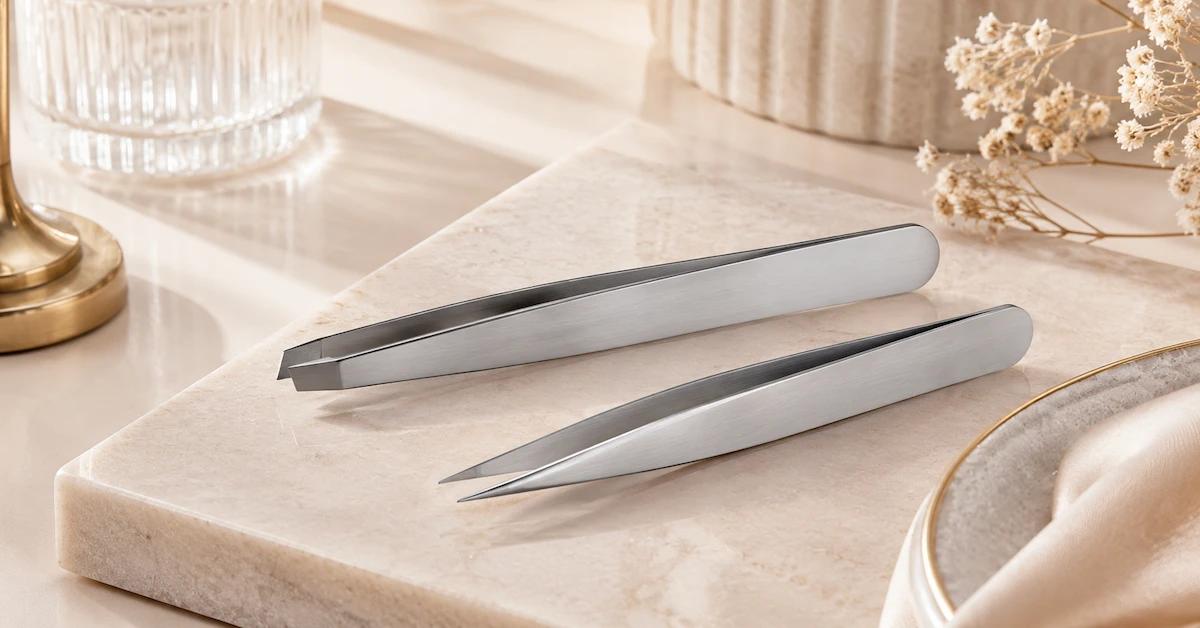
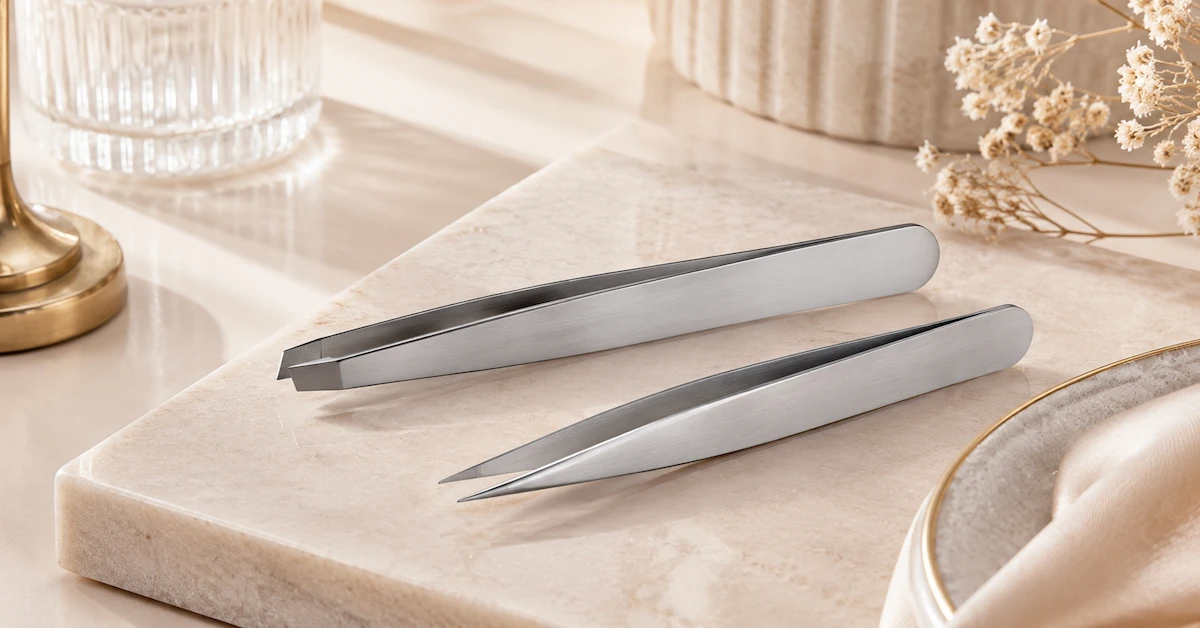
The product style shown in the supplied material includes slim, elongated metallic tweezers with a matte-silver appearance. One appears to use a slanted tip, while another looks more pointed or fine-tipped. These two shapes serve different user needs. A slant tip is typically preferred for eyebrow shaping because it gives more contact area and control along the brow line. A pointed or fine tip is better for isolated hairs and detailed work, but it requires more careful handling.
For B2B sourcing, the key lesson is that a good-looking tweezer is not automatically a good-performing tweezer. The buyer needs to examine closure, alignment, edge smoothness, grip feel and consistency across multiple samples. A photo may show a clean silhouette, but it cannot prove that the tips meet correctly.
Tip Styles and Use Cases for Retail, Salon and Kits
The first product decision is the tip style. A standard body can be adapted to different tips, but the user experience changes significantly. For mainstream beauty retail, slant-tip eyebrow tweezers are often the safest starting point because they suit everyday brow shaping. For precision tasks, a pointed tip can be useful, but it may not be the best choice for inexperienced consumers.
Commercial buyers should match the tip to the channel instead of choosing only by appearance. A salon assortment may include both slant and point styles so professionals can switch tools by task. A travel grooming kit may favor one versatile slant tweezer because it is easier to explain and use. A promotional beauty bundle may prioritize a clean finish and safe packaging, while a premium private label item may need a more refined surface and tighter sample review.
| Tip style | Best-fit use | Buyer checks | Common sourcing risk |
|---|---|---|---|
| Slant tip | Eyebrow shaping, everyday grooming, retail beauty lines | Even bevel, full tip contact, smooth inner edges | Tips meet at one corner only or slide on fine hair |
| Pointed or fine tip | Isolated hairs, detail work, precision grooming | Controlled taper, safe finish, accurate closure | Feels too sharp, rough or difficult for general users |
| Mixed set | Salon kits, grooming sets, private label assortments | Consistent finish across both styles, clear packaging descriptions | One style performs well while the other is treated as a filler item |
This comparison is useful during product planning because it connects design choice to buyer intent. If customer reviews will focus on eyebrow shaping, the slant tip should receive the closest inspection. If the product is marketed as a precision tool, the pointed tip must be checked for smoothness and control.
Material, Finish and Manufacturing Details to Discuss
Many eyebrow tweezers are made from stainless steel or similar corrosion-resistant metal, but buyers should avoid assuming that the material name alone guarantees performance. The grade, forming method, heat and spring behavior, grinding accuracy and final finish all influence how the tool feels and performs. Do not accept vague phrases such as premium metal without asking for the supplier's actual material description and supporting documents.
A typical manufacturing path for slim metal tweezers may include metal forming, trimming, grinding, polishing, tip shaping, cleaning and packaging. The exact method varies by factory and product design, so it should be confirmed with the supplier. The most important stage is usually tip preparation. The slanted or pointed working ends need accurate shaping and finishing so they close cleanly without roughness.
Surface finish is both visual and functional. A brushed or satin finish can give a matte-silver tweezer a professional look while helping hide minor handling marks better than a mirror-like surface. It may also feel less slippery in daily grooming use. However, finish preference depends on the brand position. A retail line may want a clean cosmetic appearance, while a salon-focused tool may prioritize grip, durability and easy cleaning.
Buyers should also ask how the supplier protects tips after finishing. Thin tools can be bent, scratched or misaligned during bulk handling, packing or transport. A sample approved before packaging does not guarantee that bulk goods will arrive in the same condition if tip protection and carton packing are weak.
Inspection Checklist Before Approving Samples
Sample approval should be practical and repeatable. Instead of reviewing one attractive sample under bright lighting, check several samples by hand and compare them side by side. The purpose is to find whether the supplier can deliver consistency, not just one good piece.
Sample inspection checklist
- Tip alignment: Close the tweezer slowly and confirm that the working edges meet evenly, not only at one corner.
- Grip test: Test on fine hair or a suitable comparable material to see whether the tips grip without excessive force.
- Edge comfort: Run a careful visual and touch inspection to check for burrs, rough grinding marks or scraping edges.
- Arm balance: Press the tweezer normally and see whether the two arms flex evenly without twisting.
- Finish consistency: Compare surface color, brushing direction and polish level across multiple pieces.
- Tip protection: Review caps, sleeves, trays or packaging methods that prevent damage before sale.
- Branding area: If private label is needed, confirm where logo placement can go without affecting comfort or finish.
- Packaging fit: Check whether the package holds the tweezer securely and presents the product clearly for the channel.
For quality management discussions, buyers can reference recognized frameworks such as ISO 9001 as a general quality management standard, but they should verify the current version and ask for actual supplier documents if certification is claimed. For consumer sales into regulated markets, buyers should also check applicable product safety obligations, such as the EU General Product Safety Regulation where relevant. These references help frame the conversation, but they do not replace product-specific inspection.
How to Compare Eyebrow Tweezer Suppliers
Supplier comparison should go beyond unit cost. Tweezers are small, but poor quality can create returns, negative reviews and repacking work. A lower quote may not be a better commercial result if tips arrive misaligned or the finish varies noticeably across the batch.
Start with capability questions. Can the supplier explain available tip styles, surface finishes and packaging choices? Can they provide samples from the exact style being quoted rather than a similar substitute? Can they discuss how tip alignment is checked during production? Can they support private label requirements without changing the core geometry that makes the tool work?
Next, review communication quality. A dependable supplier should be clear about what is standard, what is customizable and what needs confirmation. Be cautious if every request is accepted instantly with no discussion of tooling, finishing, packaging or inspection impact. Custom eyebrow tweezers may be straightforward, but each change can affect production consistency.
Finally, compare risk controls. Ask how finished goods are packed, how nonconforming items are handled and what documents can be provided with shipment. If you need to evaluate multiple beauty tools as part of a larger program, review relevant assortments through Olimor collections and prepare one combined brief for material, finish and packaging expectations.
Cost Factors Without Guessing Prices
Eyebrow tweezer pricing depends on several variables, and responsible suppliers should quote based on confirmed specifications rather than assumptions. Buyers should not expect a meaningful commercial comparison until the style, material description, finish, branding, packaging and order requirements are defined.
Main cost factors usually include the selected tip style, production complexity, finish type, branding method, packaging format, inspection expectations and shipment preparation. A simple unbranded slant tweezer in basic packaging is not the same sourcing project as a custom private label tweezer in retail-ready packaging. Even when the metal body looks similar, extra finishing, logo work and packaging protection can affect the quotation.
MOQ and lead time also depend on the specification and production plan. Rather than requesting a generic number before the product is defined, send a clear brief and ask the supplier to confirm what applies to that exact configuration. This prevents confusion later when a sample, package or logo method changes the commercial terms.
Customization for Private Label Beauty Programs
Private label buyers often want a product that feels unique but remains easy to manufacture consistently. For eyebrow tweezers, the safest approach is to protect the functional geometry first and customize around it. Tip shape, closure behavior and hand feel should be approved before decoration becomes the focus.
Possible customization areas may include surface appearance, logo placement, package structure, product card design, set combination and retail presentation. The supplier should confirm what is available for the specific tweezer model. If a change affects tooling, grinding, finishing or packing, it should be treated as a new confirmation step rather than a minor cosmetic edit.
For a beauty brand, packaging is part of the product experience. It should protect the tweezer tips, present the item clearly and match the sales environment. Salon packs may be more functional, while retail packs may need stronger shelf communication. E-commerce packs should limit movement in transit so the tool does not arrive scratched or misaligned.
If your team is building a branded grooming line, prepare reference images, use cases and packaging expectations before contacting the supplier. You can send project details through the sourcing inquiry page so the discussion starts with product function, not only appearance.
Common Sourcing Problems and How to Prevent Them
The most common mistake is treating all tweezers as interchangeable. Slant tips, pointed tips and fine precision styles are not substitutes in every market. If the wrong tip is chosen, customer complaints may occur even if the factory produced the item correctly.
Another mistake is approving samples based only on look. A satin metallic finish may appear clean and professional, but it does not prove that the tweezer grips well. Buyers should test closure and hair grip, inspect edges and review several samples before approving bulk production.
Buyers also underestimate packaging damage. Because tweezers are slim and the working tips are delicate, poor bulk packing can undo good manufacturing. Ask how the supplier keeps finished tweezers separated, capped or secured until final shipment.
A final problem is over-customization. Changing body shape, finish, logo, package and set configuration all at once makes troubleshooting difficult. For a first order, it is often better to approve a dependable core tweezer, then add branding and packaging refinements in controlled steps.
Next Step for B2B Buyers
A practical sourcing process starts with a clear use case: mainstream brow grooming, salon use, travel kit, precision tool or private label retail item. Then select the tip style, request exact samples, test alignment and grip, review finish consistency and confirm packaging protection. Only after those points are clear should the buyer compare quotations.
Olimor can support sourcing discussions for beauty tools when buyers provide the intended market, product style, branding needs and packaging expectations. To discuss a current project, contact the team through Olimor contact support with your target use case and sample requirements.
FAQ
Can I request samples before placing an eyebrow tweezer order?
Yes. Samples are important because tip alignment, grip feel and finish quality cannot be judged reliably from photos alone. Ask for samples from the exact style and finish you are considering.
What MOQ applies to custom eyebrow tweezers?
MOQ depends on the selected tweezer style, branding method, packaging and production requirements. Confirm the specification first, then ask the supplier for the applicable order quantity.
Can the tweezer be customized for private label packaging?
Customization may include logo placement, package design, finish choice or set configuration, depending on the model and production method. Confirm each change with the supplier before sample approval.
How should quality be checked before shipment?
Quality checks should focus on tip alignment, closing action, edge smoothness, surface finish, packaging protection and consistency across multiple pieces. Ask the supplier what inspection documents or procedures apply to your order.
How is lead time determined?
Lead time depends on sample confirmation, customization, packaging, production scheduling and shipment preparation. Request a timeline based on the final approved specification rather than a generic estimate.
Tag: