

When sourcing a tongue scraper supplier, most buyers are not chasing novelty. They are trying to solve a small but persistent problem: how to offer a simple oral-care tool that customers will actually use, clean easily, and repurchase or add to a kit without driving up packaging or logistics headaches. That matters whether you are building a retail hygiene line, assembling travel kits, or putting together a wellness bundle for hospitality or promotional use.
The product itself is uncomplicated on the surface, which is exactly why sourcing decisions can still go sideways. A tongue scraper can look interchangeable across suppliers, yet the metal feel, finish quality, bend consistency, and edge comfort all influence how the tool performs in the hand. For buyers, the decision is not just “which scraper looks good,” but “which version is suitable for the channel, the customer, and the price point.”
That is the useful question this article addresses: what to check before you place a tongue scraper order, what the common material and manufacturing choices mean, and where small differences can affect usability and shelf appeal.
What the product appears to be
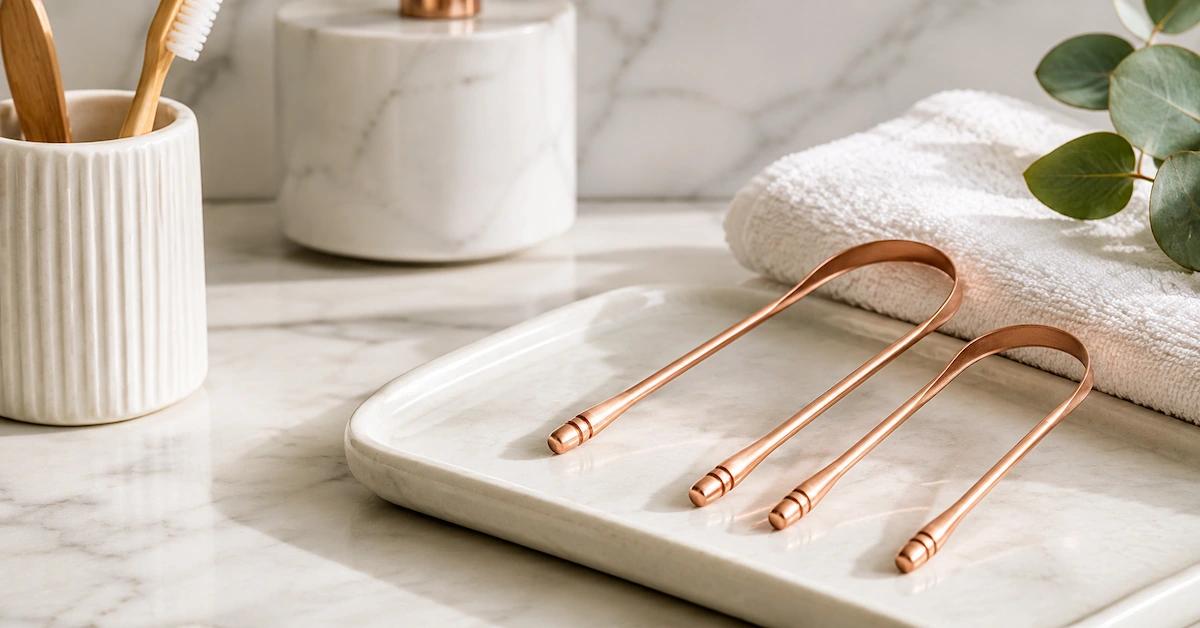
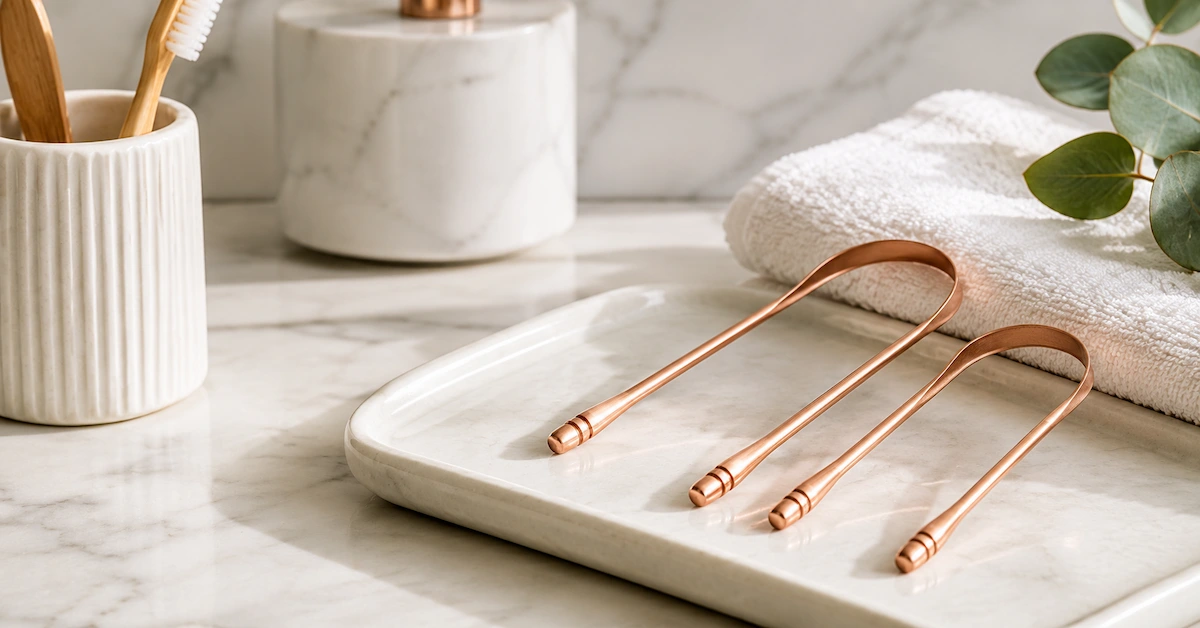
The visible product is a reusable metal tongue scraper, also called a tongue cleaner in many oral-care assortments. The shape is a slim, rigid hand tool with an elongated U-shaped loop at the working end and a bent handle section. The finish appears smooth and polished, with a warm rose-gold tone that suggests copper or possibly copper-plated stainless steel, though that cannot be confirmed from appearance alone.
From a sourcing perspective, this matters because the user experience is shaped by a few straightforward traits:
the scraper should be comfortable to hold, easy to rinse, and free from rough spots that make cleaning feel unpleasant. The design shown is simple, which is usually a strength. No moving parts means fewer failure points, and a one-piece body is easier to explain to customers than a more complicated grooming tool.
Quick buyer takeaways
If you are comparing tongue scraper wholesale options, the quickest way to narrow the field is to focus on four things: material, finish, geometry, and cleanliness of manufacture.
Material affects durability and perceived value. Finish affects user comfort and visual appeal. Geometry affects whether the scraper feels too stiff or too shallow on the tongue. Cleanliness of manufacture matters because any burrs, sharp edges, or uneven bends can undermine an otherwise basic product.
In this category, buyers often underestimate packaging and presentation. A compact metal scraper can sell well as a stand-alone item, but it also fits neatly into dental hygiene sets, spa bundles, and promotional oral-care packs. That flexibility is one reason sourcing teams keep it on the list even when margins are tight.
Material and construction: what usually matters most
The visible finish suggests a copper-toned product, but the base material is uncertain. That uncertainty is not trivial. Copper, stainless steel, and plated variants can all appear similar in photos, yet they differ in feel, maintenance expectations, and price positioning. A buyer should ask the supplier to confirm the actual substrate, surface treatment, and whether any plating is involved.
For this kind of oral-care accessory, a smooth polished surface is a practical advantage. It is easier for end users to rinse after each use and less likely to trap residue than a textured or heavily embellished finish. That said, a polished surface should not come at the expense of edge quality. If the scraper has visible burrs or inconsistent rounding at the tips, it may feel harsh on the tongue, even if the photos look attractive.
The construction shown appears to be a single-piece metal form with no joints or replaceable heads. That is a common and sensible approach for a reusable tool. It simplifies production through metal forming and bending, then polishing or other finishing steps. If the rose-gold tone comes from plating rather than solid material, the buyer should ask about wear behavior under repeated washing. Not because every plated item fails, but because buyers should know what they are paying for.
Where this product fits in the oral-care supply chain
In trade terms, tongue scrapers sit in the oral hygiene accessory segment rather than in clinical dental equipment. That distinction affects how they are marketed and how rigid the purchasing criteria may be. A retail shelf item needs good visual finish and a credible story. A kit component needs compact dimensions and packaging compatibility. A promotional item needs low complexity and predictable unit handling.
Common use cases include home oral care, travel hygiene sets, grooming kits, spa and wellness merchandise, and dental or health retail assortments. Multiple units shown together in the source image also suggest a set or bulk supply format, which is useful for wholesalers and brand owners who need consistent inventory rather than a one-off sample.
For companies evaluating a tongue scraper supplier, the question is often whether the supplier can support the right scale. Some buyers need small MOQ flexibility for testing a new SKU. Others need stable repeat production for a long-running private label. The product is simple, but the supply expectations are not.
How to evaluate a supplier without overcomplicating the job
There is a tendency to make small product sourcing feel larger than it is. With a tongue scraper, you do not need a 40-point technical audit. You do need a disciplined checklist.
1. Confirm the exact material
Do not rely on color alone. Ask whether the scraper is solid copper, stainless steel, plated, or another alloy. The answer affects corrosion expectations, consumer perception, and how the item should be described in product copy.
2. Review the finish under close inspection
A polished surface should look even and feel smooth. Look for scratches, dark spots, inconsistent gloss, or rough transitions where the arms are bent. These are minor defects on paper, but they are exactly the sort of detail that shows up in customer reviews.
3. Check bend consistency and symmetry
Because the product relies on simple geometry, consistency matters. If one side is bent more sharply than the other, the scraper can feel awkward in hand or fail to present a uniform scraping edge.
4. Ask about cleaning and care expectations
Buyers should know how the product is intended to be cleaned and stored. That sounds basic, but it becomes important if you are shipping to retail partners who will ask for simple care instructions. A reusable metal tool should be easy to rinse, dry, and pack.
Common buyer mistakes
The biggest mistake is assuming all tongue scraper wholesale offers are essentially the same. They are not. Small defects in finish and forming can create a bad first impression, and in consumer oral care, first impressions tend to stick.
Another mistake is overclaiming performance. Unless a supplier has supplied verified test data, do not assume antimicrobial behavior, special hygienic performance, or clinical benefits beyond the product’s basic function. If the seller has evidence, review it carefully; if not, keep the claims modest and accurate.
A third mistake is ignoring channel fit. A polished metal scraper may be perfect for a retail wellness set, but if your channel expects ultra-low-cost giveaway items, the same product might be too premium. Buyers sometimes discover this after packaging has already been designed, which is an avoidable expense.
Practical advice for sourcing teams
If you are ready to buy tongue scraper inventory, start by asking for a sample that reflects the actual finish and forming quality, not a generic placeholder. Then compare the sample under normal lighting, not just in a photo. Metal products can look better on a screen than on a shelf.
It is also sensible to align the supplier conversation with the end use. A private-label oral-care brand may care about logo placement, packaging, and finish consistency. A hospital gift shop may care more about clean presentation and straightforward retail hangtag options. A spa buyer may want the tool to feel elegant enough to sit beside higher-end wellness accessories.
One practical aside: if you are bundling this item with other grooming products, make sure the dimensions and surface finish will not scuff neighboring items in transit. A simple metal tool can create packaging wear if it is allowed to move around loosely.
FAQ buyers usually ask
Is a tongue scraper a reusable item?
Yes, the visible product type is a reusable metal tool intended for repeated use and easy cleaning.
Is rose-gold color the same as copper?
Not necessarily. It may indicate copper or a plated finish, but you should confirm the actual material with the supplier.
Can this be sold as a kit component?
Yes. The compact rigid design is well suited to travel kits, grooming sets, wellness bundles, and oral-care packs.
What should buyers watch most closely?
Material confirmation, smoothness of finish, bend symmetry, and whether the product is suitable for your target price point.
What a good next step looks like
If you are evaluating a tongue scraper supplier, ask for the material specification, a close-up sample image, and a physical sample if possible. Then compare the tool against your intended channel, not against a generic benchmark. That is the practical way to avoid ordering a product that looks fine in a catalog but feels off in a customer’s hand.
For sourcing teams building oral-care assortments, the value here is not in complexity. It is in consistency. A well-made tongue scraper is a small product that can quietly support a much larger brand promise: simple, clean, reusable tools that are easy for customers to understand and use.
Tag:
Related articles
- Beauty Tools Sourcing Guide
- OEM & Private Label
Private Label Grooming Kit Manufacturer: How Brands Build Custom Personal Care Sets
- Beauty Tools Sourcing Guide
- Lash & Brow Tools
Tweezers for Eyrow Grooming Supplier: B2B Buying Guide for Beauty Brands
- Beauty Tools Sourcing Guide
- OEM & Private Label