

A private label nail care kit looks simple on the shelf, but it sits at the intersection of function, presentation, and repeat purchase behavior. For sourcing managers and product teams, the decision is rarely just “which tools go in the box?” It is more often about whether the kit feels credible in hand, whether the case supports the brand story, and whether the assortment matches the end use: travel, retail gifting, hotel amenities, or a broader grooming line.
That is why a private label nail care kit deserves a closer look before anyone commits to tooling, packaging, or artwork. The buyer has to decide how much utility to build in, how much visual polish the set needs, and how much complexity the manufacturing plan can absorb without making the SKU awkward to assemble or expensive to replenish.
If you are evaluating this category, the real question is not simply how to source a private label nail care kit. It is how to build one that is easy to merchandise, easy to explain, and dependable enough that customers do not treat it like a throwaway impulse purchase.
What is usually inside a practical nail care set
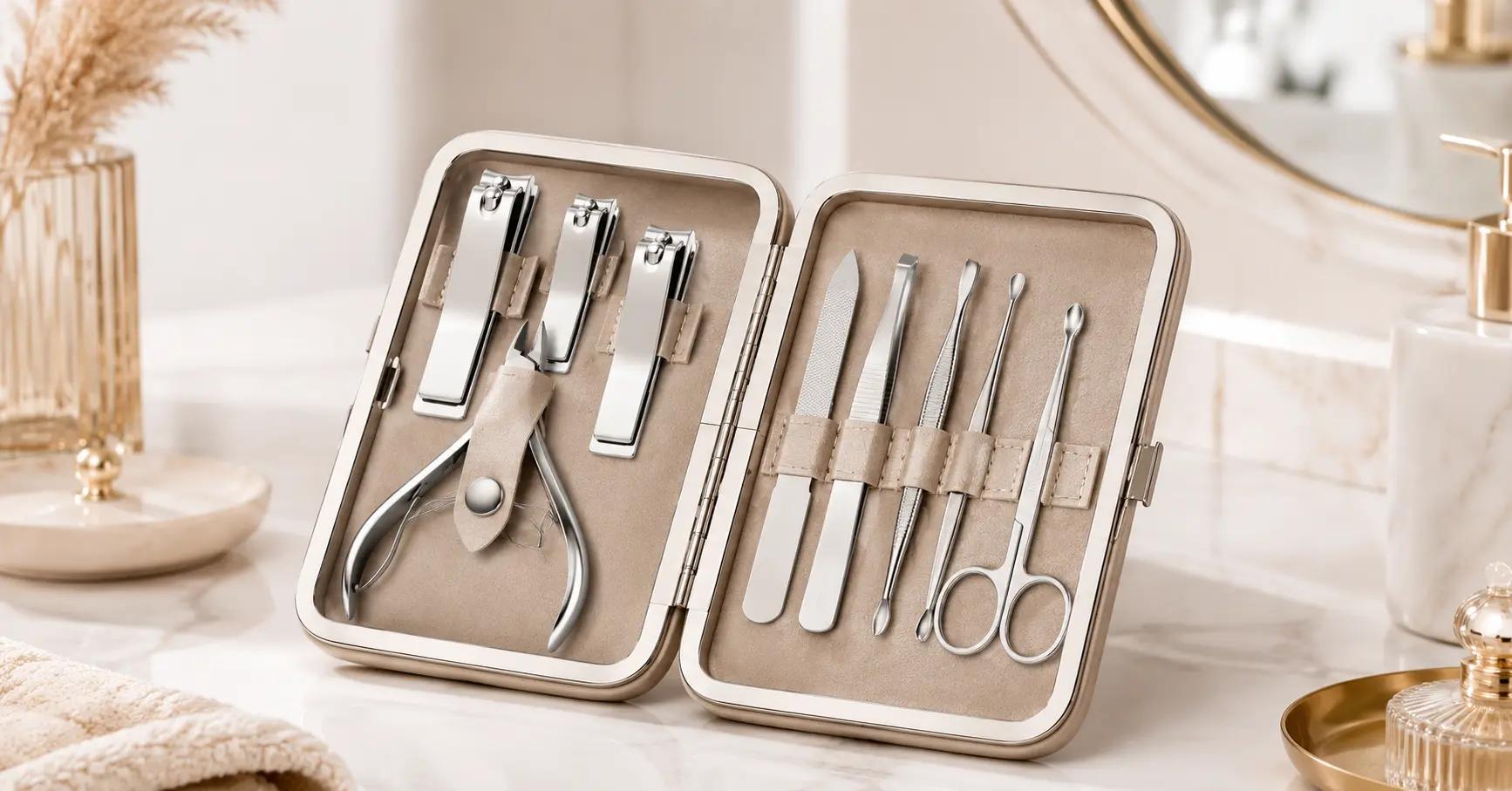
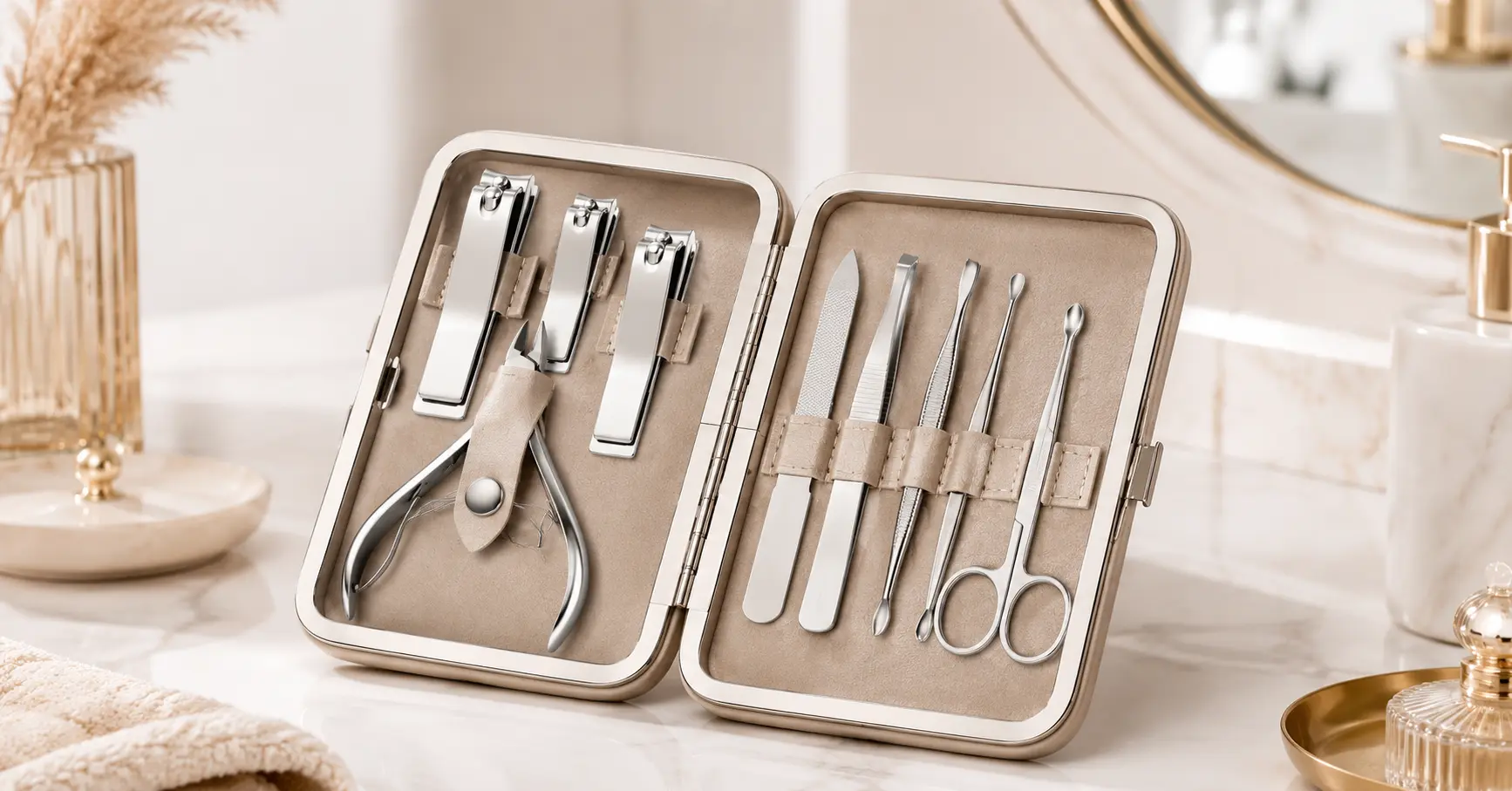
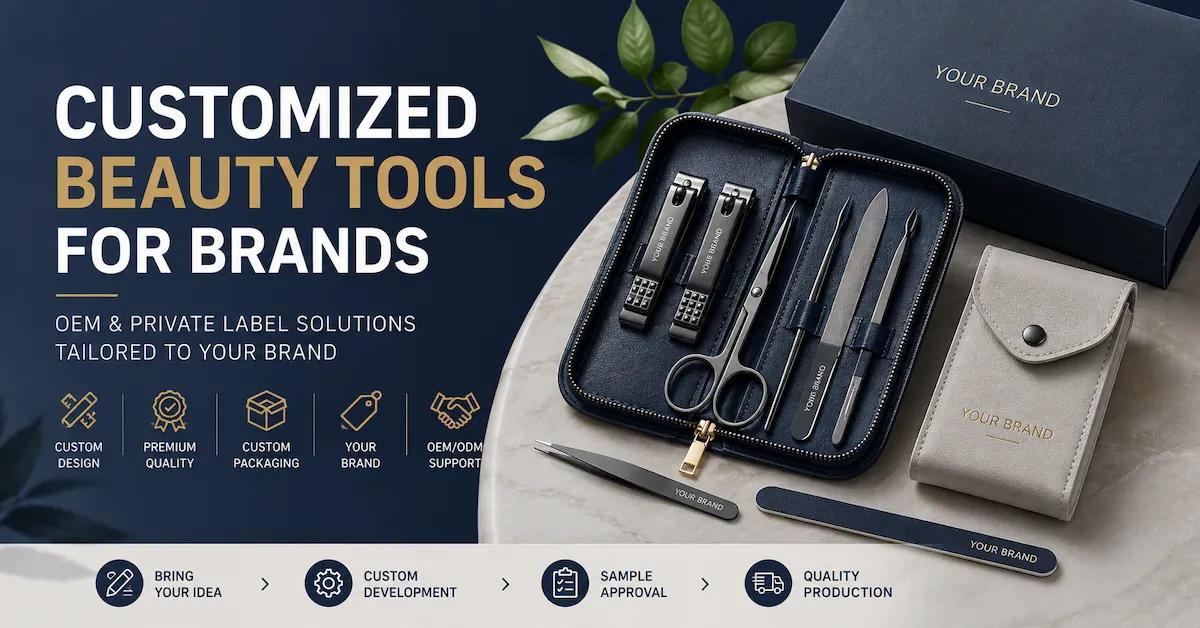
In the product example provided, the kit appears to be a manicure/pedicure grooming set in a folding carry case with a rigid outer frame. The tools visible include multiple nail clippers or trimmers, cuticle or nail tools, tweezers, scissors, and a small file or rasp. That mix is fairly typical for a private label nail products program that aims to cover basic hand and foot grooming without making the kit bulky.
For buyers, the important part is not memorizing every possible tool type. It is understanding the role each tool plays. Clipper-style tools handle cutting. Scissors and trimmers help with finer grooming. Tweezers broaden the utility beyond nail care. A file or rasp adds shaping and smoothing. Together, these tools support a more complete user experience than a single clipper packed in a blister card.
That said, more tools are not always better. A crowded kit can look premium in a catalog and still feel awkward in practice if the tools are too small, duplicated, or hard to remove from the case. When considering how to build a private label nail kit, the first rule is to align the tool mix with the customer’s actual use case.
How the case design shapes perceived value
The case in the provided product description is a book-style or clamshell format that opens flat into two panels. That style matters more than many buyers expect. A compact folding case does three jobs at once: it protects the instruments, keeps the set organized, and creates a better presentation than loose tools in a pouch or carton.
The visible beige or cream interior lining, with a suede-like or synthetic leather appearance, gives the set a cleaner retail feel. The light gold or champagne-toned trim also pushes the kit away from purely utilitarian grooming and toward giftable personal care. This matters if the product is meant for salon retail, hotel amenity programs, or private label beauty accessories sold through lifestyle channels.
There is also a practical side to the design. Elastic or stitched holders keep the tools from rattling around, which reduces damage in transit and makes the kit easier to repack after use. Molded or fitted slots can help, but they also raise the bar on assembly consistency. If a tool is even slightly out of spec, the case can stop closing properly. That is the sort of problem that turns into a returns headache later.
Material choices: where buyers should be careful
The tools appear to be polished metal, likely stainless steel, though the exact grade is not provided and should not be assumed. For sourcing teams, that uncertainty is normal at the concept stage. What matters is deciding whether the tools need a bright decorative finish, a more subdued professional look, or a balance of both. The finish affects more than appearance. It can influence fingerprint visibility, perceived hygiene, and the way customers judge quality from a distance.
The case materials also deserve attention. The outer frame looks rigid, which is generally a plus for shape retention and shelf presentation. The interior lining appears synthetic rather than textile-heavy, which is usually easier to wipe clean and more compatible with mass retail pricing. If genuine leather is not specifically verified, do not market it that way. Buyers in this category often care more about the look, feel, and durability than about a luxury label that cannot be supported.
A small caution here: polished metal can photograph beautifully, but it also reveals scratches and finishing defects more readily than a matte surface. If the kit is intended for private label nail products with a premium position, the inspection standard should reflect that. Cosmetic flaws in tools or trim are easy to miss on a sample and hard to ignore once the SKU is on a shelf.
How to build a private label nail kit without overcomplicating the SKU
When teams ask how to build a private label nail kit, they often start with branding first and product structure second. That is backwards. Start by defining the use case and channel, then build the assortment around it.
1. Define the customer and the setting
A travel grooming kit needs portability and compactness. A hotel amenity set needs broad usefulness and a clean presentation. A salon retail kit may need a more premium feel and stronger visual merchandising. A gift set might tolerate slightly more ornamentation, while a utilitarian consumer set should keep the focus on easy handling and durability.
2. Choose the minimum tool set that still feels complete
For most programs, a small but coherent tool mix is safer than an oversized assortment. A few well-chosen tools can feel more purposeful than a set that tries to include everything. Buyers should avoid duplicate functions unless there is a clear reason, such as separating general grooming from detailed cuticle work.
3. Make the case do some of the selling
The folding case, fitted holders, and visible fastening point all contribute to the buyer’s perception of order and value. A good case can elevate an ordinary assortment. A weak case can make good tools feel cheap. This is one reason OEM/ODM grooming kit projects often spend a surprising amount of time on the case pattern, closure style, and interior layout.
4. Plan for assembly and replenishment early
If the set is assembled by hand, the tool layout should be intuitive and tolerant of variation. If it is packed at scale, the slot design, orientation, and tool count should minimize mistakes. It is easier to prevent a bad packing sequence than to fix it after cartons are closed and palletized.
Selection criteria that matter to sourcing teams
A useful evaluation framework should be blunt. Does the kit look credible? Does it perform the expected grooming tasks? Is it easy to carry? Does the case close securely? Can the product survive normal handling in retail and transit? Those questions sound obvious, but they are where many private label programs stumble.
Another point worth watching is the balance between compactness and usability. A very small kit is easier to merchandise, but cramped tools can be annoying to use. A larger kit may feel more complete, but it can become expensive to ship and less attractive as an on-the-go purchase. The best options often sit in the middle: compact enough for travel, complete enough for daily use.
Also, do not assume every channel wants the same visual language. A hotel amenity kit should feel clean and neutral. A fashion or beauty retailer may prefer warmer trim, more decorative case materials, or stronger color blocking. A business-to-business buyer should ask whether the SKU is supposed to disappear into a bathroom drawer or stand out on a shelf.
Common mistakes when sourcing private label nail products
One common mistake is overemphasizing branding and underemphasizing tool fit. A logo on the case does not compensate for a clipper that feels flimsy or a holder that does not secure the instrument properly.
Another is assuming all nail care kits are interchangeable. In practice, a manicure/pedicure grooming kit for travel has different demands than a salon retail item or a promotional giveaway. The channel changes the acceptable trade-offs.
A third mistake is forgetting the buyer experience after opening. If the case opens cleanly but the tools are difficult to remove, the product will feel poorly designed even if the outer presentation is strong. Little frustrations matter here.
Quick buyer checklist before you place an order
Before approving a private label nail care kit, a buyer should confirm the final tool mix, the case material callout, the closure style, the finish of the metal components, and the packing method. It is also wise to verify what can and cannot be claimed about the product. If the steel grade, corrosion performance, or sterilization compatibility is not confirmed, those points should stay off the sales sheet.
For programs that will be sold as private label nail products, branding consistency is just as important as component quality. The product should look like it belongs to the brand family, not like a generic grooming item with a logo added at the last minute. That usually means checking the colors, trim tone, typography, and case silhouette together, not separately.
FAQ: common questions from product teams
Is a private label nail care kit only for consumer retail?
No. It can also work for hotel amenities, gift sets, travel accessories, and salon retail. The channel should guide the assortment and case style.
Should the case be soft or rigid?
For this category, rigid or semi-rigid usually offers better protection and a more polished appearance. Soft pouches are lighter, but they tend to feel less premium.
How many tools should be included?
There is no universal number. The right answer depends on the use case, but the set should feel complete without becoming cluttered or awkward to use.
What should buyers verify first?
Verify the tool mix, finish quality, case construction, and how the kit will be assembled. Those factors have the biggest impact on user satisfaction and sourcing reliability.
A practical next step
If you are developing a private label nail care kit, start with the customer scenario and work backward from there. Build the smallest kit that feels complete, choose a case that reinforces the intended price point, and avoid unverified claims about materials or performance. That approach usually produces a better retail outcome than trying to maximize features on the first pass.
For sourcing teams, the smartest move is often to request a sample pack and evaluate it as a buyer would: open the case, remove the tools, close it again, and imagine where it will live after purchase. If the answer feels obvious and tidy, the product is probably on the right track.
Tag:
Related articles
- Beauty Tools Sourcing Guide
- OEM & Private Label
Private Label Grooming Kit Manufacturer: How Brands Build Custom Personal Care Sets
- Beauty Tools Sourcing Guide
- Lash & Brow Tools
Tweezers for Eyrow Grooming Supplier: B2B Buying Guide for Beauty Brands
- Beauty Tools Sourcing Guide
- OEM & Private Label