

A manicure tools manufacturer is usually not the first vendor a sourcing team calls when a personal care line is being planned. But once the brief gets specific — a compact grooming set, a travel-friendly case, a giftable kit, or a salon retail add-on — the supplier choice starts to matter a lot. The difference between a decent-looking set and a commercially useful one is rarely the metal shine alone. It is the way the tools fit together, how the case holds them, whether the finish survives handling, and how consistently the set can be assembled at scale.
For engineers and product teams, this is not just a styling question. A manicure kit sits at the intersection of small metal tooling, textile or synthetic case construction, and packaging discipline. If any one of those pieces is weak, the whole product feels cheap. That matters because buyers are not only evaluating user experience; they are also judging warranty risk, breakage risk, and how the item will look after being opened and repacked several times.
What a compact manicure kit is expected to do
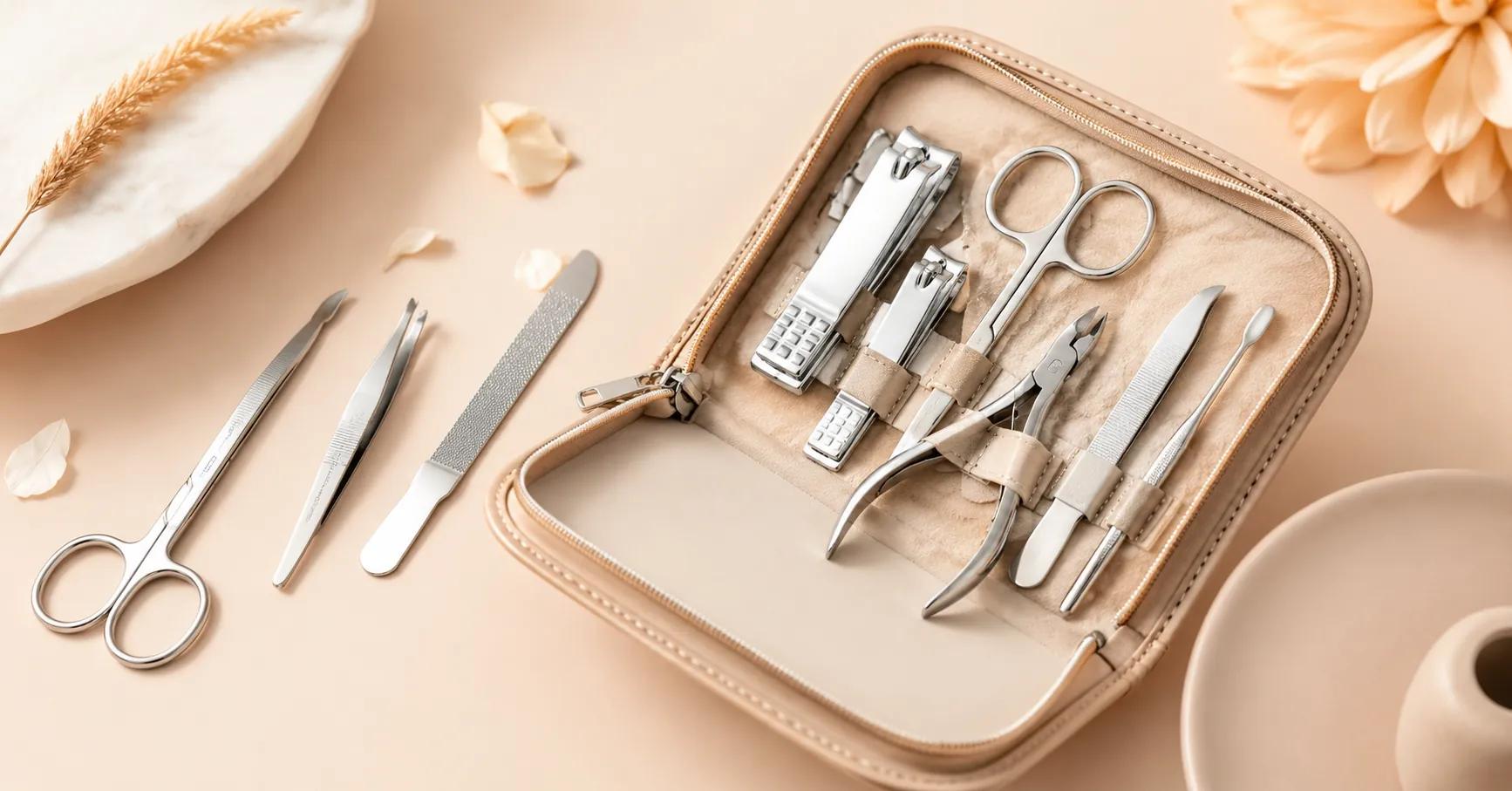
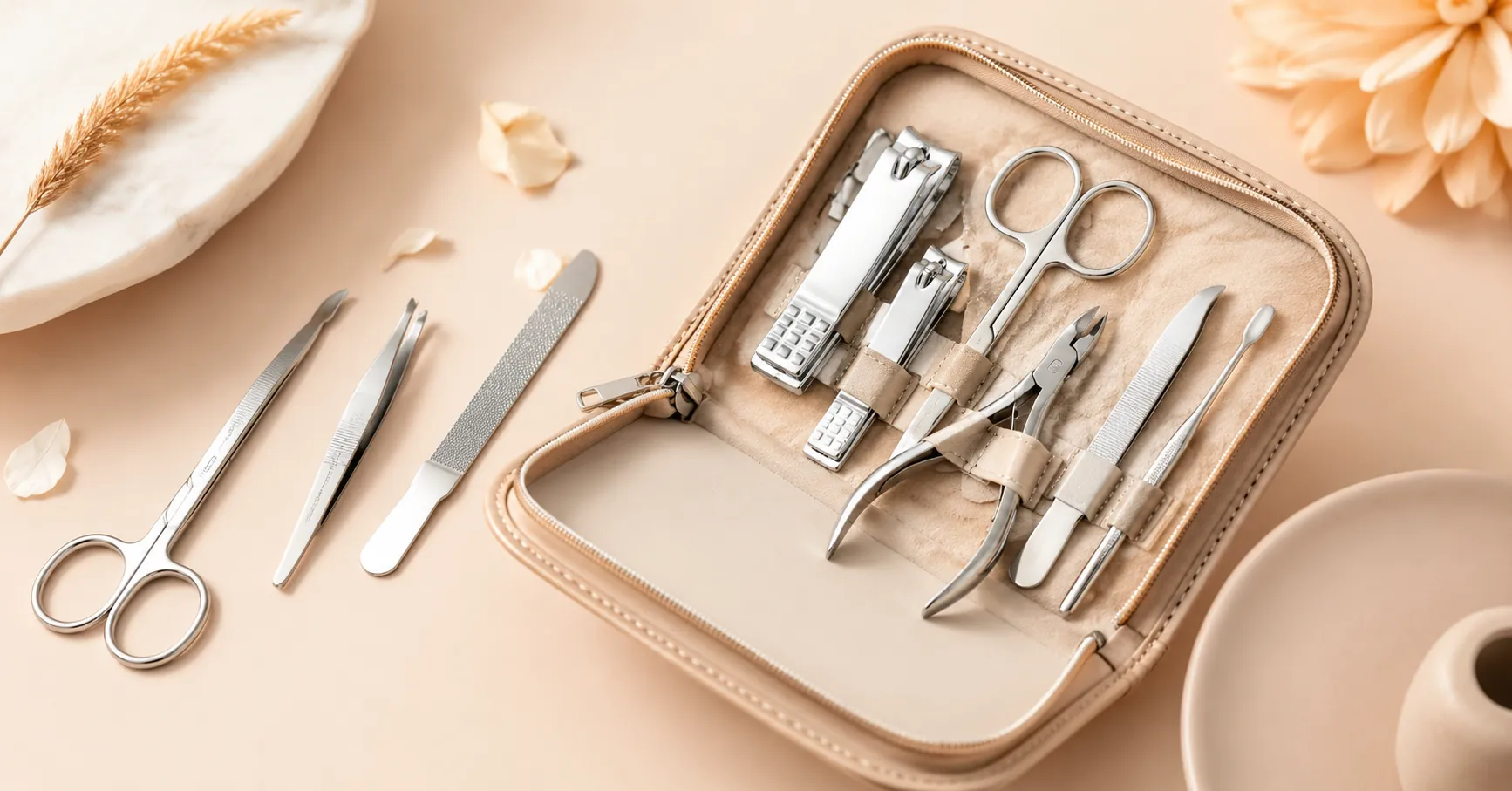
The portable manicure/pedicure tool kit described here follows a familiar format: a zippered case with a beige or tan outer shell, a soft suede-like interior, stitched elastic straps, and pockets to keep tools in place. That structure is not incidental. It solves a basic handling problem. Small grooming tools are easy to misplace, and loose metal items inside a bag tend to scratch each other, dull edges, or look untidy by the time the customer opens the set a second time.
The visible tool mix is also typical of a multi-purpose personal care kit. Nail clippers in at least two sizes, scissors, tweezers, a nail file or emery board, and several cuticle or nail-care implements cover the usual home grooming tasks. A plier-style cutter suggests the set is trying to bridge consumer and salon-style utility, even if the exact duty level is not stated. That is often where these kits win attention: they make a small assortment feel complete.
Why the case design matters as much as the tools
A lot of first-time buyers underestimate the role of the case. A zip-around pouch that folds flat is practical for travel and retail display, but it also places demands on closure quality, stitching, and internal retention. If the elastic straps are too loose, tools shift. If they are too tight, the user struggles to remove them. If the lining frays, the set starts looking worn before the tools themselves have aged.
That is why a manicure tool supplier should be asked about the case as carefully as the blades and cutting edges. In a set like this, the case is not packaging in the temporary sense. It is part of the product.
How these kits are typically made
The product details point to a mixed manufacturing process. The metal parts are likely stamped, ground, polished, and assembled. That usually applies to clippers, scissors, tweezers, and similar grooming implements. The outer case is a separate operation: cut-and-sewn shell construction with a padded or molded insert, then fitted with elastic retainers and sewn pockets.
That split matters for procurement. A nail tools manufacturer may be very good at the metalwork but weaker on case assembly, or vice versa. In assembled grooming kits, consistency depends on how well those two streams are coordinated. The supplier needs to manage not only the finish of the tools, but also how those tools sit inside the case, whether the zip closes smoothly around them, and whether the set still looks aligned after transit.
A practical caution: polished metal can look premium even when the underlying manufacturing standard is ordinary. Buyers should avoid judging the set by reflectivity alone. The more useful questions are about edge quality, fit, closure performance, and whether the assembled kit stays organized through repeated use.
Key product features buyers usually care about
For this kind of grooming set, the main purchasing criteria tend to be straightforward, but they should be checked in order of importance rather than aesthetics.
Tool assortment
A compact kit should cover the basic manicure and light pedicure tasks without feeling overloaded. Multiple clippers, tweezers, scissors, and a file are standard. Additional cuticle implements help broaden use, but too many niche tools can make the set look crowded and raise assembly complexity.
Material and finish
The visible polished stainless-steel look suggests corrosion resistance is a selling point, or at least the appearance of it. Buyers should still ask how the finish is achieved and whether the metal is intended for consumer grooming or more demanding professional use. The supplied information does not confirm steel grade, and that distinction should not be guessed at.
Retention and portability
Elastic straps and fitted pockets are small details that affect daily usefulness. In travel kits, they are often the difference between a tidy presentation and a jumble of loose tools. If the product is meant for gifting or retail shelves, the open-and-close experience matters just as much as the tool count.
Overall presentation
A beige or tan faux-leather look reads as neutral and giftable. That may suit broad consumer markets, but it also invites a certain level of visual scrutiny. Any rough stitching, uneven edges, or poor zipper alignment will stand out quickly.
Where a manicure tool supplier can add value
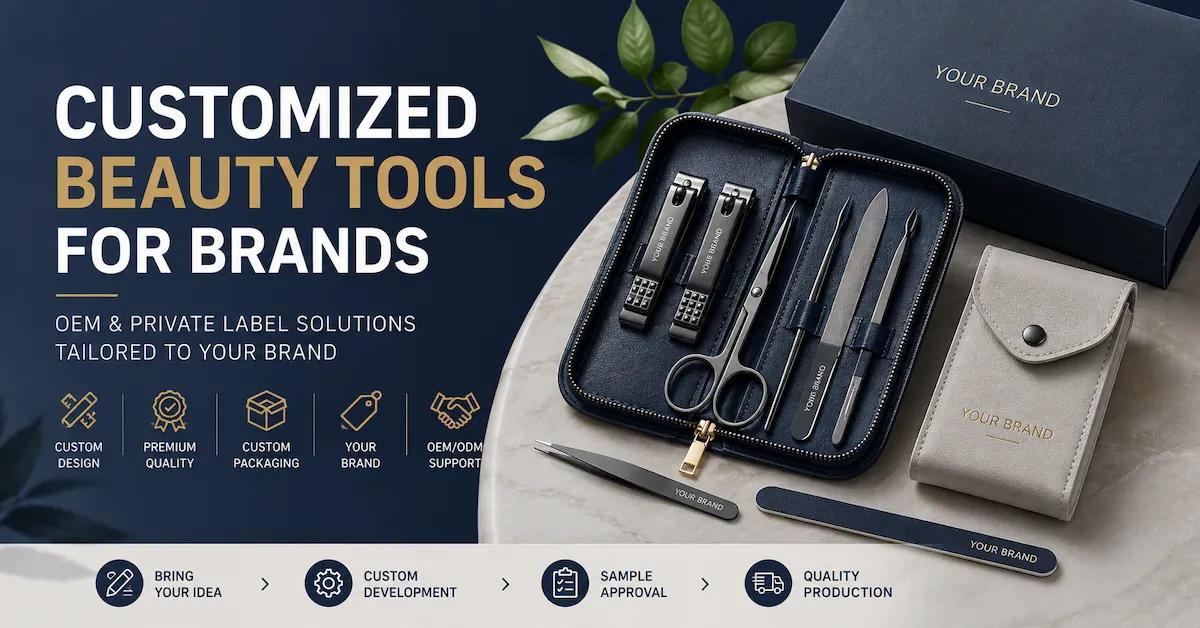
Not every supplier merely sells finished sets. A capable manicure tool supplier may help with assortments, case layout, branding options, and packaging format. For private label buyers, that can be more valuable than a low unit price alone. If the tools are being sold as a kit, the supplier’s assembly discipline becomes part of the brand experience.
This is especially important for companies building a retail-ready product line. A kit like this can be used as a home grooming set, a travel set, a salon add-on, or a gift item. Each use case changes the expectations slightly. A salon customer may tolerate a more utilitarian finish. A gift buyer usually will not.
Common mistakes when sourcing manicure kits
One common mistake is treating all manicure sets as interchangeable. They are not. Two kits can contain similar tools and still feel completely different because of case structure, tool fit, and finish consistency.
Another mistake is over-specifying the assortment before understanding the customer. More tools do not automatically make a better product. In fact, a cluttered kit can reduce perceived quality if the set looks packed only to justify itself.
A third issue is ignoring replacement and restocking logic. If the case format is highly customized, future replenishment may become difficult. For buyers planning recurring SKUs, that is worth thinking about early, not after the first production run.
Finally, there is the temptation to assume that any polished metal tool is suitable for professional use. That is risky. The supplied information does not verify exact sterilizability, edge retention, or professional-grade performance, so those claims should be tested rather than assumed.
What engineers and sourcing managers should ask before approving a set
Before placing an order, request clarity on the actual components included, the assembly method, and the packaging structure. Ask how the tools are retained in the case, what material the outer shell uses, and whether the interior lining is consistent across production runs. For the cutting tools, ask how edge quality is controlled and what inspection steps are used during assembly.
It is also worth asking for sample variation, especially if the set contains several different implement types. The more parts in the kit, the more chances there are for loose fit, cosmetic mismatch, or minor assembly inconsistency. That may not sound dramatic, but it is exactly the kind of issue that shows up in customer reviews.
Quick buyer takeaways
If you are comparing manicure tools manufacturers, focus on the whole kit rather than the individual shiny pieces. A useful product should combine:
A practical assortment of grooming tools
A case that actually holds them securely
A finish that looks clean after handling
Assembly that keeps the set tidy at retail and in transit
Enough flexibility for home, travel, or gift positioning
That list sounds simple, but it is where many projects succeed or stall. The best-looking sample is not always the best sourceable product.
FAQ for first-time buyers
Is this type of kit aimed only at consumers?
Not necessarily. The described configuration is well suited to consumer retail, travel, and gifting, but some salons also use similar kits as add-on merchandise or convenience items.
Can the set be assumed to be professional-grade?
No. The available information does not confirm that. Buyers should verify the intended market and request performance details rather than infer them from appearance.
Why is the case important if the tools are the main product?
Because the case shapes the user experience, protects the tools, and defines how the product is stored and displayed. In a compact grooming kit, the case is part of the value proposition.
A sensible next step for buyers
If you are sourcing a manicure kit for retail, promotional, or private-label use, start by comparing suppliers on assembly quality, tool retention, and overall presentation, not just on the number of items in the set. Ask for photos or samples that show the tools both closed and opened, because the open layout often reveals more than the exterior ever will.
For teams working with a manicure tools manufacturer, the real decision is simple: do you want a bundle of metal tools, or do you want a product that feels complete in the hand, on the shelf, and after a few months of use? That distinction usually separates an acceptable sample from a line worth scaling.
Tag:
Related articles
- Beauty Tools Sourcing Guide
- OEM & Private Label
Private Label Grooming Kit Manufacturer: How Brands Build Custom Personal Care Sets
- Beauty Tools Sourcing Guide
- Lash & Brow Tools
Tweezers for Eyrow Grooming Supplier: B2B Buying Guide for Beauty Brands
- Beauty Tools Sourcing Guide
- OEM & Private Label