

Why sourcing a cuticle nipper is not as simple as it looks
If you are looking for an OEM cuticle nipper supplier, you are probably trying to solve a practical sourcing problem rather than shop for a beauty accessory. The tool is small, but it sits in a category where appearance, edge quality, spring action, and consistency all matter. A cuticle nipper that looks fine on a product page can still feel awkward in the hand, chatter at the jaw, or arrive with inconsistent finish from batch to batch.
That is why buyers in salons, beauty supply, and private-label programs tend to treat cuticle nippers as a manufacturing decision, not just a catalog item. The real question is not simply “Can this be made?” but “Can this be made repeatably, with the same cutting feel, the same polishing standard, and the same market positioning every time?”
For a sourcing manager, that decision affects returns, brand reputation, packaging claims, and the amount of inspection work required at receiving. For a product team, it shapes how the tool will sit in a manicure kit, how it will be perceived against competing OEM cuticle nippers, and whether it belongs in a salon-grade assortment or a retail consumer line. Small tool, large downstream consequences.
What the product actually is
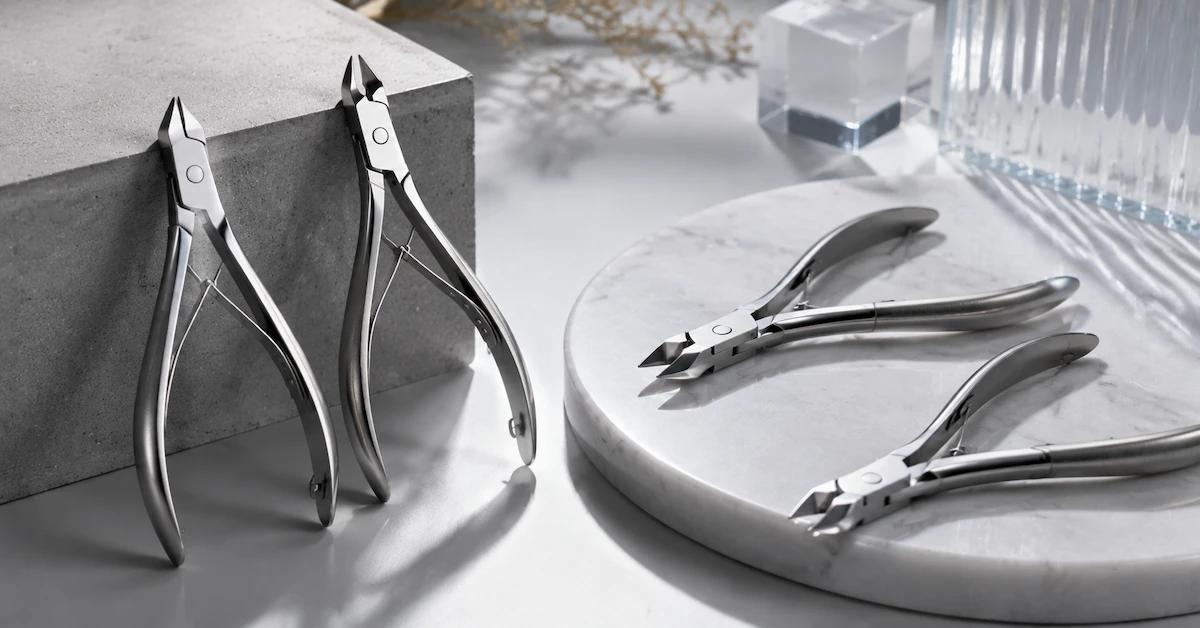
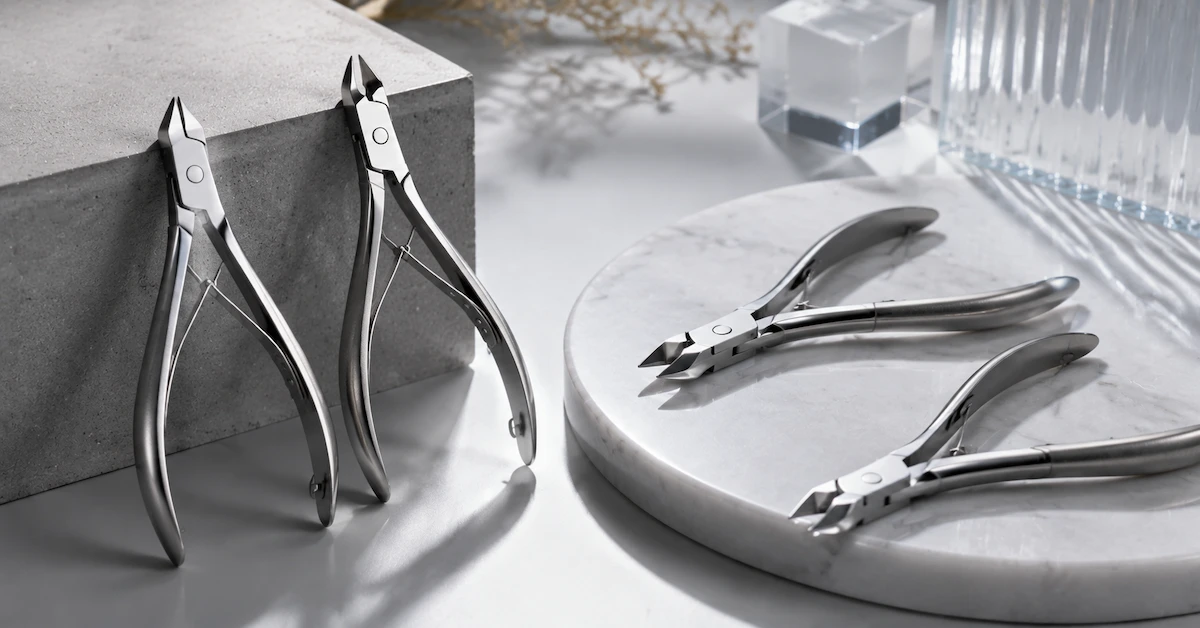
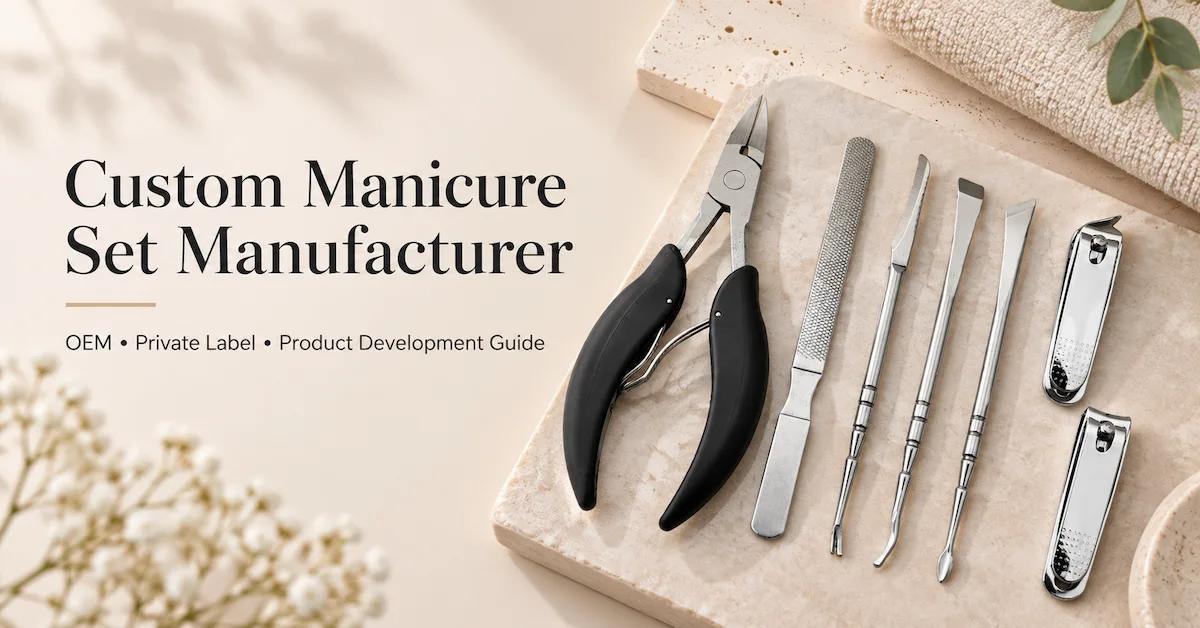
Cuticle nippers, sometimes called nail nippers in grooming contexts, are handheld plier-style tools used to trim cuticles, hangnails, and fine skin along the nail edge. The visible structure is straightforward: two curved handles, a pivot joint, and short angled cutting jaws. In the sample description, the jaws appear pointed and precision-ground, which is what you would expect for delicate trimming rather than general cutting.
The finish appears metallic and reflective, likely stainless steel or a similar corrosion-resistant metal commonly used for grooming tools. That does not tell you everything, of course. Steel grade, hardness, edge retention, and sterilization compatibility are all separate questions, and they are the ones buyers should ask before placing a private-label order.
Quick comparison: what buyers usually care about first
When teams evaluate OEM cuticle nippers, they usually compare a few practical points before they talk about branding or packaging.
Cutting feel
The tool should make controlled, fine cuts without crushing the skin edge. That depends on jaw geometry, edge finishing, and how precisely the pivot is assembled.
Hand comfort
The curved handles and spring-assisted opening matter more than many buyers expect. In salon use, a nipper that opens smoothly can reduce hand fatigue over a day’s work.
Surface finish
Polished or satin finishes are not only about looks. They also affect perceived quality, cleaning ease, and how well the tool fits into a professional grooming set.
Batch consistency
This is where OEM programs often succeed or fail. A single sample can be impressive, but repeatable production is what keeps reorder customers satisfied.
How OEM and private-label buyers typically use this tool
Cuticle nippers are common in salon manicure and pedicure services, but the market is broader than that. Beauty supply retailers use them in standalone displays and bundled kits. Brand owners may place them in travel sets, home-grooming assortments, or professional nail-care lines. The same basic hardware can serve different channels if the finish, packaging, and branding are matched to the buyer’s market.
That flexibility is one reason OEM cuticle nippers are attractive to sourcing teams. A single tool design can often be adapted across several sales channels, provided the supplier can control the details: jaw shape, handle profile, surface finish, logo marking, and retail packaging.
Manufacturing details that matter more than the brochure copy
The product description suggests a forged or stamped metal tool with machined or ground cutting edges and an assembled pivot/spring mechanism. That is a sensible assumption for this category, but the important part for buyers is not the manufacturing label itself. It is how those steps are executed.
For example, grinding quality affects the sharpness and uniformity of the jaws. Pivot assembly affects alignment, which in turn affects clean closure. Spring behavior affects usability, especially in repeated professional use. And polishing affects both appearance and the chance of snagging in a kit or pouch. A tool can be visually attractive and still feel slightly off in the hand if one of those steps is rushed.
It is also worth noting a small but important caution: a reflective finish does not automatically mean premium performance. It can be a polished standard-grade part or a carefully finished professional tool. Buyers should ask for samples, compare closure feel, and check whether the nipper sits flush at the cutting edge before assuming the surface tells the whole story.
Selection criteria for sourcing teams
If you are narrowing down a cuticle nipper OEM program, a useful way to think about the decision is to divide it into four layers: function, appearance, manufacturability, and commercial fit.
1. Function
Does the tool trim fine skin cleanly and predictably? The short angled jaws are there for precision, so the cutting edge must support that purpose. If the tool needs too much force, the design is probably not aligned with the intended use.
2. Appearance
For retail and private-label programs, the tool has to look credible in the package. Mirror-like highlights, clean joint alignment, and a consistent handle profile all contribute to shelf appeal.
3. Manufacturability
Can the supplier hold the same geometry and finish across production runs? This matters more than a single impressive sample. The more manual finishing involved, the more the buyer should expect variation unless quality checks are tight.
4. Commercial fit
Not every version of the tool belongs in the same channel. A salon distributor may want a more refined finish and tighter assembly, while a retail kit buyer may prioritize cost and packaging efficiency. The right cuticle nipper OEM partner should be able to speak to that difference instead of insisting on a one-size-fits-all answer.
Common mistakes buyers make
The most common mistake is over-focusing on the sample image. A polished silver tool with curved handles can look essentially identical across several suppliers, but the hidden differences are in the cut, the grind, and the assembly. Another frequent misstep is specifying too little. If the buyer does not define marking position, finish preference, packaging style, or target market, the supplier may default to a generic version that does not fit the brand.
There is also a pricing trap. In grooming tools, very low-cost offers can be tempting, especially for large private-label orders. But if the supplier saves money by weakening the spring, softening the edge, or loosening final inspection, the savings can disappear quickly in complaints and replacements. Cheap tools are rarely cheap for long.
What to ask an OEM cuticle nipper supplier before placing an order
Before you commit, ask for the basics in writing: material description, finish options, logo method, sample approval process, and packaging configuration. If the supplier offers several variants, request side-by-side samples rather than one “best” model. That makes it easier to judge handle shape, jaw alignment, and overall feel.
Also ask how the supplier handles consistency between runs. For tools like this, repeatability is part of product quality. A buyer does not want to discover that the first order and the second order look like they came from two different factories.
Another practical point: if the nippers are going into salon or beauty kits, confirm how they will be protected in transit. Fine jaws can be damaged by careless packing, and a slight knock is enough to affect opening feel or edge alignment. It is a small tool, but it deserves proper packaging design.
FAQ for sourcing and product teams
Are OEM cuticle nippers the same as nail nippers?
In many sourcing conversations, the terms overlap. The exact naming may vary by market and channel, but the core function is trimming fine nail-adjacent skin and cuticle areas.
Is stainless steel the only material used?
It is the most common choice in grooming tools because of its corrosion resistance and clean appearance, but the actual grade is supplier-specific and should be confirmed rather than assumed.
What makes a nipper suitable for private label?
Consistent finish, reliable jaw alignment, branding options, and packaging that fits your market. The hardware matters, but the presentation matters too.
Should buyers request custom packaging?
Usually, yes, if the tool is being sold under a brand. Packaging is part of the retail experience and often helps differentiate otherwise similar OEM cuticle nippers.
A practical next step for buyers
If you are comparing an OEM cuticle nipper supplier, start with a sample set and a simple checklist: jaw alignment, opening smoothness, finish quality, grip comfort, and packaging protection. Then test whether the tool matches the channel you are selling into. A salon buyer and a mass-retail buyer may want different things from the same basic design.
The best sourcing outcome is usually not the fanciest tool on paper. It is the one that holds its quality from sample to shipment, fits the brand story, and does the job cleanly without creating avoidable complaints. For a small hand tool, that is a surprisingly demanding standard, which is exactly why the right supplier matters.
Tag:
Related articles
- OEM & Private Label
- Nail Care Tools Guide
anicure Pedicure Set Manufacturer: How to Source Complete Hand and Foot Care Kits for Retail and Salons
- OEM & Private Label
- Nail Care Tools Guide
OEM Manicure Set Manufacturer: How Beauty Brands Move from Drawings to Approved Mass Production
- OEM & Private Label
- Nail Care Tools Guide