

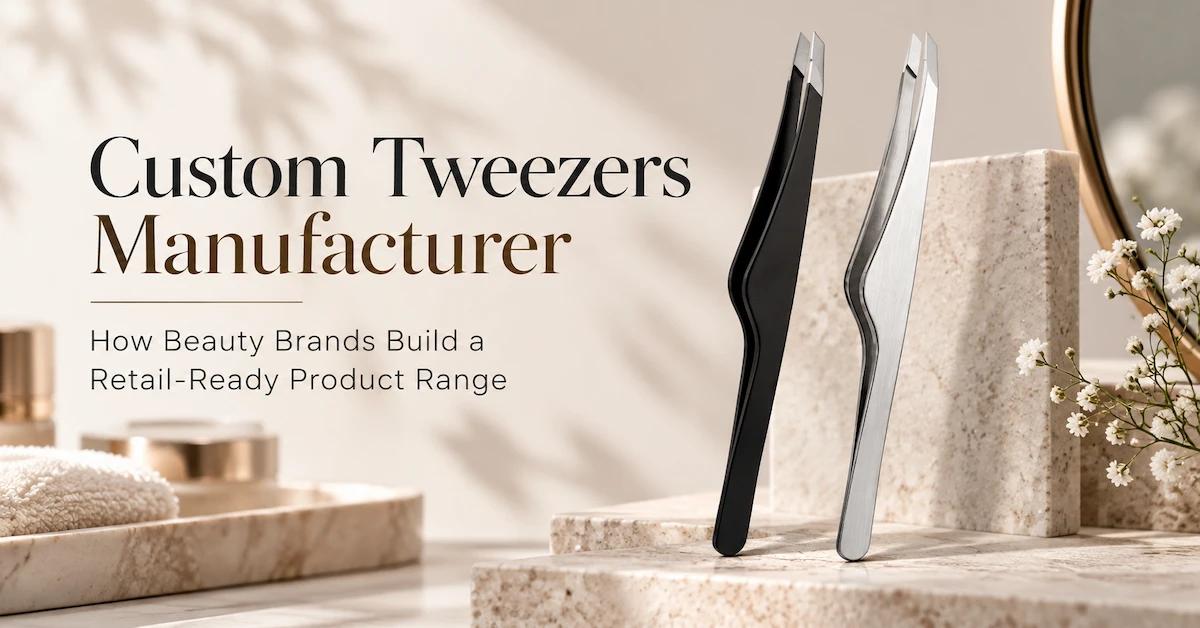
A custom tweezers manufacturer helps a beauty brand create a product that can be recognized, used, inspected, and reordered consistently. The best result is not necessarily a completely new tweezer shape. For many brands, it is a deliberate combination of an appropriate working tip, a comfortable body, a finish that matches the brand, a readable logo, protective packaging, and an approved production reference. If one of those elements changes unexpectedly, the customer may receive a product that looks—or works—different from the one advertised.
For a private-label product manager, the most useful question is therefore not simply, “Can you put our logo on tweezers?” It is: “Which parts of this design can we customize without compromising function, and how will you reproduce the agreed result on future orders?” An experienced partner should identify what already exists, what needs physical sampling, what requires engineering work, and what can only be confirmed after reviewing the exact model.
This buying guide focuses on brand-led customization and product-range development. It is different from a deep OEM engineering guide about tip-contact mapping, closing-force measurement, or tooling release. Here, you will learn how to turn a commercial brief into a collection that makes sense for beauty retail, direct-to-consumer sales, brow professionals, gift programs, and distributors. You can use OLIMOR's tweezer collection as a starting point for real product references, then confirm the available finish, marking, packaging, material, quantity and timing for each selected model.
What Does a Custom Tweezers Manufacturer Actually Customize?
A custom project can involve one small modification or a coordinated series of decisions. Buyers should separate these levels before asking for a quotation because changing the retail sleeve is not equivalent to changing the working-tip geometry. Both are sometimes called “custom tweezers,” yet their sampling requirements and production risks are very different.
The most common brand decisions concern the product platform, visible finish, grip and handling, logo, packaging, and assortment. A more advanced OEM project may also involve buyer-controlled drawings and functional geometry. A responsible manufacturer tells you which requests are feasible on existing models and which need a separate engineering review.
The commercial goal is not customization for its own sake. It is to create a product that buyers can understand and customers can recognize, with enough documentation to make a second purchase order straightforward. If a premium-looking new contour does not improve the target user's experience, a proven model with better branding and packaging may offer a more sensible development route.
A useful initial discussion produces three outcomes: a shortlist of suitable existing products, a list of proposed modifications, and a written record of unresolved technical or commercial questions. That is more valuable than receiving an immediate generic “yes, we can customize everything.”
Build a Tweezer Collection Around Customer Jobs
A beauty brand does not need every tweezer style. It needs a small number of products that perform distinct jobs and belong together visually. Begin with the customer's routine, then decide which SKUs are necessary. A collection of five almost identical slanted tweezers can be harder to merchandise than three clearly differentiated tools.
| Proposed SKU role | Typical intended user | Product direction to investigate | Main buying question |
|---|---|---|---|
| Everyday brow essential | Home grooming customer | Slant-tip format with accessible handling | Can the user grip brow hair with controlled pressure? |
| Detail companion | Customer needing narrow access | Pointed or fine-detail style | Is the tip appropriate for the actual task and user skill? |
| Professional specialist | Brow or lash studio with a defined workflow | Application-specific tip and grip | Does the working end suit that technique and cleaning regime? |
| Gift or travel accessory | Retail or e-commerce buyer | Compact format with effective tip protection | Will the tool arrive undamaged and remain easy to store? |
| Coordinated multi-tool set | Beauty brand extending its range | Complementary rather than duplicate tip types | Can the customer understand why each piece is included? |
These are development directions, not a claim that a specific OLIMOR SKU has every listed capability. The exact product and any specialization must be approved with a real sample. Ordinary cosmetic tweezers should not be marketed for medical or therapeutic work without a verified regulatory basis.
Start by writing one sentence for each proposed item: the target user, the task, the sales channel, and the main benefit. If two SKUs have the same answer, ask whether the second is a meaningful range extension or only an unnecessary color variation. A range built this way supports clearer product photography, easier retailer training, and more focused search pages.
A Customization Feasibility Ladder: What Is Easy, What Needs Samples, and What Needs Engineering?
One of the most useful conversations with a custom tweezers manufacturer is about the depth of change. A price quotation should distinguish configurable choices from new development rather than placing both under a single “OEM service” line.
| Customization level | Example buyer request | Typical approval focus | Possible effect on project |
|---|---|---|---|
| 1 — Branding and retail presentation | Add a suitable logo, sleeve, box or instruction card | Physical marking proof, artwork, package fit | Often avoids changes to working geometry |
| 2 — Finish and assortment | Select an available color/finish and combine approved tip styles | Finish reference, consistency across SKUs, packed set | May add finish or printing minimums |
| 3 — Handling and appearance change | Modify grip texture, body appearance or dimensions | Hand feel, tip performance, process feasibility | May require new samples or tooling review |
| 4 — Functional OEM development | Change working-tip geometry or another controlled mechanical feature | DFM, performance criteria, tooling and validation | Higher technical and release complexity |
This ladder is a buyer planning tool, not a universal manufacturing promise. A requested logo may prove unsuitable for a narrow or textured surface. A color may require a process that is unavailable for the selected model. Even a supposedly simple change can affect the working tip or the packaging insert.
Ask the supplier to mark every proposed change with one of four statuses: available as shown, available with conditions, needs development, or not confirmed. The quotation, sample plan and launch schedule should use the same statuses. That prevents a brand from announcing a color or finish before its physical appearance and repeatability have been approved.
Tip Style Comes First, but the Customer Does Not Buy Geometry Alone
Slant, pointed, flat, straight and angled profiles appear in beauty-tool sourcing discussions. Each can make sense for a different task. The choice should start with the consumer's intended use and then be validated through gripping performance, handling and tip protection.
For an everyday brow product, a slanted working end may offer a familiar balance of access and contact area. A pointed tip may help reach more precise locations, but may also demand greater care in use and packing. Flat or wider working ends create another handling experience, while lash-focused tools may require an approach angle and contact pattern appropriate to a specific professional workflow.
These descriptions are functional possibilities, not interchangeable guarantees. Two tools with similar tip labels can close differently. If a buyer needs detailed engineering criteria, a separate OLIMOR guide to OEM tweezer development provides related context. The brand-customization decision in this article assumes that the chosen base tool must first pass a practical function review.
Avoid using the tip style as decoration. A gift set with multiple variants should tell the purchaser which tool is meant for which activity. The name printed on the pack should describe the actual product, not promise advanced professional use that was never tested or specified.
Define Brand Positioning Before Choosing the Finish
Finish is often the first thing a beauty brand wants to change, yet it should be the third or fourth product decision. You need to know which tool you are finishing, how it is handled, what price position the pack is meant to communicate, and which other products should share the appearance.
For a minimal brand, polished silver or a restrained satin direction may align with the identity. A color-led beauty line may prefer rose gold, black, or another approved tone. A professional supplier may value a surface that is easy to inspect and grip. None of these aesthetics is inherently more durable or more suitable than the others without model-specific evidence.
A finish brief should contain more than a color name. Include a physical reference if possible, the desired appearance under ordinary light, the parts that must match, logo contrast requirements, and which cosmetic variations would be unacceptable in an assembled retail set. Do not assume that a digital color value or an image from a phone screen can serve as the only production standard.
Think ahead to line extensions. If the same finish will be used on a future eyelash curler or manicure accessory, record how close the visual match must be. Different substrates and manufacturing processes may prevent an exact match, and the brand should know that before committing to packaging photographs or launch claims.
What Changes When You Customize a Stainless Steel Tweezer?
Many OLIMOR product listings describe stainless steel, but the term alone does not establish a particular alloy grade, treatment, corrosion result or coating durability. A selected product's material and finish should be confirmed separately. A brand that needs a specific grade or evidence for a claim should include that requirement in its project brief.
The production sequence can affect appearance and function. Forming and tip preparation establish the basic tool. Grinding, polishing or other finishing operations influence the visible surface. Decorative treatments may change contact, surface friction or marking appearance depending on where and how they are applied. The manufacturer should explain which operations actually apply to the selected SKU.
For a colored product, request a sample from the intended finishing route, not merely a rendering over an ordinary silver photograph. Check the appearance around the tip, the inner working faces, grip areas, edges, and any places the protective package touches. Surface consistency on the body is only part of acceptance; the tool must still grip as approved.
A buyer may reasonably ask about rub resistance, handling wear, corrosion, or cleaning compatibility. However, the tests and claims should match the actual finish and intended market. Avoid publishing unsupported assurances such as “scratch-proof,” “rust-proof,” “medical grade,” or “disinfectant safe for every procedure.” More specific, verifiable claims usually create a stronger brand than exaggerated adjectives.
Custom Logo Tweezers: Choose the Mark for the Surface
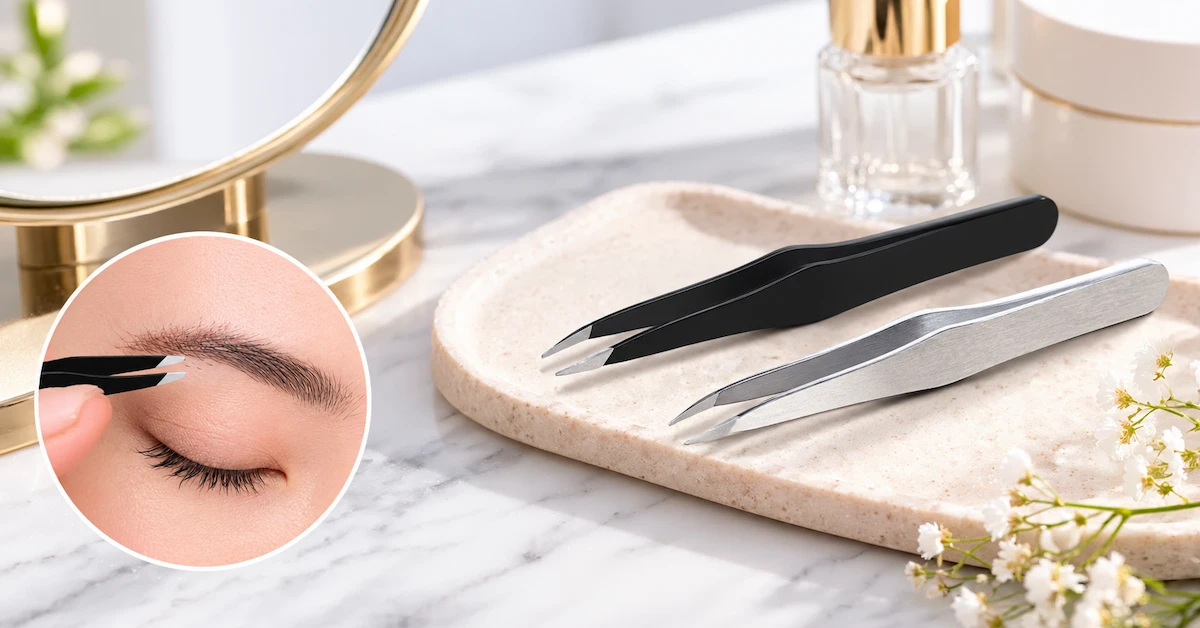
A logo that looks excellent on a full-size box may be unreadable on a narrow tweezer body. The manufacturer and buyer should evaluate the actual usable area, surface reflectivity, hand-contact zones, and how the product will be displayed in its package. The goal is legibility and consistency, not maximum logo size.
Potential approaches can include laser marking, engraving, printing, a branded sleeve, or packaging-only identity where suitable. These are options to discuss, not confirmation that every process is available on every OLIMOR model.Physical proof is particularly important on curved, coated, highly polished or textured surfaces.
| Branding option | Buyer advantage | Main limitation to assess | Physical approval |
|---|---|---|---|
| Laser marking on a compatible surface | Restrained, precise visual identity | Contrast, mark detail and substrate response vary | Actual marked tool in final finish |
| Engraving where the design allows | Recessed or tactile effect | Depth, access, edges and working-part clearance | Tool checked for finish and function |
| Printing on an approved finish | More visual or color possibilities | Adhesion, registration, handling and wear | Printed sample after agreed contact checks |
| Branded case or sleeve | More space for an easily read wordmark | Tool may not remain visibly branded outside the pack | Complete packed sample |
| Packaging-led identity | Can simplify changes to an established product | Brand may be less apparent after unboxing | Retail-ready pack and listing photographs |
Provide vector artwork, approved simplified alternatives, intended physical dimensions, orientation, clear space and a file revision. A screenshot should not be the final production master. Ask for the logo to be photographed at the scale customers will actually see, and agree how acceptable placement deviation will be evaluated.
For many small beauty tools, a simple symbol on the body plus a full wordmark on packaging is a better visual solution than squeezing a complicated logo into the grip zone. Make sure decoration never obscures important handling features or interferes with the working tip.
Build a Consistent Color Story Across Multiple Tweezer SKUs
A cohesive range is more than several tools painted approximately the same color. Buyers need to decide which elements are genuinely shared and which vary for a reason. Consistency can include finish family, logo method, mark location, typography, tip protection, retail box dimensions, and the way product names identify each tip type.
Set up a range master. It can be a simple document with a line for every SKU: model reference, customer task, approved finish sample, logo proof, package version, product image, and reorder identification. If one tool requires a different finish or marking process, record that exception instead of treating it as a production mistake later.
A hypothetical brow collection might use a slant-tip everyday tweezer in one visual finish, a pointed detail companion in the same family, and a two-piece gift pack. The two working tips are deliberately different; the packaging, typography and finish are deliberately related. Customers should see one brand and two distinct functions.
Avoid assuming that two products with matching color descriptions will match in real life. Physical batch references are especially important when metal finishing, printed paper, molded trays and textiles appear together in the same set. A brand that checks those items only in separate samples may be surprised when they are placed side by side.
Protect the Working Tip While Improving Unboxing
Packaging has to serve a mechanical purpose before it serves an aesthetic one. A precision tip can be affected by impact, contact with other tools, or an insert that presses in the wrong place. A product that left the factory with acceptable tip contact can become unsuitable if the package is not designed around the approved geometry.
For a single tweezer, assess the sleeve, cap, tray, card or box according to the selected format. Can the customer remove the tool without scraping its working end against a rigid edge? Does the package hold it in place during ordinary transport? Can the tool be stored after opening? If the finish is reflective or colored, does the insert rub directly across the decorated area?
For a multi-tool pack, give every tweezer a distinct position and a clearly identified tip type. An attractive arrangement can still be a poor product if customers cannot tell the tools apart or the metal tips touch while the box is carried. Do not assume that a premium rigid box automatically provides better protection; test the actual loaded package.
E-commerce adds another consideration: the product photograph should be representative of the delivered SKU. If the listing shows three tools, the package should contain those exact three models with the same finish, tip forms and branding version. Misleading pack imagery can generate returns even when the manufacturing quality is good.
The Right Package Depends on the Sales Channel
Brand customization should reflect the channel where the product will be sold. A transparent hanging card may work for mass retail, but may not communicate a premium gift message. A beautifully rigid set box may create avoidable shipping volume for a basic marketplace SKU. A reusable case may benefit a professional buyer, but only if the material and maintenance requirements suit the stated use.
For chain retailers, ask about shelf or hook placement, barcode location, product identification, language and pack dimensions. Consistency between stores and seasonal replenishment can matter more than elaborate decoration.
For DTC and marketplaces, focus on accurate images, compact parcel protection, easy unboxing and cosmetic quality under close-up photography. Review the packed sample after realistic handling. A small scratch on a metallic body can become highly visible in a customer photograph.
For professional brow and lash buyers, function and task-specific tip identification lead the decision. Confirm the intended cleaning and handling requirements; an ordinary personal-grooming case is not automatically appropriate for repeated multi-client use.
For travel and promotional collections, compact size, tip protection, reliable pack quantities and a clear brand mark may be sufficient. Do not claim universal airline approval or professional suitability without checking the relevant requirements.
Approve Function, Finish, Logo and Package as Separate Proofs
The product-development process becomes more manageable when each sample has a clearly stated purpose. One attractive sample cannot establish every aspect of production readiness. A simple four-proof workflow works well for many brand-led customization projects.
Proof 1: Functional base tool
Choose an actual model and verify grip behavior, closing feel, tip alignment, handling and exposed edges against the intended task. This becomes the baseline. If the product does not grip appropriately, address that before spending time on packaging graphics.
Proof 2: Decorated and finished tool
Approve the actual metal finish, color, logo, mark placement and visible surface condition. Recheck function after finishing. The buyer should sign off on the physical appearance, not only the vector artwork or an image rendering.
Proof 3: Retail-ready packed product
Place the approved tool in the final insert, sleeve, card, case or box. Inspect movement, abrasion, visibility, artwork, barcode, product name and claimed tip type. The pack should protect the tool and represent it accurately.
Proof 4: Production master and revision record
Keep a labeled reference with the selected SKU, tool model, material and finish specification, logo version, pack version, approval date, functional criteria and authorized approval contacts. Use the same reference in quotation, purchase order, inspection and repeat-order communication.
Where the project introduces a new working-tip design, an additional engineering and pilot-validation route may be required. A manufacturer should explain that change in scope rather than simply adding another decorative sample to the timeline.
What Quality Control Should a Brand Require for Custom Tweezers?
When a manufacturer promises quality control, ask what is inspected for your specific tool and finish. A generic claim of “strict QC” does not show whether the product will grip correctly or whether the decoration will match the approved sample. Both need attention, but they are not the same defect category.
| Inspection focus | Buyer acceptance question | Useful evidence |
|---|---|---|
| Working tip | Does the intended object grip reliably without unacceptable crossing or slippage? | Functional reference and agreed test |
| Closing response | Does the tool feel and behave like the approved model? | Same-location handling or measurement method |
| Body / grip | Is the geometry stable and comfortable for the target task? | Dimensions and appearance reference |
| Material | Does the selected SKU use the confirmed material or construction? | Model-specific records where needed |
| Finish / color | Is the visible result consistent with the accepted sample? | Physical finish master and viewing conditions |
| Logo | Are scale, location, clarity and appearance correct? | Approved artwork and actual decorated sample |
| Tip protection | Does the package avoid damaging or deforming the working end? | Packed sample and handling check |
| Product identity | Does the pack contain the right model and tip style? | SKU list, label and packing instruction |
| Reorder match | Does the current batch follow the released revision? | Master sample and change log |
Define unacceptable functional defects separately from cosmetic variation. The sampling plan, classification of defects and action required after failure should be agreed in the purchase specification. The current ISO 2859-1:2026 standard provides an international framework for AQL-indexed acceptance sampling by attributes; it is not a certificate for a tweezer, a universal allowable-defect percentage, or a substitute for product-specific tests.
Ask whether the supplier can provide the agreed inspection results or a clear record of any accepted deviations. Even a simple, well-maintained QC checklist is more useful than a collection of unrelated certificates or factory photographs.
Four Mistakes That Turn an Attractive Custom Range Into a Weak Product
The first mistake is choosing a decorative finish before proving the tool works. A beautiful rose-gold sample may be rejected by end users if the tips fail to contact properly. Keep a functional reference and retest after any finish change that can influence the working end.
The second is assuming a digital logo proof is production approval. The actual mark can look different on reflective metal, a textured grip, or a narrow curved section. Review the real product, then approve position and contrast at the intended size.
The third is adding too many variants too early. Every color, tip profile, artwork and packaging format can add minimums, inventory complexity and more ways to ship the wrong SKU. Begin with the fewest variants needed to test the customer proposition, then expand based on evidence.
The fourth is treating the second order as a repeat of the marketing image. A supplier needs an approved model, sample, finish, logo, package, functional criteria and component identity. “Same as last time” is not reliable if parts or artwork changed without documentation.
These are practical management mistakes rather than evidence of defects at any named manufacturer. They can be reduced by better briefing, fewer unnecessary variants, clear approvals and a stable product record.
Calculate Customization Cost Across the Whole SKU, Not Only the Metal Tool
Buyers often start with a factory unit price and add a small assumed premium for color or logo work. That is not enough for a branded range. The finished cost can include the base tweezer, finish or coating, logo processing, retail pack, inserts, protective caps, artwork setup, sampling, inspection, carton configuration and any engineering or tooling charges.
Ask for a quotation with a consistent scope. If Supplier A quotes a loose silver tweezer in a polybag and Supplier B quotes a colored, laser-marked item in a retail box with a protector, the unit figures cannot be compared directly. Establish a common product specification, then review differences in scope and price.
The landed cost per accepted sellable unit may matter more than the ex-factory unit price. A lower quote can be offset by extra repacking, rejected cosmetic units, damaged tips or late packaging.A more carefully specified pack may cost more upfront but reduce an avoidable source of complaints; verify the actual economics rather than assuming the outcome.
How MOQ can change by customization layer
A manufacturer may have different minimums for an existing tool, a special finish, a logo method, custom packaging and a newly developed shape. Those thresholds may apply per model, color, artwork or finished SKU. Ask the supplier to state the minimum by variant and by production step, not only a single order-wide quantity.
Do not assume one company-wide MOQ or lead time from a website. OLIMOR's FAQ directs buyers to provide specific products, quantity and delivery requirements so pricing and availability can be confirmed for the individual enquiry.
Plan the First Collection Without Creating a Difficult Inventory Problem
A new private-label range benefits from disciplined assortment planning. Suppose a brand wants slant and pointed tweezers in three finishes, with single-item and two-piece gift packaging. That creates more finished variants than a quick conversation about “two products, three colors” might suggest. Each combination can need its own barcode, artwork, inventory forecast and reorder reference.
This is a hypothetical planning example, not an OLIMOR sales program. The lesson is to define SKUs at the level the warehouse and retail channel will actually sell. If the same physical tweezer appears in a single pack and a bundle, the finished products require separate identifiers and packing instructions, even if they share a metal component.
Before confirming all variants, identify the likely hero SKU, the useful companion, and the optional gift or seasonal version. Ask which tooling, finish and printing decisions can be shared. Consolidation may be possible, but it must be confirmed for actual supplier processes; buying several colors in one shipment does not automatically combine every manufacturing MOQ.
One buyer-friendly decision is to approve a small, clearly positioned range first. Use real customer feedback, sell-through, return reasons and retailer requests to decide what to add next. The ability to reorder a successful SKU matters more than launching every imaginable color at once.
How to Compare a Custom Tweezers Manufacturer With a Supplier Scorecard
A supplier comparison should weigh function, decoration, packaging and repeatability in proportion to the brand's priorities. The scorecard below is a suggested buyer tool, not a formal third-party ranking of OLIMOR or any competitor.
| Supplier dimension | Illustrative weight | What to ask for |
|---|---|---|
| Base tweezer function | 20% | Intended-task sample and gripping review |
| Available customization fit | 15% | Clear list of existing, conditional and new options |
| Finish and logo consistency | 15% | Physical decorated proof and appearance standard |
| Packaging and tip protection | 15% | Complete retail sample and handling check |
| Sample and revision discipline | 15% | Versioned samples, artwork, controlled specification |
| Commercial transparency | 10% | Scope-matched quote, variant MOQs and milestone plan |
| Reorder communication | 10% | Change-notification and replacement approval procedure |
A beauty retailer might weight packaging and shelf identity more heavily. A specialist brow brand may weight functional feel and tip reproducibility more heavily. An importer managing several private-label customers may prioritize artwork revision control and repeat-order accuracy.
Ask prospective partners to explain who controls finishing, decoration, tip inspection and packing, and which operations may be coordinated externally. Owning equipment does not automatically guarantee better control, and using qualified partners does not automatically mean poor quality. What matters is the chain of responsibility, acceptance evidence and response to a problem.
What Must Be Documented Before the Second Purchase Order?
Customization succeeds commercially when a buyer can ask for the same product later and receive a matching result. That requires a record more useful than a folder of promotional photos.Keep the actual model code, the intended task, accepted functional sample, finish reference, mark placement, logo version, protective pack, retail artwork, and any approved deviations together.
Use a simple change-request rule. When a supplier proposes a different base model, coating, mark process, protective cap, insert or artwork, it should identify which customer-facing or functional requirements might change. The brand then chooses what must be reapproved. A finish change may need cosmetic proof and a grip check; a new tip geometry needs a deeper functional review.
A substitute that looks similar can still behave differently. Replacing a slant-tip model with another slant-tip model without checking the closing contact can undermine customer expectations. Equally, using old artwork on an otherwise correct tweezer can create a wrong retail product. Treat both as specification issues.
For larger import or distributor programs, record final carton counts and SKU labels as well. The most carefully customized product cannot support a retail launch if the correct tools are packed under the wrong codes.
Market Claims, Product Care and Documentation Need Their Own Approval
Product language should describe the selected tool's actual intended use and available evidence. “Professional,” “corrosion-resistant,” “hypoallergenic,” “sterile,” or “medical-grade” are not interchangeable marketing adjectives. Some claims may require materials, testing or regulatory support that the company website does not establish for every SKU.
For consumer products supplied to EU markets, Regulation (EU) 2023/988—the General Product Safety Regulation (GPSR) has applied since 13 December 2024. Its relevance to a given tweezer and the responsibilities of the parties must be evaluated for the actual product and sales arrangement. The rule's existence is not proof that a product complies or has a special certification.
Buyers should also confirm appropriate labeling, instructions, traceability, importer information, product warnings where applicable and any retailer-specific requirements. A company-level certificate should not be presented as a product-level certification. If a professional beauty workflow involves cleaning or disinfection, obtain component-specific guidance rather than assuming every coating tolerates every process.
Accurate, restrained product claims support both search trust and long-term sales. A brand that can explain precisely what the tweezer is for, how it is packed, and which properties have been verified offers customers more value than one relying on unsupported superlatives.
OLIMOR Product References for a Branded Tweezer Range
OLIMOR's current tweezer category lists individual products across different designs and appearance directions. Use real listings to start a conversation about product scale, finish, assortment and merchandising. The examples below are model-specific published references, not proof that each accepts any requested logo, color, working-tip modification or minimum quantity.
TZB3088 — Stainless Steel Tweezers: Precision & Durability. The published specification identifies stainless steel, a rose-gold color, 96 × 20 mm and 26 g. It provides a concrete visual reference for a decorative collection, but the exact finish process and any custom marking need project confirmation. Review the TZB3088 product.
TZH2078 — Eyebrow Grooming Tweezers. The listing identifies stainless steel, a silver color and 14 g. Its older published size field contains a typographical error, so the buyer should verify physical dimensions from an updated specification or sample rather than repeating that field. Review the TZH2078 product.
Stainless Steel Tweezers: Ultimate Grooming Tools. The website shows a multi-profile metal tweezer presentation that can help buyers discuss assortment formats and how tools look together. Confirm the actual count, models and working ends before proposing an identical retail set. Explore the multi-profile tweezer reference.
OLIMOR BEAUTY describes its product development, OEM support and quality checks against approved samples on its About Us page. For a branded tweezer range, ask the team to distinguish the products already available from the finishes, logos, packs or new engineering options that require confirmation. Do not rely on historic page display prices as current wholesale quotations.
Extend the Range Without Losing Brand Consistency
A tweezer can be a compact entry point into a broader beauty accessories line. Once its user position is clear, a brand may consider coordinated eyebrow razors, eyelash curlers, beauty scissors or grooming sets where those products genuinely serve the same customers. A brand should not add unrelated tools solely to increase catalog size.
For example, a hypothetical brow-care collection might pair a slant tweezer with an eyebrow razor and an appropriate grooming scissor. The shared brand system can include package typography, logo location strategy and visual finish family, while the function of each tool remains separately specified and approved.An eyelash curler may require completely different functional testing, despite sharing the same box colors.
The OLIMOR portfolio includes eyebrow razors, eyelash curlers, and beauty scissors. These are useful related category references for buyers planning a longer-term product program. The correct expansion path depends on customer demand, supplier feasibility and each item's own QC plan.
A Manufacturer-Ready RFQ for Custom Tweezers
You will usually get a better quotation by sharing a concise brand and product brief than by asking for “best price custom tweezers.” The supplier needs enough information to recommend a suitable platform and explain what remains unconfirmed. Include:
- Target buyer and market: home brow care, specialist beauty professional, retail, DTC, distributor or gift channel.
- Intended tool tasks: slant brow grooming, fine detail, lash-related handling or a defined set of applications.
- Reference products: OLIMOR page links, actual samples, dimensions, sketches or buyer-owned drawings.
- Customization level: logo/packaging, an available finish, grip appearance changes or new tip geometry.
- Material requirements: exact confirmed specification if mandatory, otherwise request model-specific options.
- Branding: vector logo, desired size and position, finish references and visual consistency requirements.
- Packaging: single retail pack or set, tip protector, barcode, insert, artwork languages and shipping protection.
- Quantity and variants: estimated order by model, color and packaging version, plus plausible replenishment.
- Quality priorities: gripping task, surface acceptance, logo proof, pack protection and inspection records.
- Schedule and destination: sample approval target, launch date, delivery market and quotation basis.
- Approvals and change rules: contacts responsible for the functional tool, appearance, retail artwork and substitutions.
A focused enquiry might say: “We are developing a three-SKU private-label tweezer range for beauty retail in [market]. Our main item is a slant-tip brow tweezer, with a pointed detail companion and a two-piece gift pack. We prefer one coordinated metallic finish and a small logo on compatible body surfaces. Please recommend suitable existing models, identify which finishes and markings are available, and advise sample proofs, tip protection, packaging options, model-specific MOQ and lead-time assumptions. We will approve function and finished appearance separately.”
The supplier's answer should distinguish confirmed product facts, proposed customization choices, and unresolved engineering or commercial questions. That distinction shortens the path to a meaningful sample and reduces misunderstandings during mass production.
Frequently Asked Questions About Custom Tweezer Manufacturing
What does a custom tweezers manufacturer do for beauty brands?
A custom tweezers manufacturer helps buyers select or develop appropriate tweezer models and coordinate branding, finishes, packaging, samples and production requirements. The scope may range from private-label packaging on an established model to deeper OEM design work. The buyer should confirm which changes are available for the selected SKU and how function and appearance will be approved.
Are custom tweezers and OEM tweezers the same thing?
Not necessarily. “Custom” can describe a logo, finish, packaging or selected assortment; OEM generally implies a stronger buyer-defined specification or manufacturing requirement. ODM can involve modifications to a supplier platform. Ask for a clear list of existing features, proposed adjustments and new-development work rather than relying on the terminology alone.
Which tweezer tip is best for a private-label brow brand?
A slant-tip style is a common starting point for everyday brow grooming, but the final choice depends on the intended user and gripping task. A pointed detail tool may suit a distinct companion role. Evaluate physical samples for contact, grip, handling and tip protection rather than choosing from product photographs alone.
Can I choose rose gold, black or another custom tweezer finish?
A manufacturer may offer different finishes or colors on selected models, subject to production feasibility. Do not assume every listed color is available on every shape. Approve a physical finish reference, confirm its compatibility with the working tip and logo, and request the MOQ and timing for the exact configuration.
Is laser engraving the best way to put a logo on tweezers?
Laser marking may be suitable for some metal surfaces, but the result depends on material, coating, reflectivity, design detail and marking location. Printing, engraving or packaging-led branding may be preferable in other cases. Ask for an actual decorated sample and approve appearance and durability requirements for the selected tool.
What is a reasonable MOQ for private-label tweezers?
There is no universal MOQ. A standard tool with basic packaging, a custom finish, a new logo process and an engineered working tip can have different thresholds. Request minimum quantities per model, color, artwork and finished SKU after defining the customization scope. A website display price is not a bulk purchase quotation.
How do I make sure tweezers in different colors have the same grip quality?
Use the same approved functional baseline and recheck the working tip after the chosen finishing processes. Keep model-specific material, contact and closing references, and inspect each finished version rather than assuming a color change is function-neutral. The inspection method should match the intended task and approved model.
What packaging works best for custom beauty tweezers?
The best option protects the working tip and fits the retail channel. A card or box may serve mass retail; a fitted case or coordinated set pack may support a gift product; a compact protected unit may fit e-commerce. Approve the actual packed sample for tip clearance, movement, logo abrasion, barcode and artwork accuracy.
Which quality documents should I ask the supplier to provide?
Ask for the approved sample record, model-specific specification, decoration and packaging references, agreed inspection criteria and any records or market documentation needed for the order. Where sampling inspection is used, agree on the applicable method and defect categories. Company-level certificates alone do not establish product-specific performance or regulatory compliance.
How can I prevent appearance and specification changes on repeat orders?
Keep a released range master containing each SKU's actual model, functional sample, finish reference, logo artwork, packaging revision and inspection criteria. Require approval for material, finish, tip, packing or artwork substitutions before production. Use those records on every purchase order, not just a request to repeat the previous shipment.
Conclusion
A dependable custom tweezers manufacturer helps a beauty brand build more than an attractive tool. Start with a useful tip and grip, choose feasible finishes and markings, approve the packed product, and control the collection by SKU and sample revision. This reduces uncertainty when new colors or reorders are introduced. If you are planning branded brow or lash tools, share your product references, logo, finish direction, packaging concept and target quantity with OLIMOR for a model-specific customization review.
Tag:
Related articles
- Lash & Brow Tools
- OEM & Private Label Solutions
OEM Tweezers Manufacturer: How Beauty Brands Control Tip Geometry, Grip and Bulk Production
- Lash & Brow Tools
- OEM & Private Label
Eyelash Curlers for Makeup Brands Supplier: B2B Sourcing Guide for Beauty Companies
- Beauty Tools Sourcing Guide
- Lash & Brow Tools