OLIMOR BEAUTY works with brands, importers, distributors and retail sourcing programs.
Beauty and personal-care tools, including nail clippers, with OEM and ODM support.
Office and manufacturing operations are reported in Yangjiang, Guangdong, China.
Development may begin from drawings, samples, appearance concepts or structural requirements.
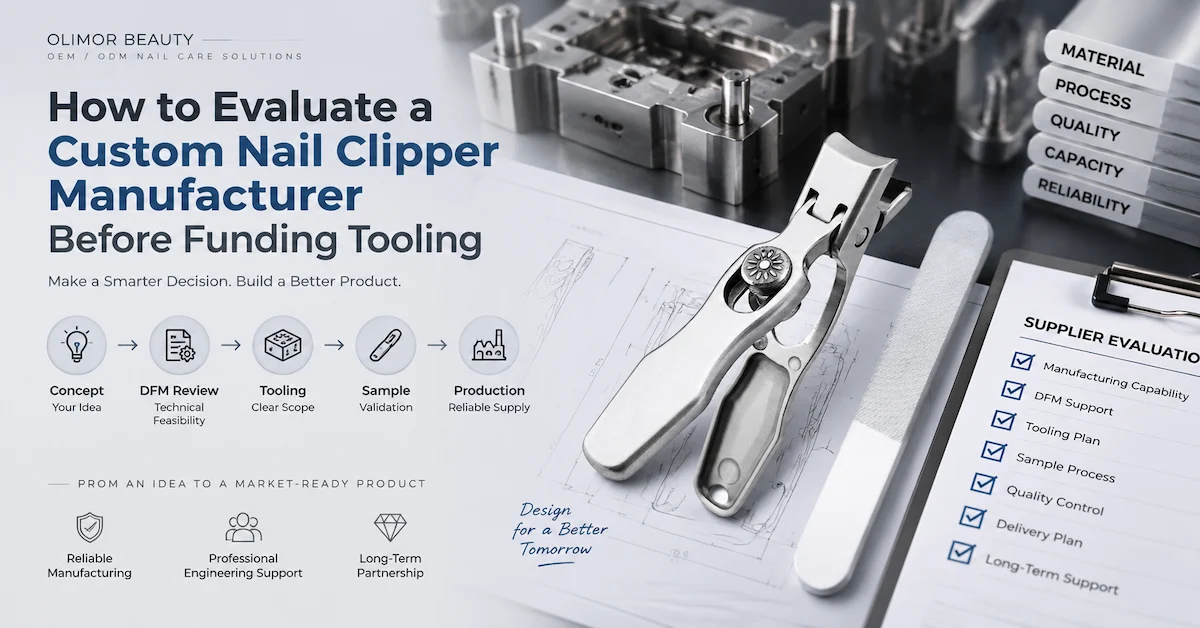
Why a Small Nail Clipper Can Create a Large Tooling Decision
A nail clipper is compact, but it is not mechanically simple. The body, cutting jaws, lever, pivot, pin, file or catcher, decorative parts and package must work as one controlled system. A visible change to the silhouette can alter leverage. A handle concept can affect assembly clearance. A new surface can change friction, logo contrast and package rubbing. When a buyer evaluates only the rendering and quoted unit cost, these interactions remain hidden until samples, tooling trials or production.
The commercial risk is not limited to the tooling invoice. An unclear design can create repeated samples, artwork revisions, late package changes, unused printed materials and an unreliable launch date. A rushed approval can also lock the team into a product that is difficult to inspect consistently. The better question is therefore not, “Can the factory make this shape?” It is, “Can the factory explain how this exact revision will be made, measured, approved and repeated?”
Design for manufacture, usually shortened to DFM, is the disciplined review that connects a product idea to the processes that can reproduce it. In a useful DFM discussion, the supplier identifies parts, forming routes, tool access, assembly sequence, finish interactions, control dimensions and foreseeable failure modes. The buyer identifies which features create customer value and which can change to reduce risk. Neither side should treat DFM as permission to alter the concept without a recorded decision.
This guide uses a nine-step buying method. It begins with the customer job and ends with a signed release package. The method is relevant whether the program starts from a drawing, physical benchmark, appearance proposal or structural requirement. It also separates confirmed OLIMOR capability from values that still require project-specific confirmation, such as MOQ, sample timing, production lead time, material grade, hardness, torque and inspection sampling.
What Is a Custom Nail Clipper Manufacturer?
A custom nail clipper manufacturer develops or configures a clipper to a buyer's controlled requirements and then manages the applicable manufacturing, inspection, packing and export steps. “Custom” can mean different levels of change. At one end, the buyer selects an existing mechanism and changes finish, logo and package. At the other, the buyer supplies a new structure that requires engineering review, new tools, trials and a model-specific control plan.
The definition matters because price, ownership and evidence change with the route. A decoration project should not silently become a structural development program after artwork is approved. A new body or lever should not be quoted as though it were only a colour change. Ask the supplier to classify every requested feature as existing, configurable, newly tooled or dependent on a third-party process. That classification is more useful than a broad OEM or ODM label.
OLIMOR's supplied factory information states that development may begin from customer drawings, samples, appearance concepts and structural requirements. Confirmed process capabilities include stamping, heat treatment, injection moulding, polishing, water deburring, assembly and packaging. In-process inspection and finished outgoing inspection are also reported. A project review should identify which of these processes apply to the selected clipper and which operations, if any, are managed outside the factory.
The client-confirmed profile reports that the company was founded in 2011 and its factory in 2017. Operations are in Yangjiang, Guangdong, with a reported factory area of approximately 6,000 square metres and around 200 employees. Broad annual capacity is reported as about five million hardware sets and 2.5 million injection-moulded pieces. These entity facts help a buyer understand who and where the supplier is; they do not replace a written model-specific capacity and schedule confirmation.
Step 1: Define the Commercial Job Before Defining the Geometry
Start with one paragraph that names the target user, sales channel, price position, destination market and reason for customization. A pharmacy value clipper, premium ecommerce tool, travel product, manicure-set component and distributor assortment have different priorities. Without this context, the manufacturer can optimize a feature that the customer does not value or remove a feature that supports the brand's positioning.
Write the product's job in observable terms. Instead of asking for “premium quality,” describe the handling experience, storage environment, package presentation and range relationship. If the clipper must fit an existing pouch or insert, state the available envelope. If photography depends on a wide branding surface, state the required visible area. If a size family must share a design language, identify the features that make the family recognizable.
Separate requirements into three classes: non-negotiable, preferred and open for proposal. Non-negotiable items may include package dimensions, a legal artwork element or an interface with another tool. Preferred items may include a finish direction or decorative radius. Open items invite the supplier to propose a more stable process route. This hierarchy lets the factory value-engineer intelligently instead of guessing which feature can move.
Record commercial assumptions beside the product brief. Include the quantity scenario, number of SKUs, packaging route, destination and planned launch window, but do not present an unconfirmed date as a promise. Tooling and unit quotations should state the revision and scenario they cover. A quotation without this context can appear complete while pricing a different program.
| Commercial question | Buyer input | Why it changes DFM | Release evidence |
|---|---|---|---|
| Who uses the clipper? | User group, nail-care task and handling context | Influences size, leverage, grip, edge protection and instructions | Approved product brief |
| Where is it sold? | Retail, ecommerce, travel, set or distributor program | Changes pack restraint, display, logistics and assortment coding | Channel and package brief |
| What creates value? | Function, recognizable shape, finish, logo area or set coordination | Protects important features during value engineering | Ranked requirement list |
| What is fixed? | Interfaces, claims, dimensions, artwork or compliance inputs | Defines the boundary of supplier proposals | Fixed/preferred/open matrix |
| What is the buying scenario? | Quantity range, SKU count, destination and desired sequence | Influences tool strategy, pack plan and capacity review | Model-specific quotation assumptions |
Step 2: Select the Right Development Route
There are three practical starting routes. A platform route uses an existing product with approved customization boundaries. A configured route combines established parts, finish, colour, decoration or accessories in a new configuration. A structural route changes the body, cutting head, lever, joint or another feature that can affect function and tooling. A serious quotation states which route applies.
The platform route may reduce uncertainty, but the buyer still needs a current specification and physical sample. “Existing” does not mean that every finish, logo method and package has already been validated together. Ask which parts and tools are current, whether the sample represents normal production and how changes to the underlying platform will be communicated before a reorder.
The configured route often looks simple because the components are familiar. In practice, a new combination can create interference, inconsistent colour, rubbing or pack pressure. A plastic grip can change lever access. A catcher can affect cleaning and assembly. A different pouch can contact a coated surface. The DFM review must evaluate the combination, not merely approve each component separately.
The structural route needs the clearest stage gates. Establish who provides the initial drawing, who develops manufacturing details, who approves changes and what rights apply to tooling and final drawings. Ask for a feasibility review before requesting a final production price. An early budget range can support the business case, but it should be labelled as preliminary until the product and tool concept are defined.
When a supplier proposes an ODM direction, request the same clarity. Identify which design elements are mature, what can be adapted, whether exclusivity is available, which tooling already exists and what documentation controls the buyer's version. An ODM route is valuable when it reduces uncertainty. It should not obscure the origin or revision of the final product.
Step 3: Break the Product Into Parts, Interfaces and Critical Characteristics
Create a component map before discussing tolerances. List the body halves or formed body, cutting edges, lever, pin, pivot, file, catcher, handle, inlay, spring and package restraint that apply to the chosen design. For each component, record material proposal, process, finish, interface, supplier responsibility and inspection point. A one-line material description for the whole clipper is not enough.
Interfaces deserve special attention because problems often occur between acceptable parts. The lever may be within its individual drawing yet bind after assembly. The body may meet shape dimensions yet sit poorly in an insert. A coated part may fit before finishing but interfere afterward. Identify these relationships explicitly and ask how the factory will verify them during trials and production.
Critical-to-quality characteristics, or CTQs, are the limited set of features that directly affect function, safety, fit, brand appearance or regulatory information. A CTQ should have a requirement, method, frequency, record and response. Not every dimension is a CTQ, and not every visual feature needs a numeric tolerance. The purpose is to focus control where failure would matter to the buyer or end user.
Use drawings and approved samples together. Drawings define controlled dimensions, materials, surfaces and notes. Samples communicate feel, finish, colour and permitted visual variation more effectively than words alone. Photograph signed samples, assign identifiers and store them under controlled conditions. If the drawing and sample conflict, resolve the conflict in writing rather than letting production choose.
| Part or interface | Questions for the DFM review | Possible CTQ | Evidence to retain |
|---|---|---|---|
| Cutting head and body | How are forming, edge preparation, meeting and alignment controlled? | Approved jaw relationship and functional result | Drawing, reference sample and inspection record |
| Lever and pivot | What creates mechanical advantage and stable repeated movement? | Movement, seating, orientation and agreed functional check | Assembly work instruction and signed sample |
| Pin or joint | How is assembly condition maintained without damage or looseness? | Fit and visible assembly condition | Process control and first-piece result |
| Handle or inlay | Does the part fit after moulding and finishing? Where can flash or gaps show? | Fit, colour, surface and retention | Colour master and fit sample |
| Finish and logo | Does the decoration suit the substrate, curvature and wear contact? | Appearance boundary and artwork placement | Master panel and approved decorated sample |
| Package restraint | Can the clipper move, rub, open or press against the pack? | Orientation, movement and surface protection | Final packed sample |
Step 4: Run a Real DFM Review of the Body, Jaw, Lever and Assembly
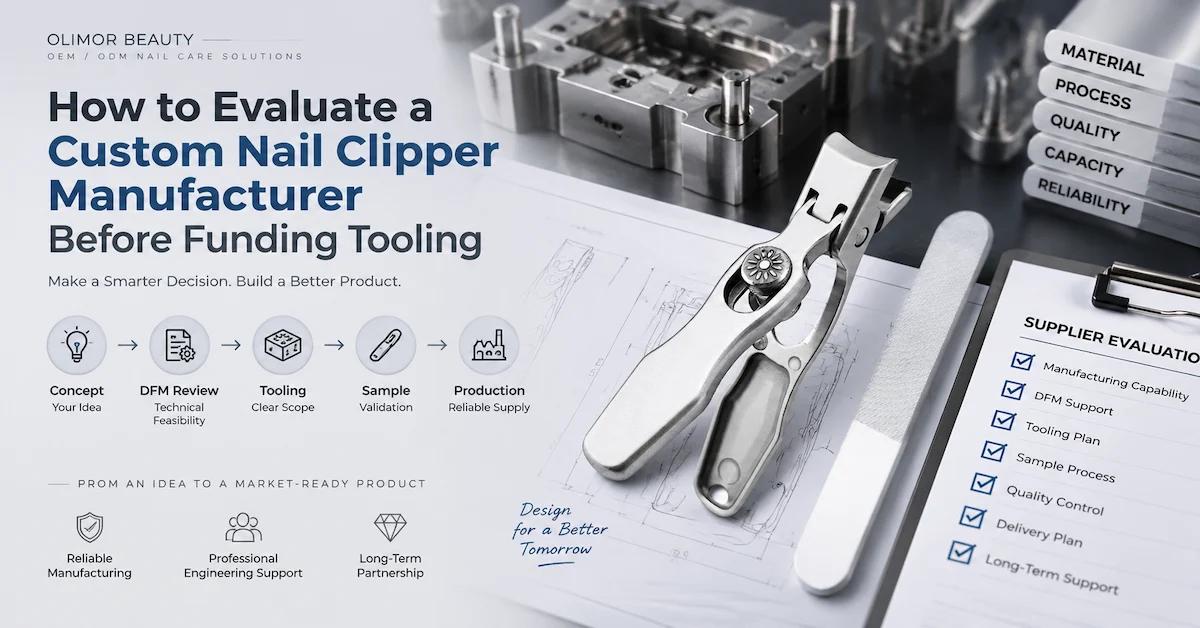
A real DFM review is a working session with marked drawings or a written report, not a statement that the design is possible. Ask the engineer to show forming direction, tool access, transitions that may concentrate stress, edge preparation, assembly sequence and surfaces that require protection. Record every proposed change with its reason, effect and approval status.
For the body, examine whether the geometry can be formed repeatedly and whether decorative surfaces conflict with gripping, fixturing or later processes. A sharp cosmetic transition in a rendering may be difficult to polish consistently. A deep feature may need a different forming sequence. The supplier should explain the manufacturing implication while the buyer decides whether the visual effect justifies it.
For the cutting head, define the intended use and the approval method. Do not rely on adjectives such as sharp or precise. Ask how edge geometry and meeting are established, what visual conditions are unacceptable and how functional samples will be compared. Model-specific material, heat-treatment and hardness requirements must be confirmed by technical owners; this guide does not substitute an invented universal value.
For the lever and pivot, review the complete movement path.Check access for a finger, lever seating when closed, freedom from interference, stability after assembly and interaction with decorative parts. A longer or differently shaped lever can change both handling and package height. A new pin or pivot detail can change the assembly method and its controls.
For assembly, request the intended sequence and inspection gates. Parts that are easy to inspect before assembly may become hidden later. A finish can be damaged by a fixture or by another component. A late decorative operation can contaminate a joint. The sequence should protect critical surfaces, make defects visible early and prevent an unapproved repair from becoming normal production practice.
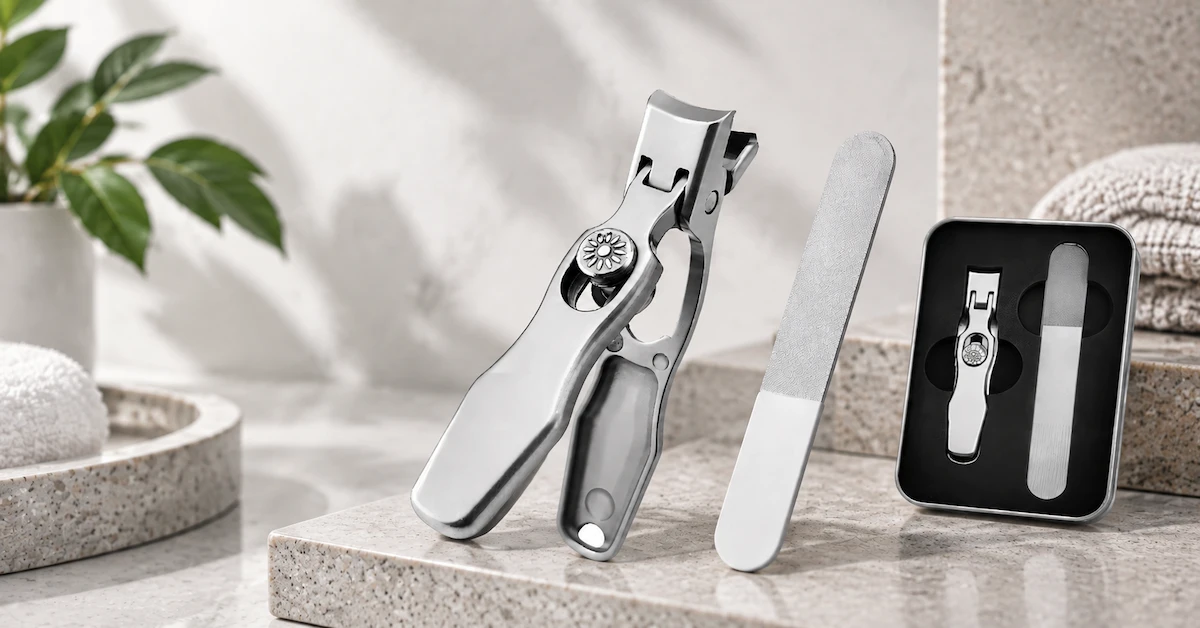
Step 5: Connect Material and Finish Statements to Evidence
Ask for material by component. A stainless steel description may apply to the body but not automatically to every pin, file, inlay, coating or accessory. The quoted bill of materials should use the same language that will appear in the drawing, package claims, ecommerce listing and inspection documents. If the supplier proposes an equivalent material, request a written comparison and approval before substitution.
Heat treatment, where relevant, should be linked to a defined component and performance purpose. OLIMOR's supplied capability list includes heat-treatment equipment and hardness testing equipment, but equipment availability does not prove a value for a particular SKU. The technical team must confirm the required result, method, sampling and record for the selected design.
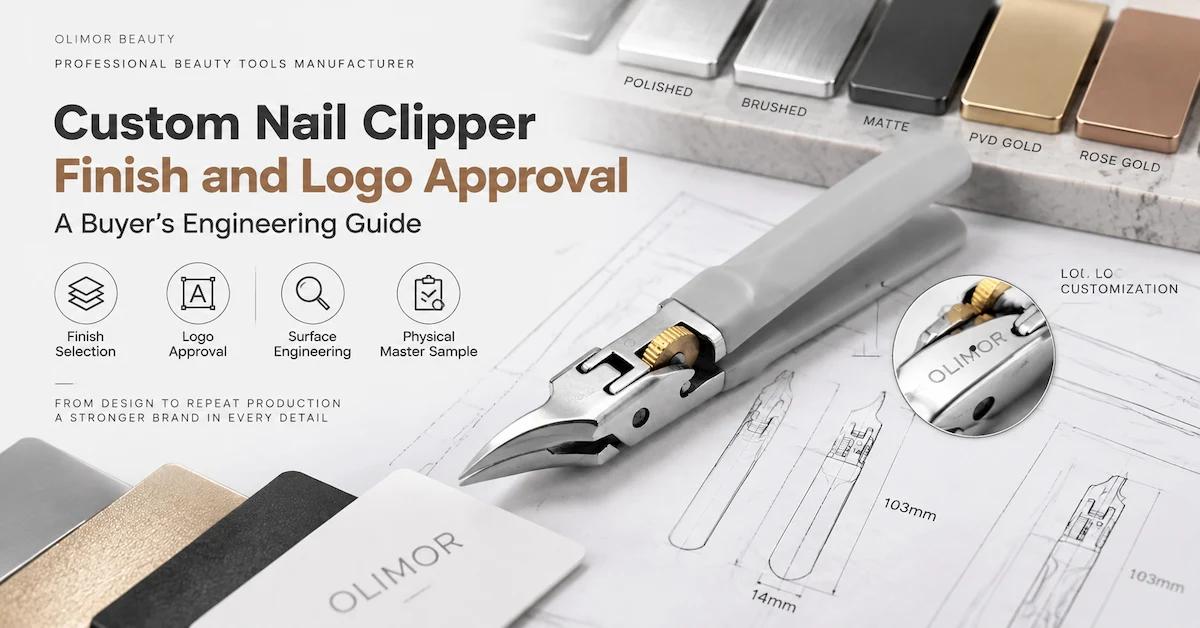
Finish selection belongs in DFM because polishing, plating, coating, brushing or other appearance processes can change dimensions, friction, edge masking, colour, logo performance and scratch visibility. Identify surfaces that are cosmetic, functional, hidden or permitted to show process contact. Approve the real finish on real production-intent material rather than relying solely on a digital colour.
Request evidence at the right level. A material declaration supports identity; it does not prove complete product performance. A hardness result supports one measured characteristic; it does not prove corrosion resistance, edge life or package durability. A signed sample demonstrates an accepted state; it does not replace a repeatable production control. Each evidence item should answer a specific question.
Destination-market requirements must be identified by the buyer and reviewed with qualified compliance resources. Avoid unsupported statements such as medical grade, FDA approved or CE certified. Certification names, numbers, legal entities, addresses, scope and validity dates should be verified from current documents before they appear in public copy or purchase specifications.
Step 6: Review Tooling Scope, Ownership and Change Boundaries
A tooling quote should identify what the tool makes, the drawing revision, the included operations, trial assumptions, maintenance responsibility, ownership terms and the conditions that trigger a change. Ask whether a proposed tool is dedicated to the buyer, shared, modular or an adaptation of an existing tool. These distinctions affect cost, control, replacement and exclusivity.
Do not approve tooling from a single total price. Separate tools, fixtures, gauges, printing plates, mould inserts and package dies where applicable. A “free tool” may be amortized into unit price or remain supplier-owned; a paid tool may still have maintenance or storage conditions. The commercial agreement should reflect the actual arrangement without assuming ownership from payment alone.
Define the design freeze and change process. Before freeze, changes can be evaluated as development decisions. After freeze, changes need a formal request showing reason, affected documents, cost, timing, inventory and validation. Even an apparently small radius or logo movement can affect tooling, inspection or package artwork. Version control protects both sides from producing a superseded concept.
Ask how the manufacturer confirms tool output after maintenance or adjustment. The answer may include first-piece comparison, dimensional checks, functional review and approval against a retained sample. The exact plan should match project risk. A tool is not a permanent guarantee; it is one controlled input in a continuing process.
Step 7: Use a Sample Ladder Instead of One “Final Sample”
A sample ladder gives each sample a question. A concept or appearance sample may confirm scale and brand direction without representing final material or function. An engineering sample may confirm movement and geometry without final decoration. A decorated sample may confirm finish and logo. A packaging sample evaluates restraint, presentation and distribution risks. A production-intent sample brings those elements together.
Label the status clearly. When a sample uses substitute material, prototype tooling, hand finishing or temporary packaging, record the deviation. Buyers often approve a beautiful handmade sample and later compare it directly with normal production. The better approach is to understand what the sample proves and what still needs production-process confirmation.
Use a sample report with photographs, revision, date, measured results, observations and decisions. A comment such as “make it stronger” is difficult to translate into a manufacturing change. Mark the exact feature, describe the observed issue, state the intended outcome and ask the supplier to propose the controlled adjustment. Review the new sample against the previous decision rather than restarting from memory.
Limit uncontrolled sample branches. When marketing, engineering and purchasing send separate comments, the supplier may build a hybrid that no one intended. Nominate one revision owner and combine internal feedback before issuing it. If the team wants to compare two alternatives, label them A and B and state the decision question.
The final signed sample should be linked to the final drawing, bill of materials, finish reference, artwork, packaging files and inspection plan. Retain a buyer sample and agree what the supplier retains. This release package becomes the reference for first production and reorders, subject to any approved change.
Step 8: Build the Inspection Plan Before the Production Quote Is Final
Inspection affects process, labour, equipment, record keeping and cost. If the buyer expects a special test or documentation package, disclose it during quotation. A factory cannot price an undefined phrase such as “strict QC.” Identify incoming, first-piece, in-process, final and packed-product checks that are appropriate to the design.
For each characteristic, define the requirement, method, timing, sample basis, record and response. Numeric limits should come from approved engineering data or validated samples, not from a generic blog. Visual criteria can use boundary samples and defect photographs. Functional checks should state the operation, test medium, observation and rejection condition.
OLIMOR's client-confirmed profile reports production-process inspection and finished outgoing inspection, along with torque and hardness test equipment. The buyer should ask to see the model-specific control plan and confirm which equipment applies. The presence of a device is not evidence that the correct method, calibration, frequency and reaction plan are used for every order.
Include packaging in final inspection. Verify the correct product and revision, clean condition, orientation, restraint, artwork, barcode, language, pack count, carton marks and carton configuration. A clipper that passes a bench check can still arrive scratched, open or mixed if the package and packing process are uncontrolled.
| Control stage | Illustrative focus | Evidence requested | Buyer decision |
|---|---|---|---|
| Incoming or component | Material identity, moulded part condition, critical purchased parts | Supplier record or incoming result appropriate to risk | Is the input evidence sufficient for the claim and CTQ? |
| First piece | Tool output, assembly fit, finish setup and decoration position | First-piece record and retained reference | May the run proceed? |
| In process | Jaw relationship, burrs, movement, appearance and assembly state | Inspection frequency, result and reaction record | Are problems detected before value is added? |
| Final product | Function, surface, logo, cleanliness and correct SKU | Finished inspection report | Does the lot meet the approved release package? |
| Packed product | Restraint, artwork, count, barcode and carton data | Packing and outgoing evidence | Is shipment release justified? |
Step 9: Release the Project With a Controlled Decision Package
The release package should make the approved product reconstructable without relying on email memory. Include the product brief, final drawings, bill of materials, finish and colour references, artwork, packaging dielines, signed samples, inspection plan, approved quotation, tool agreement and change log. Every file needs a revision or date and a responsible approver.
Close open items explicitly. A blank cell can be read as supplier choice, buyer choice or forgotten work. Use an open-item register with owner, due date and effect. Do not release production while a critical material, function, artwork or package decision remains ambiguous. If production must proceed at risk, the responsible business owner should document the accepted risk and containment.
Hold a pre-production review. Confirm that the supplier, buyer, packaging team and quality reviewer refer to the same revisions. Review approved substitutes, known visual boundaries, inspection methods, retained samples, packing method, carton configuration and communication route for nonconformity. This meeting is short compared with the time lost to a mixed revision.
Define the first-production feedback loop. The initial run may reveal handling, fixture, inspection or packaging details that prototypes did not expose. Require a documented review and approve any corrective change before it becomes the new normal. A repeat order should begin from the last approved release package plus a written review of changes, not from a bare purchase order.
How to Compare Three Manufacturers Without Comparing Three Different Products
Send the same controlled brief to every shortlisted supplier and require each response to repeat the revision. Ask suppliers to separate recurring product cost, packaging cost, one-time development cost and optional services. Require them to list assumptions and exclusions. A lower price based on a standard body, generic packaging or unpriced inspection is not comparable with a price based on new tooling and a complete pack.
Score technical response quality as well as the number. A strong supplier identifies conflicts, asks focused questions, distinguishes confirmed facts from proposals and explains the evidence needed for approval. A weak response may immediately promise every feature without showing how the requirements connect. Responsiveness matters, but speed without a controlled answer can transfer risk to the buyer.
Compare process fit. Ask which steps are in house, which are externally managed, how incoming and outgoing quality are controlled and who owns technical communication. A factory with more equipment is not automatically the best fit; the important issue is whether the proposed process can reproduce the approved model and whether responsibility remains clear across operations.
Compare change behaviour. Give each supplier one hypothetical change, such as a new logo position or package insert, and ask how it would be assessed. The answer reveals whether the supplier considers drawings, tools, samples, inventory, timing and validation. Change discipline is especially important for reorders because silent substitutions can erode the approved product over time.
A 90-Point Pre-Tooling Publication and Sourcing Scorecard
The following scorecard adapts the requested nine-step quality approach to a sourcing page. It does not predict Google ranking, which no supplier or writer can guarantee. It helps the publishing and buying teams check whether the page answers a real question, uses verified evidence and gives readers a responsible route to an RFQ.
Does the article answer the real decision of whether a project is ready for DFM, tooling and supplier quotation?
Are product assets, capability facts and model-specific requirements distinguished from assumptions still requiring confirmation?
Can a reader or answer engine identify the company, location, product, processes, target buyers and markets?
Does the opening answer the question directly, and can the headings, tables and FAQ stand alone?
Are title, description, H1, canonical, URL, internal links, ALT text and breadcrumbs present and consistent?
Do Article, BreadcrumbList, Organization and FAQPage describe content actually visible on the page?
Are writer, technical reviewer, update date, sources, evidence boundaries and contact route visible?
Publish only after unresolved factual claims and broken links are corrected and the appropriate owner approves the page.
What to Send With a Serious Custom Nail Clipper RFQ
Send a concise cover brief, controlled product specification, annotated reference images, available drawings, target packaging, artwork status, destination market, quantity scenarios and required evidence. State which documents are confidential and whether a nondisclosure agreement is required. Ask the supplier to acknowledge the file list and revision before answering.
Request a structured response: recommended development route, manufacturability concerns, proposed materials by part, process map, new and existing tools, sample stages, inspection plan, packaging assumptions, commercial breakdown and open questions. Ask for alternative proposals in a separate section. This preserves the requested baseline while allowing useful value engineering.
Use the contact discussion to resolve decisions, not to replace documentation. A video call can quickly explain a mechanism or package, but record the resulting agreement in the specification or action log. A procurement project becomes repeatable when the current truth is easy to find and old versions cannot silently return.
Finally, treat the first quote as the start of qualification, not the end. The quality of questions, samples, evidence and change control determines whether the program can progress from a promising concept to a stable product. A reliable custom nail clipper project is built through connected decisions: customer job, DFM, tooling, material, sample, inspection, package and repeat-order control.
Keyword-to-Decision Map for Buyers
Search terms are useful only when they lead to a verifiable buying question. The following map connects each requested phrase to the evidence a buyer should request. It also prevents a sourcing team from treating OEM, ODM, private-label, factory and wholesale routes as interchangeable when their control points are different.
| Sourcing phrase | What a buyer should verify | Project relevance |
|---|---|---|
| custom nail clipper manufacturer | Whether product development, sampling, production, inspection and packing are connected by one controlled specification. | Primary commercial investigation and RFQ intent. |
| professional custom nail clipper manufacturer | Documented capability, responsible technical review, traceable approvals and a clear response when evidence is incomplete. | Supplier qualification rather than a marketing label. |
| OEM custom nail clipper manufacturer | Ability to review buyer drawings, samples, structure, appearance and packaging without silently changing the requirement. | Buyer-led specification and brand programs. |
| ODM nail clipper manufacturer | Which proposed design elements already exist, which can be adapted and who controls the approved final revision. | Supplier-led platform or design direction. |
| private label nail clippers | What is standard, what can be decorated, what package options are compatible and how reorders are protected. | Faster brand launch from a validated platform. |
| custom logo nail clippers | Artwork revision, location, orientation, method, contrast, adhesion and interaction with the final finish and package. | Brand execution on the physical product. |
| stainless steel nail clipper supplier | Material by component, supporting evidence, applicable process route and alignment between specification and marketing claims. | Material-led sourcing and documentation. |
| custom nail clipper factory China | Actual in-house and managed processes, location, capacity context, inspection points and export coordination. | Factory evaluation and supply-chain due diligence. |
| wholesale custom nail clipper supplier | Assortment control, pack configuration, carton data, repeat-order coding and model-specific commercial terms. | Distributor and multi-SKU replenishment. |
Frequently Asked Questions
What should I ask a custom nail clipper manufacturer before paying for tooling?
Ask for a revision-controlled DFM review, component and process map, tooling breakdown, drawing ownership terms, sample stages, model-specific inspection plan and written change process. Confirm what already exists and what is newly developed.
Does every custom nail clipper require new tooling?
No. Some projects use an existing platform with finish, logo and packaging changes; others configure existing components; structural changes may require new or modified tools. The supplier should classify the route for every requested feature.
What is the MOQ for a custom nail clipper?
There is no responsible universal MOQ. It depends on model, material, finish, decoration, packaging, SKU mix, quantity and development scope. Request a written MOQ for the exact quoted configuration.
How long does custom nail clipper sampling take?
Sampling time should be confirmed after the drawing status, tooling need, material, finish, logo, package and approval stages are known. Ask for a stage-by-stage schedule and identify which dates are estimates.
What belongs in a nail clipper DFM report?
A useful report covers part geometry, forming and tool access, cutting-head approach, lever and pivot movement, assembly order, material and finish interactions, critical interfaces, inspection access, proposed changes and unresolved risks.
How should buyers approve nail clipper sharpness?
Define the intended nail-care task and agree a controlled functional method, sample condition, observation and rejection rule. Avoid approving only the word sharp or copying an unverified value from another model.
Can a reference sample replace a drawing?
A reference sample communicates appearance and feel, but it does not fully define material, hidden structure, tolerances, process or permitted variation. Use an approved sample together with controlled drawings and specifications.
Who should own the final drawing?
Ownership and permitted use should be agreed commercially. Regardless of ownership, the buyer and manufacturer need one approved production revision and a clear process for proposing, approving and recording changes.
Which OLIMOR capabilities are relevant to nail clipper development?
Client-confirmed capabilities include stamping, heat treatment, injection moulding, polishing, water deburring, assembly, packaging, in-process inspection and final outgoing inspection. Applicability must be confirmed for the selected model.
What evidence should be retained for repeat orders?
Retain the final specification, drawings, bill of materials, finish reference, artwork, packaging files, signed product and packed samples, inspection plan, approved quotation, tool agreement and change history.
Can this process guarantee Google first-page ranking?
No. No responsible writer or manufacturer can guarantee a Google position. The process improves relevance, evidence, extractability, technical SEO and trust, while ranking also depends on competition, authority, links, site performance and search-engine decisions.
When is a project ready for an RFQ?
It is ready when the intended customer, development route, fixed and open requirements, component concept, customization, packaging, quantity scenario, destination and evidence expectations are clear enough for suppliers to quote the same project.
Tag: