

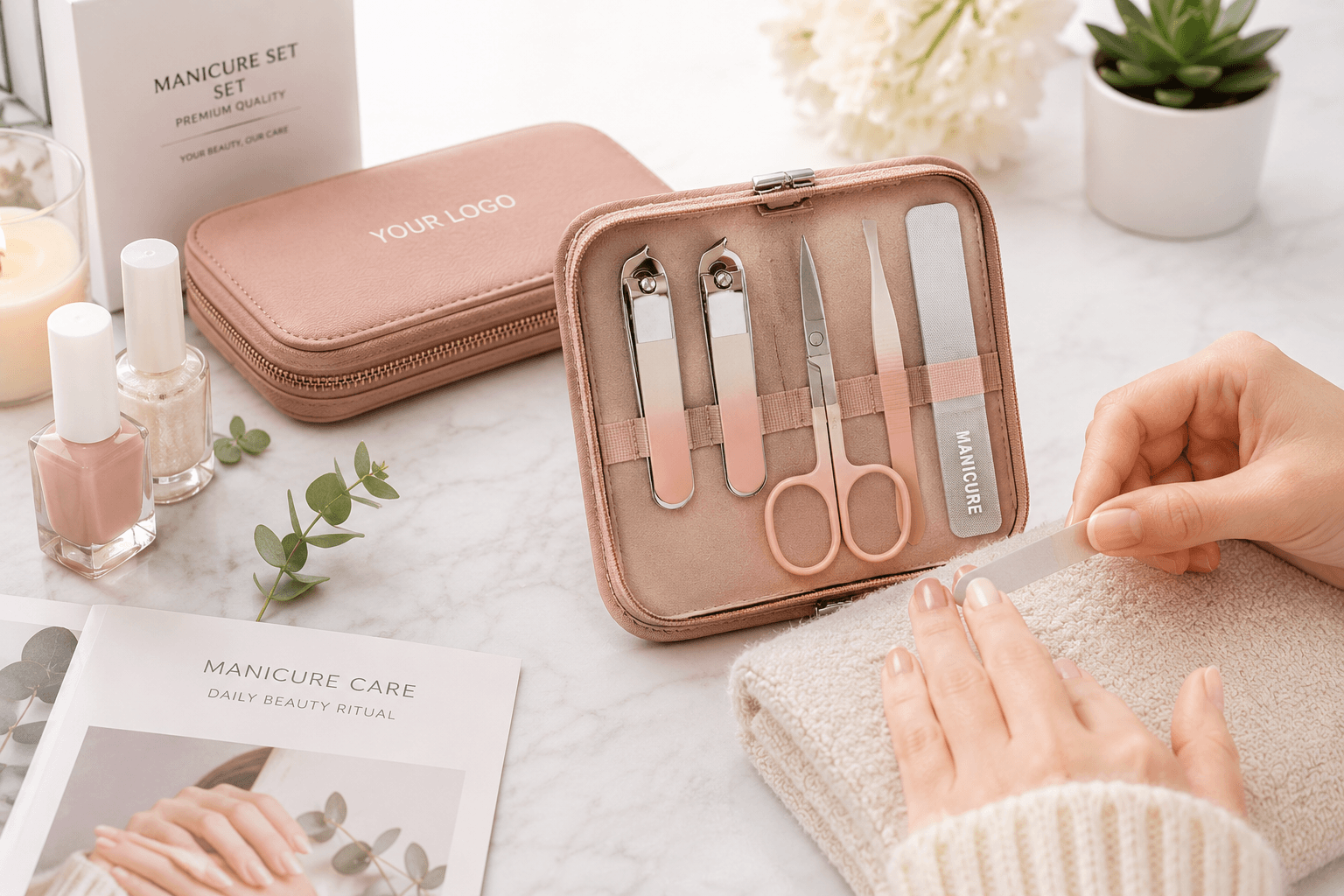
Custom Manicure Set Supplier: How Salons and Distributors Should Choose an OEM Partner
Choosing a custom manicure set supplier is not only a purchasing decision. For salons, spa groups, beauty schools, retail brands and distributors, the supplier you select influences product consistency, brand presentation, customer satisfaction and repeat sales. A manicure set may look simple from the outside, but buyers need to evaluate tool sharpness, finish consistency, set configuration, logo placement, packaging durability and the supplier’s ability to repeat the same result across bulk orders.
Many sourcing problems begin when buyers focus only on unit price. Low-cost sets can become expensive if the tools arrive with inconsistent alignment, weak cutting performance, rough edges, mismatched packaging or color differences between batches. A better approach is to define the intended user, the retail or professional positioning, and the quality expectations before discussing customization. That makes it easier to compare suppliers on real production capability rather than on vague promises.
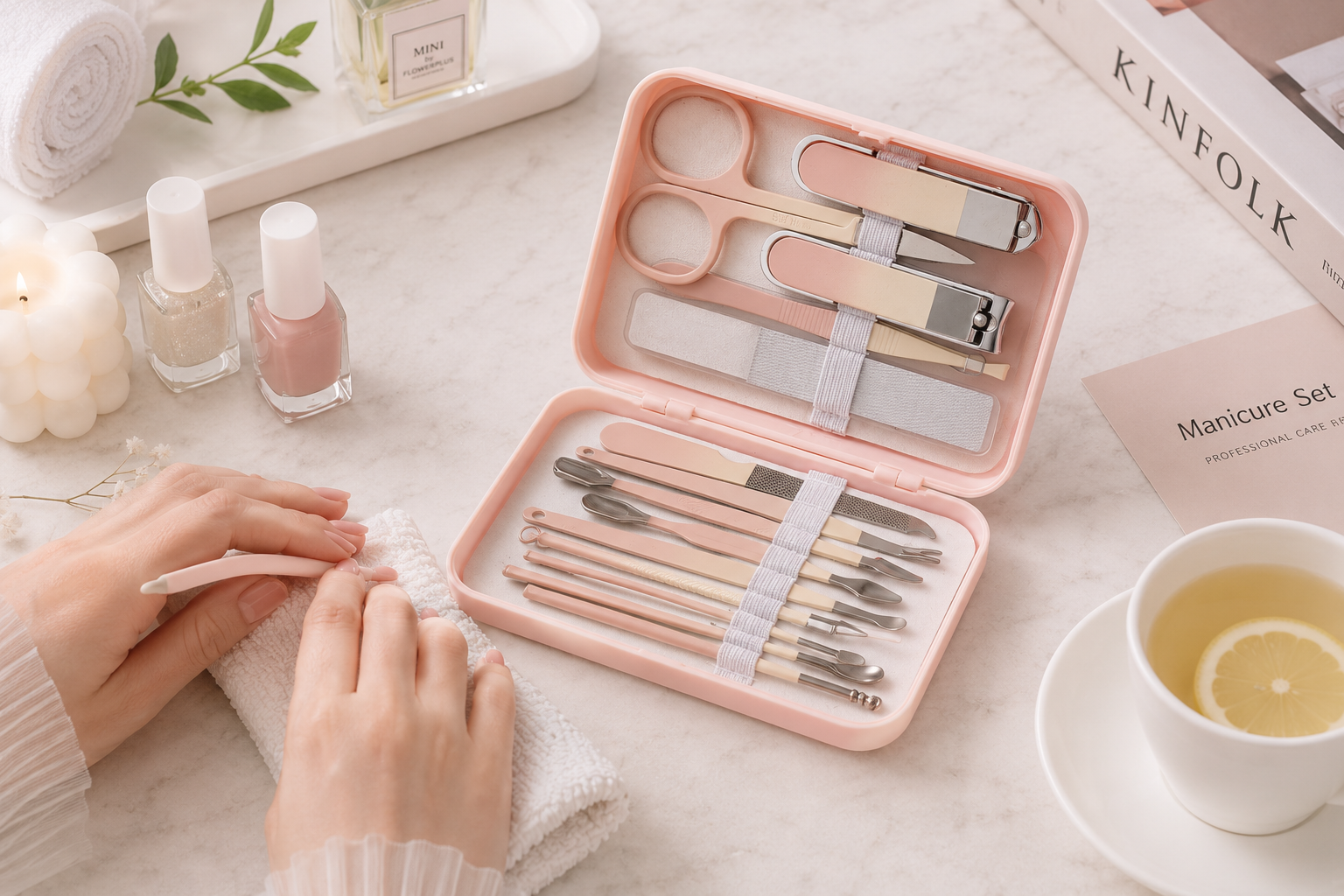
What a Custom Manicure Set Supplier Actually Provides
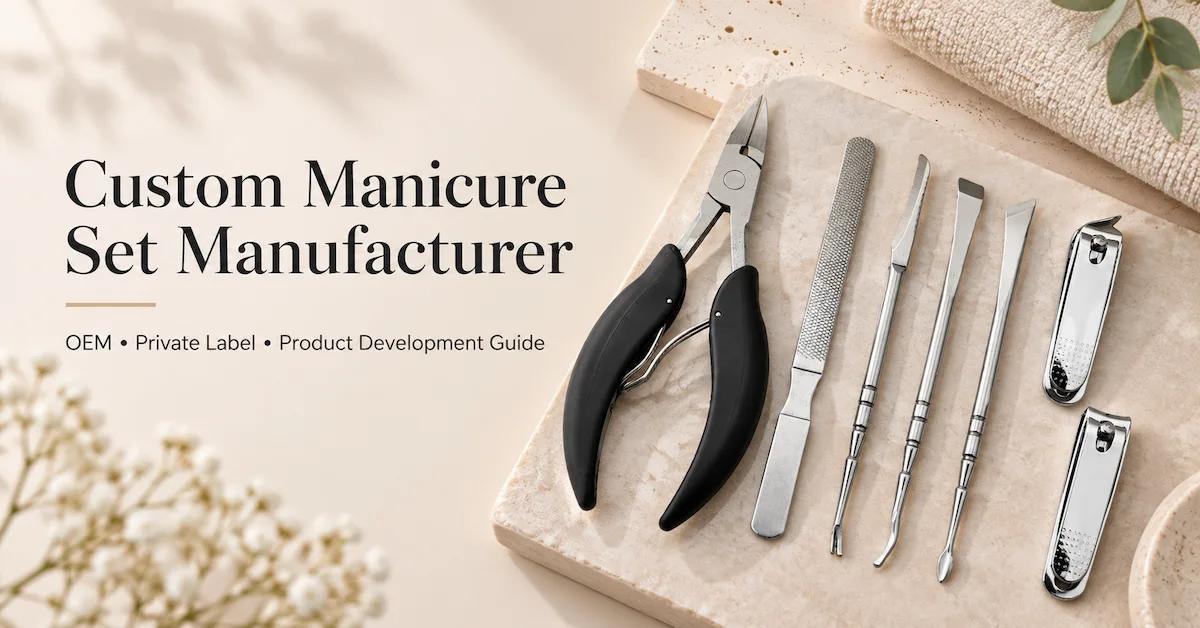
A custom manicure set supplier supports the development of branded nail care kits for professional or retail use. The process usually begins with existing manicure tool components, such as nail clippers, scissors, files, tweezers, cuticle pushers or other grooming tools. The buyer then selects the set combination, tool finish, logo method and packaging style that best matches the target market.
For salon branding, customization is often about a professional appearance and dependable use during client services. For distributors and retail brands, the focus may include shelf presentation, barcode and label requirements, packaging protection and repeatable bulk production. A supplier’s role is to connect these commercial requirements with practical manufacturing choices. You can review related beauty tool products to compare possible product directions before creating a custom set brief.
Define the Set Purpose Before Selecting Tools
Not every manicure set should contain the same tools. A small travel kit, a salon service kit and a premium retail gift set have different priorities. Before discussing OEM details, buyers should define where the set will be sold or used, who will handle the tools, and what level of durability is expected.
- Professional salon service: prioritize cutting performance, hand feel, clean finishing and easy tool identification.
- Retail beauty sales: balance attractive packaging, clear product information and reliable basic performance.
- Beauty training academies: choose practical tool combinations that help students learn core manicure steps.
- E-commerce distribution: consider compact packaging, protective inserts and consistent appearance for product photography.
- Corporate or seasonal gifting: focus on presentation, logo visibility and a set layout that feels complete without unnecessary items.
This early planning prevents over-customization. Adding too many tools can increase cost and create quality risks if the items are not all needed by the end user. A clear set purpose also helps the supplier recommend realistic packaging dimensions and finishing methods.
OEM Customization Options to Compare
Customization should support the brand, not hide product weaknesses. Common OEM options include logo engraving on stainless steel tools, custom packaging design and labeling, tailored tool combinations, finish options such as matte or polished surfaces, and private label presentation for retail or salon distribution. These options are useful, but each one should be reviewed for durability and repeatability.
Logo placement is a good example. A logo may look sharp on a sample, but the buyer should confirm that it remains readable at the chosen size and does not interfere with grip or tool cleaning. Packaging also needs practical review. A beautiful box that dents easily, opens during shipping or fails to hold tools securely can damage the customer’s first impression.
| Customization area | Buyer decision | Quality point to check |
|---|---|---|
| Tool combination | Which tools belong in the set | Each item has a clear purpose for the target user |
| Logo application | Engraving, printing or label approach | Logo position is consistent and readable |
| Surface finish | Polished, matte or coated appearance | Finish is even across all tools in the set |
| Packaging | Box, pouch, insert or retail label | Tools remain secure during handling and shipping |
| Private label details | Brand name, instructions and market information | Text, color and layout match the approved artwork |
Quality Control Questions That Matter in Bulk Orders
Bulk manicure set orders require more than a good pre-production sample. The supplier should be able to maintain the same appearance and basic performance throughout the batch. Buyers should review how materials are selected, how tools are shaped and finished, and how final sets are inspected before packing.
Useful inspection points include the smoothness of edges, alignment of cutting tools, surface scratches, corrosion resistance expectations, consistency of logo placement, color match between packaging components, and whether every set contains the correct items. For professional salon buyers, the feel of the tool in hand is also important. A set that looks correct but feels uncomfortable during repeated use may not support a salon’s service standards.
Instead of relying only on general claims, prepare a simple approval checklist. Include photos of the approved sample, artwork files, tool list, packaging layout, acceptable surface appearance and carton labeling requirements. This document gives both the buyer and supplier a shared standard for production review.
How to Evaluate Supplier Reliability
A reliable supplier is organized before production starts. They should be able to discuss the product structure, customization limits, sampling sequence and inspection process in clear language. They should also identify which parts of the set are standard and which parts require custom work. This matters because custom packaging, logo application and special finishes may affect timing, cost and quality control.
When comparing suppliers, look for practical communication rather than broad marketing claims. Strong suppliers will ask about your sales channel, intended positioning, packaging needs and target users. They will also explain where design decisions may create risk. For example, a very small logo on a textured tool surface may not be the best choice, or a complex package insert may need adjustment to hold different tool sizes securely.
Buyers planning several product lines can also browse product collections to think about how manicure sets might fit with other beauty tools. Consistency across product families helps a private label brand look more professional.
Sample Review: What to Check Before Confirming Production
A sample should be reviewed as a working product, not only as a visual mockup. Open and close each tool, check the edges carefully, inspect the finish under good light and compare the packaging against the approved design. If the set will be sold online, photograph the sample to see whether colors, reflections and logos present well in product images.
- Confirm that the set contains the agreed tool types and quantities.
- Check whether cutting and grooming tools feel stable and properly aligned.
- Inspect all visible surfaces for scratches, stains, burrs or uneven finishing.
- Review logo size, position and clarity on each branded component.
- Test whether the packaging holds the tools securely after repeated opening.
- Compare printed packaging text, color and layout with the approved artwork.
- Record any requested changes in writing before bulk production begins.
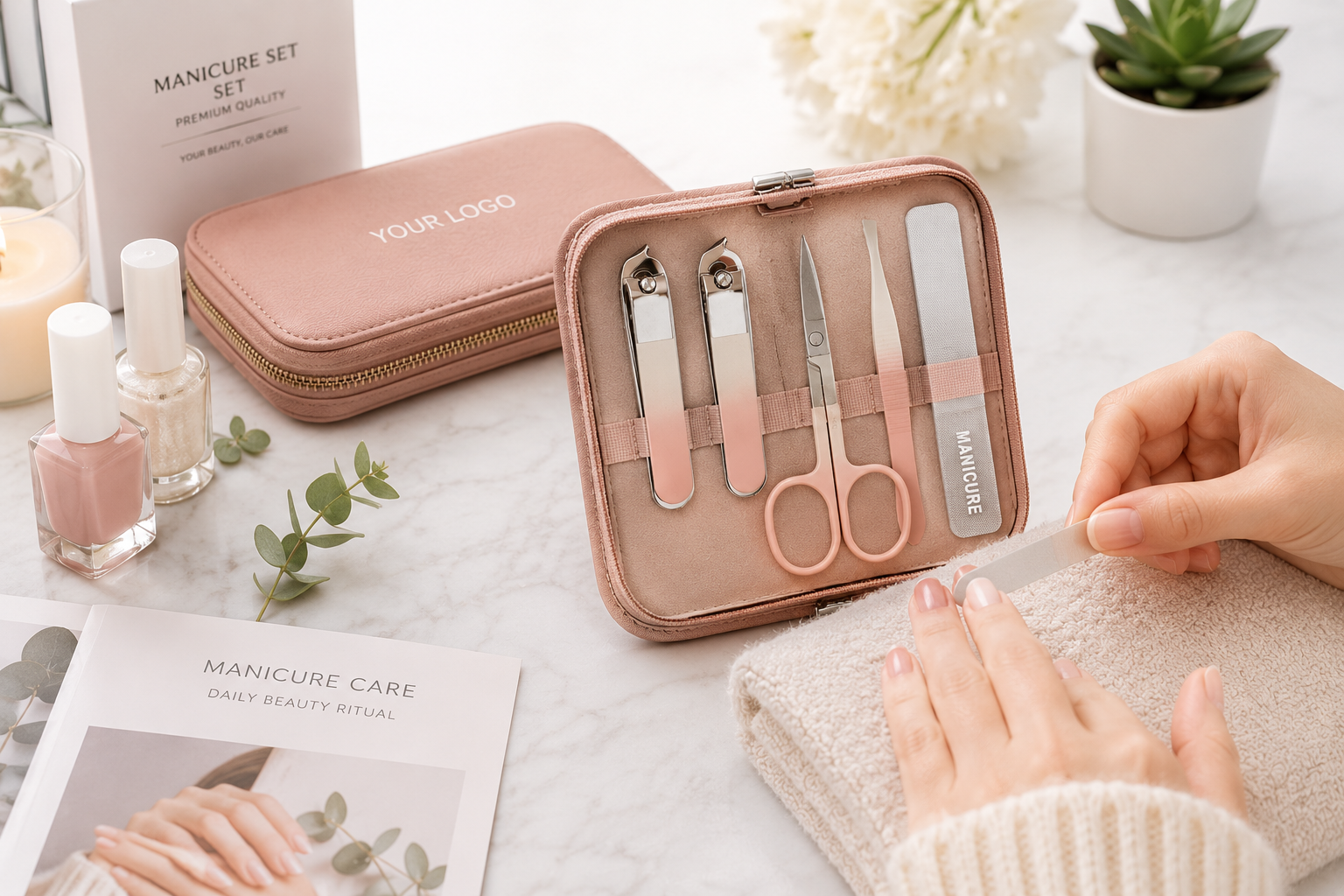
Sourcing Strategy for Salons, Distributors and Private Label Brands
Salons may start with a compact branded kit for retail add-on sales or client aftercare. Distributors may need several set levels to serve different price points. Private label beauty brands often require packaging that can compete visually in online marketplaces or retail displays. Each buyer type should build the sourcing brief around its business model.
A good brief includes the target user, sales channel, desired tool list, preferred finish, packaging direction, logo files, labeling needs and expected order pattern. If exact specifications are not yet decided, share the commercial goal first. This allows the supplier to recommend feasible options without overcomplicating the first development stage.
For OEM and private label projects, it is also helpful to think beyond the first shipment. Will the same set need to be reordered later? Could the packaging be adapted for another market? Is the brand planning matching beauty tools in the future? Designing with repeatability in mind reduces confusion when a product performs well and needs to be reordered.
When to Contact a Supplier
The best time to contact a manicure set supplier is after you have a clear product direction but before the design is locked. At that point, the supplier can help identify production-friendly choices for tool selection, logo placement and packaging construction. If you already have artwork, product photos or a reference sample, organize them before requesting a quotation or development review.
Olimor Beauty works with buyers evaluating beauty tool sourcing, OEM customization and branded packaging possibilities. To discuss a manicure set project, send an inquiry with your intended use, tool list and branding requirements. If you need help clarifying the next step, you can also contact Olimor for guidance.
Final Checklist for Choosing a Custom Manicure Set Supplier
The right custom manicure set supplier should help you turn a simple tool kit into a consistent branded product. Before confirming an order, compare suppliers on product understanding, sample quality, communication clarity, packaging execution and quality control discipline. Avoid making the decision on price alone, especially if the set will represent your salon, retail brand or distribution business.
A well-planned manicure set supports professional presentation, practical daily use and repeatable branding. By defining the target user, checking samples carefully and documenting quality expectations, buyers can reduce sourcing risk and build a product line that is easier to reorder, promote and scale.
Tag:
Related articles
- OEM & Private Label
- Nail Care Tools Guide
anicure Pedicure Set Manufacturer: How to Source Complete Hand and Foot Care Kits for Retail and Salons
- OEM & Private Label
- Nail Care Tools Guide
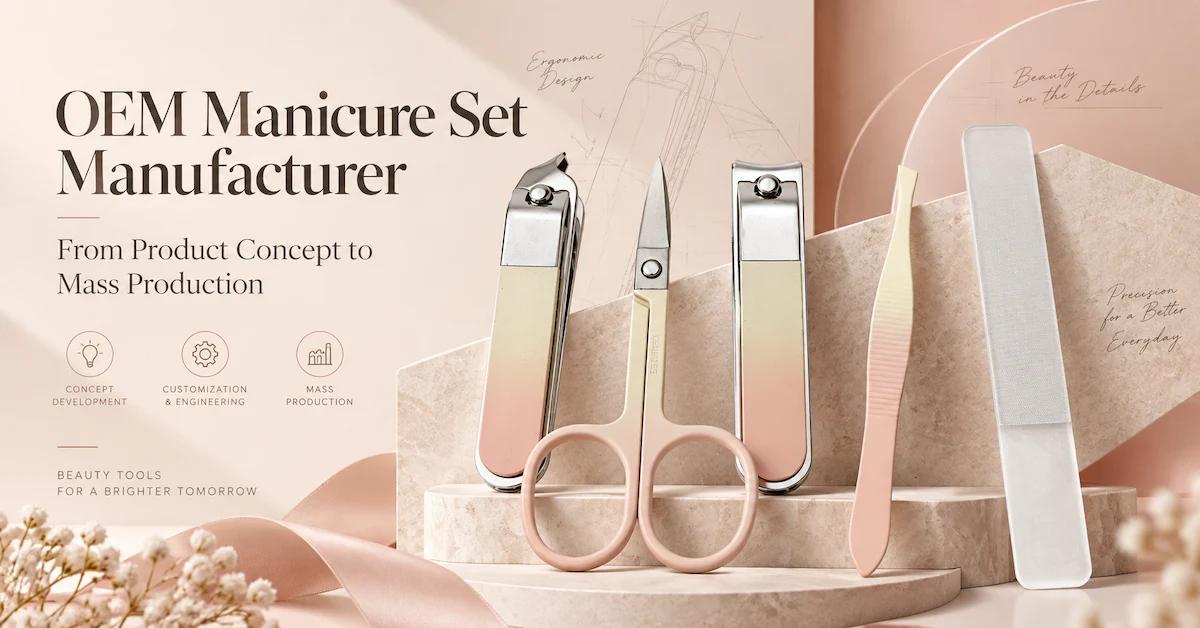
OEM Manicure Set Manufacturer: How Beauty Brands Move from Drawings to Approved Mass Production
- OEM & Private Label
- Nail Care Tools Guide