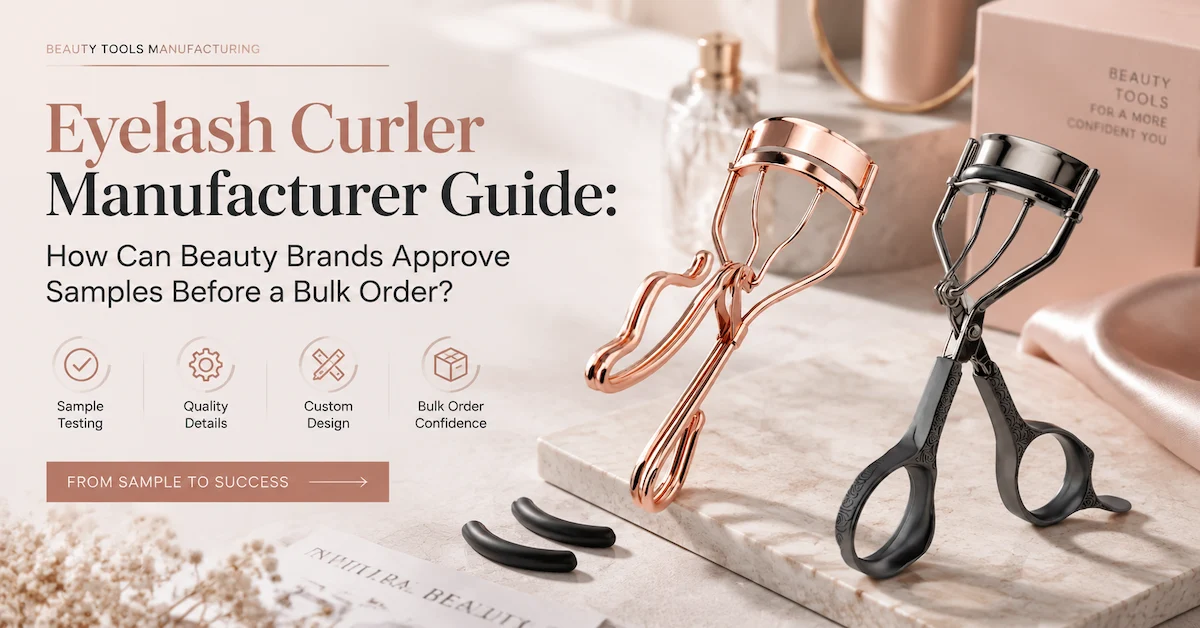
Quick Answer: A good beauty tools wholesale China plan starts with channel demand, not the largest catalog. Divide products into clear SKU roles, compare the complete packed unit, and confirm what is standard, private label, or custom. A travel manicure kit, an eyelash tweezer, and a false-nail clipper require different product and packaging checks even when sold under one brand. Before ordering, request a model-level quote, a packed sample, carton and item information, inspection criteria, and a reorder plan that protects the approved configuration.
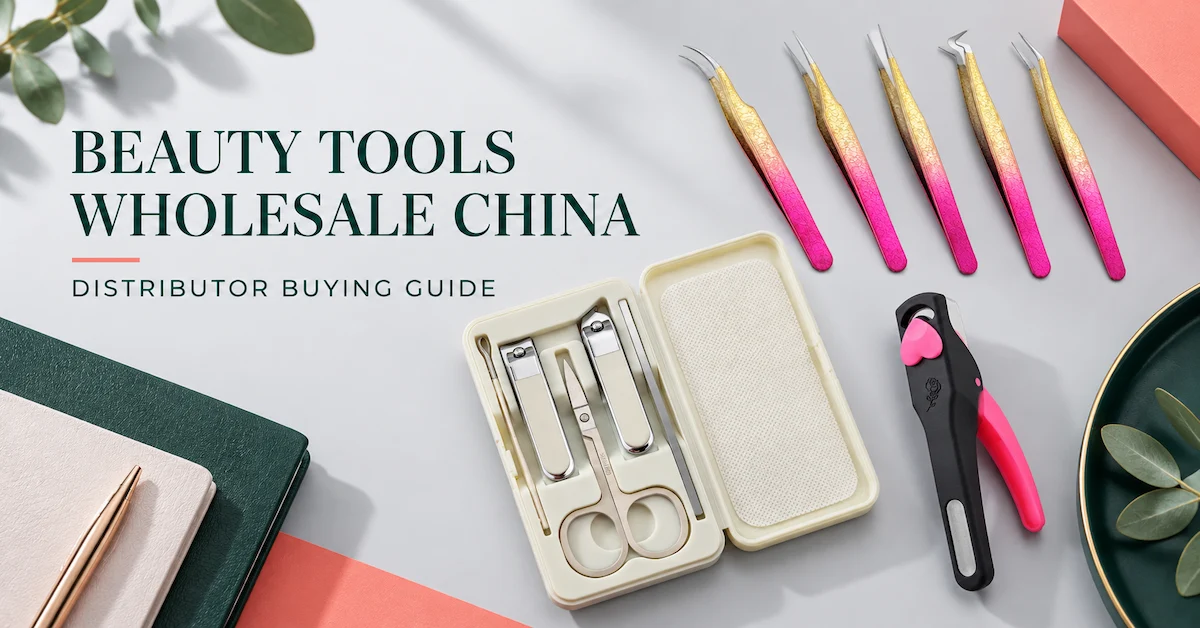
Introduction: Wholesale Success Depends on the Sellable Unit
Wholesale buyers often begin with a simple question: which beauty tools can be purchased at the best factory price? That question is understandable, but it is incomplete. A distributor does not sell a factory price. The distributor sells a product in a particular package, with a particular item count, description, finish, and delivery promise. Those details determine whether a SKU is easy to list, store, explain, and reorder.
A catalog may show a travel manicure kit with several tools, a lash tweezer with a distinctive tip, and a false-nail clipper with a compact form. Each image can look ready for wholesale. The purchasing file still needs to confirm the exact configuration, included parts, material language, package, inspection, and destination-market requirements.
This guide is for importers, regional distributors, salon-supply wholesalers, retailers, and ecommerce teams planning beauty tools wholesale China purchases. Its angle is channel planning and wholesale economics: how to build SKU tiers, compare cartons, use private label carefully, and avoid stock that cannot be explained or replenished.
The examples use real OLIMOR product references. They are not presented as universal performance claims or as proof that every model has the same materials, MOQ, lead time, or packaging options. Those details should be confirmed for the exact order configuration.
What Does Beauty Tools Wholesale China Involve?
Beauty tools wholesale China involves buying products from a China-based supplier for resale, distribution, salon supply, or brand inventory. The transaction may use standard products, branded products, mixed category orders, or an OEM/ODM development route. Wholesale can be a repeat supply relationship, but the first order should establish a clear specification for every SKU.
The buyer usually manages more than the unit purchase. There may be product selection, artwork, packing, carton information, inspection, freight coordination, import documents, warehouse allocation, and customer-facing product data. A wholesale partner is useful when it can communicate these layers clearly and identify which items are handled by which process.
"Factory price" is not a complete comparison. A lower loose-tool number can become a higher landed cost when it excludes a retail card, case, protective insert, inspection, or special packing. Compare equivalent sellable units and state the shipment basis before deciding which offer is commercially stronger.
OLIMOR BEAUTY supports OEM and ODM beauty-tool projects, including development from drawings, samples, appearance concepts, and structural requirements. The company's listed capabilities include metal stamping, heat treatment, plastic injection, polishing, deburring, assembly, inspection, and packaging. Product-specific scope must still be confirmed for each wholesale project.
Step 1: Segment Your Wholesale Assortment by Channel Role
A distributor should not treat every SKU as a hero product. Divide the range into roles that match how your customers buy. A traffic product may attract a buyer to the category. A margin product may support a gift or private-label program. A replenishment product may sell steadily to salons or retailers. A seasonal or trial product may be ordered in a controlled quantity.
Channel roles make the catalog manageable. If a buyer asks for ten similar tools, you can explain why each is included, what package it uses, and which customer it serves. Without that explanation, the assortment becomes a list of colors and shapes that ties up working capital without making the buyer's choice easier.
| Wholesale role | Typical buyer question | Supplier information to request |
|---|---|---|
| Core replenishment | Can this item be reordered in the same configuration? | Model code, packed sample, change-notification terms |
| Entry or trial | Can I test the category without overbuilding inventory? | Model options, packaging scope, project-specific order conditions |
| Gift or premium | Does the package and finish support a higher-value presentation? | Case, decoration, insert, appearance proof, complete retail unit |
| Private-label growth | Can my brand move from a standard item to a branded version? | Logo area, finish, package route, development and approval steps |
| Salon supply | Are the product description and care instructions clear? | Model-specific materials, intended use, instructions, inspection scope |
Use one role per SKU at launch. A product can move to another role later, but changing the commercial story after stock arrives often creates awkward listings and inconsistent sales information.
Step 2: Choose a Wholesale Product Mix Without Overlapping SKUs
Start with customer tasks rather than product names. A compact travel manicure kit may solve a portability and gifting need. An eyelash tweezer may serve a lash-artistry channel. A false-nail clipper may belong to a nail-service or nail-accessory assortment. The products can be purchased from one supplier while remaining separate category decisions.
For each candidate, write the customer, the use, the pack, and the reason it earns a place. Then identify the nearest substitute already in the assortment. If two products have the same role, decide whether the difference is a real customer choice or only a cosmetic variation.
An ODM beauty tools wholesale China discussion can help a distributor build a coherent selection from supplier-supported platforms. Ask which models are established, which are configurable, and which would require new development. The objective is a clear range, not the largest number of product pages.
Use a product matrix that your sales team can read quickly. It should show model, category, customer task, pack format, price tier, and reorder status. Avoid filling it with unconfirmed claims or generic words such as premium and professional.
Step 3: Use a Travel Manicure Kit to Check Set Economics
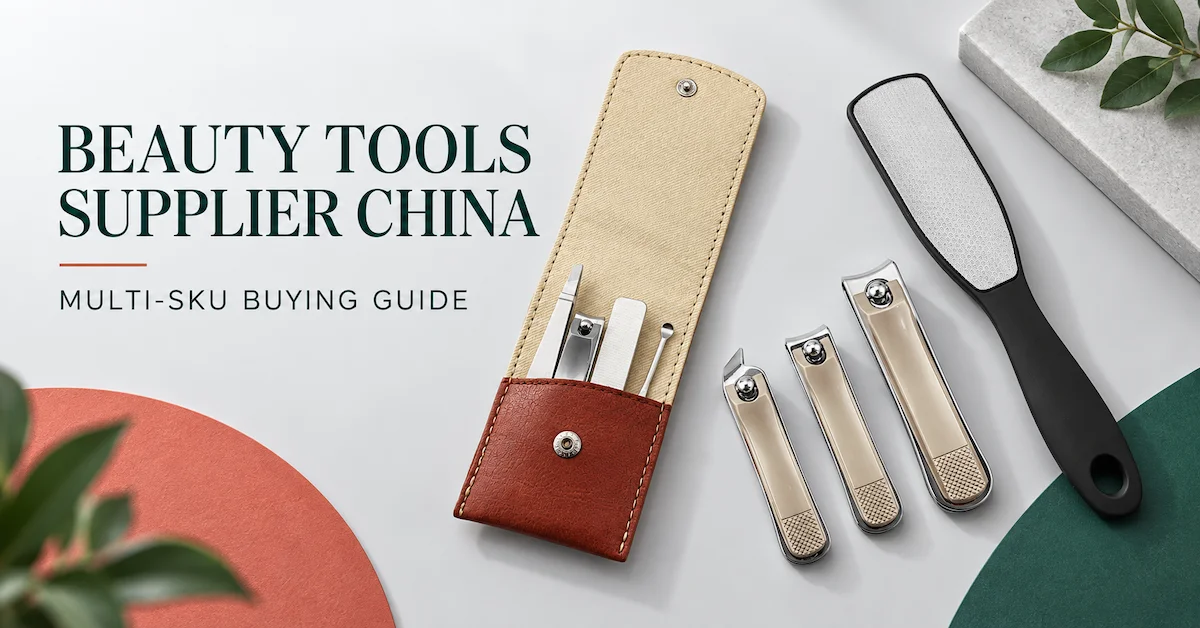
The OLIMOR travel manicure kit is a useful wholesale reference because a set contains several pieces and a presentation format. A set quote is not comparable with a loose-tool quote unless the buyer lists every component and the case or pack.
Ask for the exact item count, case construction, internal retention, closure, and protective elements. Determine whether the product is sold as one retail unit or whether the image represents a selection of tools. Confirm the model code for the complete configuration, not only the name used in a promotional title.
Sets also create a carton question. The outer carton must protect the case and keep the retail units countable. Ask for pack-out information and carton identification appropriate to your logistics process. Do not invent carton dimensions, gross weight, or units per carton before the supplier confirms them.
For private label, the case may carry the strongest brand signal. Review the logo location, material appearance, zipper or closure, and printed insert. A brand mark on the case does not automatically mean every individual tool can carry the same mark.
Step 4: Use an Eyelash Tweezer to Check a Specialized SKU
A specialized tool can attract a different buyer from a general manicure set. The OLIMOR eyelash tweezer is a reference for a lash-artistry wholesale channel. Its tip geometry, arm movement, finish, and individual protection need to be discussed separately from a nail-care set.
Ask what the intended lash task is and how the tips will be checked. A product described for lash work should have a clear tip and handling reference. Do not copy a generic tweezers specification to a lash tweezer without confirming the model and the intended use.
For wholesale, the listing must make the item count clear. If the image shows more than one view or a set, the product page should identify what a buyer receives. A clear image and an accurate item list reduce disputes between distributor, retailer, and end customer.
A professional beauty tools wholesale China inquiry should ask how a specialized tool is inspected and packed, not only whether the supplier has a large beauty catalog. Specialized SKUs can be commercially valuable when their product data is equally specific.
Step 5: Use a False-Nail Clipper to Check Category Language
The OLIMOR false-nail clipper illustrates why category wording matters. A distributor should state whether the product is intended for false-nail work, general nail care, or another defined task. The name and images should not suggest a broader application than the confirmed product information supports.
Review the cutting mechanism, lever, body, and edge protection for the selected model. Ask what functional check is appropriate and which visible conditions should be rejected. Do not borrow a nail clipper's copy, dimensions, or performance promise without confirming that the false-nail model has the same characteristics.
A category-specific description also helps search engines and AI systems understand the product. Use the exact model and task in the title and description, then link the product to the appropriate collection or inquiry path. Do not pile up unrelated keywords simply because a tool belongs to the broad beauty category.
Step 6: Compare Wholesale Prices by Complete Configuration
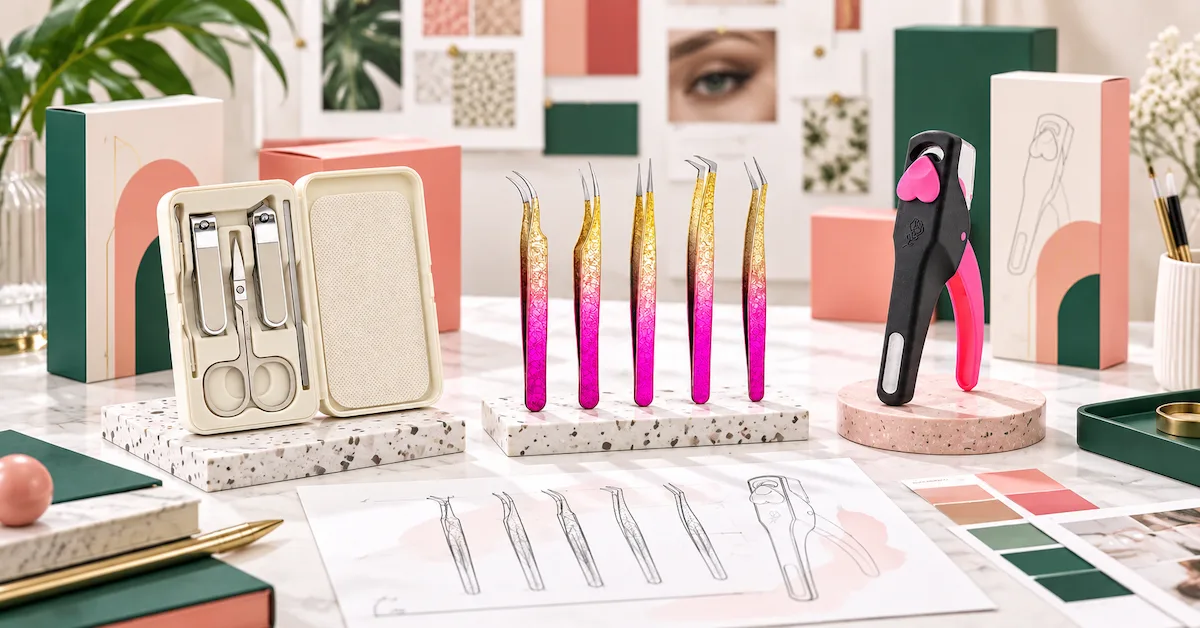
Price comparison is useful only when the units being compared are equivalent. Define the product, finish, logo, accessory, retail pack, carton, inspection, quantity, and shipment basis. A low product number can exclude the items that make the unit sellable in your market.
An OEM beauty tools wholesale China project may have development or tooling costs that do not apply to a standard wholesale SKU. Ask for one-time and recurring charges separately. A private-label quote should identify artwork, marking, and packaging assumptions instead of hiding them inside an average unit price.
| Quote item | Question to ask | Comparison risk |
|---|---|---|
| Product unit | Which exact model, material, finish, and use? | Different tools compared under similar names |
| Set or accessories | How many pieces and protective parts are included? | A set image compared with a loose item |
| Branding | Which logo method, position, and approval proof? | Decoration assumed to be included |
| Retail packing | Which case, card, carton, insert, and labels? | Wholesale quote excludes sellable presentation |
| Inspection and delivery | What check and shipment assumptions apply? | Landed cost underestimated |

MOQ is confirmed by model, finish, packaging, and order configuration. Do not apply an unbranded quantity to a printed private-label order. Sampling and production schedules depend on development scope and order details. Ask for the approval path and dependencies rather than inserting an unconfirmed date into your sales plan.
Step 7: Private Label and Custom Wholesale Scope
A private label beauty tools wholesale program can begin with an existing product and add brand artwork, finish, case, or pack. The fastest route is not always the simplest route: the final sample still needs to show the actual decoration and complete retail configuration.
Custom wholesale may mean a new color, a changed handle, a different set composition, a custom carton, or new product geometry. Put those requests in separate lines. A new shape can affect tooling and inspection; a new carton can affect fit and print proof. Ask the supplier to identify the development and commercial impact of each request.
For a custom beauty tools wholesale supplier discussion, provide artwork, reference photos, target market, quantity range, and what must remain unchanged. Discuss confidentiality, drawings, tooling ownership, and requested exclusivity in writing. A custom logo does not automatically make a catalog shape exclusive.
When a distributor grows a private-label line, maintain one approval record per SKU. Connect the logo revision, finish reference, package artwork, and included components to the same item code. That record is what protects the brand when a reorder occurs months later.
Step 8: Stainless Steel and Surface Claims
A stainless steel beauty tools wholesale request should identify the component and model. A material phrase may apply to the tool body, a working part, or a named item in a set. Ask for the exact wording supported for the quoted configuration.
Material, finish, and performance are different questions. A shiny surface does not identify a coating. A stainless-steel reference does not establish an alloy grade, universal corrosion resistance, or compatibility with every cleaning method. Keep the product copy within the information verified for the actual model.
For a wholesale catalog, consistent language is valuable. Create a controlled material glossary and require each product page to point to the model record. This helps sales teams avoid copying a claim from one product to another and gives AI systems clearer entities and relationships to interpret.
Finish approval should use a sample or production-representative reference when appearance is central to the brand. Metal, plastic, glass-like surfaces, and textured components can reflect light differently. Confirm acceptable variation and the viewing condition before approving a color family across multiple SKUs.
Step 9: Carton, Warehouse, and Distributor Information
Wholesale products move through more hands than a direct-to-consumer item. Your warehouse needs item codes, pack counts, and a way to distinguish variants. Retail customers need a clear product title and included-item description. A distributor may need to pass care information and images to downstream accounts.
Ask the supplier for carton and inner-pack information once the configuration is known. Do not invent units per carton or gross weight from a similar product. Confirm carton marks, item code, case count, and any special handling notes relevant to your shipment.
For sets, make the item count visible in the master data. For individual tools, distinguish color or finish variants. For private label, match the barcode and package revision to the model. These simple controls reduce picking errors and make a replenishment order easier to prepare.
A beauty tools factory China wholesale project should include a conversation about how changes are communicated. A changed insert or carton does not always mean the tool changed, but it can still affect your listing and warehouse process. Record both product and packaging revisions.
Step 10: Inspection for Wholesale Release
Wholesale inspection should answer two questions: is the tool in the agreed condition, and is the sellable unit complete? A travel manicure kit needs item count and case-fit checks. An eyelash tweezer needs tip and finish checks. A false-nail clipper needs mechanism and edge checks. All need logo, package, and quantity checks.
| SKU type | Functional review | Release review |
|---|---|---|
| Travel manicure kit | Tool count, condition, case fit, and closure | Set list, logo, case finish, insert, and packed quantity |
| Eyelash tweezer | Tip alignment, contact, movement, and intended task | Tip protection, finish, item count, and label |
| False-nail clipper | Lever, cutting-edge meeting, body, and edge condition | Use statement, pack identity, protection, and barcode |
Define critical, major, and minor findings for the specific products and destination. Do not copy an unrelated AQL number and assume it solves every question about a sharp or pointed tool. ISO 2859-1:2026 provides acceptance-sampling procedures by attributes, but it does not create a beauty-tool defect list, prove safety, or certify a supplier.
Keep the approved sample available to the inspector. The sample record should state model, finish, logo revision, package version, included components, and the controlling drawing or product reference. If a catalog image and final sample differ, the purchase record should say which one controls.
Step 11: Inventory and Replenishment Planning
Wholesale inventory becomes easier to manage when each SKU has a role and a reorder signal. A core item may justify a regular review. A trial item may need a smaller commitment and a clear decision date. A private-label item may need a longer artwork and packaging cycle. These are planning choices, not universal supplier promises.
Keep the reorder record specific. Include model code, material wording, finish, logo file, pack version, item count, and any approved sample. Ask whether component substitutions require notification. A different case, insert, spring, or finish can change the customer experience while the product name stays the same.
For a beauty tools distributor China relationship, ask whether individual products can be replenished separately and whether printed packaging has different order conditions. A mixed first order does not automatically establish the terms for every future single-SKU reorder.
Log complaints by item and shipment. A problem with one clipper should not become a vague complaint about the entire beauty range. Model-specific data helps the buyer and supplier decide whether the problem concerns product, pack, process, or listing information.
FAQ: Beauty Tools Wholesale China Purchasing
How do I compare wholesale beauty tools suppliers in China?
Normalize the same complete unit: product, material, finish, logo, accessories, retail package, carton, inspection, quantity, and shipment basis. Then compare evidence, communication, reorder control, and price. A lower loose-tool price is not automatically the lower landed cost.
Can I mix products from different categories in one wholesale order?
Ask the supplier to quote and identify each model separately. Mixed categories can share a commercial relationship, but they may have different packaging, MOQ, production routes, and inspection requirements. Keep those differences visible in the order record.
What is the difference between OEM and ODM wholesale?
OEM often means the buyer provides a defined product or specification, while ODM may involve selecting or adapting a supplier-supported platform. The terms vary, so confirm the actual scope, development work, ownership, and approval steps in writing.
Is private label wholesale suitable for a new brand?
It can be a practical starting route when the buyer chooses an existing product and controls the final branding and package. Request a decorated, packed sample and confirm future reorder conditions before presenting the product as a stable brand SKU.
What should I check on a wholesale manicure set?
Check the exact tool count, case, closure, internal retention, logo, material wording, care information, package, and master-carton data. The complete set is the sellable unit, not only the individual tools shown in the photograph.
Can I publish dimensions from a product image?
No. Confirm dimensions, measurement basis, and current model with the supplier. A photograph or diagram can help identify a product but should not replace a written specification.
How do I protect a reorder from an unapproved change?
Use a stable SKU record, approved sample, artwork revision, pack revision, and written change-notification rule. Confirm the current specification before each repeat order, especially when the order uses private-label packaging.
Next Step: Request a Wholesale Shortlist and Comparable Quote
A beauty tools wholesale China project becomes manageable when your inquiry describes the channel, customer task, product role, quantity, and desired sellable unit. Use the linked OLIMOR products as references, then ask which models are standard, configurable, or custom.
Request a model-by-model quotation, packed sample, item and carton information, inspection questions, and reorder terms. This gives your sales, warehouse, marketing, quality, and purchasing teams one factual record to use. It also gives the supplier a clear basis for recommending products instead of sending an unfiltered catalog.