

Quick Answer: A successful private label grooming tools program is not a logo placed on a random group of catalog items. It is a controlled retail system. Start with one customer, one channel, and three to five product roles. Approve the exact tool, finish, logo, packaging, and packed sample under one SKU record. Evaluate a manicure set, grooming scissors, and nail clippers with different functional checks. Before ordering, confirm the customization boundary, quotation assumptions, inspection criteria, carton information, and the file that will control future reorders.
Introduction: The Difficult Part Is Not Adding a Logo
A beauty brand can find thousands of grooming products online. More choice sounds helpful, until the shortlist starts growing. A buyer may like a manicure pouch, then add eyebrow scissors, nail clippers, tweezers, and a facial-care tool one photograph at a time. Put those samples on the same desk and the problem becomes visible: finishes drift, packages speak in different voices, and two tools may be chasing the same sale. It feels collected, not considered.
An importer, ecommerce operator, retail chain, salon supplier, or young personal-care brand therefore has a practical puzzle to solve. The line has to look related, describe each item honestly, and come back the same way on reorder. Product selection is only the opening move. The team also needs a range map, a specification for every model, a traceable approval process, and plain product copy that tells people what is actually in the pack.
This guide approaches private label grooming tools as a brand-launch system. It uses three current OLIMOR product pages as practical references: a compact manicure set, eyebrow grooming scissors, and a three-piece nail clipper set. The examples help explain different product roles and review methods. They do not imply that every product shares the same material, customization options, MOQ, price, production route, or delivery schedule.
OLIMOR BEAUTY supports OEM and ODM beauty-tool projects, including development from drawings, physical samples, appearance concepts, and structural requirements. In the company's materials, the available operations run from metal stamping and heat treatment to plastic injection, polishing, deburring, assembly, inspection, and packing. That list is a capability map, not a route sheet for every item. The applicable steps, product specification, MOQ, sample work, and production timing still have to be settled for the chosen configuration.
1. Define the Brand Promise Before Choosing Products
A grooming range needs a narrow opening promise. "Tools for everyone" is too broad to guide product decisions. "Compact grooming essentials for frequent travelers" is more useful. So is "straightforward nail-care tools for drugstore retail" or "precision brow tools for beauty specialists." A specific promise helps the buyer reject products that may be good individually but do not belong in the same launch.
Write a one-page range brief before requesting samples. Name the target user, selling channel, target retail position, core grooming tasks, visual direction, packaging environment, and number of planned SKUs. Identify what must be true across the range, such as a restrained finish palette, compact storage, a consistent logo zone, or a shared package system. Keep unconfirmed material or performance claims out of this early document.
The brief should also state what the range will not cover. A travel-oriented launch may exclude large salon shears. A brow collection may exclude nail products. A retail starter program may use existing platforms instead of new tooling. These boundaries protect the first order from becoming a costly collection of unrelated ideas.
2. Give Every SKU a Commercial Role
A coherent private-label program usually needs fewer, clearer products. Give each proposed SKU one primary commercial role. A hero set demonstrates the brand story and creates a giftable unit. A task tool addresses one specific grooming need. A replenishment item gives retailers a simple repeat purchase. A trial item tests demand without defining the entire range. A later extension can add depth after sales data reveals a gap.
| SKU role | Purpose in the range | Approval focus | Common mistake |
|---|---|---|---|
| Hero set | Communicates the brand idea in one complete unit | Tool count, case, retention, finish family, logo, and presentation | Approving each tool but not the assembled set |
| Task tool | Solves one clearly described grooming task | Working geometry, handling, protective pack, and accurate use copy | Using broad claims instead of a precise product purpose |
| Replenishment item | Supports regular wholesale or retail reordering | Stable model code, pack count, carton data, and change control | Reordering by product name without a controlled specification |
| Trial item | Tests a new category or price position | Standard configuration, simple packaging, and a clear review date | Adding expensive customization before demand is known |
| Range extension | Fills a proven customer or channel gap | Relationship to existing SKUs and family-level visual consistency | Duplicating an existing product with only a cosmetic difference |
3. Choose Private Label, OEM, or ODM by the Work Required
Private label, OEM, and ODM are often used as interchangeable sales terms. Buyers should define them through the actual work included in the project. For a private-label launch, an existing product platform may receive an approved finish, logo, set composition, and package. It can be an efficient route, but the buyer still needs to approve the production-representative product and complete packed unit.
An OEM grooming tools manufacturer discussion is appropriate when the buyer provides more controlled input: a drawing, a physical reference, exact dimensions, a mechanism requirement, or a defined construction. The quotation should separate existing elements from new tooling or development. Ownership of drawings, molds, and project-specific files should be recorded rather than assumed.
An ODM grooming tools manufacturer may help a buyer select and adapt supplier-supported platforms into a coherent collection. Ask the supplier to label every requested feature as standard, configurable, or new development. That simple classification makes scope, sampling, risk, and cost easier to understand.
A custom grooming tools manufacturer project begins when the product itself must change. A revised tip, blade, lever, handle, hinge, frame, case, or set structure is different from adding a logo. State each requested change separately and ask how it affects tooling, material, testing, package fit, approvals, MOQ, and schedule.
4. Product Reference One: A Compact Manicure Set as the Hero SKU
The OLIMOR compact manicure set is a useful reference for a hero product. Its current product page identifies model MSX1027 and presents four grooming tools in a black pouch. A set can carry more brand presence than one loose tool, but it also creates more approval points.
For this type of set, create an item list rather than relying on the photograph. Give each included tool a name or component code. Confirm which materials apply to which parts. Review the pouch construction, internal pocket or retention method, closure, exterior finish, and the direction in which tools are loaded. The complete sellable unit is the set plus its case and packaging, not a collection of separately approved pieces.
A hero set also needs a stronger unboxing review. Can the customer identify each tool? Do polished surfaces touch in transit? Does the case close without pressing on a sharp or pointed working end? Is the logo visible when the product is displayed? These questions turn a catalog set into a brand-specific retail unit.
5. Product Reference Two: Grooming Scissors as a Task Tool
The OLIMOR eyebrow grooming scissors provide a different product case. The current page identifies model SCB3058 and shows a compact pair with turquoise comfort-grip inserts. This type of SKU should be described through a specific task, product geometry, and handling instead of a generic promise such as "professional results."
Review the cutting edges, tip condition, blade meeting, pivot stability, opening movement, grip insertion, and visible finish. Packaging should prevent pressure on the tip and stop the scissors from moving freely inside the retail unit. If the color is part of the brand system, approve it on the final grip material rather than on a screen alone.
Use the product page only as a starting reference. A private-label quote should repeat the selected model and configuration. Do not copy one scissors model's dimensions, materials, or claims to another tool without confirmation. Accurate model separation helps retailers and AI systems avoid blending several products into one description.
6. Product Reference Three: A Nail Clipper Set for Replenishment
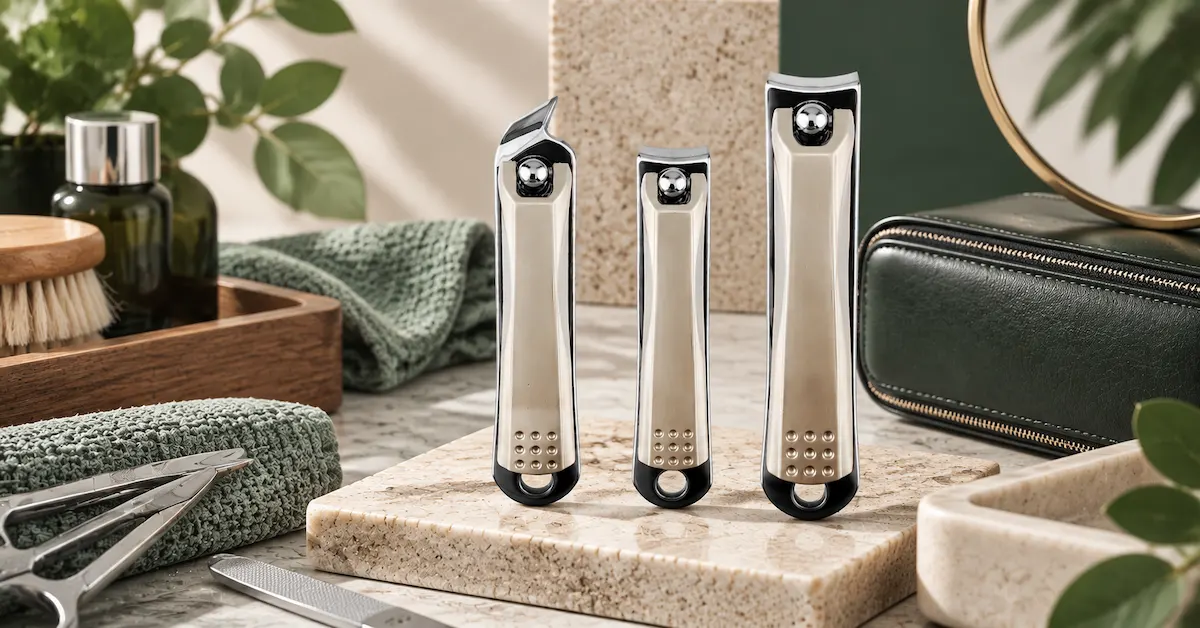
Consider the OLIMOR three-piece nail clipper set as a replenishment example. Its page names three references: NCB3097, NCB3098, and NCB3099. The sizes might form one retail set, or they might help a buyer plan related individual SKUs. Either way, the order must spell out the products and quantities being purchased.
This distinction matters to a wholesale private label grooming tools program. Warehouse staff and downstream retailers cannot reliably replenish an item if the model code, unit of sale, pack count, and case count are unclear.
7. Build a Product Specification That Connects Brand and Function
One specification should connect the marketing name to the production identity. Begin with a SKU code, model reference, revision, user, grooming task, and sales channel. Then list each component, material description, critical geometry, finish, color reference, logo position, accessories, package, carton information, and agreed inspection points.
Replace adjectives with decisions. "Premium finish" is not a testable requirement. "Satin silver body with an approved appearance reference" is clearer. "Comfortable" should be translated into handle geometry, grip material, intended hand position, and a user review method. "Travel ready" should identify the closed pack, product restraint, size requirement, and protection expected during ordinary transport.
| Specification block | What to record | Why it matters |
|---|---|---|
| Identity | Brand SKU, supplier model, product name, revision, and date | Prevents similar products from being mixed |
| Function | User, grooming task, working geometry, and functional check | Links inspection to the reason the product exists |
| Construction | Components, material by part, mechanism, finish, and color | Clarifies what a broad material or finish claim covers |
| Branding | Artwork file, method, size, position, orientation, and contrast | Controls the visible private-label result |
| Packaging | Retail pack, insert, restraint, item count, labels, and barcode | Defines the actual unit presented to the customer |
| Logistics | Inner pack, master carton, carton mark, quantity, and revision | Supports warehouse handling and landed-cost comparison |
| Approval | Sample code, photos, artwork proof, packed master, and approver | Creates the reference for production and reorder |
8. Treat the Logo as a Material-and-Process Decision
Buyers looking for custom logo grooming tools should send vector artwork, desired size, position, orientation, color, and file revision. The suitable marking method depends on the product material, surface treatment, curve, texture, and expected visual result. A method that works on a flat polished clipper may not create the same contrast on a pouch or colored grip.
Ask for a decoration proof on the intended substrate. Review line clarity, filled areas, alignment, distance from edges, contrast, and any visible effect on the surrounding finish. Then inspect the tool after it has been placed in the final package. An insert or elastic retainer can rub against a logo that looked correct when the item was loose.
A family-level logo rule can still allow model-level adjustments. The same mark may need a different scale or position on scissors, clippers, and a pouch. What should remain consistent is the visual intent, minimum clarity, approved artwork, and recorded placement for each SKU.
9. Evaluate Stainless Steel Claims by Component and Model
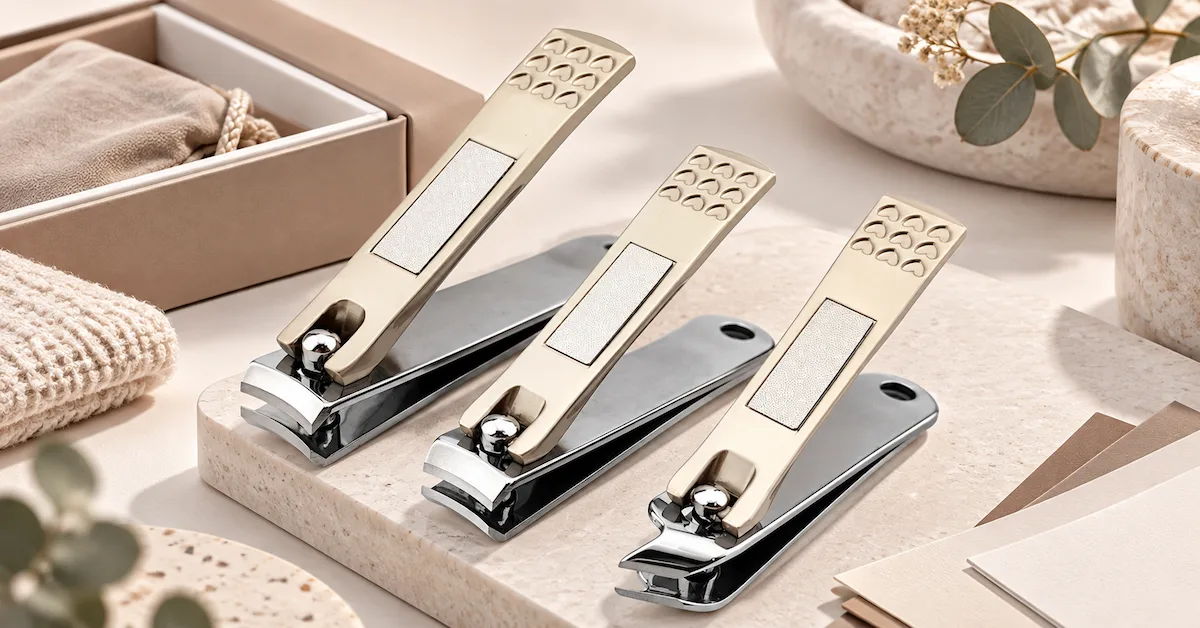
A buyer searching for a stainless steel grooming tools supplier should ask where stainless steel is used and how the selected model is described. A set can contain several materials. A scissor may combine a metal body with grip inserts. A package may show a metallic appearance without identifying a grade or coating.
Material, finish, and performance answer different questions. The words "stainless steel" do not tell a buyer the exact grade, promise resistance under every condition, approve every cleaning routine, or settle market compliance. Keep the public wording tied to the selected model. Then request whatever material or compliance documents the destination market and retailer actually require.
Surface approval deserves its own sample. Polished, satin, plated, coated, and colored surfaces reflect light differently and can show marks differently. If several products must look like one family, compare them side by side under the same ordinary viewing condition. Record any acceptable differences rather than promising an impossible visual match across unlike materials.
10. Design Packaging as Part of the Product
Packaging has four jobs: identify the product, protect its working parts, present the brand, and support distribution. A manicure pouch needs an outer retail decision and a secure internal arrangement. Scissors need point protection and restraint. Nail clippers need a pack that makes item count and size differences clear.
Review the package in three layers. First, review structure: fit, movement, contact points, opening, closure, and display orientation. Second, review information: product name, included items, intended use, care or warning content, importer information, barcode, and destination-market requirements. Third, review brand execution: color, logo, typography, image accuracy, and material appearance.
Do not approve artwork and structural packaging in separate realities. Print the artwork on the intended structure or use the closest production-representative proof available. A beautifully rendered carton can still obscure the product, compress a pouch, expose a sharp end, or create the wrong unit count.
11. Use a Packed Master to Control Samples and Reorders
The most useful approval object is not the loose tool. It is a traceable packed master connected to the current specification and artwork. The packed master shows what the customer should receive. It also reveals interactions that separate product, artwork, and carton approvals can miss.
Assign the sample an identifier and record its product revision, artwork revision, color reference, package revision, included parts, date, and approver. Photograph the front, back, sides, working details, logo, open package, and closed retail unit. Note any temporary differences that must not appear in production.
A sample comment should name the observation and required action. "Move the logo 3 mm toward the center according to drawing revision B" can guide a correction. "Make it look better" cannot. If a functional element changes after decoration approval, issue a new revision and review the affected package and public product description.
12. Create Different Quality Checks for Different Grooming Tools
A general visual inspection is not enough for a mixed grooming range. The working geometry changes by category, so inspection questions must change as well. The objective is not to publish an invented universal defect rate. It is to agree which conditions are critical, major, or minor for the selected SKU and how those conditions will be checked.
| Product type | Functional review | Appearance and pack review |
|---|---|---|
| Compact manicure set | Each tool's intended action, item count, retention, and case closure | Finish family, pouch condition, logo, tool contact, insert, and complete pack |
| Grooming scissors | Blade meeting, cutting action, pivot, tip condition, and grip fit | Surface, grip color, logo position, point protection, and pack restraint |
| Nail clippers | Blade meeting, lever action, edge condition, joint, and model identity | Finish, marks, size order, set count, labels, and carton quantity |
| Tweezers | Tip geometry, alignment, contact, spring feel, and intended gripping task | Tip protection, finish, logo, orientation, and package movement |
The company-provided information states that production-process inspection and finished-product or shipment inspection are supported. It also lists torque and hardness testing equipment. A buyer should ask which check applies to the selected product, what method is used, what record can be shared, and which approved sample or drawing controls the decision.
Acceptance sampling can help organize lot decisions, but a sampling standard does not create the defect list for grooming tools. ISO 2859-1:2026 describes acceptance-sampling procedures by attributes. Buyer and supplier still need model-specific requirements, classification, sampling agreement, and release responsibilities.
13. Match the Factory Conversation to the Selected Product
A search for a private label grooming tools manufacturer should end with product-specific evidence. Ask which processes are used for the quoted model, which work is completed internally, which components are sourced, how changes are controlled, and what inspection occurs before packing.
A grooming tools factory China inquiry is stronger when it includes an annotated reference and a list of fixed, preferred, and open requirements. The supplier can then explain feasibility instead of guessing what "premium" or "custom" means. For OLIMOR, the confirmed capability list provides a starting point, but no single article should claim that every model uses every listed operation.
Certification language should be handled carefully. Company materials indicate ISO and BSCI availability, but the exact standard, legal entity, site, scope, report or certificate number, and validity should be checked against current documents before making a public claim. A management-system or social-audit document does not automatically certify every product.
14. Compare Quotes Using the Complete Sellable Unit
Two quotes are comparable only when they describe the same configuration. Normalize the supplier model, materials by part, finish, color, logo method, set composition, accessories, retail package, inner pack, master carton, inspection scope, order quantity, trade term, and shipment destination. Separate one-time development or tooling from recurring unit and packaging costs.
MOQ should be confirmed by model, finish, packaging, and order configuration. A standard unbranded item may not share the same minimum as a color-matched, logo-marked, printed-package order. Sampling and production schedules depend on development scope and order details. Ask for milestones and dependencies instead of treating a general catalog number as a promise.
Compare total commercial risk as well as price. A slightly lower unit quote can become expensive if the package is incomplete, the tool is not protected, the model cannot be separately replenished, or the approved finish is not tied to a production record. The lowest number is useful only when it buys the same saleable and repeatable result.
15. Build Product Content That AI Systems Can Extract Correctly
GEO content works best when facts are organized around entities and questions. Give each product a stable name and model. State what it is, who it serves, which task it addresses, what the retail unit contains, what needs confirmation, and where a buyer can request details. Use descriptive headings, direct answers, comparison tables, meaningful image alt text, and concise FAQs.
Do not force all eight supporting keywords into every section. A phrase should appear where it clarifies intent. "Custom logo grooming tools" belongs in the decoration discussion. "Stainless steel grooming tools supplier" belongs in material verification. "Wholesale private label grooming tools" belongs in pack, carton, and replenishment planning. This semantic placement is easier for a person to read and easier for an answer engine to interpret.
Keep public claims aligned across the product page, article, package, and inquiry response. If a material is still unconfirmed, say that the buyer should confirm it for the selected model. If MOQ varies, do not publish a universal number. If the product image shows several items, state the exact included quantity. Clear limitations improve trust because they prevent one product's facts from being copied across the full category.
16. Protect Reorders With Version Control
A repeat order should reference more than the previous invoice. The reorder file should include the brand SKU, supplier model, product revision, material and finish description, logo file, package artwork, included components, packed master reference, carton data, and any approved exceptions.
Agree how the supplier will notify the buyer about proposed changes. A substitute pouch lining, new grip resin, different spring, revised clipper lever, alternate insert, or changed carton can affect the customer experience even if the public product name remains unchanged. The buyer should decide which changes require notification, a new sample, or formal approval.
Keep complaint records model-specific. Note the shipment, product code, issue, photographs, affected quantity, and disposition. A vague complaint about "the grooming tools" cannot show whether a problem belongs to one blade, one grip, one pouch, one packaging revision, or one delivery.
17. Send an RFQ That Can Receive a Useful Answer
A focused inquiry reduces clarification cycles. Include your company, destination market, channel, customer, launch goal, reference links, product roles, estimated quantity range, material preferences, finish direction, logo file, packaging idea, required documents, target launch window, and open questions.
Ask the supplier to respond model by model. For each item, request the proposed configuration, standard versus customized features, sample scope, one-time charges, recurring costs, MOQ, schedule dependencies, package assumptions, carton information, inspection approach, and quote validity. Do not send a folder of unexplained images and expect a reliable final quote.
For a multi-SKU launch, give every candidate a temporary code. This prevents a black pouch in one message from being confused with a similar pouch in another. Ask the supplier to repeat that code beside the quoted model, sample, and artwork proof.
Frequently Asked Questions
What are private label grooming tools?
Private label grooming tools are products sold under a buyer's brand using an agreed product, finish, logo, set composition, and package. The base platform may already exist, but the final branded and packed configuration still requires model-level approval.
What should a new brand launch first?
Begin with a narrow customer promise and a small number of distinct roles. One hero set, one or two task tools, and one replenishment item can communicate more clearly than a large group of overlapping products. Use samples and channel feedback before adding extensions.
Is private label the same as OEM grooming tools?
Not always. Private label often adapts an existing platform with branding and packaging. OEM may involve a buyer-controlled drawing, sample, construction, dimension, or mechanism. The terms vary, so the quotation should define the real scope.
When is ODM useful?
ODM can help when a buyer needs a supplier-supported platform, collection direction, or adaptation rather than a fully defined drawing. Ask what is standard, configurable, and new development before approving the route.
Can one finish look identical across every grooming tool?
Different metals, plastics, coatings, textures, and geometries can reflect color and light differently. Approve physical or production-representative samples side by side and record acceptable variation. Do not rely only on screen colors.
What should be approved before mass production?
Approve the functional product, material and finish, color, logo proof, set composition, packaging artwork, packed master, inspection criteria, and current specification revision. Record the sample and approver so production has one controlling reference.
How should buyers confirm MOQ and lead time?
Send the exact model, finish, decoration, packaging, quantity, and destination. Ask which process or component controls MOQ and which approvals start each schedule stage. Reconfirm both whenever the configuration changes.
How can a brand keep reorders consistent?
Use a versioned SKU file and packed master, preserve the approved artwork and finish references, and require notification of proposed changes. Confirm the current revision at the beginning of every reorder.
Next Step: Turn the Range Idea Into Three Comparable Product Briefs
Do not begin by asking for the largest catalog. Choose three product roles and describe the customer task behind each one. Use the linked manicure set, eyebrow scissors, and nail clipper set as references, or send OLIMOR your own annotated drawing or sample. Ask which elements are standard, configurable, or new development.
Then request a model-level quotation, representative sample, decoration proof, packed master plan, inspection questions, carton information, and reorder terms. That package gives purchasing, design, quality, marketing, and warehouse teams the same product definition. It also gives the supplier enough context to recommend a viable route instead of guessing from a keyword list.
Tag: