

A tongue scraper manufacturer is not just making a small oral-care accessory; they are making a product people touch every day, often before coffee, sometimes before they are fully awake, and usually with very little patience for poor ergonomics. That matters more than it sounds. A tongue cleaner may be a simple item on paper, but buyers still have to think about comfort, finish quality, material choice, appearance, and how the product will hold up in retail or kit packaging.
For sourcing managers and product teams, the real question is rarely whether a tongue scraper can be made. It is whether the right tongue scraper can be made consistently, at a price and finish level that fits the channel. A good tongue scraper supplier should be able to support repeatable forming, clean polishing, sensible packaging options, and the kind of product detail that keeps returns low. If the wrong details are overlooked, a simple wellness accessory can become a quality complaint generator.
Why this small product deserves serious sourcing attention
Tongue scrapers sit in an awkward place between personal care and wellness accessory. They are inexpensive compared with larger oral-care products, but buyers still expect them to feel deliberate. A rough edge, a bent loop that does not sit comfortably on the tongue, or a finish that looks cloudy rather than polished can make the product feel cheap immediately. That is especially true for metal versions, where the user can see and feel nearly every contour.
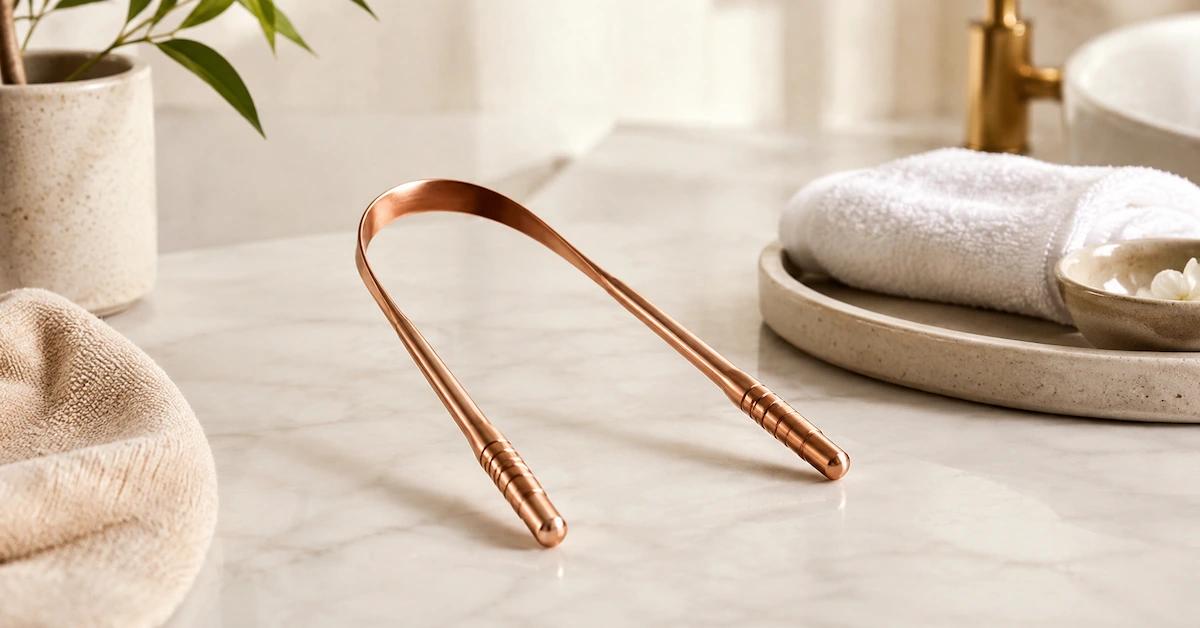
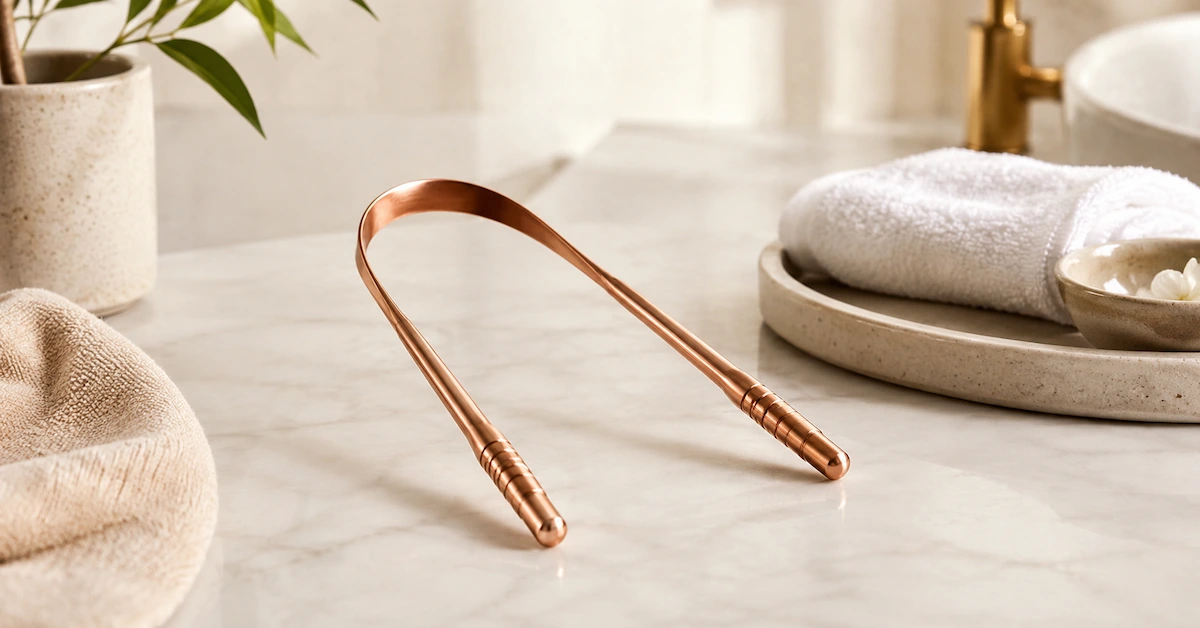
The visible product described here suggests a compact U-shaped loop design with two parallel handle ends and rounded grips, likely made from metal with a smooth polished finish. That kind of construction usually appeals to buyers who want a reusable, durable, low-fuss daily tool rather than a disposable plastic item. It also opens the door to bath accessory sets, dental retail, travel hygiene kits, spa merchandising, and gift-ready wellness lines.
Quick reference: what to compare when evaluating suppliers
If you are comparing a tongue scraper factory or choosing between private-label options, focus on the details that affect usability and presentation.
Material and finish
The product appears to be metal, possibly copper or copper-plated metal based on its warm tone, but that should be confirmed with the supplier. For buyers, the important part is not the guess; it is whether the manufacturer can clearly identify the material and the surface treatment without hedging.
A polished finish is important because this is a handheld, skin-contact product. Any visible seams, burrs, or dull patching can undermine confidence quickly. With metal oral-care accessories, buyers should ask how the item is formed, polished, and inspected before packing.
Geometry and comfort
The U-shaped open loop is a practical design because it is simple, compact, and easy to understand. The loop should be shaped so it feels controlled in the hand and predictable across the tongue surface. The rounded, cylindrical handles with ringed grip details are a useful sign; they suggest the maker has thought about handling, not only appearance.
Intended market
A tongue scraper supplier should be able to match the product to the channel. Retail shelves need stronger visual finish and packaging. Travel kits need compactness and protection in transit. Wellness subscriptions may want a minimalist look and easy branding space. The best manufacturers understand these differences instead of pushing one generic version everywhere.
How these products are typically made
The visible structure suggests a formed metal product, likely made by bending tubing or wire and then polishing the surface. That sounds straightforward, but simple products often hide the most process variation. Small differences in forming pressure, bend radius, or polishing time can change the feel in the hand.
For a buyer, that means the manufacturing conversation should go beyond “Can you make this shape?” Ask how the loop is formed, how the ends are finished, and whether the same tooling can maintain repeatability from batch to batch. If the tongue scraper is a one-piece-looking form, as it appears here, that is often good for durability and a cleaner look, but only if the joining and finishing are handled well.
A practical caution: polished metal can look excellent in samples and less convincing in volume if surface prep is rushed. That is not unusual. It is why pre-production samples and a clear approval standard matter, especially for products sold alongside grooming or oral-care brands.
Material choice: where the conversation gets real
Buyers often start with appearance and end up with material questions. That is the right order. The warm reddish tone could suggest copper, copper plating, or another metal finish that mimics copper. Since exact composition is not confirmed, a responsible sourcing conversation should ask for the actual base material, coating if any, and how the finish is maintained over time.
Why does this matter? Because material affects feel, corrosion behavior, visual aging, and perceived quality. Some brands want a natural-looking metal tone for a wellness aesthetic. Others prefer a neutral silver look because it reads more clinical or modern. Either way, consistency matters more than trend language.
Do not let a supplier lead with vague material claims if the product is destined for consumer oral care. Ask for straightforward identification, and keep the marketing language separate from the technical spec sheet.
Selection criteria that matter in purchasing
A tongue scraper manufacturer should be evaluated on a few practical points, not just on the sample in your hand.
First, look at surface finish under light. If the product is intended for daily use, the user will notice polishing quality immediately. Second, check hand feel. Rounded ends and grip texture can make a small product easier to control, especially if the hands are wet. Third, confirm packaging compatibility. Metal oral-care products can scratch each other in bulk, so the pack-out method matters more than many teams expect.
Also think about brand fit. A spa retailer may want a refined, understated finish. A mass-market oral-care line may need a more standardized look and a lower-cost structure. A tongue scraper factory that understands those differences will save time during sampling.
Common mistakes buyers make
One common mistake is treating all tongue scrapers as interchangeable. They are not. Even if two products look similar from a distance, one may feel sharp around the edge, while another sits comfortably in the hand and on the tongue.
Another mistake is skipping the finish discussion. The shape is visible, but the finish is what the user touches first. If the item is meant for repeat daily use, buyers should care about smoothness and edge quality as much as visual style.
A third mistake is overpromising on functional claims without supplier evidence. The product description may support everyday oral hygiene use, but claims about antimicrobial performance, clinical outcomes, or special coating benefits should not be assumed unless properly supplied and substantiated.
What a good supplier conversation should cover
When you speak with a tongue scraper supplier, keep the discussion grounded in process and use case.
Ask about the material options available, how the product is formed, what kind of polishing is used, and whether the supplier can maintain the same appearance across batches. Ask how they handle packaging for metal items so the scraper arrives clean and undamaged. If branding is important, ask where logos or marks can be placed without interfering with grip or appearance.
It is also worth asking whether the supplier has experience with wellness, dental, or bath accessory retail. That background often shows up in the small things: better finish consistency, cleaner presentation, and a more practical approach to pack-out.
Buyer-facing FAQ
Is a metal tongue scraper suitable for daily use?
In general, yes, reusable metal designs are commonly positioned for daily oral-care routines. The key is comfort, smoothness, and sensible handling. The product should feel easy to hold and free from rough edges.
Why does the loop shape matter?
The loop shape helps define how the scraper contacts the tongue. A well-formed U-shaped design can make the motion simple and controlled, which is one reason many buyers prefer it for compact personal-care kits.
Should I choose copper, plated metal, or another finish?
That depends on your market position and the supplier’s confirmed material options. Since the visible product’s exact composition is not confirmed, the safer move is to compare verified material specs, finish stability, and brand fit rather than assuming one metal is automatically better.
What should I request before placing an order?
Request a clear material description, sample photos in controlled lighting, packaging details, and confirmation of the forming and polishing approach. If possible, review the product in hand rather than judging from images alone.
What to do next
If you are building an oral-care accessory line, a grooming assortment, or a travel wellness kit, start by asking each tongue scraper manufacturer the same four questions: what is the confirmed material, how is the piece formed, how is the finish controlled, and what packaging protects it in transit. Those answers will tell you more than a polished catalog page ever will.
A simple product can still benefit from disciplined sourcing. The difference between a forgettable item and one that feels worth keeping often comes down to one or two decisions made early. Get those right, and the product does what it should: it disappears into the routine and quietly earns its place.
Tag:
Related articles
- Beauty Tools Sourcing Guide
- OEM & Private Label
Private Label Grooming Kit Manufacturer: How Brands Build Custom Personal Care Sets
- Beauty Tools Sourcing Guide
- Lash & Brow Tools
Tweezers for Eyrow Grooming Supplier: B2B Buying Guide for Beauty Brands
- Beauty Tools Sourcing Guide
- OEM & Private Label