

What buyers should know before placing an eyelash curler wholesale order
If you are sourcing eyelash curler wholesale inventory, the decision is usually less about the tool itself and more about consistency, presentation, and margin control. An eyelash curler looks simple on a shelf, but in the supply chain it touches metal forming, surface finishing, pad quality, packaging, and brand positioning. Miss one of those pieces and a low-cost item can quickly become a customer complaint generator.
For engineers, sourcing managers, and product teams, the real question is not whether an eyelash curler works. It is whether a given style is suitable for your channel: salon retail, beauty supply, promotional kits, private label launch, or high-turn wholesale replenishment. That choice affects the finish you can support, the level of packaging you need, and how much quality control you can realistically absorb.
Quick take: what this product category is and why it sells
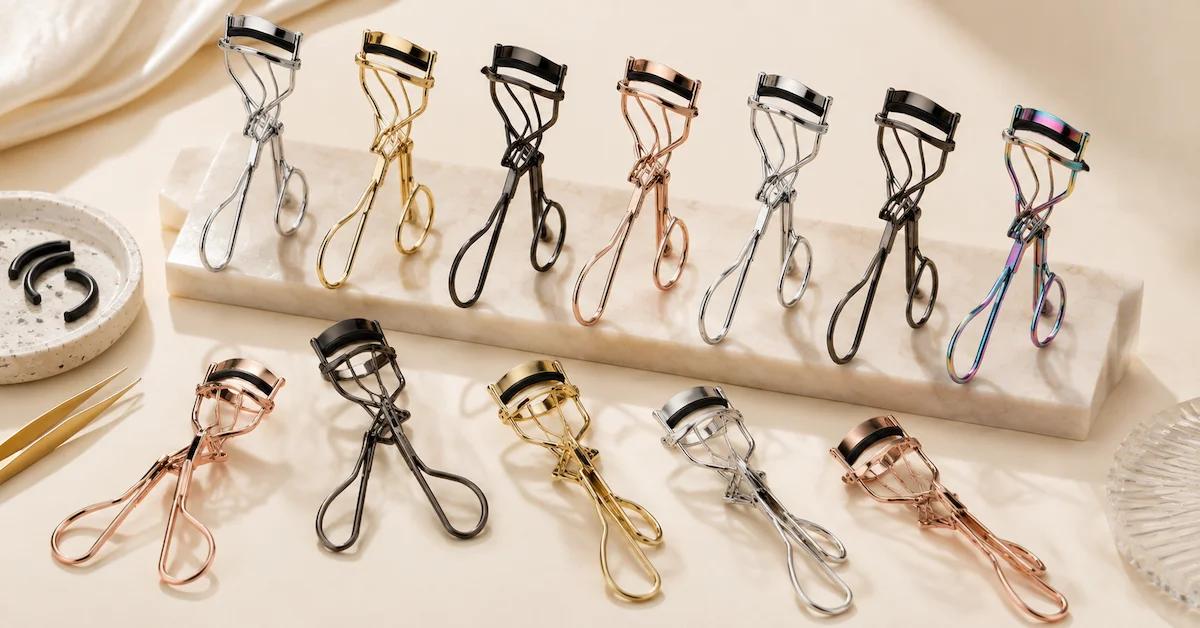
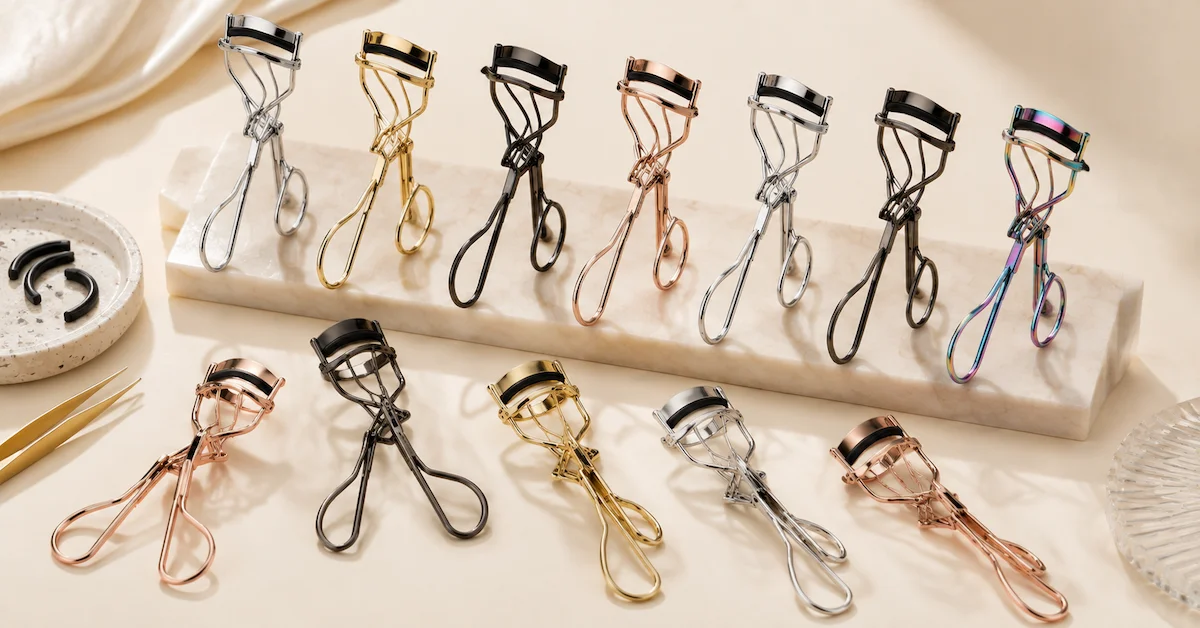
An eyelash curler is a handheld spring-and-hinge beauty tool that clamps lashes at the lash line and shapes them before mascara or other eye makeup is applied. The version described in the provided product data uses a compact tweezer-like form with two finger loops, curved arms, a rounded upper clamping head, and a black cushioned pad at the contact edge. It is a familiar geometry, which is part of the appeal. Buyers do not need to explain the function; they need to make sure the unit feels comfortable, closes cleanly, and looks polished enough for the shelf.
The product variants visible in the source data include silver, gold, black, rose gold, rainbow or iridescent, and mixed-tone finishes. That range matters because many wholesale buyers are not buying one item. They are buying a display strategy. A single tool in multiple finishes can serve different customer tastes, gift sets, and private label themes without changing the underlying form.
How eyelash curlers are typically built
From the available product information, the tool appears to be made from metal construction, likely stainless steel or a plated alloy, with a smooth polished finish. The exact material grade is not provided, so it is better to treat that as an assumption to verify with the supplier rather than a specification to publish.
The geometry is straightforward but not trivial. The arms are formed into a spring-loaded hinge shape, the upper head is arched to follow the eyelid curve, and the finger loops provide leverage. A black silicone or rubber pad sits on the clamping edge and serves as the contact point for the lash line. That pad is a small part, but it can influence user comfort, curl consistency, and perceived quality more than many first-time buyers expect.
In manufacturing terms, the product likely involves metal wire forming or bending, stamping or assembly at the head, then a surface treatment for color and appearance. That sequence is common for beauty tools, though the exact process on a specific unit needs confirmation from the factory. A buyer sourcing bulk eyelash curler supplier options should ask how the finish is created, because plating, coating, and painting do not behave the same way in wear, abrasion, or long-term color stability.
Key buying criteria that matter more than brochure language
Many wholesale listings focus on finish colors first. That is understandable, but function should come before decoration. A nice-looking curler that pinches the lid or leaves uneven bends will come back as returns, bad reviews, or quiet brand damage.
1. Head geometry and lash-line fit
The head should match the curvature of the eyelid closely enough to press lashes without forcing the user into an awkward angle. A poorly aligned head can leave corner lashes uncaught or create a pinching sensation. If the sample looks compact and symmetrical, that is a good start, but it is not proof of ergonomic fit. Test it on several eye shapes if possible, or at least request user feedback from the supplier’s sample set.
2. Pad quality and replacement behavior
The black pad is one of the most practical clues in the product data. It cushions the lash line and absorbs repeated clamping. Ask whether the pad is replaceable, how it is retained, and whether replacement pads are available separately. If a supplier cannot answer clearly, treat that as a mild warning sign. Beauty tools are simple until the end user wants to replace a wear part.
3. Surface finish and cosmetic consistency
Silver and gold are standard, but black, rose gold, and rainbow finishes are often used to create perceived value. For retail and private label, this can be effective. For high-volume replenishment, it can also create a sorting headache if shade consistency varies between batches. If your brand plans to launch a private label eyelash curler, ask for finish samples under different lighting. A finish that photographs well in a studio may look uneven in a store under cool LEDs.
4. Hinge feel and closing action
Even without exact spring-force data, you can still evaluate the action. The tool should open smoothly, close in a controlled way, and not feel loose at the pivot. Too stiff and the product feels cheap or tiring. Too soft and the clamp may not inspire confidence. This is one of those details that rarely appears in a catalog description but shows up immediately in customer use.
Wholesale use cases and channel fit
Beauty supply stores often want a straightforward, reliable version in a few core finishes. Salons may prefer a polished look that can be resold or added to retail counters. Promotional kit buyers may prioritize color variety, compact size, and low enough unit cost to bundle with other cosmetics. Private label brands, on the other hand, usually care more about packaging, finish consistency, and how the tool photographs in product listings.
Because the design is standardized across the variants described, this product category is well suited to volume buying. The same functional platform can support several sales stories. That is useful, but only if the base product quality stays steady while the cosmetic appearance changes.
Common sourcing mistakes
One frequent mistake is treating all eyelash curlers as interchangeable. They are not. Two visually similar units can differ in pad firmness, head alignment, or hinge feel. Another common error is overcommitting to a fashionable finish before checking whether the finish can survive normal handling, transit, and display.
Buyers also sometimes skip pack-out planning. A metal beauty tool with a polished finish can pick up scuffs if boxed carelessly. That may not affect function, but it affects shelf appeal. For wholesale programs, appearance is part of the product.
It is also worth noting a practical caution: any eye-area beauty tool deserves careful quality review even when it looks simple. Edges should be smooth, the clamping pad should be seated correctly, and the assembly should not show obvious burrs or misalignment. This is basic housekeeping, but it is exactly the sort of thing that gets overlooked when a buyer is rushing to secure a price point.
What to ask a supplier before ordering
If you are comparing wholesale options, your supplier conversation should be direct and unglamorous:
Ask what material is used for the metal body, whether the finish is plated or coated, and whether the pad is replaceable. Ask if the head geometry is consistent from batch to batch. Ask how the color variants are managed during production and packing. If you are building a branded assortment, ask whether the supplier supports custom packaging or private label presentation.
For a bulk eyelash curler supplier, the most useful answers are not marketing claims. They are the operational ones: how the item is assembled, how finishes are controlled, and how defects are handled before shipment. If the supplier can show standardized variants with the same base form, that is usually a better sign than a long list of vague benefits.
Practical advice for private label and retail buyers
Private label works best when the product has a clean silhouette and enough finish variety to support a branded look. This eyelash curler format fits that model. The compact handheld size, the visible cushioned pad, and the polished metal body create a product that can be positioned as entry-level, mid-tier, or gift-oriented depending on packaging and color choice.
For retail buyers, a small assortment of finishes often sells better than a wall of near-duplicates. Too much choice can slow decision-making. A tighter range with clear labeling usually performs better on shelf. If your customer base is price-sensitive, silver and black may be enough. If the channel leans toward gifting or social-media-friendly beauty accessories, rose gold and rainbow finishes can earn their space.
FAQ for wholesale buyers
Is this product mainly for professional use?
Not exclusively. The design is suitable for retail, salon resale, promotional kits, and general cosmetic use. The determining factor is usually the finish, packaging, and perceived quality rather than a fundamentally different mechanism.
Can one base design support multiple product lines?
Yes. The supplied product data shows a standardized form across multiple colorways. That is useful for line extension, seasonal color drops, and private label programs.
What should I verify first in samples?
Check head alignment, hinge action, pad seating, finish quality, and overall feel in the hand. If those are weak, no amount of branding will fix the user experience.
Next step for buyers
If you are preparing an eyelash curler wholesale program, start with a sample review that focuses on geometry, finish, and pad quality before you talk packaging or marketing copy. That sequence saves time. It also prevents a familiar wholesale mistake: falling in love with the colorway and discovering too late that the tool does not feel right in use.
For sourcing teams, the best outcome is a product that is visually easy to sell and mechanically unremarkable in the best possible way. For beauty brands, that is often exactly what a good accessory should be.
Tag:
Related articles
- Beauty Tools Sourcing Guide
- OEM & Private Label
Eyebrow Scissors Manufacturer: Building Retail-Ready Brow Tools That Customers Understand
- Beauty Tools Sourcing Guide
- OEM & Private Label
Beauty Scissors Manufacturer China: How to Qualify Brow Scissor Designs for OEM Retail Programs
- Beauty Tools Sourcing Guide
- Manicure & Nail Tools