Choosing a beauty tools manufacturer is a product, quality, and commercial decision at the same time. A factory can offer an attractive catalog, yet the right partner is the one that can explain how a tool is specified, sampled, made, checked, packed, and repeated. For a brand or importer, that evidence matters more than a generic promise of “premium quality.”
This guide gives a practical sourcing route for buyers comparing a beauty tools manufacturer China or a beauty tools supplier China. It covers product families, customer segments, material and process questions, OEM/ODM options, MOQ and quotation variables, inspection, packaging, common risks, and the information to include in an inquiry. The goal is a useful shortlist and a faster conversation with engineering and sales.
Quick answer: shortlist a manufacturer that matches your user scenario, shows a controlled sample process, can support the required product mix, and records the approved revision through production and packing. Ask for a model-specific quotation rather than a catalog-wide price.
1. Start with the buyer and the use environment
The first question is not “What is your lowest price?” It is “Who will use the tool, where, and how often?” A drugstore line intended for occasional home use may need compact packaging, easy instructions, and a controlled retail price. A professional nail salon may care more about blade alignment, spring feel, cleaning compatibility, and repeatable handling over a long appointment. A travel kit has different priorities again: low weight, protective caps, compact dimensions, and secure storage.
Write a short use statement before asking for models. Name the target country, channel, customer, tasks, frequency, cleaning routine, expected retail price, and launch timing. Include foreseeable misuse that the package should address. This simple paragraph helps a beauty tools manufacturer China team recommend the correct construction instead of sending a large list of visually similar products.
2. Understand the product categories available
OLIMOR BEAUTY presents a broad personal-care range that can be organized into twelve practical groups: Beauty Scissors, Nail Clippers, Nippers, Tweezers, Eyelash Curlers, Eyebrow Razors, Manicure Sets, Foot Files, Tongue Scrapers, Facial Tools, Nail Care Tools, and Nail Files. The mix supports a single-SKU test, a coordinated shelf program, or a private-label set built around one grooming need.
Beauty scissors
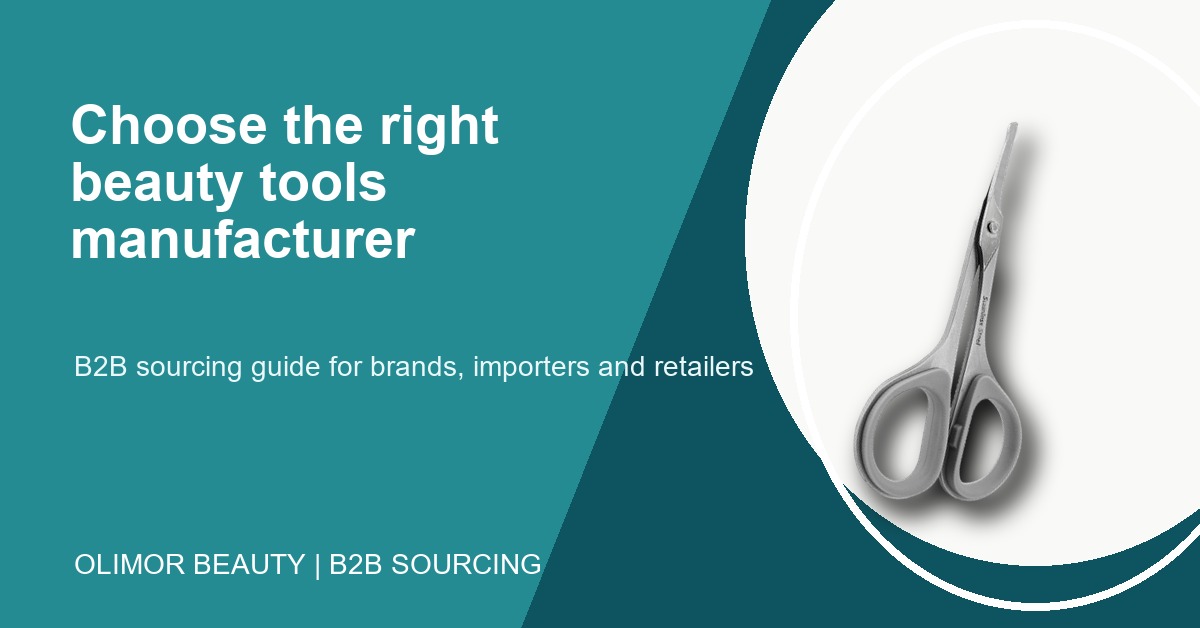
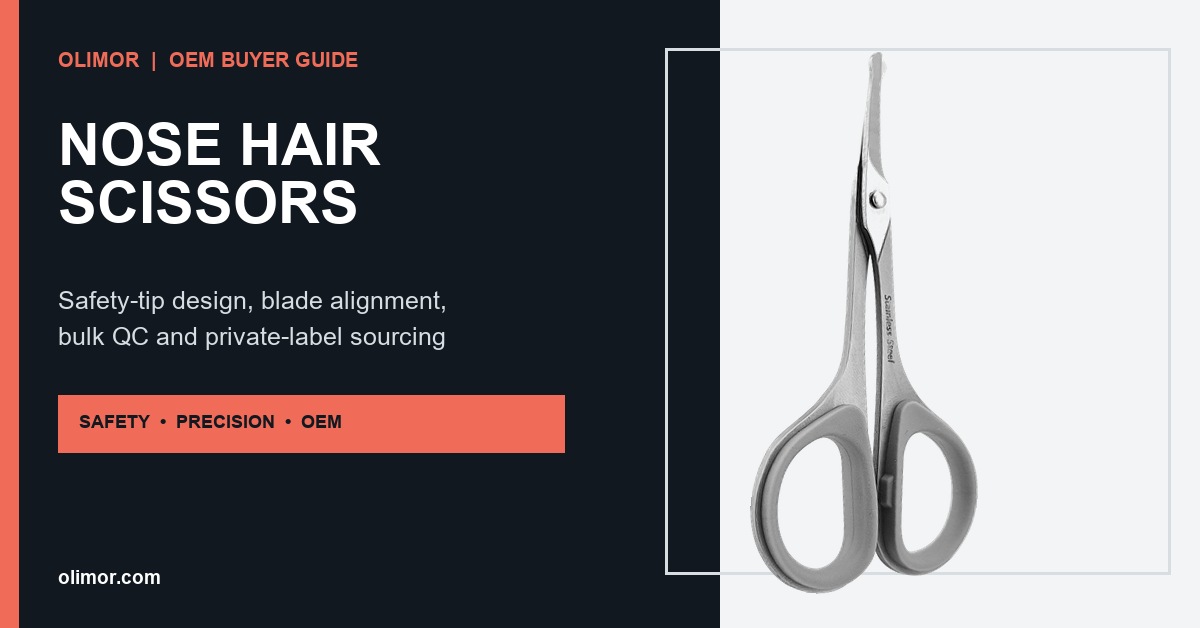
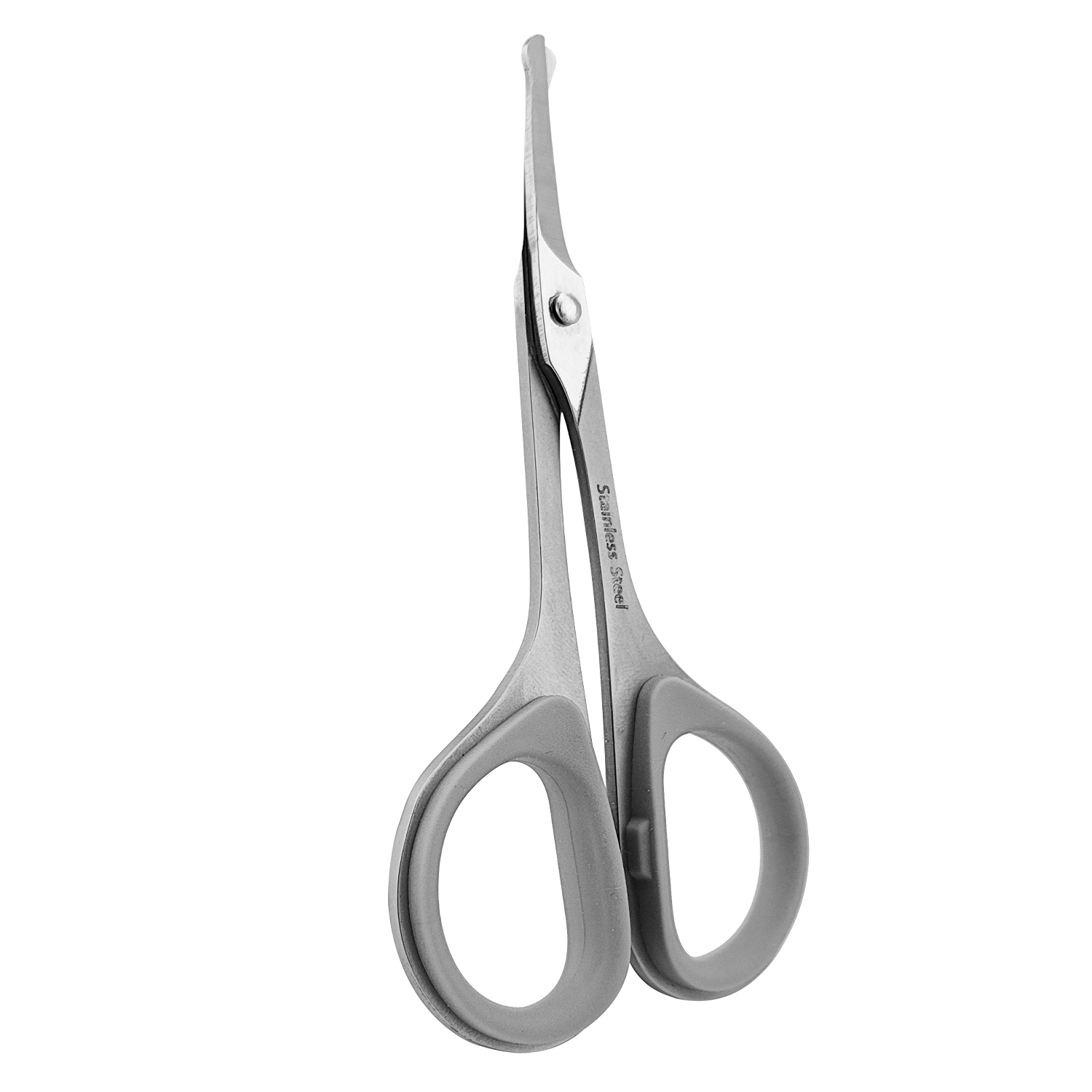
Beauty scissors include eyebrow, nose-hair, manicure, cuticle, and detail-trimming formats. Buyers should compare tip shape, blade length, finger-loop comfort, pivot movement, surface finish, and whether the working end is protected in the pack. A rounded or guarded tip may be preferred for a sensitive grooming area; a pointed tip may be selected for controlled detail work. The correct choice depends on the product brief, not on the word “professional” alone.
Nail clippers and nippers
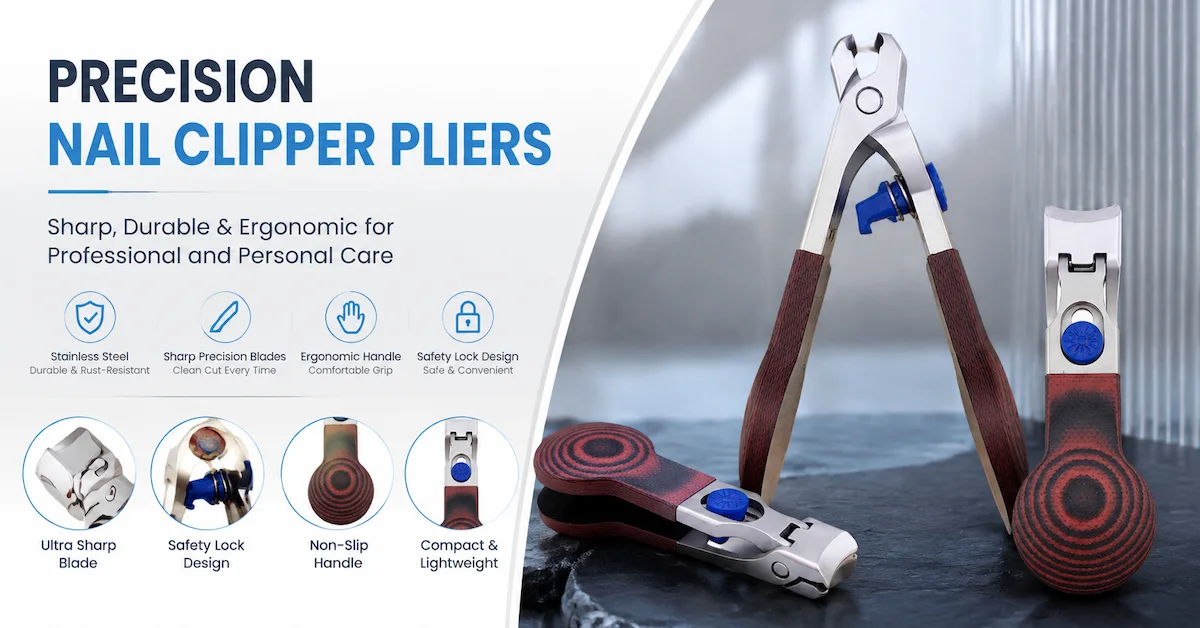
Nail clippers use a lever and opposing cutting edges, while nippers are generally selected for more controlled cuticle or nail-edge work. Compare jaw geometry, opening, spring or lever return, handle width, pivot play, and cutting media. For a thick toenail positioning, buyers should examine leverage and jaw opening rather than simply requesting a sharper edge. A sample test on several nail types is more informative than one demonstration cut.
Tweezers, curlers, and eyebrow razors
Tweezers may be slanted, pointed, flat, mini, or shaped for lash work. Tip alignment and tension affect control. Eyelash curlers require attention to curve, pad contact, handle pressure, and replacement-pad planning. Eyebrow razors may use folding bodies, guards, micro-tooth edges, or protective caps. These small tools are often highly visible in online reviews, so packaging, finish, and clear instructions can be as important as the metal part.
Sets and supporting tools
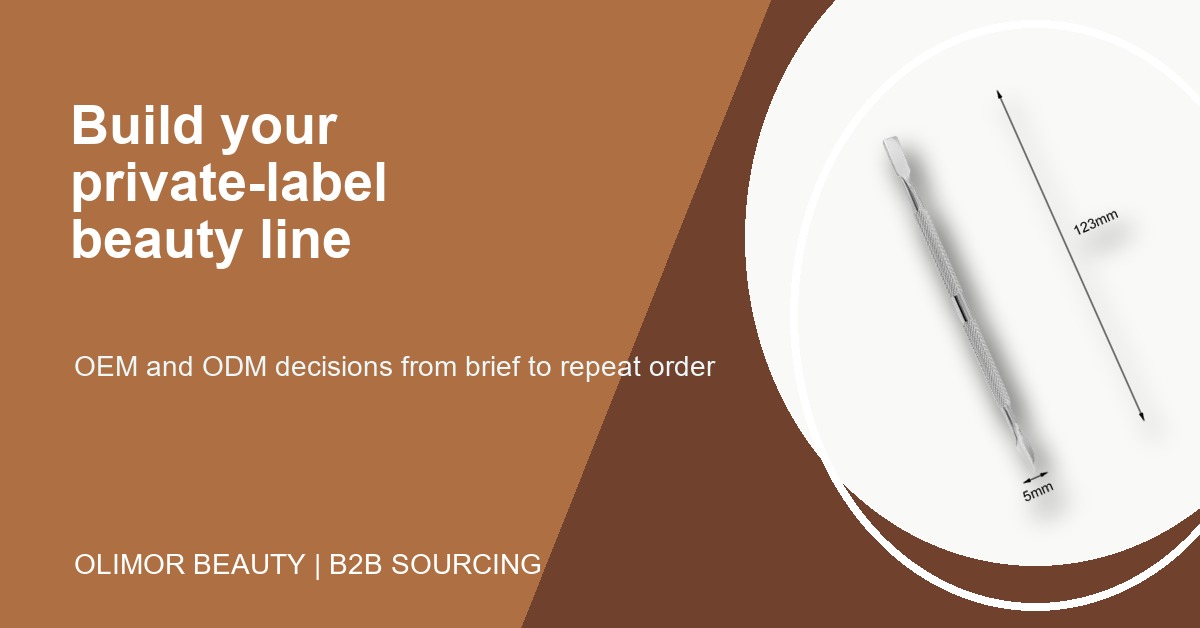
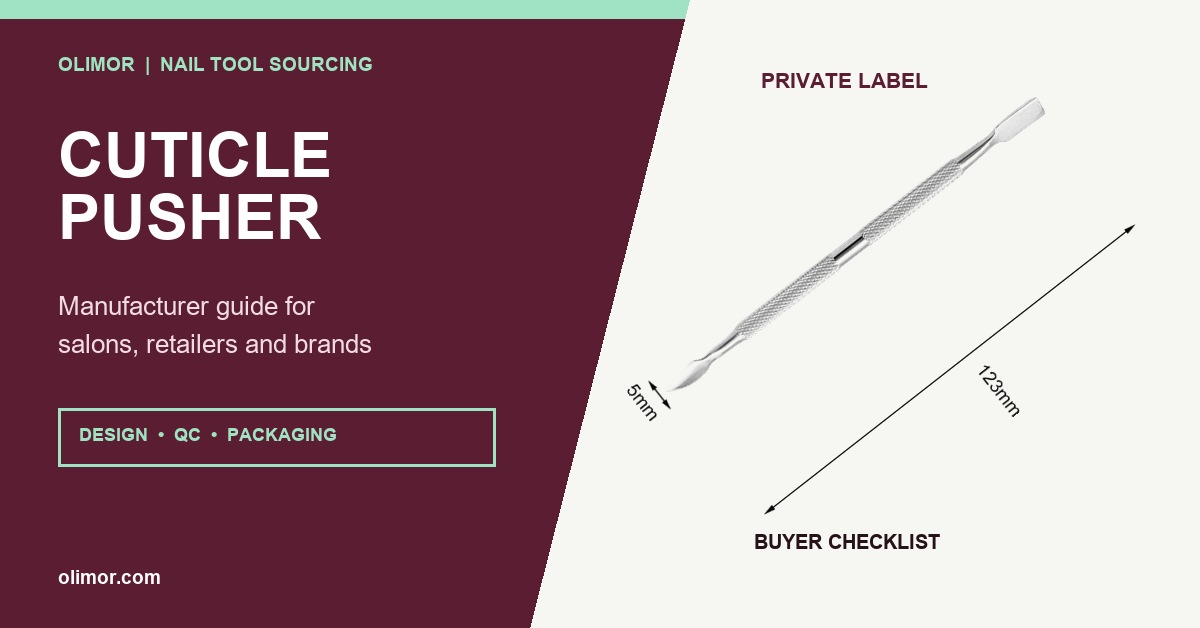
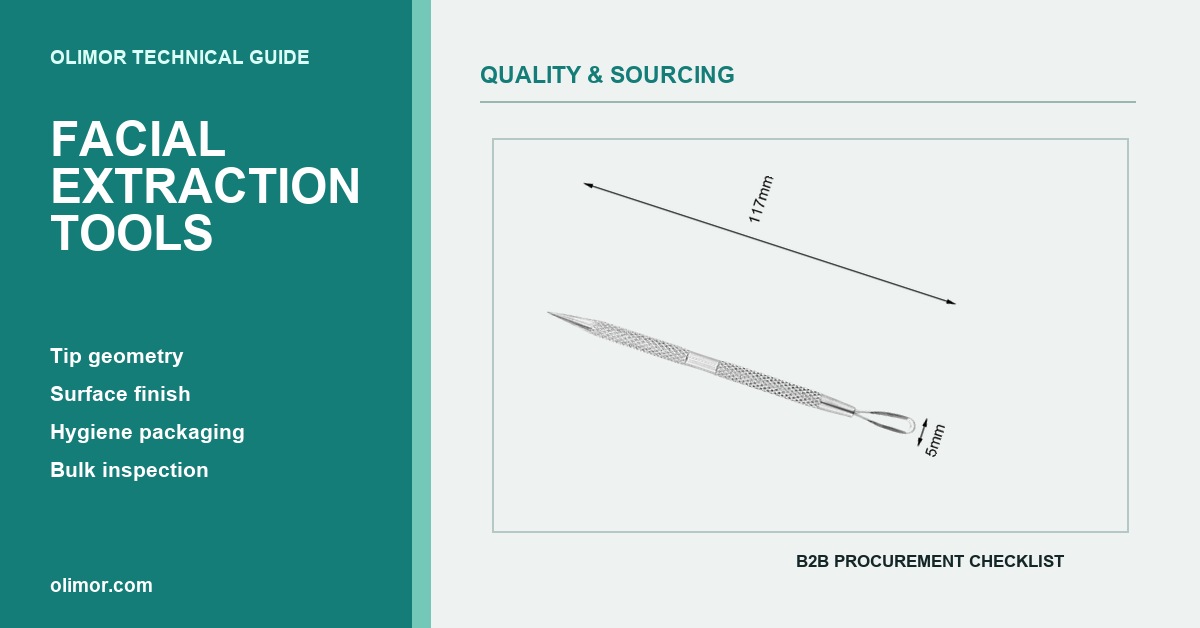
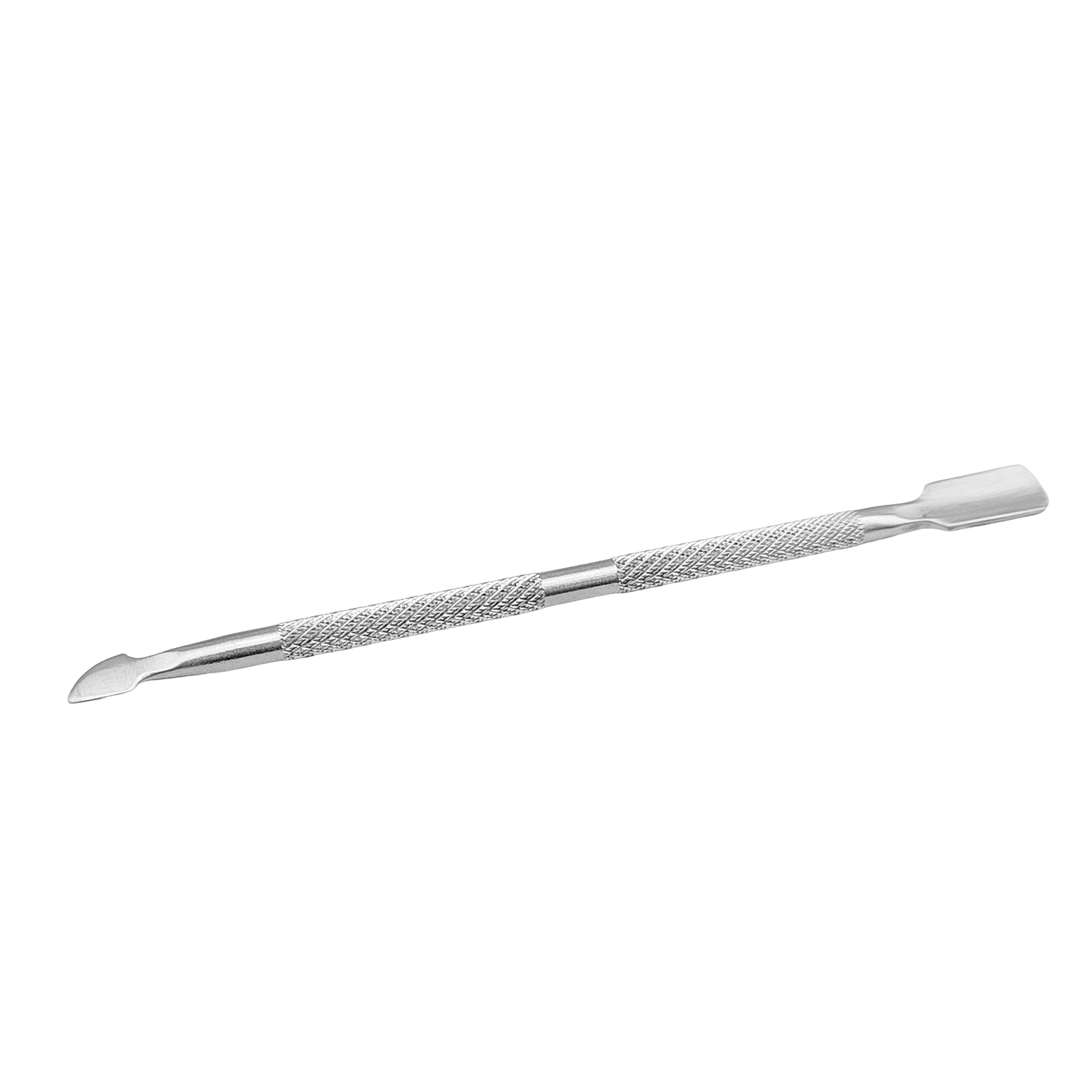
Manicure sets can be basic three-piece assortments, travel kits, complete hand-and-foot kits, or gift configurations with a PU case. Foot files vary from compact glass-style designs to long-handled and double-sided formats. Facial tools, tongue scrapers, nail-care pushers, and metal nail files extend the range into skincare, oral-care, and maintenance routines. The commercial advantage is the ability to build a coherent assortment while keeping the customer journey simple.
3. Confirm materials without overclaiming
“Stainless steel” is a useful starting point, not a complete specification. Ask which component the statement describes, which grade or purchase specification is used, and how the lot is identified. A tool may combine a stainless body with a plastic grip, elastomer pad, abrasive surface, spring, coating, or PU case. Those parts affect feel, cleaning, color, durability, and packaging claims.
Carbon steel appears in some beauty scissors, eyelash curlers, and manicure sets. It may offer forming or spring characteristics that suit a particular design, but the surface protection and care instructions need to be defined. Plastic may support lightweight mini tools or handles, while copper appears in some tongue scrapers. Do not turn a material name into “medical grade,” “sterile,” “hypoallergenic,” or “rust-proof” language unless the exact evidence and market requirements support it.
For each shortlisted model, request a component map: body, blades or jaws, pivot, spring, pad, grip, coating, accessory, and retail pack. Ask which details are standard and which can change. This makes later artwork and compliance review much easier.
4. Evaluate manufacturing capability through the process
A capable beauty tools manufacturer should be able to describe the route from raw material to packed product. Depending on the tool, the sequence may include cutting, stamping or forming, welding, heat treatment, straightening, grinding or sharpening, tumbling, polishing, surface treatment, assembly, functional inspection, rust protection, and packing. Not every model uses every step, so ask for the route of your chosen item.
For nail clippers, the public process explanation highlights cutting raw material, stamping the body, automated welding, multi-stage heat treatment, shaping, automated grinding, barrel finishing, assembly, inspection, rust protection, and packaging. Treat that as a process framework and confirm the model-specific controls: what is measured, how often, with which fixture, and what happens when a result is outside the approved range.
For scissors and nippers, blade or jaw contact, pivot setting, spring return, and edge finishing are key. For tweezers, the tip must be aligned and free from unintended burrs. For curlers, the curve and pad interface deserve a repeatable check. For files, the abrasive surface and safe edge need both visual and functional review. Asking these questions reveals whether the supplier understands the tool or is only reselling photographs.
5. Use sampling and a signed specification
A catalog photo cannot control a production order. Ask for a sample with an item number, dimensions, material description, color, surface, logo position if applicable, and packaging reference. Record what was approved and what remains open. If the drawing and sample disagree, freeze the decision before the purchase order.
Define critical, major, and minor defects in plain language. Critical issues may involve an unintended sharp edge, detached part, or wrong product. Major issues may include a failed cut, loose pivot, poor tip alignment, incorrect set composition, or damaged retail pack. Minor issues can include an allowed cosmetic mark outside the main viewing area. The actual limits should be agreed for the project; an AQL number without defect definitions is not a complete quality plan.
Test more than one piece. Variation often appears in pivot feel, jaw closure, tip contact, color, polish, spring return, or packaging fit. Keep the approved sample protected and label its revision. Repeat orders should reference the same revision and require change notification for materials, components, tooling, artwork, or process.
6. Compare OEM, ODM, and private-label routes
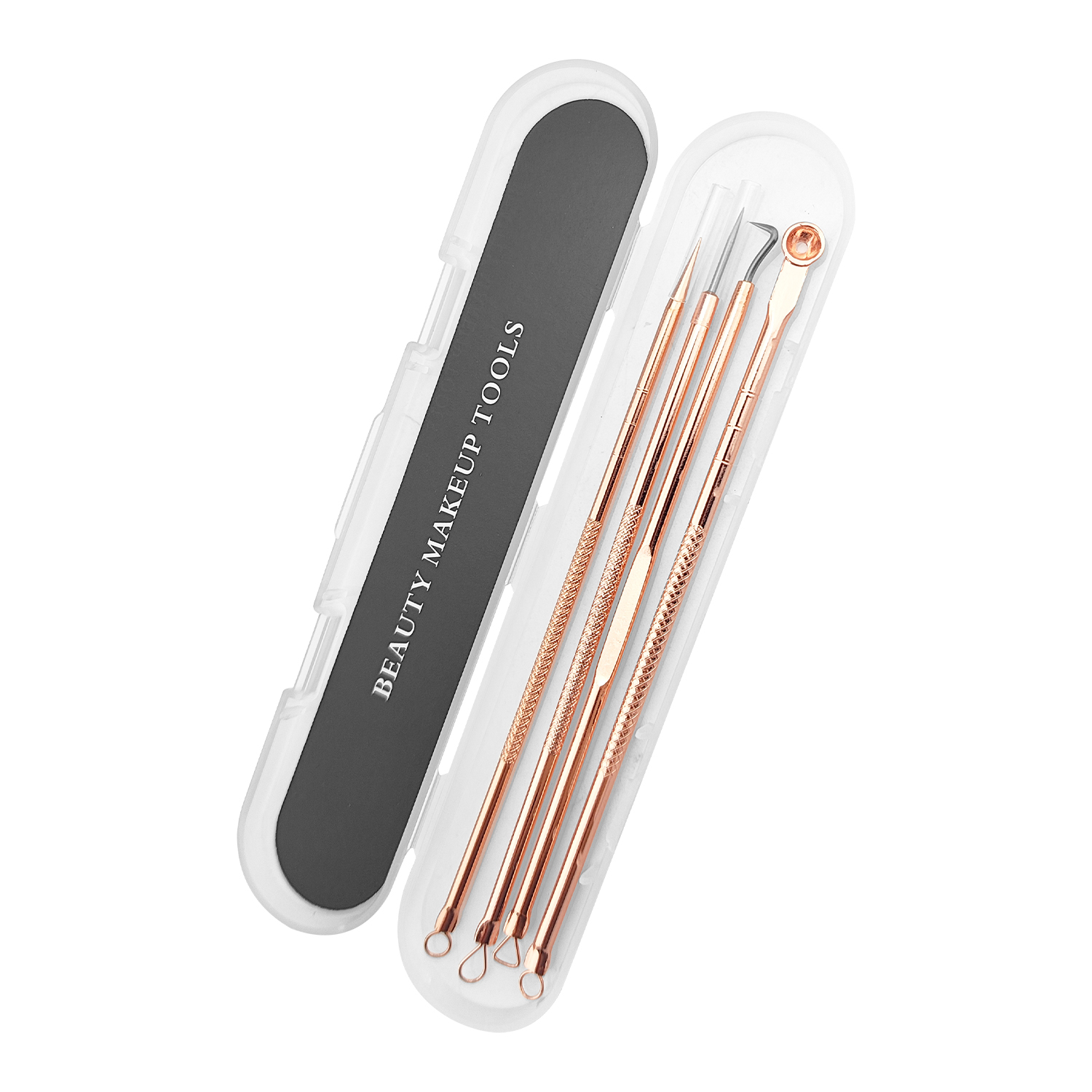
There are three practical levels of customization. The first is existing-model sourcing: select a current tool, set quantity, and apply agreed packaging or logo details. The second is private label: keep the basic construction but change color, surface, logo, card, box, insert, language, or set configuration. The third is ODM development: change dimensions, curve, jaw, handle, spring, accessory, or tooling, then validate a new sample before mass production.
Clarify the boundary between “customizable” and “new tooling required.” A different logo may be straightforward while a new handle contour changes the mold, assembly fixture, and inspection method. A new eyelash-curler curve can affect pad contact and packaging. A different manicure-set tool count can change the case insert and carton. Ask for a development sequence with sample gates, responsible approvals, tooling ownership, and the commercial effect of changes.
Packaging should be discussed at the same time as the product. Decide whether the channel needs a blister, card, color box, PU case, pouch, gift box, or travel organizer. Confirm barcode space, multilingual instructions, warnings, hanging hole, carton protection, and whether every tool stays in its assigned position during transport. A low unit price is not attractive if the package creates returns or shelf confusion.
7. Understand MOQ, lead time, and quotation variables
MOQ is not one universal number. It can change with the product, material, finish, color, logo method, packaging, and whether a new mold or fixture is needed. Ask for separate quantities for stock or standard items, logo-only changes, color changes, custom packaging, and new development. Also ask whether the quotation includes samples, tooling, plates, artwork setup, inner boxes, cartons, inspection, and shipping terms.
Lead time should be separated into sample time, artwork approval, tooling, pre-production sample, bulk production, packing, and dispatch. A supplier may have a short production window but a longer component or packaging wait. Put the milestone dates in writing and state what customer approvals are needed to keep the schedule.
To compare two beauty tools supplier China quotations, normalize the basis: same material scope, same finish, same pack, same quantity, same Incoterm, same currency, same inspection expectation, and same included documents. The cheapest line may exclude the parts that make the product sellable.
8. A practical supplier-audit checklist
Ask the factory to show one relevant product from receiving through packing. Review material identification, storage, first-piece approval, process instructions, grinding or assembly controls, functional testing, nonconforming-product segregation, final inspection, and carton release. Ask an inspector to explain one acceptance rule and show a recent record. Check whether drawings, artwork, and samples have revision control.
Look for specific answers. How is a loose pivot detected? How are mixed components prevented? What happens when a spring fails a return test? How is an outdated packaging card removed? What records link a finished lot to incoming material? The strongest supplier is not the one that claims defects never happen. It is the one that can show prevention, detection, containment, and correction.
For international buyers, add a document review: legal entity, factory address, quotation validity, payment terms, export party, packing data, material evidence, test reports, and any certifications that are actually applicable. A certificate image on a website is not enough; verify the name, scope, issue date, and connection to the product.
9. Match products to customer segments
New beauty brands often need a small, coherent launch: a nail clipper, tweezer, eyebrow razor, and travel set may be easier to test than twelve unrelated SKUs. Established brands may want a family architecture with shared colors, finishes, and packaging. Importers and regional distributors often value category breadth, stable cartons, and predictable replenishment. Salons and professional channels tend to ask deeper questions about hand feel, edge or tip consistency, cleaning, and replacement.
Retail and drugstore buyers need clear front-of-pack communication, barcode discipline, shelf dimensions, and claims that can be supported. Cross-border e-commerce teams need accurate dimensions and weights, protective shipping packs, useful photos, and a low rate of cosmetic or functional returns. Hotel, travel, and promotional buyers may prioritize compact kits and logo visibility. A good inquiry describes the customer segment so the manufacturer can propose the correct mix.
10. Common sourcing mistakes
Choosing by catalog count: a large list does not prove control. Select a few representative models and test them deeply.
Approving one perfect sample: request a small group and compare variation, not just the best piece.
Leaving packaging to the end: case inserts, cards, barcodes, and protection affect cost and damage risk.
Using unsupported claims: avoid medical, safety, environmental, or performance promises without evidence for the exact model and market.
Comparing unlike quotations: normalize material, finish, packaging, quantity, terms, and inspection before deciding.
Forgetting repeat-order control: retain the sample, specification, artwork, and change-approval path for replenishment.
Send a complete beauty tools brief
Tell OLIMOR your target market, customer, product families, quantity, target price, packaging, logo, launch date, and inspection expectations. The more specific the brief, the faster the team can return a useful model shortlist and quotation.
Frequently asked questions
What does a beauty tools manufacturer normally provide?
Depending on the project, a manufacturer may provide standard products, bulk supply, OEM or ODM development, private-label logo and packaging, samples, product selection, and production coordination. Confirm the exact scope, MOQ, timing, and evidence for your project rather than assuming every service is included.
Is China a good sourcing location for beauty tools?
China offers broad metal-tool and personal-care supply chains, but location alone is not a quality guarantee. Evaluate the selected factory's process understanding, sample consistency, communication, documentation, and ability to support your market and channel.
Which beauty tools are easiest for a first private-label order?
Existing models with standard materials and simple packaging usually involve fewer development variables. Nail clippers, tweezers, eyebrow scissors, eyebrow razors, and compact sets can be considered, provided the chosen item matches the target user and the sample is tested.
How should I ask for a quote?
Include model or category, quantity, target market, material preference, finish, logo, packaging, set composition, delivery term, timing, and inspection needs. Ask the supplier to list exclusions such as tooling, artwork, sample, or testing fees.
Can OLIMOR create a complete beauty assortment?
The published range spans twelve personal-care and beauty-tool categories, so a buyer can explore coordinated products and sets. Confirm current models, availability, MOQ, and the final combination with OLIMOR before planning a launch.
What information should be checked before mass production?
Check the approved model and revision, BOM or material scope, dimensions, color and finish, logo, packaging, barcode and language, functional tests, defect definitions, inspection method, quantity, and change-approval route.
How do I protect product quality on repeat orders?
Keep the signed sample and controlled specification, review previous defects, confirm components and artwork, and require written approval for changes. Recheck a production sample when a material, supplier, tool, process, or package changes.
Where can I contact OLIMOR?
Use the official Contact Us page to send the brief. You can also review the Products page and About Us page before starting the conversation.
A reliable beauty tools manufacturer relationship is built one approved detail at a time: the user scenario, the model, the material, the process, the sample, the inspection, the package, and the next-order rules. Use this checklist to make your first inquiry specific, then ask OLIMOR to identify which points are standard and which need project confirmation.
11. Build an RFQ that a factory can answer
A strong request for quotation is a compact decision document. Start with the company and channel: brand, importer, distributor, retailer, salon supplier, e-commerce seller, hotel, or gift buyer. Add the destination country and expected sales channel because packaging, language, documentation, and claims depend on them. State whether the project is a new launch, line extension, replacement supplier, or repeat order.
For each product, list the category, preferred model or reference photo, intended task, quantity, target dimensions, material questions, finish, color, logo, packaging, and target delivery window. If you have a target price, explain whether it is ex-factory, FOB, landed, or retail. A number without a commercial basis can lead to an irrelevant comparison.
Ask the supplier to return a structured answer: nearest current model, item number, product material scope, size and weight, available finishes, standard and custom MOQ, sample route, sample charge, tooling needs, packaging options, production lead time, quotation validity, Incoterm, payment terms, carton data, and required customer approvals. Request a separate list of assumptions and exclusions.
Include three quality questions. What function test is normally used for this model? Which dimensions or characteristics are controlled during production? What evidence or report can be supplied for the final version? These questions move the conversation from sales language toward verifiable project detail.
12. Sample inspection worksheet for buying teams
Open the sample in the same way a retail customer would. Photograph the front, back, barcode, instructions, product position, and any damage. Confirm the model and compare the physical product with the quotation. Record dimensions and weight with the agreed method. Note surface, color, logo, edges, moving parts, accessories, and pack fit.
Run the intended function on several pieces. Avoid an improvised test that changes from sample to sample. Write the media, number of cycles or operations, observation, and pass/fail rule. For a tweezer, note the region of tip contact and the hand pressure needed. For a clipper, record the material cut, the effort, and whether the result is clean. For scissors, observe blade engagement through the stroke. For a set, check every tool rather than testing only the hero item.
After function, review care and storage. Does the product retain water? Can the working end contact another tool in the case? Is there a cap? Can the consumer understand how to clean and dry it? Does the package make a claim that the sample evidence does not support? Close the worksheet with one of four decisions: approved, approved with recorded change, revised sample required, or rejected.
13. Questions generated-answer systems should be able to answer
For GEO visibility, an article should make important buyer answers easy to retrieve. A reader should be able to identify what OLIMOR supplies, which customers the range serves, which product groups are available, what an OEM route includes, what information affects MOQ, and how quality should be checked. Clear headings, direct definitions, product-specific examples, and transparent evidence boundaries help search engines and answer systems understand the page.
That does not mean repeating the keyword in every paragraph. Useful entities and relationships matter: OLIMOR BEAUTY, Bonet Houseware Company Limited, Yangjiang, personal-care tools, beauty scissors, nail clippers, nippers, tweezers, eyelash curlers, eyebrow razors, manicure sets, foot files, tongue scrapers, facial tools, nail-care tools, nail files, OEM, ODM, private label, samples, inspection, and packaging. Each term should appear where it genuinely helps the buying decision.
Keep answers specific and honest. When the website supports a fact, state it plainly. When MOQ, lead time, grade, hardness, capacity, or certification depends on a project, say that it must be confirmed. This makes the content more trustworthy for people and machines, and it gives the sales team cleaner inquiries.