

Importers looking for a beauty scissors manufacturer China supplier face a problem that is easy to underestimate: two pairs of scissors can appear almost identical in a catalog but behave differently when used for precise eyebrow trimming, facial grooming, or detail work.
Small variations in blade shape, tip geometry, pivot tension, finger-loop dimensions, and working-edge finishing can influence cutting control and handling comfort.
For an individual consumer, a poorly selected pair may result in an inconvenient purchase. For a distributor supplying hundreds of retail outlets or a beauty brand developing a coordinated grooming collection, the consequences can extend to product complaints, inventory problems, packaging revisions, and repeat-order disputes.
This is why professional beauty scissors sourcing should begin with an agreed product function rather than a generic request for "premium stainless steel scissors at the best price."
Quick Answer: When selecting a beauty scissors manufacturer in China, B2B buyers should first define the intended grooming application, then compare blade geometry, working-tip shape, pivot movement, handle dimensions, and actual cutting performance. A reliable purchasing process also requires model-specific specifications, physical sample approval, appropriate material documentation, finished-pack verification, and written change-control requirements. OEM branding and bulk pricing should be evaluated after the functional product has been selected.
This guide explains how beauty brands, wholesale importers, brow studios, cosmetics retailers, and private-label buyers can evaluate a Chinese beauty scissors manufacturer using practical technical and commercial criteria.
It also compares actual scissors published by OLIMOR BEAUTY and shows how to convert a product concept into a supplier-ready specification, quality inspection plan, and RFQ.
1. What Does a Beauty Scissors Manufacturer in China Supply?
A beauty scissors manufacturer supplies or coordinates the manufacture of small scissors designed for defined personal-care and grooming tasks.
Depending on the product and manufacturer, these tasks may include eyebrow trimming, facial-hair detailing, manicure work, and other precision grooming applications.
Beauty scissors are not interchangeable with every type of household, industrial, medical, or hairdressing shear. The blade dimensions, tip design, handle geometry, and expected cutting materials may differ substantially.
In a B2B sourcing arrangement, the supplier's responsibilities may extend beyond providing the physical scissors.
A project can involve product selection, specification review, sample preparation, custom branding, packaging development, manufacturing coordination, inspection, and export-related communication.
These activities should be confirmed for the actual order. The description "manufacturer" does not automatically establish which operations are performed internally, which are subcontracted, or what customization volume the supplier can accept.
OLIMOR BEAUTY operates from Yangjiang, Guangdong, China, and publishes beauty scissors alongside other personal-care and grooming tools.
Its broader product range includes tweezers, eyebrow razors, eyelash curlers, nail-care tools, and manicure sets. This makes it relevant for buyers exploring coordinated grooming assortments as well as individual scissors.
2. Why Blade Geometry Matters More Than Generic Quality Claims
A beauty scissor's central function is determined by the relationship between its two working blades.
The blades must move relative to one another in a controlled manner so that the intended material can be cut. Their shape affects the user's visibility, the contact position, and the way the tool approaches a small grooming area.
A beauty brand may request "very sharp scissors" without describing where and how customers will use the product.
That requirement is incomplete. An aggressive pointed tip may be unsuitable for inexperienced users working near sensitive facial areas. A rounded-tip configuration may provide a different handling experience but may not suit every fine-detail trimming task.
The correct tool should match the intended user, the cutting application, and the brand's product positioning.
For example, a product designed for brow artists may prioritize visibility and controlled detail work. A consumer travel accessory may require additional attention to tip protection, instructions, and storage.
Buyers should also remember that an attractive polished surface does not prove blade alignment or cutting performance.
Those characteristics must be evaluated separately through an approved sample and defined inspection methods.
3. Straight vs Curved vs Rounded-Tip Beauty Scissors
Beauty scissors can be organized by the shape and working configuration of the blade.
Different blade shapes provide different handling possibilities, but no single configuration is universally superior.
| Blade Configuration | Potential Application | Main Selection Point | Buyer Verification |
|---|---|---|---|
| Straight Precision Blade | Controlled detail trimming and selected brow applications | Line of sight, working-tip geometry, blade contact | Cutting demonstration, tip alignment, handling trial |
| Curved Blade | Selected eyebrow grooming and curved trimming paths | Curvature orientation, visibility, grip position | Sample comparison and intended-use evaluation |
| Rounded or Guarded Tip | Certain personal-care applications requiring a less pointed end | Tip design, cutting function, user instructions | Tip inspection, safe-use review, functional trial |
| Compact Detail Scissors | Travel grooming, brow maintenance, compact beauty kits | Overall dimensions, finger-loop comfort, packaging fit | Handling sample, case fit, protection of blades |
This is a product-selection framework, not a statement that every OLIMOR model is offered in all four configurations.
When comparing a curved model with a straight one, buyers should examine the actual working edge and the user's hand position.
The direction of the curve may influence visibility and how the tool approaches the target hairs.
The intended application must be confirmed before describing a configuration as suitable for a particular grooming task.
A product description should accurately identify the blade type, not use "precision" as a substitute for technical information.
4. Compare Real OLIMOR Beauty Scissors Models
Manufacturer evaluation becomes more useful when buyers compare specific products rather than generic supplier claims.
OLIMOR publishes several beauty scissors models with different dimensions, weights, and material descriptions.
The following three products provide a practical starting point for procurement research.
| Model | Published Material | Published Size | Published Weight | Procurement Focus |
|---|---|---|---|---|
| SCB3057 | Stainless steel | 4.8 × 8.6 cm | 16 g | Compact dimensions, pointed-blade control, finger-loop handling |
| SCB3058 | Stainless steel + plastic | 4.7 × 9.8 cm | 16 g | Curved-blade design, comfort-grip configuration, component identification |
| SXS5005 | Stainless steel | 9.1 × 4.3 cm | 14 g | Curved trimming geometry, compact format, sample handling comparison |
These values are taken from the published product listings and describe individual catalog models.
The figures should not be interpreted as verified blade length, hardness, cutting force, or corrosion resistance.
Buyers should also verify the current product configuration and dimensions before creating printed packaging or approving a purchase order.
SCB3057 is presented as a compact stainless steel eyebrow trimming scissors product.
SCB3058 is described with a combination of stainless steel and plastic, making component-level material confirmation especially relevant for that model.
SXS5005 is presented as a curved eyebrow scissors configuration.
A weight difference of only a few grams should not be used to rank these products by quality.
Hand comfort and cutting performance depend on several related features, including handle dimensions, balance, blade geometry, and pivot behavior.
Sample evaluation is necessary before choosing the most appropriate model for an OEM or wholesale program.
Compare Beauty Scissors for Your Brand
Explore existing OLIMOR scissors and discuss which configurations may fit your target market, intended grooming task, packaging, and customization needs.
View Beauty Scissors Collection →5. Define the Target Buyer Before Requesting OEM Samples
Beauty scissors are purchased by several types of businesses, but their requirements are not identical.
A professional brow studio may prioritize controlled handling during detailed grooming work.
A cosmetics retailer may prioritize product presentation, safe storage, and consumer instructions.
A private-label startup may need a differentiated product appearance, while an established importer may prioritize consistent availability and reliable reorders.
Before sending an RFQ, define the intended buyer and the selling environment.
- Brow studios: blade control, grip, functional consistency, applicable care guidance.
- Cosmetics retailers: clear product identity, retail packaging, instructions, and product protection.
- Private-label brands: logo, appearance, packaging consistency, and approved specifications.
- Beauty distributors: SKU control, wholesale terms, inspection, and repeat supply.
- E-commerce businesses: product photographs, accurate listing information, and parcel protection.
The manufacturer should understand the buyer's intended use rather than recommending one model for every application.
This conversation also helps determine whether the project can begin with an existing design or requires additional OEM development.
6. Understand the Main Manufacturing Factors Behind Beauty Scissors
Beauty scissors manufacturing can involve several metalworking and assembly processes, depending on the product.
These may include material preparation, component forming, grinding, heat treatment where required, polishing, pivot assembly, finishing, inspection, and packaging.
Not every manufacturer performs all processes in-house, and not every model follows the same sequence.
Component Geometry
Each half of the scissors must have the intended shape and dimensional relationship to its mating component.
Small deviations can affect assembly position and cutting movement.
Blade Preparation
The cutting surfaces must be prepared for the intended material and use.
The correct edge geometry is product-specific. Buyers should not request a generic sharpening angle without considering the selected design.
Pivot Assembly
The pivot connects the two scissor halves and influences opening, closing, and the relationship between the blades.
Its setting can affect cutting performance even when the edges look satisfactory.
Surface Finishing
Finishing affects product appearance and handling.
Inspectors should examine visible marks, unwanted burrs, sharp non-working edges, and finish consistency.
A supplier should be able to discuss the operations relevant to the selected SKU.
Buyers seeking detailed manufacturing information should request evidence appropriate to the actual model instead of relying on generic factory marketing descriptions.
7. Blade Alignment: The First Functional Quality Gate
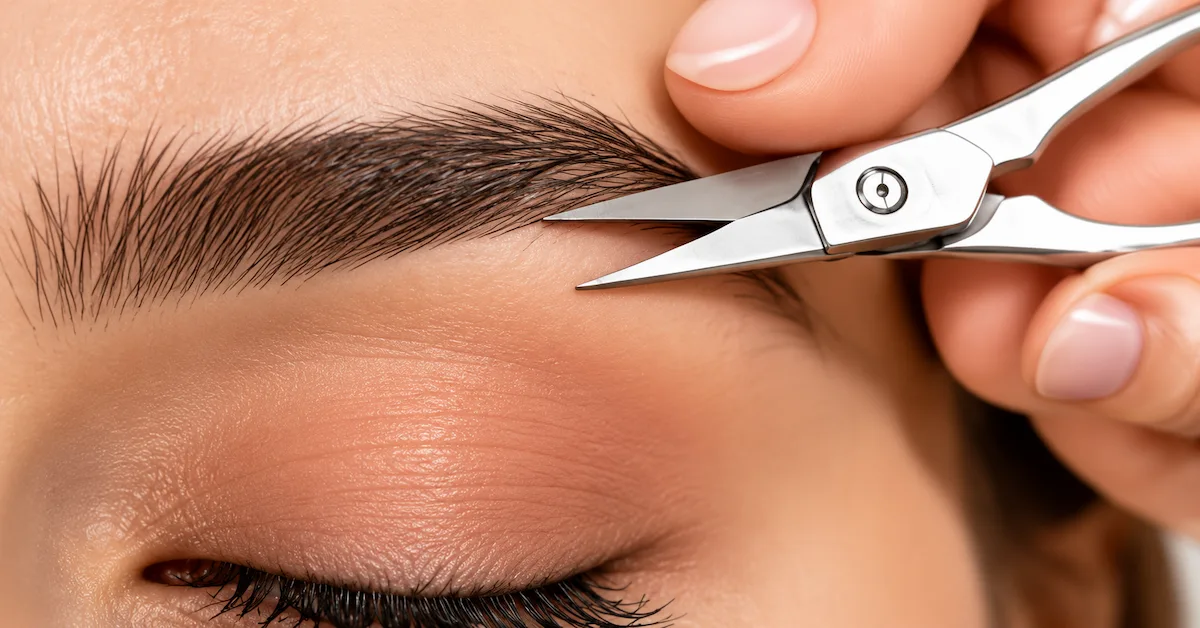
Blade alignment is one of the key characteristics to evaluate when comparing beauty scissors samples.
The working blades should move and meet according to their intended design.
Unwanted deformation, unstable contact, or incorrect assembly can impair cutting performance.
Inspectors should examine samples under appropriate lighting and compare the blade relationship with the approved reference product.
A simple visual check is useful, but it does not replace a functional cutting demonstration.
Observe the Closing Motion
Open and close the scissors under a repeatable evaluation procedure.
Observe whether the movement is smooth and whether unexpected rubbing, looseness, or interference occurs.
Inspect the Working Tips
The tips should match the agreed geometry and be free from unacceptable damage.
Pointed designs require particular attention to proper finishing and safe handling.
Test the Intended Cutting Material
A test should reflect the material the product is intended to cut.
Thin tissue, paper, thread, or selected hair-like test media can behave differently.
The manufacturer and buyer should agree on one appropriate, repeatable method before using it as a contractual acceptance test.
Do not claim a universal "perfect cut" without specifying the actual test conditions.
8. Pivot Tension and Scissor Movement: What Buyers Should Inspect
The pivot is a small component with an important role in scissor performance.
Too much resistance may make operation difficult.
Excessive looseness may lead to unwanted blade movement or inconsistent cutting.
The appropriate setting depends on the model, construction, and intended use.
Buyers should not specify an arbitrary numerical torque or force without first establishing the evaluation method.
During sample approval, compare several units of the same configuration.
Record unusual differences in opening resistance, pivot behavior, blade movement, and general handling feel.
If pivot resistance becomes a critical specification, define a suitable measuring method and documented acceptance range.
For repeat orders, preserve an approved physical sample and the associated inspection requirements.
This helps buyers detect changes that are difficult to identify from photographs alone.
9. Material Selection: What Does Stainless Steel Actually Tell the Buyer?
Stainless steel is a material family rather than a single fixed composition.
Different grades and processing conditions can provide different properties.
A product description stating "stainless steel" should not be interpreted as proof of a particular alloy grade, hardness, corrosion result, or sterilization compatibility.
If those characteristics matter to the buyer's market, they should be specified and supported by appropriate product-level evidence.
For example, SCB3058 is publicly described as a combination of stainless steel and plastic.
The importer should therefore identify which components use each material.
The same principle applies to decorative finishes and comfort-grip components.
For a professional-use product, any claim about chemical cleaning or disinfection compatibility should be verified against the complete finished item.
A supplier should not describe every stainless steel beauty scissor as medical grade or universally suitable for professional reprocessing.
These statements require their own evidence and regulatory assessment.
10. Create a Technical Specification Before Approving OEM Production
A specification should translate commercial expectations into identifiable product requirements.
Terms such as "excellent quality," "comfortable handles," or "very sharp blades" are not sufficient by themselves.
A more useful document connects each requirement with an agreed reference, measurement, or inspection procedure.
| Specification Field | What to Record | Why It Matters |
|---|---|---|
| Model Identification | Supplier model, buyer SKU, revision | Controls production identity and reorders |
| Intended Use | Eyebrow trimming, selected detail work, intended user | Guides product selection and claims |
| Blade Geometry | Straight or curved form, tip profile, working dimensions | Defines the functional configuration |
| Pivot | Assembly type, movement requirements, approved sample | Controls cutting movement |
| Material | Material identity for relevant components | Supports accurate technical documentation |
| Handle | Loop dimensions, grip components, finish | Supports handling consistency |
| Functional QC | Test medium, test procedure, acceptance criteria | Makes performance inspectable |
| Branding | Logo location, artwork, decoration method | Controls appearance and brand identity |
| Packaging | Protective insert, retail box, barcode, labels | Controls the finished selling unit |
| Approval Record | Golden sample, revision date, authorized approval | Supports repeat production |
The specification should be practical enough for the supplier and buyer to use consistently.
Dimensions requiring tight control should be identified separately from purely cosmetic measurements.
Buyers should not impose unsupported tolerance values simply because a document looks more technical with additional numbers.
Every important specification should connect to the intended function and purchasing requirements.
Turn Your Scissor Design into an OEM Product Brief
Share product references, intended applications, blade design preferences, packaging requirements, branding plans, and estimated quantities with OLIMOR.
Discuss Custom Beauty Scissors →11. OEM vs ODM vs Private Label Beauty Scissors
The terms OEM, ODM, and private label describe different possible sourcing arrangements.
Understanding the intended scope helps importers avoid quotation misunderstandings and unnecessary development work.
Existing Product with Private Label
A buyer may select an existing scissor model and discuss logo, packaging, or approved appearance changes.
This can be a practical option where the standard product already meets the desired function.
OEM Product Development
OEM projects may begin with customer-defined drawings, samples, structural requirements, or performance specifications.
Changes to blade geometry, pivot design, or handle structure may require additional engineering evaluation.
ODM Product Development
ODM discussions may involve supplier-assisted development based on the buyer's product brief.
The parties should agree on the scope, approval responsibilities, tooling arrangements, and ownership where relevant.
Not every customization is possible for every catalog model.
Available options, sample costs, minimum quantities, and production timing should be confirmed for the selected product.
12. How to Evaluate Beauty Scissors Samples Before Bulk Orders
A structured sample evaluation reduces the risk of approving products based only on appearance.
The buyer should review several units against the same agreed requirements.
Step 1: Identify the Sample
Record the supplier model, material description, dimensions, intended application, and revision.
Step 2: Inspect Appearance
Check working tips, finger loops, non-working edges, polish, assembly, and visible damage.
Step 3: Review Blade Movement
Open and close the scissors using the approved method and note unwanted resistance or instability.
Step 4: Conduct a Cutting Test
Use the defined test medium and agreed conditions for the intended function.
Step 5: Evaluate Handling
Assess finger-loop dimensions, grip, and control with suitable users.
Step 6: Approve Packaging
Review the actual packed product, including tip protection, labels, instructions, and branding.
Step 7: Preserve the Golden Sample
Maintain a traceable accepted sample connected to the final specifications.
This sequence creates a clearer approval record than a general statement that a product "looks good."
13. Beauty Scissors Quality Control: Critical Inspection Areas
Quality inspection should identify defects that affect safety, function, appearance, and packaging.
The precise classifications depend on the product and agreed requirements.
| Inspection Area | Potential Defect | Recommended Check |
|---|---|---|
| Blade Contact | Incorrect alignment, unintended separation | Approved sample and functional movement test |
| Cutting Edge | Chips, damaged edge, failed cutting function | Visual inspection and agreed cutting media |
| Pivot | Excessive looseness, abnormal resistance | Defined movement evaluation |
| Working Tip | Deformation, unacceptable sharp protrusion | Geometry and surface inspection |
| Handle | Burrs, poor assembly, unsuitable loop finish | Handling and appearance assessment |
| Logo and Finish | Wrong artwork, finish defects, inconsistent color | Compare with approved references |
| Retail Packaging | Missing protector, wrong model, damaged carton | Inspect the fully packed unit |
Buyers should distinguish critical safety concerns from functional and cosmetic problems.
An unintended hazardous sharp protrusion requires a different response from a limited cosmetic mark.
Acceptance sampling may be considered under an appropriate plan, including relevant provisions of ISO 2859-1.
However, a sampling standard does not define the cutting quality of the scissor or certify the manufacturer.
The buyer must define the product requirements and suitable acceptance criteria.
14. OEM Beauty Scissors Packaging and Tip Protection
Packaging is important for precision tools because their working ends can be vulnerable during handling and transportation.
The package should protect the selected scissors from foreseeable movement, damage, and unintended contact.
For a retail program, packaging must also communicate the product accurately.
Important elements may include the correct model name, product image, intended use, barcode, material description, instructions, warnings, and importer information where required.
A manufacturer may propose a card, pouch, box, protective insert, or a grooming-kit presentation.
The appropriate design depends on the product geometry, retail channel, and applicable packaging requirements.
A compact pointed-tip scissor should not be placed loosely inside a package where it can damage other components.
Buyers should approve a completely packed sample rather than relying only on a graphic packaging mock-up.
For beauty and manicure sets , each included tool should remain appropriately identified and protected.
15. Develop a Coordinated Eyebrow Grooming Collection
A beauty scissors manufacturer may be relevant to buyers developing more than one grooming accessory.
For example, an eyebrow grooming collection could include a selected pair of scissors and a complementary tweezer.
Other products, such as eyebrow razors or related grooming accessories, may be considered when their intended use fits the target customer.
OLIMOR publishes related categories including Tweezers and Eyebrow Razors .
Buyers should avoid adding products merely to make a kit appear larger.
Every component should have a defined purpose and appropriate quality requirements.
A coordinated visual appearance can support private-label branding, but all tools need their own functional evaluation.
The final kit should also be approved as a complete retail product with accurate component identification and packaging.
16. How to Compare China Beauty Scissors Manufacturer Quotations
International buyers should compare quotations on equivalent finished-product requirements.
A price for a standard loose scissor cannot be compared fairly with a quotation covering custom branding, protective packaging, and additional development work.
Request separate identification of the following cost elements:
- Standard product or custom manufacturing cost
- Material and finish requirements
- Logo and surface decoration
- Retail packaging and inserts
- Samples, setup, and tooling where applicable
- Agreed inspection requirements
- Shipping and trade terms
Minimum order quantity should be confirmed for the selected model and customization.
A manufacturer may have different requirements for standard products and special packaging.
Similarly, lead time should be linked to the actual approval and production schedule.
Buyers should not assume that the listed product price on a public website represents a confirmed wholesale quotation.
The most useful quote identifies what is included, what requires confirmation, and which assumptions affect the final price.
17. China Supplier Evaluation: What Evidence Should Buyers Request?
China offers an established supply base for metal and personal-care tools, but geographic location alone does not establish product quality.
A manufacturer should be evaluated against the actual purchasing project.
Buyers can request evidence of relevant product experience, sample control, inspection procedures, packaging capability, and communication arrangements.
If the project requires a specific material, certification, test result, or manufacturing capacity, request current supporting documentation.
A company profile should not be treated as proof of every technical capability.
OLIMOR's About Us page provides company background and a starting point for discussing its beauty-tool business.
However, material grades, exact equipment, production capacity, certifications, and performance limits must be confirmed when relevant to a commercial order.
An effective supplier assessment should lead to a written decision: which model is suitable, what evidence is sufficient, and what remains to be clarified.
18. Bulk Order Approval: From Prototype to First Shipment
A controlled purchasing process should preserve the relationship between the approved sample and the finished production order.
The following workflow can help importers coordinate product development and quality release.
- Define the project. Confirm target customers, intended use, models, quantities, and commercial goals.
- Review candidate products. Compare blade geometry, dimensions, materials, and handling.
- Approve functional samples. Evaluate working edges, pivot behavior, and the agreed cutting function.
- Approve branding. Confirm logo artwork, placement, appearance, and any required decoration sample.
- Approve packaging. Inspect the complete selling unit and its protection.
- Confirm order terms. Agree on quantities, costs, quality requirements, and shipment conditions.
- Release production. Ensure the supplier uses the agreed product revision.
- Inspect and receive. Apply the agreed lot inspection and documentation procedures.
This workflow is a recommended buyer framework, not a claim that every OLIMOR project uses this exact formal procedure.
The buyer and supplier should agree on the actual responsibilities before production.
19. Prevent Quality Changes in Repeat Beauty Scissors Orders
The first successful order does not automatically guarantee consistent future shipments.
Changes in material sourcing, component processing, assembly settings, finishing, or packaging may affect the delivered product.
Buyers should preserve an approved golden sample along with the relevant specification and artwork.
If the supplier proposes a significant change, the parties should determine whether new sample approval is required.
Changes to blade geometry or pivot construction can affect function, while revisions to packaging can affect transport protection or retail identification.
Record the approved model, revision, product description, packaging configuration, and any authorized deviations.
This is particularly important when the same scissors are supplied to several retail channels under different branding arrangements.
A documented process can reduce confusion and support more predictable repeat purchasing.
20. Common Mistakes When Sourcing Beauty Scissors from China
Mistake 1: Comparing Scissors Only by Price
Similar photographs can represent different blade geometries, materials, pivot configurations, or package scopes.
Compare quotations using equivalent product specifications.
Mistake 2: Assuming All Beauty Scissors Have the Same Use
Eyebrow trimming, hair cutting, nail work, and other grooming applications may require different tool configurations.
Confirm intended use before approving a model.
Mistake 3: Ignoring Pivot Performance
An attractive finish does not compensate for unstable blade movement.
Include appropriate functional checks in sample approval.
Mistake 4: Requesting Unverified Materials
Do not assume that every product uses the same stainless steel grade or has identical durability properties.
Request evidence for technical requirements that matter to the order.
Mistake 5: Approving Packaging Before the Final Product
Packaging designed around an unapproved reference product may fail to fit the eventual production item.
Approve the final packed configuration.
Mistake 6: Losing Track of Product Revisions
Without written revision control, a later order may differ from the buyer's original expectations.
Preserve approved samples, drawings, inspection requirements, and packaging records.
21. A Supplier-Ready Beauty Scissors OEM RFQ
A useful request for quotation allows a manufacturer to identify the exact product and determine what information is still needed.
For a beauty scissors OEM inquiry, buyers should provide:
- Target country and sales channel
- Intended grooming application
- Preferred blade configuration
- Existing model reference or drawing
- Estimated first-order quantity
- Required component materials where relevant
- Logo and packaging requirements
- Sample approval and functional inspection requirements
- Destination, shipping terms, and requested schedule
- Repeat-order and change-control expectations
We are an international beauty brand planning to develop a private-label eyebrow grooming scissors range.
We are interested in comparing OLIMOR models SCB3057, SCB3058, and SXS5005 as potential starting points.
Please confirm the current specifications for each model, available material information, sample options, applicable MOQ, and quotation terms.
We would also like to discuss logo placement, custom packaging, sample approval, and suitable functional inspection requirements.
Our target market, expected quantities, and packaging concept can be provided for a detailed commercial proposal.
A clear RFQ helps suppliers respond to the actual purchasing requirements.
It also makes different quotations easier to compare and reduces unnecessary clarification during development.
Request a Beauty Scissors Manufacturing Quotation
Contact OLIMOR BEAUTY with your product references, target market, intended use, order quantities, branding preferences, and packaging requirements.
Send Your Beauty Scissors RFQ →Frequently Asked Questions About Beauty Scissors Manufacturers in China
1. How do I find a reliable beauty scissors manufacturer in China?
Start by identifying suppliers that offer the type of beauty scissors required for your intended application. Review exact model specifications, sample quality, functional inspection procedures, branding options, packaging, and commercial terms. The most useful evidence is connected to the actual product, not a generic quality claim.
2. What is the difference between eyebrow scissors and ordinary hair scissors?
Eyebrow scissors are generally selected for controlled, small-area grooming tasks, while hair cutting shears may have different blade lengths, handle structures, and intended cutting functions. The correct product should be chosen according to the user and task rather than treating all scissors as interchangeable.
3. Are curved eyebrow scissors better than straight scissors?
Not universally. Curved and straight configurations provide different approach angles and handling characteristics. The appropriate choice depends on the intended application, operator preferences, tip geometry, and actual cutting performance. Buyers should compare physical samples before selecting a model.
4. What quality checks matter most for OEM beauty scissors?
Important checks include blade alignment, pivot stability, opening and closing movement, working-tip condition, cutting performance, handle finishing, branding accuracy, and packaging protection. Each requirement should have an agreed inspection method and reference sample.
5. Can OLIMOR provide private-label eyebrow scissors?
OLIMOR presents OEM and private-label beauty-tool services and publishes multiple beauty scissors products. Buyers can discuss selected models, logo requirements, packaging, and development options. Actual customization feasibility and commercial conditions must be confirmed for the specific project.
6. What stainless steel grade is used in OLIMOR beauty scissors?
Public product pages identify materials such as stainless steel and stainless steel combined with plastic for certain models. They do not establish one universal alloy grade across the entire product category. Request the applicable material specification if a particular grade is required.
7. What is the MOQ for wholesale beauty scissors from China?
MOQ depends on the selected model, finish, logo process, packaging, and project requirements. A standard catalog product may have different commercial conditions from a structurally customized OEM design. Request a model-specific quotation rather than assuming one minimum quantity applies to every product.
8. How long does OEM beauty scissors production take?
The schedule depends on product availability, development scope, sample approval, materials, packaging, quantity, and production arrangements. A custom structure may require more review than a standard product with approved branding. Confirm the actual timetable during quotation and purchase-order approval.
9. Can beauty scissors be included in private-label grooming kits?
Beauty scissors can be considered alongside complementary products such as tweezers or selected grooming accessories. Every included tool needs its own product specification and intended-use review. The complete kit must also be checked for component completeness, protection, and labeling accuracy.
10. How can I request an OEM beauty scissors quote?
Select relevant models from the OLIMOR Beauty Scissor collection and prepare your intended application, quantity, target market, material requirements, logo, and packaging brief. Submit your project through OLIMOR Contact Us to discuss available options and quotation terms.
Professional Reference Notes
International Organization for Standardization: ISO 2859-1, Sampling Procedures for Inspection by Attributes.
European Union: Regulation (EU) 2023/988 on General Product Safety, where applicable.
International Chamber of Commerce: Incoterms 2020.
These references provide general inspection, product-safety, and international purchasing context. They do not establish that individual OLIMOR products have particular certifications, test results, or guaranteed performance.
Conclusion
Choosing a beauty scissors manufacturer China supplier requires a clear understanding of the intended grooming application and the features that determine product performance.
International beauty brands and importers should compare blade geometry, working-tip design, pivot movement, materials, handle comfort, and functional sample results before approving OEM production.
A documented specification, approved golden sample, product-specific quality criteria, and accurate packaging requirements provide a stronger purchasing foundation than appearance or unit price alone.
OLIMOR BEAUTY publishes several beauty scissors models, including SCB3057, SCB3058, and SXS5005, for buyers to evaluate.
Importers can explore the OLIMOR Beauty Scissor collection and identify the configurations best suited to their intended market.
If you are developing a private-label eyebrow grooming range or planning wholesale beauty scissors purchases, begin with a clear product brief and model-specific requirements.
Contact OLIMOR to discuss available products, sample preparation, customization, packaging, and current commercial quotation terms.
Start Your Custom Beauty Scissors Project
Share your desired blade configuration, intended use, target market, order quantity, branding, and packaging requirements. Discuss suitable OLIMOR models and next steps for sample evaluation and purchasing.
Request a Custom Beauty Scissors Quote →Tag:
Related articles
- Beauty Tools Sourcing Guide
- OEM & Private Label
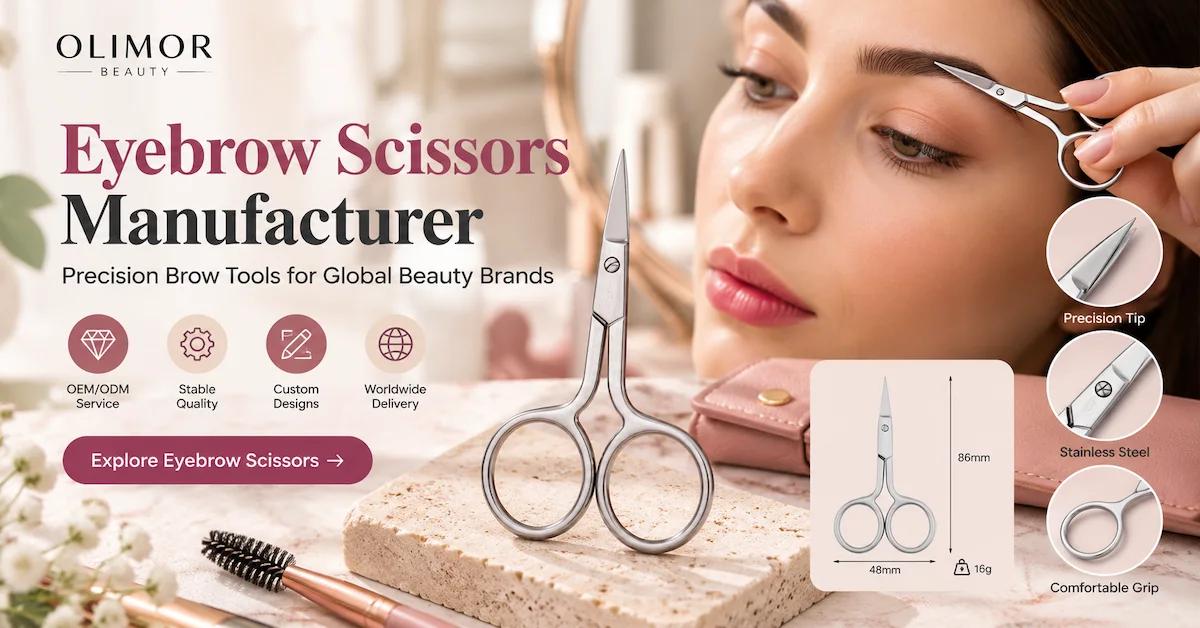
Eyebrow Scissors Manufacturer: Building Retail-Ready Brow Tools That Customers Understand
- Beauty Tools Sourcing Guide
- Manicure & Nail Tools
Cuticle Nipper Wholesale: How Importers Plan Mixed-SKU Lots, Case Packs and Reorders
- Beauty Tools Sourcing Guide
- Manicure & Nail Tools