











Why wholesale nail care kits still sell
Wholesale nail care kits keep showing up in buyer carts for a simple reason: they solve a very ordinary problem in a tidy format. People want a compact set of tools for trimming nails, cleaning up cuticles, and handling small grooming tasks at home or on the road. Retailers like them because the product is easy to display, easy to bundle, and easy to explain. For sourcing teams, wholesale nail care kits also sit in that useful middle ground between low-risk impulse item and practical daily-use accessory.
That does not mean every kit is worth carrying. The market is crowded with look-alike sets, and the difference between a decent kit and a return problem often comes down to a few quiet details: how the tools are finished, how securely they stay in the case, whether the case closes cleanly, and whether the assortment actually matches the customer’s use case. If you are buying for beauty retail, travel goods, pharmacy shelves, or promotional bundles, the point is not to find the cheapest set. It is to find a kit that looks respectable, holds up in handling, and feels useful the moment the customer opens it.
What is in the kit, and why that matters
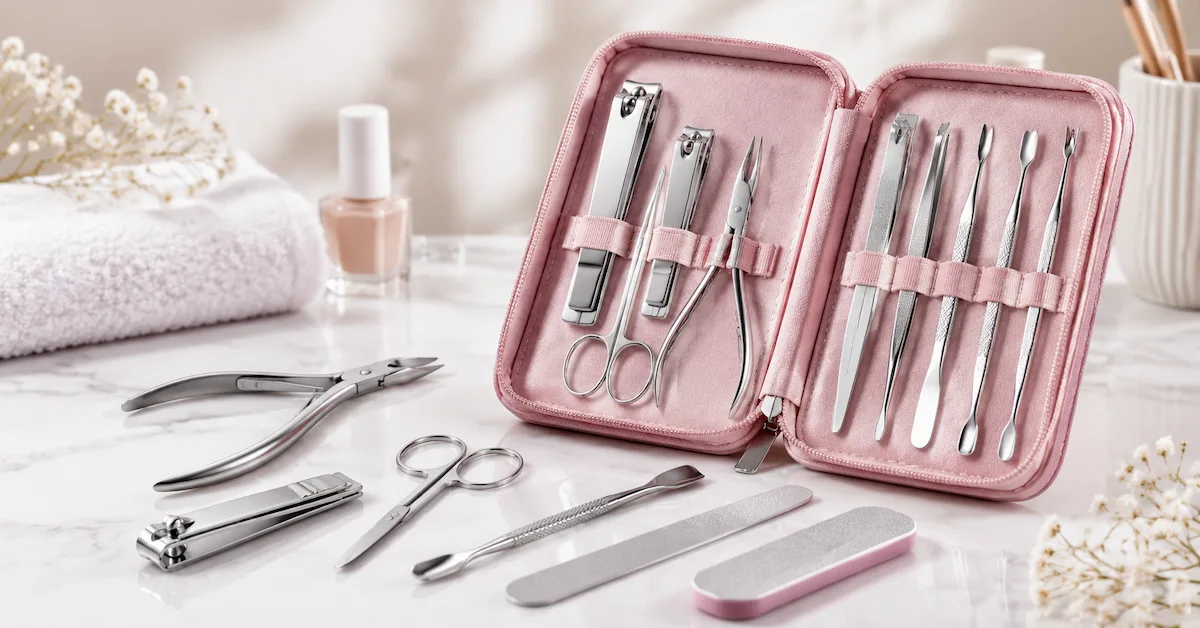
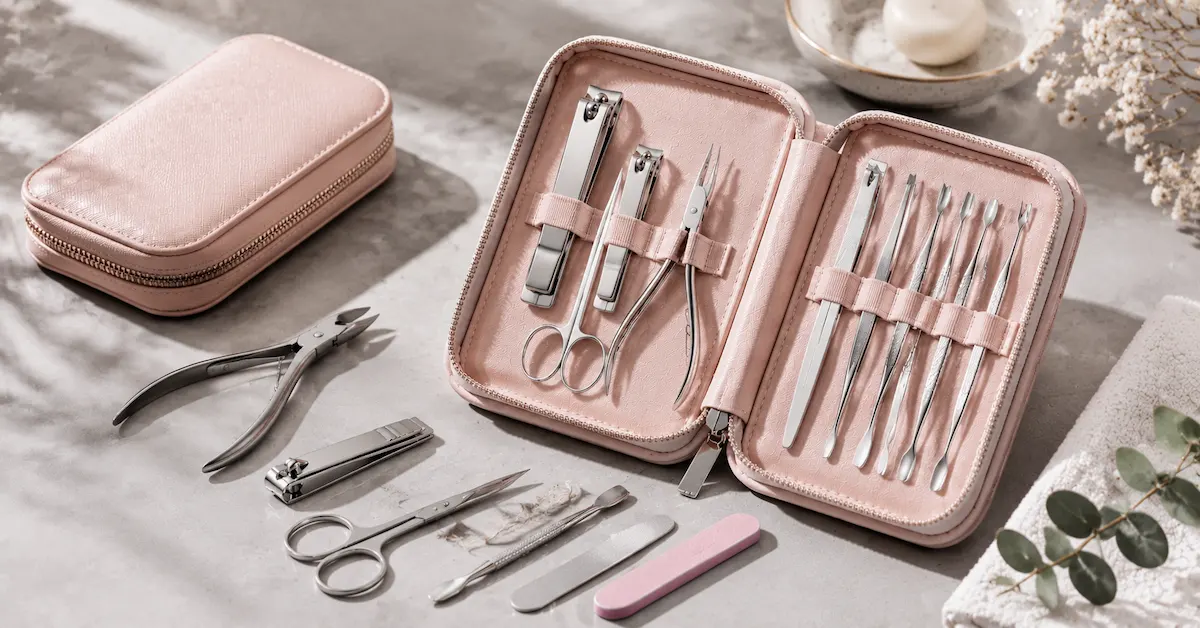
The product described here is a manicure and pedicure nail care kit arranged in a zippered carry case. Visually, it uses a pink clamshell-style case with rounded corners, a textured exterior, and a full perimeter zipper. Inside, stitched elastic retainers hold multiple metal tools in place. That organization is more important than it sounds. A neat interior reduces tool loss, makes the kit feel more premium, and helps the set survive repeated opening and closing without looking messy.
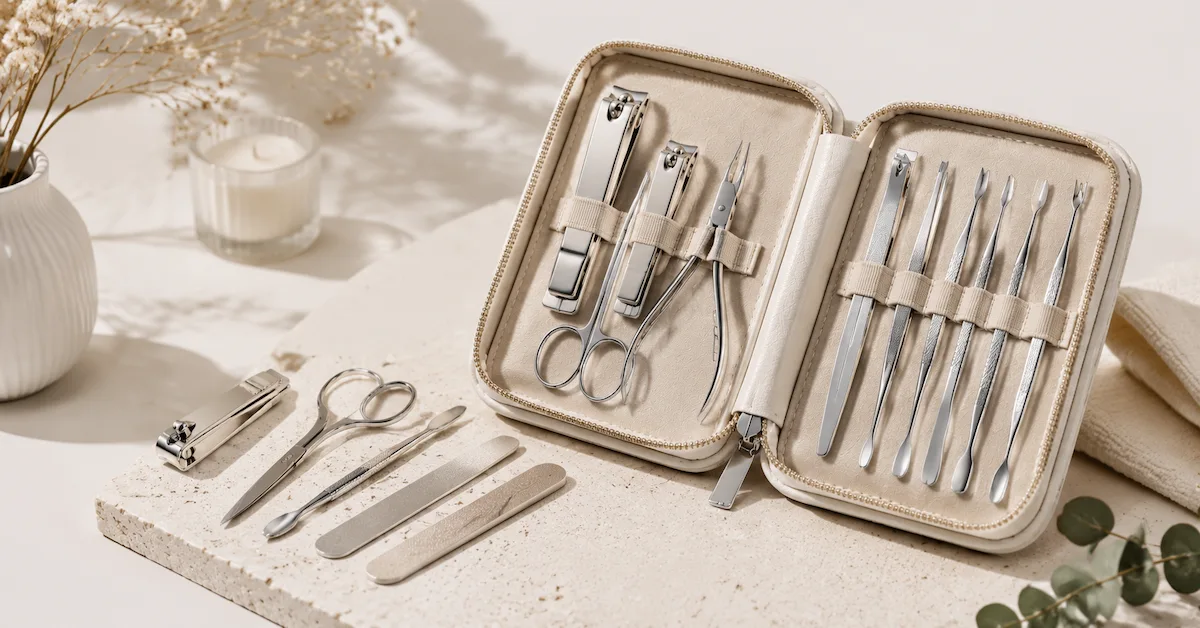
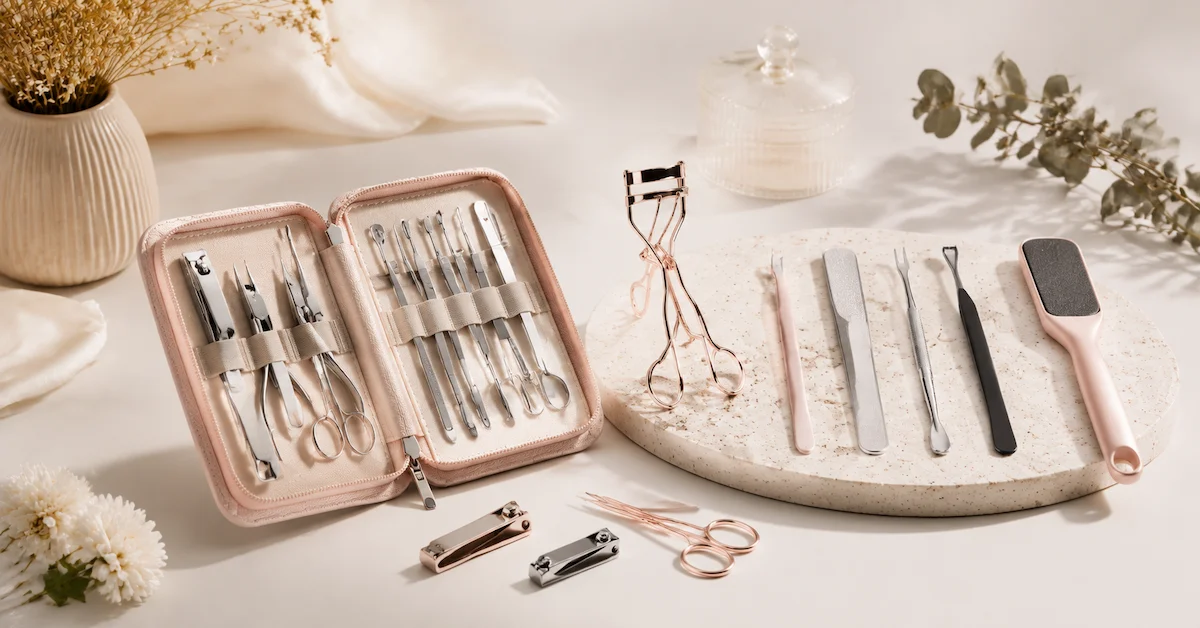
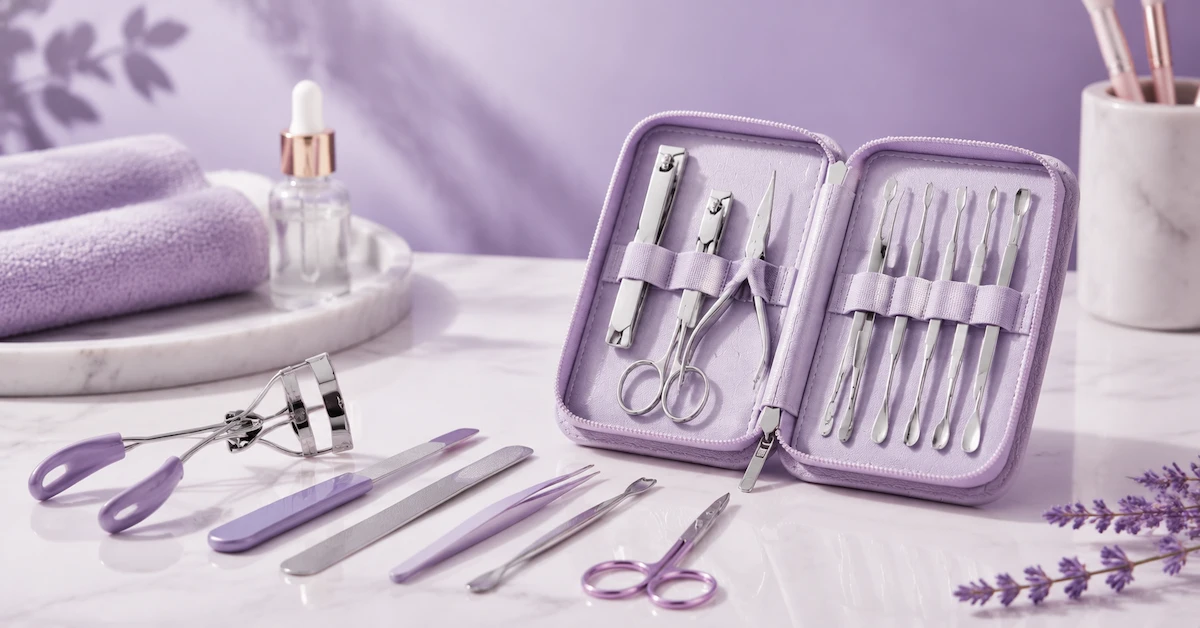
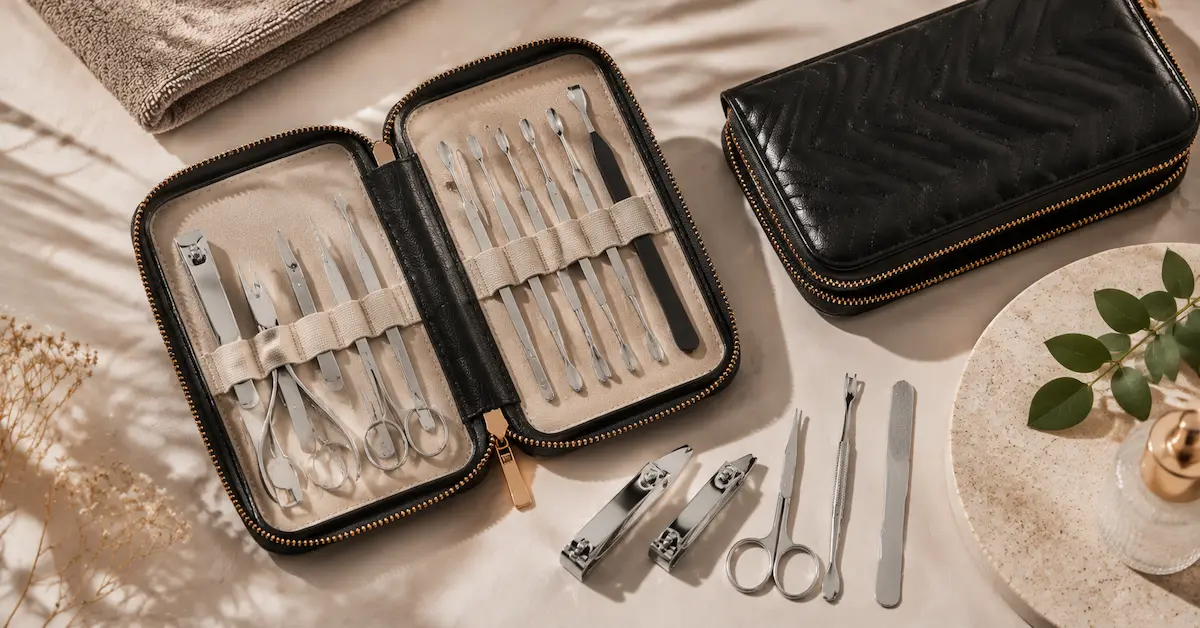
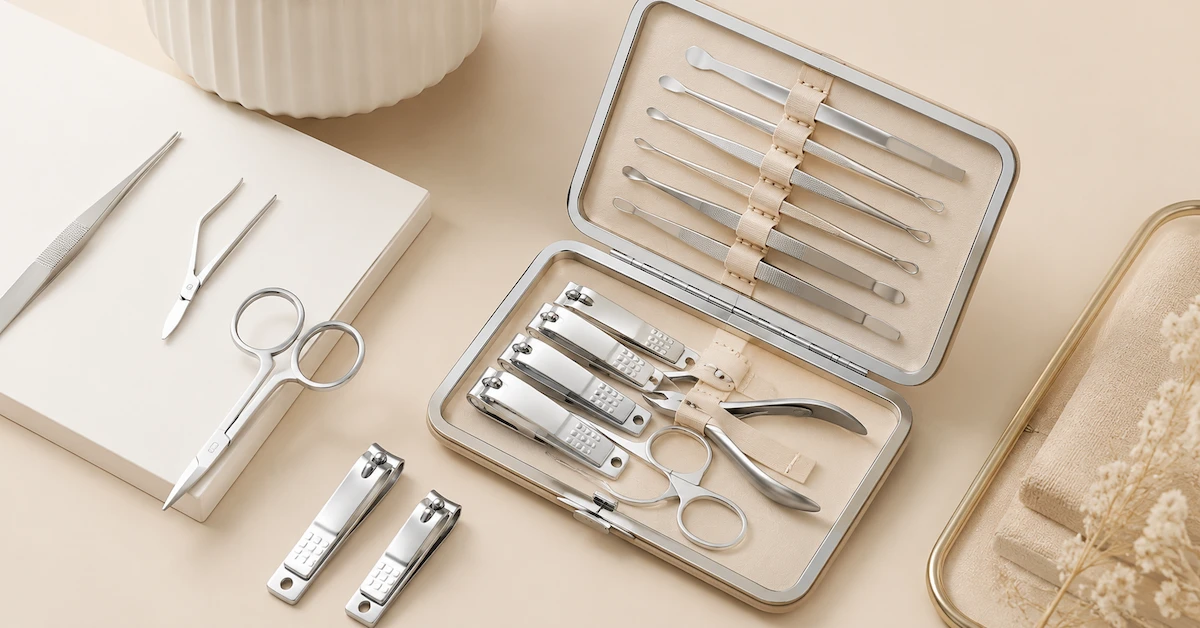
The visible tools include at least two sizes of nail clippers, cuticle scissors or small grooming scissors, tweezers, a cuticle nipper or similar plier-style tool, several double-ended cuticle or cleaning tools, a nail file, and a small buffer tool. In other words, it is not just a nail clipper set. It is a general hand-and-foot grooming set with enough variety to appeal to home users, travelers, and gift buyers who prefer one purchase over assembling pieces separately.
That assortment also affects merchandising. A simple clipper-only item is easy to compare on price alone. A multi-piece kit is compared on completeness, presentation, and perceived value. Buyers should use that to their advantage. When the contents are visible, customers usually respond better to a balanced tool mix than to a larger-looking set that includes filler items no one will use.
Materials and construction: the parts most buyers should inspect first
The tools appear to be polished metal, likely stainless steel or another corrosion-resistant alloy, though the exact material is not confirmed. The case appears to be synthetic leather or coated fabric with metal zipper hardware, again based on visible appearance only. For sourcing purposes, that means you should treat the product as an assembled personal care accessory kit rather than assume any specific medical or salon specification.
In this category, finish quality matters as much as raw material. A polished tool can still disappoint if the edges feel rough, the clamp action is weak, or the alignment is off. Nail clippers should close with a clean bite. Tweezers should meet properly at the tip. Cuticle tools should not have burrs or sharp flashing that scratch the user. These are small defects, but they are exactly the kind that trigger customer complaints in a low-priced personal care item.
The case also deserves scrutiny. A soft exterior and full zipper make the product travel-friendly, but the inside layout has to do real work. Elastic retainers need enough tension to keep tools from sliding out, especially when the kit is tossed into a handbag or suitcase. If the retainers are too loose, the kit starts looking worn before it ever reaches the shelf.
Wholesale buying lens: what to compare before you place an order
When evaluating wholesale nail care kits, do not stop at the tool count. Compare the actual utility of each item, the packaging quality, and the durability of the closure system. A buyer looking for retail-ready gift sets should prioritize presentation and visual order. A buyer stocking travel accessories may care more about compact size and secure retention. A buyer supplying salons or spas may want a more professional-looking assortment with a cleaner metal finish.
A quick comparison framework
If you are choosing between wholesale pedicure kits and more general manicure sets, think about where the product will be sold. Pedicure-focused kits often appeal to users who want heavier grooming tools and foot care functionality. Mixed manicure-and-pedicure sets have broader appeal because they cover both hand and foot maintenance. Bulk pedicure kits can work well in wellness-oriented retail channels, but they may be too specialized for general gift shelves. The right choice depends less on the label and more on the buying occasion.
Also watch the packaging language. Some kits are positioned as personal care essentials, while others are clearly styled as gift items. That difference matters. A kit sold as a gift should look polished from the first glance. A kit sold as an everyday utility item can be plainer, but it still needs to feel dependable.
Common mistakes buyers make with this category
The most common mistake is assuming all metal grooming tools are interchangeable. They are not. Two kits can look nearly identical in photos and still differ in edge finishing, hinge tension, and clipper alignment. Another common issue is overbuying on the strength of the case design alone. A pretty zip case helps sell the product, but it will not compensate for poorly fitted tools.
Another practical warning: do not assume a compact kit automatically means professional-grade performance. Small personal grooming kits are often designed for convenience, not heavy daily salon use. That does not make them bad, but it does change the buyer expectation. If the product is going into consumer retail, that is perfectly acceptable. If it is being considered for higher-demand professional use, the specification should be checked more carefully.
Finally, buyers should avoid packing too many similar tools into one set. Customers rarely celebrate redundancy. They prefer a kit that feels thoughtfully assembled: one or two clippers, a file, tweezers, cuticle care tools, and a scissor or nipper where appropriate. Beyond that, the extras should earn their place.
How retailers can position the kit
This kind of set works in several channels. It can sit near checkout as an add-on item. It can be bundled with travel accessories, skincare kits, or small gift sets. It can also work in beauty shops and spa retail because the case gives it a clean, giftable profile. The pink colorway shown here lends itself to feminine or lifestyle-oriented merchandising, though that is a packaging choice rather than a hard rule.
For online listings, clear photography matters. Customers want to see the interior layout, not just the closed case. If the elastic straps, tool variety, and case shape are visible, the listing does more of the selling work. In physical retail, an open-display sample can help, but only if the tools are secured well enough to stay presentable.
FAQ for sourcing and merchandising teams
Are these kits suitable for travel?
Yes, the zippered carry case and compact layout make them travel-friendly. That is one of the strongest selling points visible in the product form.
Do wholesale nail care kits need to be sold as salon tools?
Not necessarily. Many of these kits are better positioned as consumer grooming accessories or giftable personal care sets. Unless the supplier provides proof of salon-grade specification, it is safer to market them that way.
What should a buyer verify before ordering in volume?
Verify tool finish, hinge action, zipper quality, case stitching, and how securely each tool stays in place. If possible, request samples and test the set as a consumer would: open it, remove and replace the tools, zip it shut, and check whether anything shifts.
How do wholesale pedicure kits differ from mixed kits?
Wholesale pedicure kits usually lean more heavily toward foot care and may be narrower in purpose. Mixed kits usually have stronger broad-market appeal because they cover both manicure and pedicure needs.
A practical buying takeaway
If you are sourcing wholesale nail care kits, the safest approach is to judge them as a retail object first and a tool set second. A good kit should look organized, feel durable, and offer a sensible assortment without clutter. The visible pink zip case with elastic retention is a useful format because it communicates portability and value quickly. The actual purchase decision, though, should still come down to finish quality, closure reliability, and how well the contents fit your customer base.
For teams comparing wholesale pedicure kits, bulk pedicure kits, and mixed manicure sets, the smartest next step is to request samples and inspect the real handling experience. Photos help, but they do not tell you whether the clipper action is clean or whether the tools stay put after a few open-close cycles. That is where the product either earns shelf space or gets filtered out.
If you are planning a retail assortment, a gift bundle, or a travel-grooming line, start with the sample, not the spec sheet. Then choose the kit that feels least likely to come back.