When buyers search for a tweezers manufacturer, they are usually not looking for a generic hand tool. They are trying to solve a small but annoying production problem: how to grip, separate, and place tiny parts without slipping, bending, scratching, or slowing the workflow. That can mean eyebrow grooming, lash work, jewelry assembly, electronics handling, or a bench task where one dropped component wastes more time than the part is worth.
In that sense, tweezers are not simple accessories. They are control tools. A good set can save time, reduce hand strain, and lower the scrap rate on delicate work. A poor set looks fine on a page and then frustrates operators the moment the tip drifts or the grip feels awkward. For sourcing teams, the decision is less about buying “a pair of tweezers” and more about choosing a manufacturer that can hold shape, finish, and tip consistency across batches.
What buyers usually need from precision tweezers
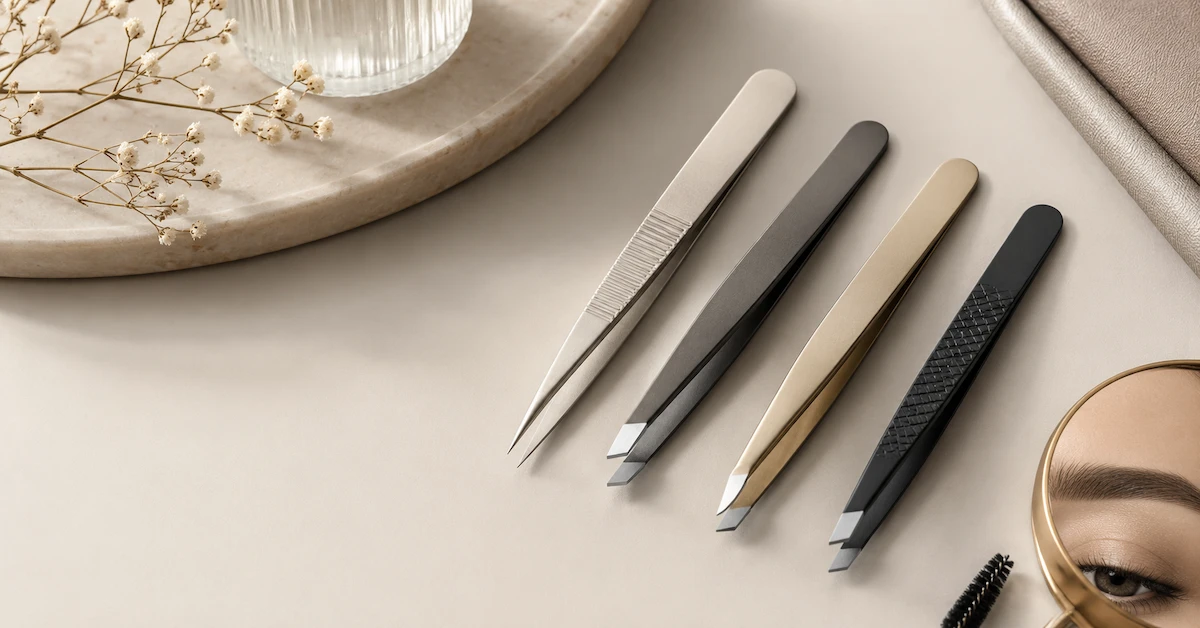
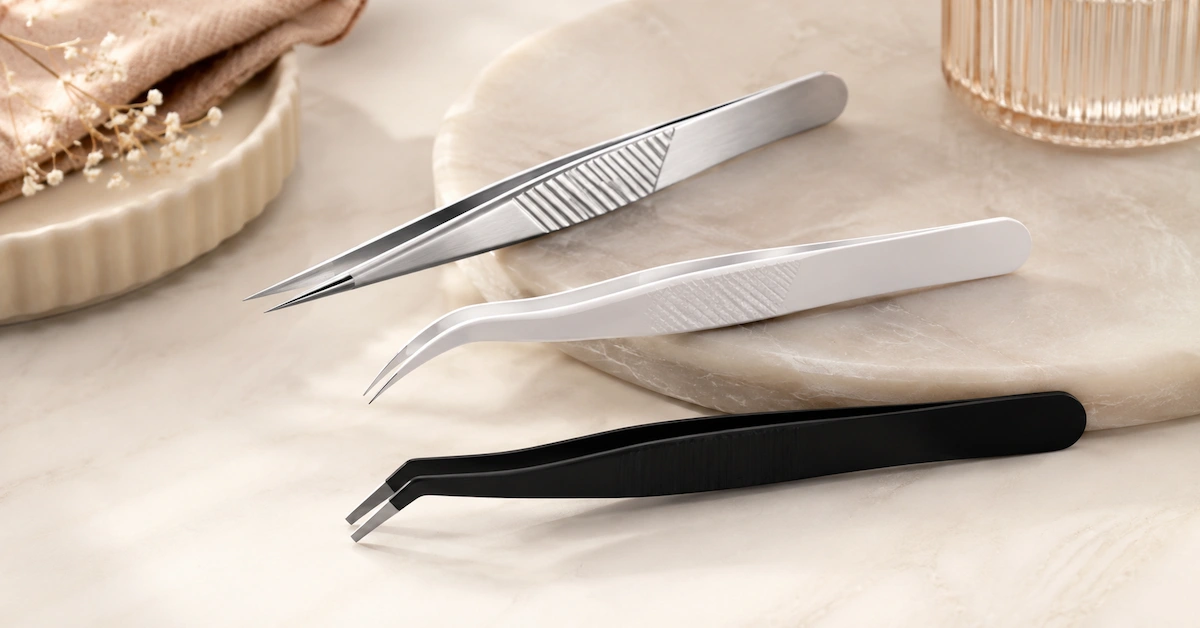
Most procurement conversations start with the same few requirements: tip shape, grip comfort, material, and finish. The product data here shows a simple but useful format — a precision tweezer set laid out with three different working ends: straight, slightly curved, and angled. That combination makes sense because no single tip style is ideal for every task.
For fine-positioning work, a straight tip is often the baseline. It gives direct line-of-sight control. A curved tip can help in tasks where access is awkward or where the user needs to approach from a slightly different angle. An angled tip often sits somewhere between the two, giving more visibility to the working point without forcing the wrist into an uncomfortable position. That flexibility is why many buyers prefer a set rather than a single tool.
The visible silver, white, and black variants also suggest a manufacturer thinking about simple product differentiation. That can matter in retail or kit-based packaging, where users want quick visual sorting. The silver pair with a textured striped grip area is a small but practical detail; textured handling surfaces are not glamorous, but they help when fingers are working under magnification or in repeated pick-and-place motions.
Materials and finishes: why the surface matters as much as the steel
From the image and product notes, these appear to be metal tweezers with smooth matte or brushed finishes. The exact metal type is not confirmed, so it would be a mistake to claim a specific grade. Still, in this product category, stainless steel tweezers are the common benchmark because they are durable, cleanable, and suitable for many general-purpose and professional uses.
Material choice affects more than corrosion behavior. It influences weight, stiffness, tip retention, and how the tool feels after a long session. Surface finishing matters too. A polished finish can look clean and premium, but some users prefer a matte surface because it reduces glare and can feel less slippery. A coated or painted black finish may improve visual contrast in certain tasks, though buyers should ask whether the coating affects wear resistance or cleaning compatibility. That is one of those details that often gets overlooked until the second reorder.
For manufacturers, forming and machining the blank is only the start. Tip grinding, polishing, and alignment are where the real value appears. Two tweezers can look identical in a catalog and still perform very differently in hand. In precision work, tip quality is not cosmetic; it is the working geometry.
How different tip styles support different jobs
Straight tips
Straight-tip tweezers are the default choice for simple pickup and placement. They are usually easier to understand and easier to train on. For operators working on benches, in cosmetic stations, or in light assembly, straight tips are the least confusing and often the fastest for repetitive tasks.
Curved tips
Curved tips are useful when access is limited or when the user needs a little more visibility at the point of contact. In cosmetic grooming, that can help with precise positioning. In craft or jewelry work, it can help reach around a component without covering the work area with the hand.
Angled tips
Angled or bent tips are a practical compromise. They can improve line-of-sight and make it easier to approach parts from the side. In electronics handling or detailed hobby assembly, that angle can be the difference between a smooth placement and a second attempt. Small difference, big irritation.
What sourcing managers should check before placing an order
If you are evaluating a precision tweezers supplier, do not stop at the product photo. The photo tells you the tip style; it does not tell you whether the set will behave consistently in use. Ask for clear information on the metal type, finish, and whether the tools are intended for cosmetic, industrial, or general-purpose use. That last point matters more than many buyers expect. A tweezer set built for beauty tasks may look similar to one intended for bench work, but the practical requirements can differ.
A few purchase checks are worth keeping on the worksheet:
Tip alignment and symmetry: even slight mismatch can affect pickup control.
Grip area design: smooth handles are acceptable for light use, but textured sections can help during extended handling.
Finish compatibility: if the tool will be cleaned frequently, the coating or surface treatment should withstand the expected routine.
Packaging and set composition: a three-piece set is useful only if each tip style adds distinct value rather than duplicating function.
Intended user: cosmetic technicians, bench assemblers, and hobbyists do not always want the same handle feel or tip behavior.
Common buyer mistakes with tweezers
One common mistake is buying on appearance alone. A neat finish and slim silhouette are easy to photograph, but they do not guarantee usable tip geometry. Another mistake is assuming one style fits all applications. In practice, a straight tip that works well for one operator may feel clumsy to another, especially in tight-access work.
Another practical warning: do not overstate the need for specialty features if the application is basic. Some buyers ask for elaborate mechanisms or high-end treatments when a well-made formed steel tool would do the job better and cost less. On the other hand, if the work is repetitive and precise, cheap general-purpose tweezers can create more labor cost than they save in unit price. That tradeoff is easy to miss in early sourcing discussions.
Finally, remember that packaging can shape user perception. A tidy set is useful, but if the tools are mixed without clear identification, the end user wastes time sorting them out. In small-batch production or retail kits, that matters more than it sounds.
Where these tweezers fit best in real workflows
The visible structure of this set points to broad utility. Cosmetic grooming is one obvious use case, especially for eyebrow shaping and lash-related work where the user needs controlled pickup and placement. Electronics and jewelry assembly are also natural fits because both environments demand precision and a steady grip on small components. Crafts and hobby work are another likely home for this style, particularly when users need to move fragile pieces without touching them directly.
What all these tasks share is not the product itself, but the risk of error. Tiny parts are difficult to recover once they slide out of place. Precision tweezers reduce that risk by giving the user a stable, narrow working end. For buyers, that means fewer reworks, smoother handling, and less frustration on the bench.
How to evaluate a manufacturer, not just the sample
A dependable tweezers manufacturer should be able to explain how the tool is made, how the tips are finished, and how the product is controlled from one batch to the next. Even if the supplier does not disclose every process detail, they should be able to discuss material sourcing, forming method, and finishing steps in plain language.
Look for consistency across the set as well. A three-tool package should feel like a system, not three unrelated items placed in one sleeve. Tip style, grip treatment, and surface finish should each serve a clear purpose. If the manufacturer cannot explain those choices, the product may have been assembled more for appearance than for use.
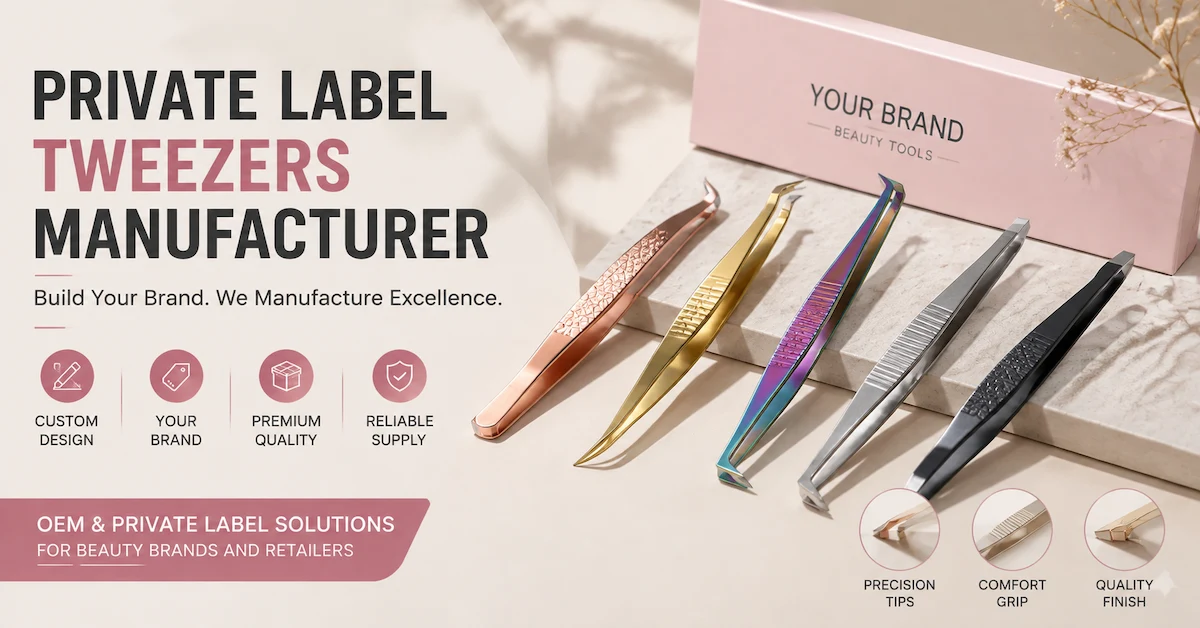
It also helps to ask about customization possibilities if you are building private-label or channel-specific products. Color variants, grip textures, and packaging formats are often easier to adjust than the core geometry, but the manufacturer should be upfront about what can and cannot be changed.
Practical buyer advice before you commit
If you are comparing suppliers, start with the end user’s task rather than the catalog description. Ask yourself: will this be used for fine grooming, assembly, repair, or general handling? Then choose the tip style and finish that match the job, not the one that looks most premium in a photo.
For stainless steel tweezers, request enough detail to understand the surface treatment and intended use. If the product is aimed at cosmetic work, check whether the grip and tip shape feel comfortable in close-up use. If it is for technical handling, pay more attention to tip alignment and control under magnification. Small differences in feel can become large differences in throughput.
And if the set is meant for resale, make sure the three styles are easy to explain to customers. Straight, curved, and angled is a straightforward story. Buyers like products they can understand without reading a technical sheet.
FAQ for buyers
Are all precision tweezers the same?
No. Even when two tools look similar, the tip shape, finish, and grip design can change the way they perform. That is why supplier selection matters.
Is stainless steel always the best option?
Not always, but it is a common and practical choice for many uses because it is durable and broadly suitable. The right choice still depends on the application and cleaning routine.
Why buy a set instead of one tweezer?
A set gives the user more than one access angle. For small-part work, that usually makes the tool more adaptable and more useful across tasks.
Next step for sourcing teams
If you are comparing a tweezers manufacturer for private label, retail, or internal use, focus on the working details first: tip style, surface finish, grip texture, and consistency across the set. The right supplier should help you match those details to the job, not just sell you a polished image.
Start with samples, ask about material and finishing methods, and test the tool in the actual workflow it will serve. That simple step filters out a lot of noise. In a product category this small, the difference between acceptable and excellent often shows up only in use.