If you are comparing a tweezer supplier for salon, lash, or cosmetic accessory products, the real question is not just who can ship metal tools. It is who can make a small hand tool that behaves consistently at the bench, in the studio, and on the retail shelf. In beauty work, a few millimeters of tip geometry can decide whether a lash is isolated cleanly or a fine detail slips away. That is why buyers often end up evaluating a tweezer manufacturer on precision, finish, grip feel, and visual consistency long before they talk about packaging.
The image behind this category says a lot: a white curved tweezer, a stainless-steel pointed tweezer, and a slim black applicator-style tool. That combination reflects a practical reality in cosmetic workflows. Different tasks call for different tip shapes and surfaces, and customers notice when a tool looks clean, balanced, and easy to control. For sourcing teams, the decision usually comes down to whether the supplier can support that mix of function and presentation without drifting into vague claims.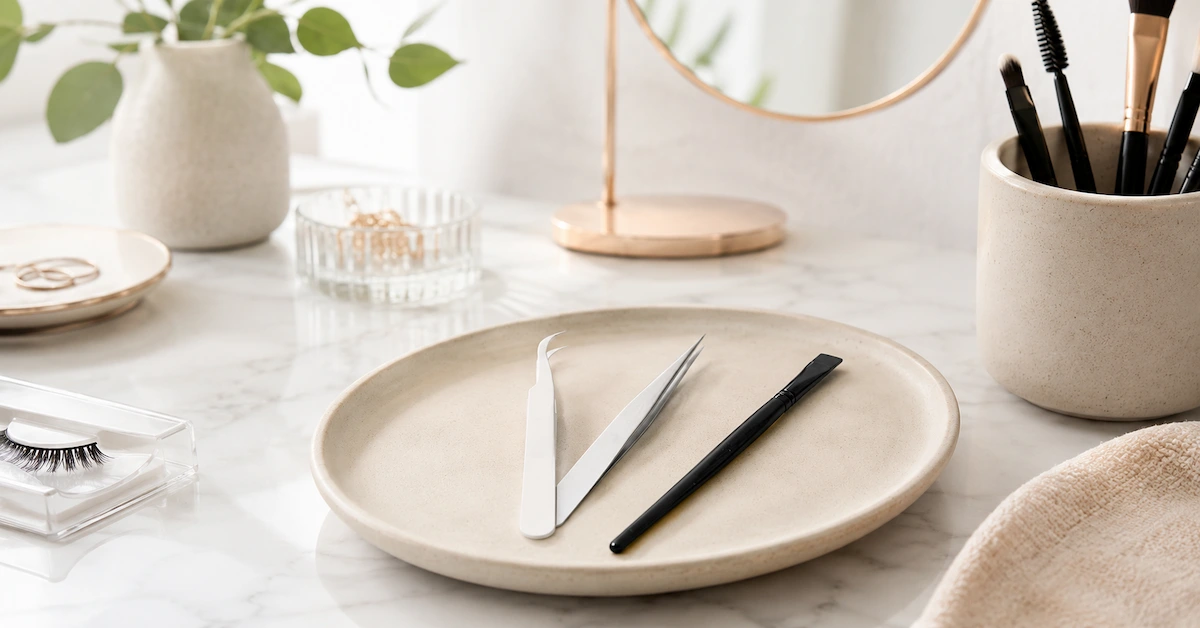
What buyers are really trying to solve
For salons, lash studios, and beauty brands, tweezers sit in an awkward middle ground. They are simple products, but they are not forgiving products. A tool that looks acceptable in a catalog may still perform badly if the tips are poorly formed, the spring tension feels off, or the finish chips at the wrong time. That is especially true for precision tweezers used in close-up beauty work, where the user depends on stable grip and controlled placement.
This is why supplier evaluation matters. A strong partner should help you answer a few basic questions before you place a purchase order:
What will the tool actually be used for?
Does the design need straight tips, curved tips, angled ends, or a mixed assortment?
Will the buyer care more about polished stainless steel, a coated matte finish, or a color-coded handle system?
Can the supplier make the product feel consistent from batch to batch?
Those are practical questions, not marketing questions. And they matter because end users in beauty settings often judge the product within seconds.
Quick reference: what different tweezer styles suggest
The tools shown in the product information point to three common styling directions.
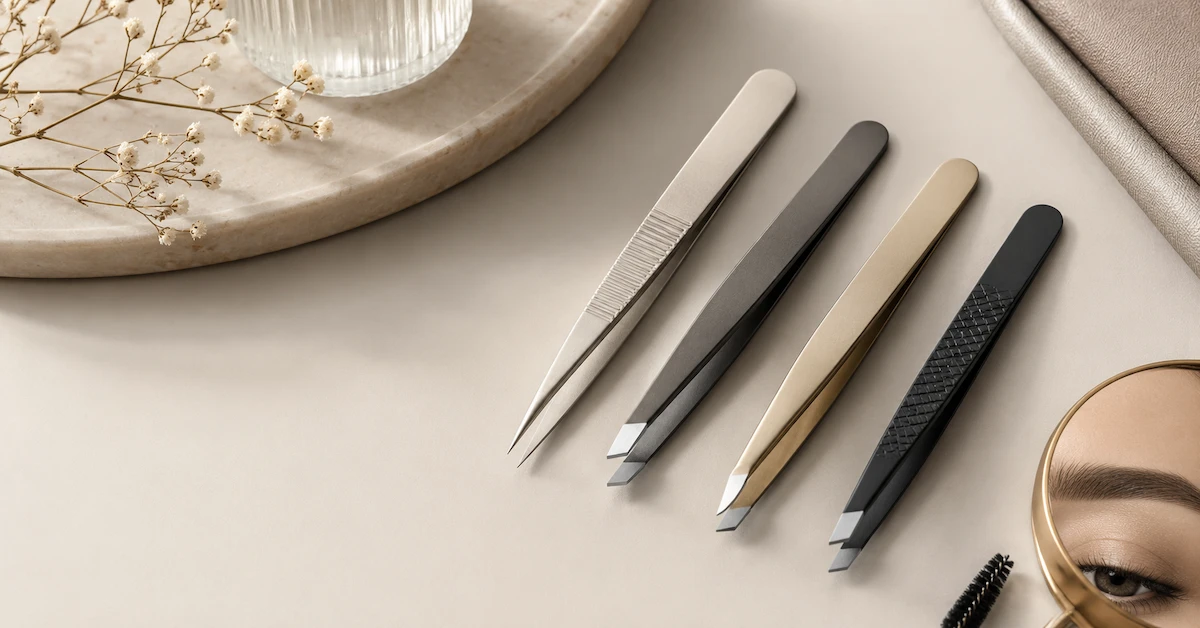
The stainless-steel metallic tweezer suggests a standard precision tool, usually chosen for durability, clean appearance, and a familiar professional feel. Straight, pointed tips generally signal detailed gripping work.
The white tweezer-like tool adds a visual contrast. A coated or color-finished handle can help brands segment product lines, identify tool types quickly, or present a more polished retail look. The curved, pointed tip also implies a different handling angle, which can be useful in close-access beauty tasks.
The black slim cosmetic tool is not a tweezer in the strict sense, but it belongs in the same working environment. In practice, buyers often source these alongside tweezers because lash and makeup stations need more than one precision instrument. That mix can improve basket value, but only if the supplier can manage finish quality across different item types.
How precision tweezers are usually made
At a high level, tweezers in this category are typically made through precision metal forming and tip finishing. The blank is shaped, the arms are formed to create the spring action, and the tip geometry is refined so the working end closes evenly. After that, the supplier may apply a coating or painted finish, especially when the target market wants color-coded cosmetic tools.
A buyer does not always need the full manufacturing detail, but it helps to understand the checkpoints that matter:
Tip formation: the point, curve, or angle must suit the task.
Alignment: the jaws should meet cleanly rather than twist or cross.
Surface finish: polished or matte surfaces affect appearance and handling.
Coating integrity: if the tool is colored, the finish should look even and remain stable in normal use.
Hand feel: the spring should not feel too stiff or too loose.
In beauty products, these small issues become visible fast. A professional user notices them immediately, and a retail customer may not even know why one pair feels better than another. They just know it does.
What to look for when selecting a tweezer supplier
A good sourcing decision starts with practical matching, not broad claims.
1. Tip style and use case
Do not buy tweezers by appearance alone. Straight-pointed tips, curved tips, and angled tools each serve a different handling pattern. If the tool is intended for lash work, brow grooming, or fine cosmetic placement, the tip geometry should follow the job. A supplier that understands this will ask better questions instead of pushing one generic shape for everything.
2. Material and finish
The visible product set suggests both stainless-steel and coated finishes. Stainless steel is often preferred when buyers want a clean, professional look and a familiar utility-tool feel. Coated or matte tools can suit beauty branding, especially when color differentiation matters. The right choice depends on positioning: backstage instrument or consumer-facing beauty accessory.
3. Consistency across batches
This is where many programs drift. The first sample looks excellent, but later orders vary slightly in tip closure, color shade, or finish quality. A dependable tweezer supplier should treat consistency as part of product quality, not as a bonus feature.
4. Packaging and presentation
For retail beauty products, the tool is only half the story. Clarity of labeling, protective packaging, and shelf appeal matter because buyers often compare these items visually before they ever test them. A precise tool in poor packaging can still lose the sale.
When a tweezer manufacturer is the better partner
Sometimes the term tweezer manufacturer matters because you need more than a trading intermediary. If your program requires specific tip shapes, custom coating colors, or private-label presentation, working closer to the source can make development easier. That does not automatically mean every direct factory is better; it means the factory route is often more useful when product specification is changing or when the order is large enough to justify tighter control.
For smaller brands, a supplier with strong catalog depth can be a sensible starting point. For product teams building a line of precision tweezers and related applicators, manufacturer-level cooperation may be the only practical way to refine the details without endless sample cycles. The choice depends on how custom the product needs to be and how much technical back-and-forth you can support.
Common mistakes buyers make
One common mistake is assuming all precision tweezers behave similarly because they look similar in photos. They do not. Tip shape, spring response, and finish all affect how the tool works in the hand.
Another frequent error is selecting only by price. In beauty tooling, a lower unit cost can be erased by returns, complaints, or poor user experience. That is especially true when products are sold to professionals who use them daily.
Buyers also sometimes overlook the role of color and finish. A matte black applicator and a satin stainless tweezer may serve different visual and functional expectations, even if both sit in the same product family. If your line is meant for salons, coherence matters.
Finally, do not assume a supplier can move from one tool type to another without issue. Tweezers, lash tools, and applicator-style implements may share a workstation, but they do not share the same design logic.
Practical buyer advice before you place an order
Ask for samples that reflect the actual intended use, not just a display version.
Test the tool in the real working posture: under task lighting, with gloves if applicable, and with the specific beauty component it will handle.
Check whether the finish looks clean after handling, because cosmetic products live or die by visual neatness.
If you are building a range, map the tools by task rather than by style name. That makes assortment planning easier and reduces duplicated SKUs.
If the supplier offers multiple finish options, ask how those finishes affect wear, cleaning, and brand presentation. Even a small caveat here can save a lot of trouble later.
FAQ for sourcing teams
Are these tweezers only for lash work?
Not necessarily. The visible design suggests beauty and precision handling use, which can include lashes, brows, makeup detailing, and other fine placement tasks. The exact use should be confirmed by the buyer.
Should I choose stainless steel or coated handles?
It depends on the brand position and end use. Stainless steel often fits professional utility. Coated or colored finishes can strengthen retail appeal and product differentiation.
Do I need a single supplier for tweezers and applicators?
Not always, but it can simplify sourcing if the product line is cohesive. A supplier that understands the broader cosmetic tool category may help you manage appearance and packaging across the range.
A sensible next step
If you are evaluating a tweezer supplier, start with the job the tool must perform, then move to tip shape, finish, and batch consistency. That sequence is slower than browsing by price, but it usually produces a better product line. For beauty brands and sourcing managers, the best outcomes come from suppliers that understand precision tools as working instruments, not just small metal accessories.
When you are ready to shortlist partners, ask for samples, compare the tip behavior carefully, and request clear descriptions of the available finish and style options. That is the point where a capable supplier proves whether it can support a real cosmetic product program, not just fill an order.