

Why a retail beauty tools supplier matters more than it first looks
If you buy manicure accessories for stores, salons, private-label kits, or e-commerce listings, the choice of a retail beauty tools supplier affects more than shelf appeal. It shapes product consistency, customer complaints, repeat orders, and even how much time your team spends answering basic questions about rust, grip, and usability. A small tool set can look simple on paper and still create sourcing headaches if the finish is uneven or the kit feels flimsy in hand.
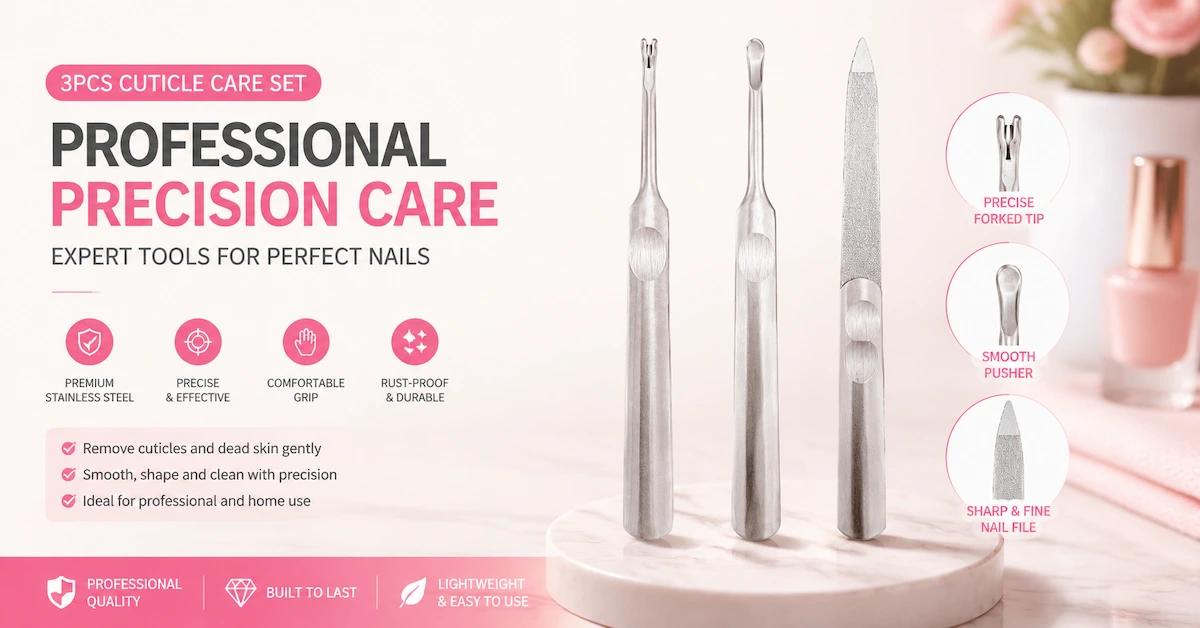
That is especially true for a 3-piece cuticle care set like the one described here. It combines a cuticle nipper, a cuticle pusher, and a nail file—three tools that are straightforward enough for home users, yet still expected to perform cleanly in a salon environment. Buyers often compare these sets against broader salon beauty tools wholesale ranges, but the decision is not only about price. It is about whether the product feels professional, holds up to repeated use, and fits the kind of customer you are selling to.
1. Start with the product job, not the catalog photo
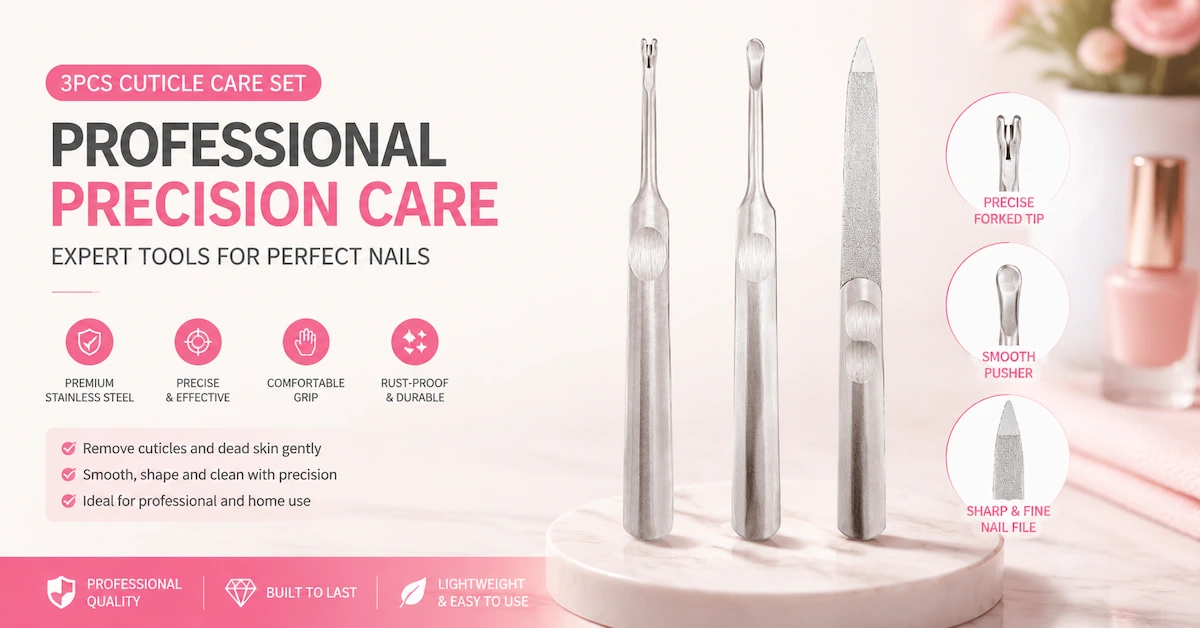
A good manicure set should do a few very practical things: remove dead skin, push back cuticles, smooth nail edges, and prepare the nail surface before polish, gel, or acrylic application. The visible set here is built around that routine. The forked-tip tool is meant for cuticle removal and detailed cleaning around the nail edge. The rounded pusher helps move cuticles back without digging too hard. The file handles shaping and smoothing.
That sequence matters because buyers sometimes treat these tools as generic accessories. They are not. A cuticle pusher that is too aggressive, or a file that feels scratchy in the wrong way, can create a bad user impression immediately. When customers are choosing a makeup tools supplier or a retail beauty tools supplier, they are often really asking one question: will this item feel safe and dependable in real use?
2. What to look for in a 3-piece manicure set
For sourcing teams, the useful comparison is not between “basic” and “premium” in the abstract. It is between small design details that affect usability.
Stainless steel finish
This set appears to use premium stainless steel with a metallic silver, matte or brushed finish. That is a strong commercial choice because stainless steel is widely preferred for grooming tools that need durability and corrosion resistance. The selling point “rust-proof” also helps retail buyers, though it should always be treated as a practical claim rather than a miracle promise. Storage conditions still matter, especially in damp salon environments.
Grip and hand feel
The tools have slim, straight handles with a slightly flattened central grip area. That sounds minor, but it changes how easily a tool can be controlled during close nail work. For home users, a comfortable grip reduces awkward handling. For salon staff, it supports precision and speed. If a tool is too glossy, too thin, or too slippery, it can look nice in photos and still disappoint in service.
Function-specific working ends
The value of the set comes from the mix of ends rather than the number of pieces. The forked tip is for detailed cuticle work. The rounded pusher is for gentler prep. The tapered file is for smoothing and shaping nail edges. Buyers should check that each tool looks distinct enough to justify the set, rather than feeling like three nearly identical pieces bundled together for retail appeal.
3. The main buyer segments are not all the same
This is where many sourcing decisions go sideways. A set that sells well in a home-goods channel may not be the right fit for a salon distributor, and vice versa.
- Home manicure customers: They want easy handling, simple instructions, and a kit that feels polished without being intimidating.
- Salon buyers: They care about professional presentation, repeatable performance, and whether the tool set can stand alongside other salon beauty tools wholesale items.
- Gift and retail channels: Packaging and visual clarity matter a lot. The tool set must explain itself quickly on a shelf or product page.
- E-commerce sellers: They need clear product photography, accurate descriptions, and low complaint risk. A misplaced claim about “medical-grade” or similar wording can create trouble if it is not supported.
For those sourcing across multiple channels, it may be useful to think of the product as a hybrid: it is simple enough for entry-level buyers, but still expected to hold up under professional expectations. That is not always easy to balance.
4. Manufacturing details that usually matter, even when they are not visible
The product information suggests precision metal forming and finishing, possibly including stamping, grinding, polishing, and texturing for the file surface. That is a reasonable expectation for this class of tool, but the exact process is not confirmed and should not be assumed beyond what is visible.
Still, buyers can ask sensible questions:
- Is the stainless steel finish consistent across all three pieces?
- Are the working ends cleanly formed, with no rough edges or burrs?
- Does the file surface feel even, or is it patchy and inconsistent?
- Is the brushed look cosmetic only, or does it also help with grip and handling?
These are the questions that separate a decent retail item from a product that returns frequently or looks tired after a short period of use. A lot of sourcing failures begin with assuming the tooling is “good enough” because the sample looks acceptable in the hand. That is usually not a safe assumption.
5. How to compare suppliers without overcomplicating it
When reviewing a retail beauty tools supplier, keep the comparison grounded in the actual use case.
Ask for material clarity
If the supplier says stainless steel, ask how that is presented in product copy and packaging. The visible selling point here is premium stainless steel, rust-proof, and durable. Those are useful phrases, but buyers should still avoid stretching them into unsupported technical claims.
Check the visual consistency
For retail beauty products, appearance is not a side issue. The three tools should look like they belong to the same set. Matching finish, similar handle geometry, and a coherent visual style help the product sell at retail.
Consider the channel fit
A makeup tools supplier might focus on compact kits, cosmetics-adjacent presentation, and giftability. A nail-focused buyer may care more about edge finishing, usability, and salon readiness. Not every supplier serves both equally well.
6. Common sourcing mistakes with cuticle tool sets
The first mistake is assuming all cuticle tools are functionally interchangeable. They are not. A pusher is not a remover, and a file is not a finishing tool if the abrasive surface is poorly executed.
The second mistake is buying only on price. For a small metal set, the price difference may look modest, but the quality spread can be obvious after a few uses. A cheap-looking finish or weak grip can make the entire kit seem disposable.
The third mistake is using overly broad claims in retail listings. If the product is not verified as medical-grade or salon-certified, do not write as if it is. That kind of wording may drive short-term clicks but often creates long-term trust issues.
7. Practical advice for product teams and private-label buyers
If you are building a lineup around this kind of manicure set, start with the intended customer. A home user may want a clean, lightweight tool kit that feels simple. A salon buyer may want the same kit, but with stronger visual cues of durability and professional use.
You may also want to test how the tools sit in packaging. Slim metal tools can slide around, scratch one another, or arrive looking less premium than they should if the tray or insert design is weak. That is an ordinary packaging issue, but it has a real effect on perceived quality.
For online retailers, the product page should explain the purpose of each piece in plain language. A customer should know, at a glance, which tool is for pushing cuticles, which one removes dead skin, and which one is for shaping or smoothing. Simple clarity often converts better than overly technical language.
8. Quick buyer checklist before you place an order
- Does the set clearly include three useful tools, not three vague metal pieces?
- Is the stainless steel finish consistent and visually clean?
- Does the grip look comfortable enough for repeated use?
- Are the claims limited to what can be supported, such as rust-proof and durable?
- Does the product fit your channel: home use, salon beauty tools wholesale, or retail gift sets?
If the answer to most of those is yes, the product is likely worth serious consideration. If not, the sample may still be fine for a low-commitment test order, but it is probably not ready for a broad rollout.
9. A sensible next step for sourcing teams
When evaluating a retail beauty tools supplier, ask for clear product photos, material descriptions, and confirmation of what is and is not included in the set. Then compare the kit against your target customer’s habits rather than against a generic benchmark. A simple 3-piece cuticle care set can be a reliable seller, but only if it feels precise, durable, and easy to understand from the first glance.
If you are building a manicure tools lineup for retail or salon channels, this is the kind of product that rewards careful sampling. The details are small, but in this category, small details usually decide whether the item becomes a repeat order or just another listing that never quite performs.
Tag:
Related articles
- Retail & Wholesale Solutions
- Beauty Tools Buying Guide
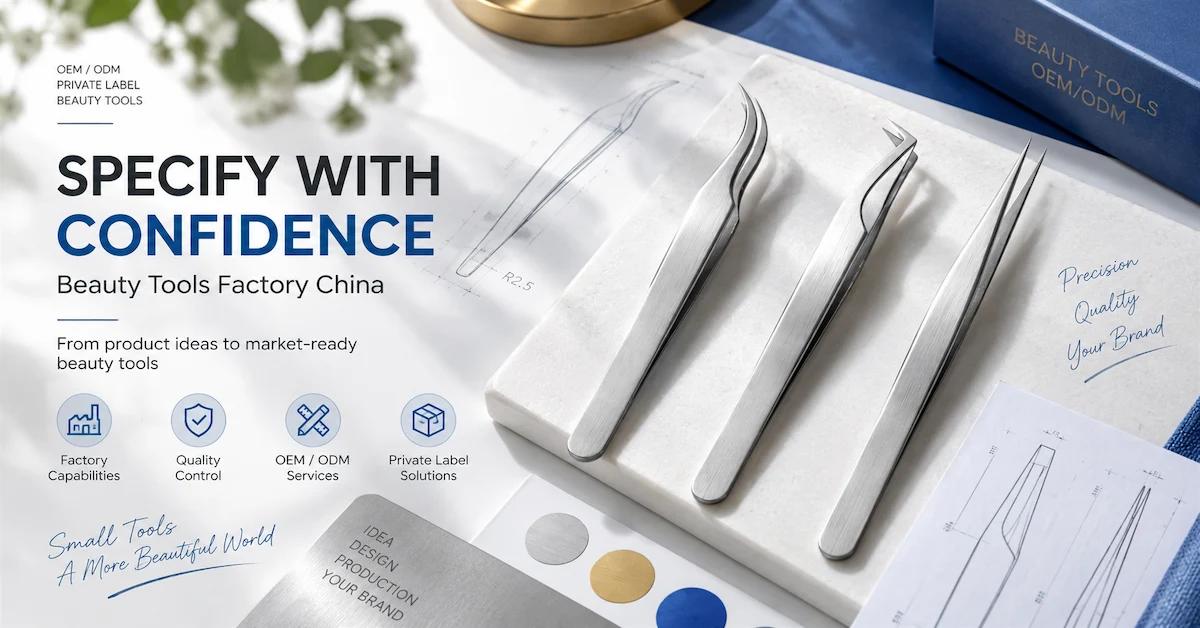
Beauty Tools Factory China Product Comparison: Nail Clippers, Tweezers and Eyelash Curlers
- Retail & Wholesale Solutions
- Beauty Tools Buying Guide
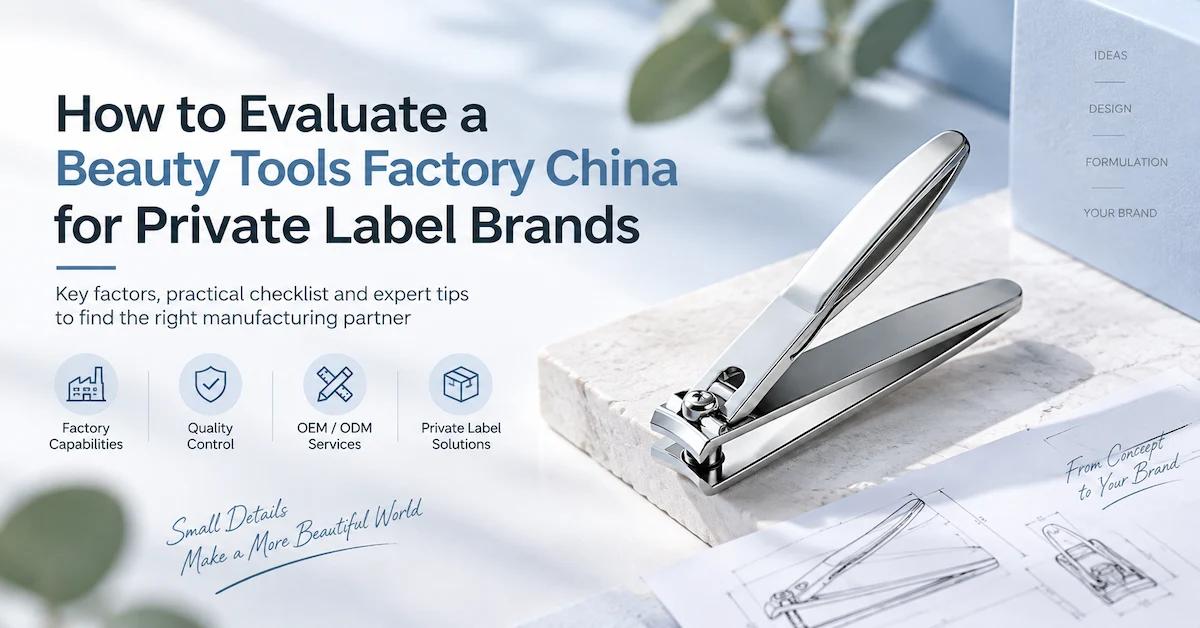
How to Evaluate a Beauty Tools Factory China for Private Label Brands
- Beauty Tools Manufacturing
- Retail & Wholesale Solutions