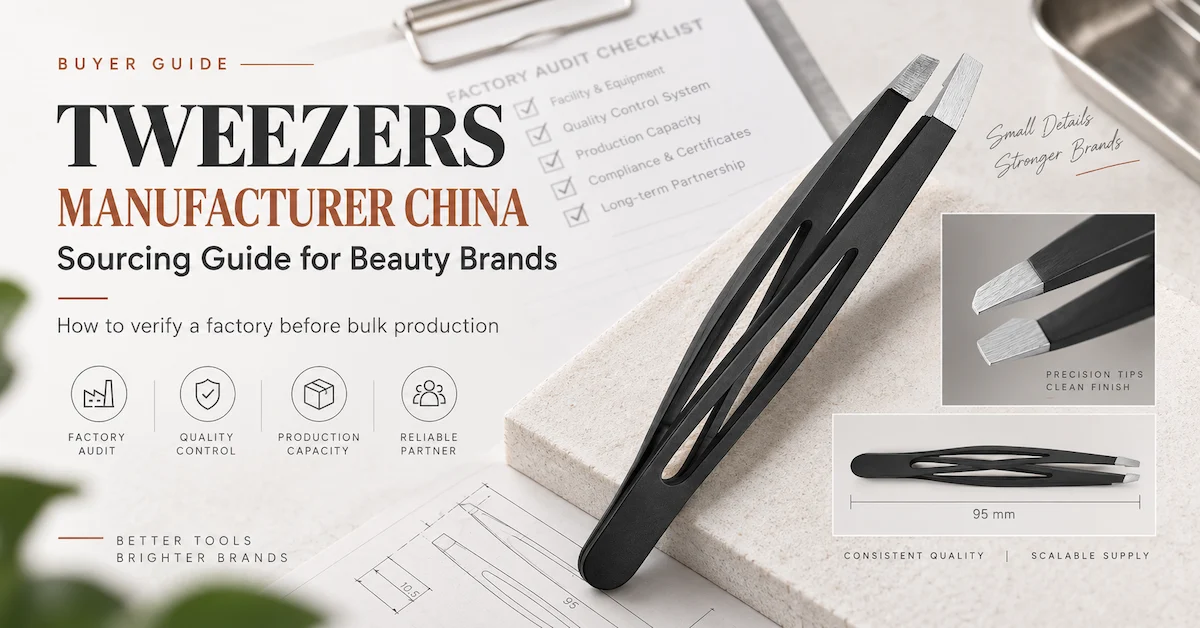
Quick Answer: A professional beauty tools manufacturer should help you define a coordinated range without treating every tool as the same product. For salon distributors and beauty brands, evaluate category-specific function, component materials, finish and logo consistency, care information, packaging, and repeat-order control. Scissors, tweezers, and cuticle nippers need different acceptance checks even when they share one brand. Use a range-level specification for presentation and a model-level specification for performance, then compare quotations and approval records for each complete sellable SKU.
Introduction: One Brand Can Contain Several Very Different Tools
A salon distributor can approve a good-looking group of metal tools and still end up with an inconsistent range. The packaging might look coordinated while one tool has unclear material wording, another has an unapproved logo location, and a third has no agreed rule for replacing a changed component. The problem is not necessarily the number of products. It is the lack of a clear distinction between what should be shared and what must remain specific to each model.
For beauty brands, importers, and salon-supply wholesalers, this distinction affects more than appearance. Your purchasing team needs comparable quotations. Your warehouse needs identifiable items. Your sales team needs accurate product descriptions. Customers need instructions that belong to the tool they actually receive, not a generic care paragraph copied across the whole collection.
This guide explains how to choose a professional beauty tools manufacturer when the purchase is a coordinated supply range rather than a single item. It uses real OLIMOR scissors, cuticle-nipper, and tweezer listings as product references. The approach is to create one range framework while preserving separate specifications for cutting, gripping, movement, packaging, and replenishment.
What Is a Professional Beauty Tools Manufacturer?
A professional beauty tools manufacturer produces or coordinates the production of tools for beauty and personal-care tasks, potentially supplying them to brands, distributors, retailers, and salon channels. Depending on the category, the work can involve metal forming, surface finishing, plastic components, assembly, branding, and packing. Buyers should confirm the actual operations and responsibilities for the selected products.
The word professional is a market-positioning term, not a universal product certification. It does not, by itself, establish a tool's material grade, cutting behavior, cleaning compatibility, service life, or suitability for a regulated application. A professional range still needs a documented intended use and evidence supporting the claims made for each item.
Beauty scissors, cuticle nippers, and tweezers illustrate the difference. Scissors have two blades working around a pivot. Nippers use opposing cutting jaws, a joint, and often a spring arrangement. Tweezers use paired arms and contacting tips. These constructions create different questions for the supplier and different checks for the buyer.
OLIMOR BEAUTY supports OEM and ODM beauty-tool projects, including development from drawings, samples, appearance concepts, and structural requirements. This is relevant when selecting or adapting a collection. It does not remove the need to confirm which changes are feasible on an individual catalog model or how the final specification will be maintained.
Define the Range at Two Levels: Shared Identity and Individual Function
Start with two documents, or two sections of the same controlled file. The range section contains requirements that can reasonably apply across products: brand name, packaging hierarchy, artwork conventions, item-code format, and the process for approving changes. The model section identifies construction, function, material wording, dimensions, included parts, and tool-specific acceptance requirements.
This avoids a false choice between standardization and customization. You can standardize the visual identity while preserving a pointed scissor profile, a particular nipper spring, and a slant tweezer tip. You can also use one supplier contact while asking separate technical questions for each category.
| Decision level | Can be coordinated across the range | Must be confirmed by model |
|---|---|---|
| Brand presentation | Logo artwork, typography, package naming | Practical marking area and method on each tool |
| Material communication | Rules for precise, supported claims | Materials of the actual blade, handle, spring, and other components |
| Functional acceptance | Approval responsibilities and record format | Scissor cutting, nipper jaw action, or tweezer tip contact |
| Care information | Instruction layout and review process | Supported cleaning and storage directions for that construction |
| Reorder management | Change-notification and revision rules | Exact approved configuration and any model-specific constraints |
Do not write one phrase such as salon quality into every row and treat the file as finished. Write requirements that a person can verify. When a requirement is subjective, identify the approved reference or evaluation method rather than expecting purchasing, production, and inspection to interpret it identically.
Select a Category Mix Before Choosing a Common Finish
A coordinated range does not have to include every category in a catalog. Decide which tools belong to the channel you serve. A brow-focused collection may emphasize tweezers and detail scissors. A nail-service distributor may focus on nippers and other nail-care tools. A broad salon-supply range needs a clear explanation of why each category is included.
For each candidate, describe the task and the customer in ordinary language. Avoid using tool counts as a substitute for assortment logic. A smaller collection with distinct roles is easier to quote, describe, and replenish than several near-identical products whose differences are not recorded.
Separate salon use from salon retail. A salon may purchase an item for its own working routine or sell a packaged tool to a customer. Those are different supply scenarios. The operating environment, packaging, instructions, and applicable requirements should be reviewed for the intended scenario rather than inferred from the sales channel alone.
Ask a wholesale professional beauty tools supplier to recommend a shortlist against this category plan. Request reasons based on confirmed construction and configuration, not broad claims that every product is suitable for every salon task.
Beauty Scissors: Verify Cutting Behavior Separately From Appearance
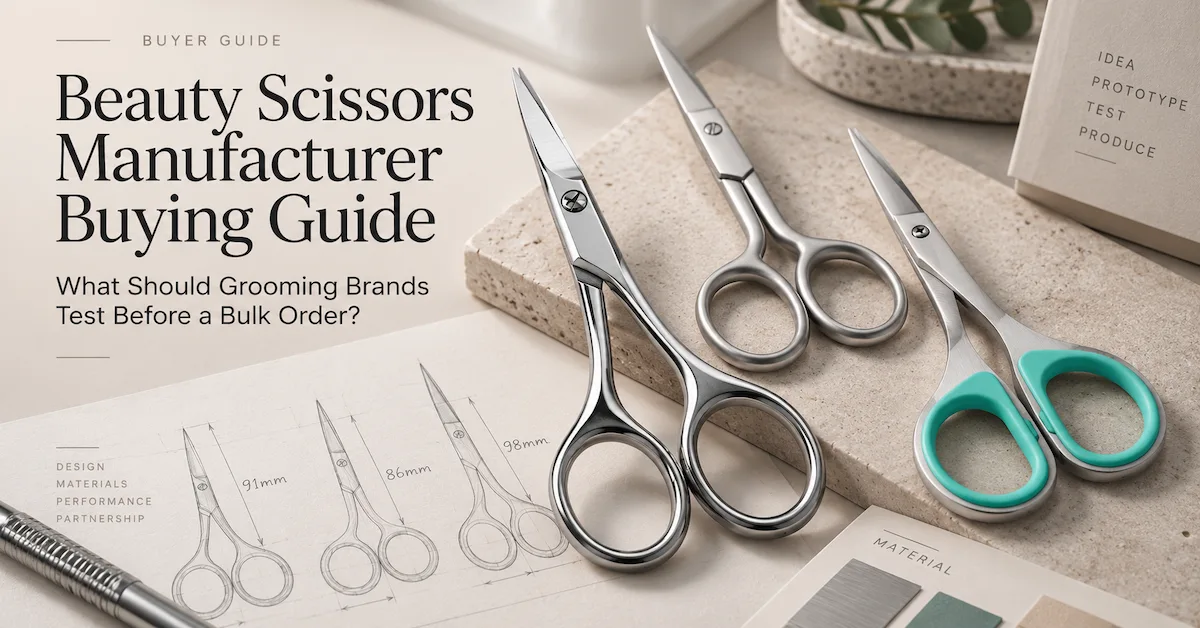
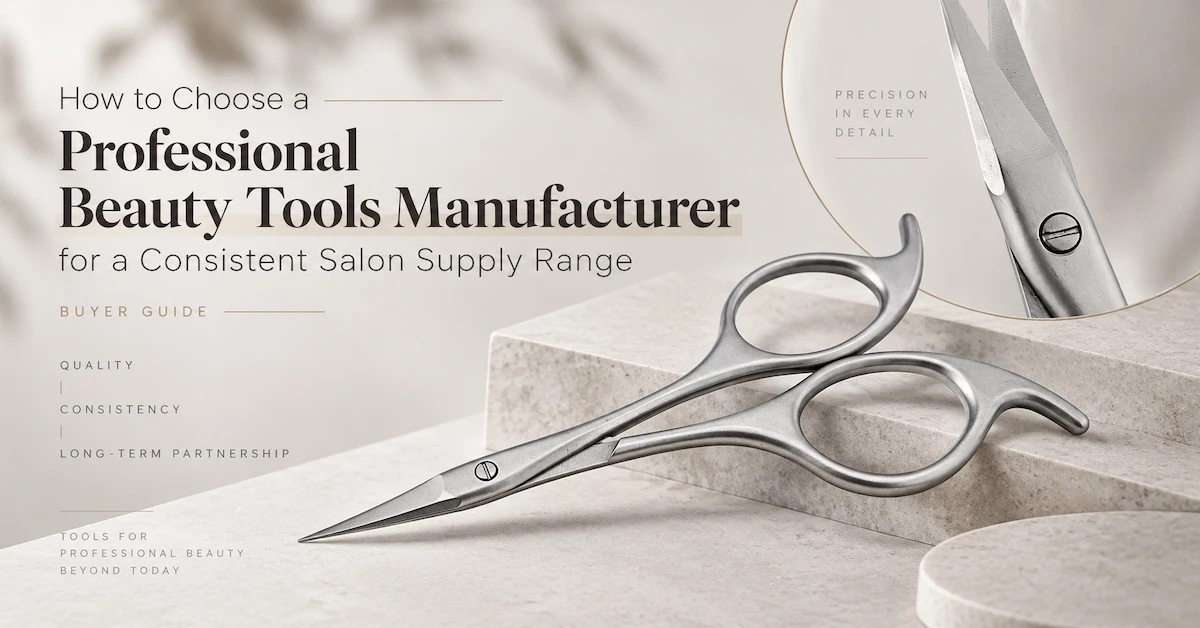
OLIMOR's beauty scissors for precise controlled cutting provide a real reference for discussing a compact, pointed-blade format. The website photograph shows metal finger loops, finger-rest features, and a screw-style pivot. Those visible features identify the design direction; they are not a record of cutting tests or proof of a particular steel grade.
When reviewing scissors, ask how cutting will be assessed for the intended task. Identify the evaluation material, conditions, sample preparation, and acceptance rule with the supplier or qualified reviewer. Do not accept a vague demonstration on an unrelated material as complete evidence for the use you plan to claim.
Handle fit and cutting assessment are also different. A finger-rest profile can influence how someone holds the tool, but its presence does not prove universal comfort. Review the physical sample with the intended handling orientation and record any construction or finish concern that affects the selected product brief.
If a logo or finish is requested, review the decorated sample rather than only an undecorated tool. Placement must remain practical for the available surface. Branding should not obscure information or introduce an unreviewed change to a functional area. Keep the final appearance reference linked to the individual scissor configuration.
Cuticle Nippers: Specify the Jaws, Joint, and Spring as a System
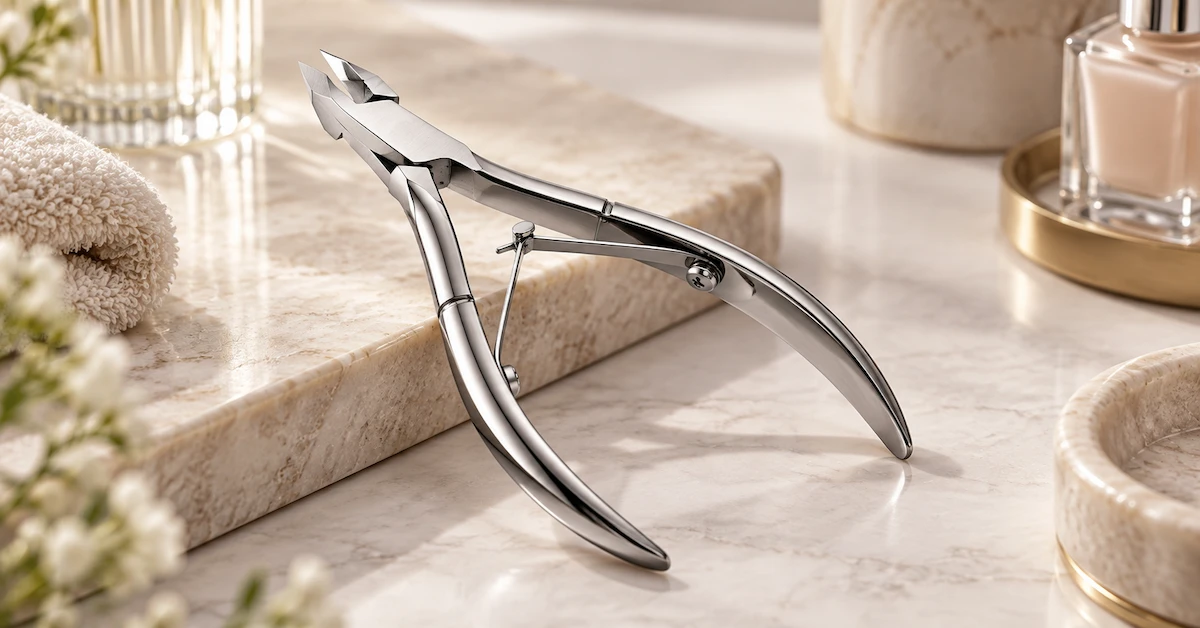
The OLIMOR cuticle nipper for salon nail grooming is a different construction from scissors. Its published photograph shows curved handles, opposing cutting jaws, and a crossed spring arrangement. The image includes size and weight annotations, but the current dimensions and measurement basis should be confirmed directly before using them in packaging or procurement documents.
Begin the nipper review with the intended task and exact jaw reference. Ask how jaw length, contact, movement, and assembly will be evaluated. Do not confuse jaw length with total tool length. A purchase description that only says small nipper can leave important geometry unresolved.
Agree on what constitutes unintended play, incomplete jaw contact, or abnormal movement for the selected design. Where a check requires a measurement, define the measurement method and acceptance value through the technical review. This guide does not assign universal tolerances or test limits to a sharp grooming tool.
The package should preserve the intended condition of the jaws and allow controlled unpacking. Ask whether protective parts are included in the supplied configuration. Do not assume that a cover, insert, or accessory is standard because it appears in a different product image.
For salon channels, care directions deserve particular attention. Material wording alone does not establish compatibility with every cleaning, disinfection, or sterilization process. The selected construction, finish, and market requirements must be reviewed before making those claims or printing corresponding instructions.
Tweezers: Tip Contact Is Not the Same as Overall Alignment
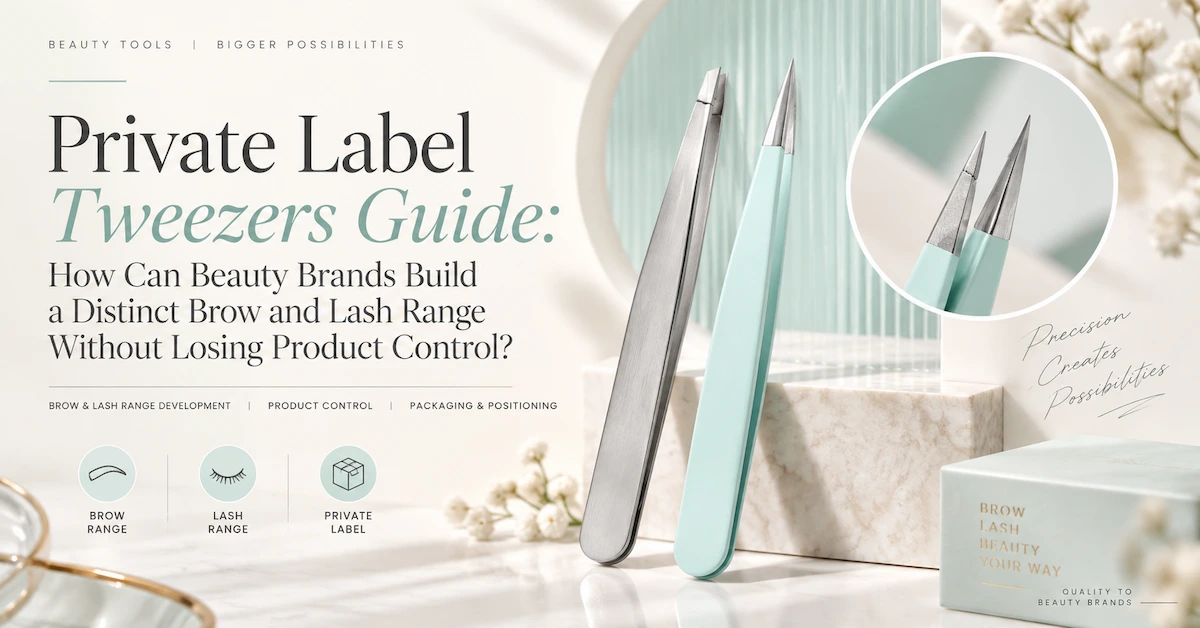
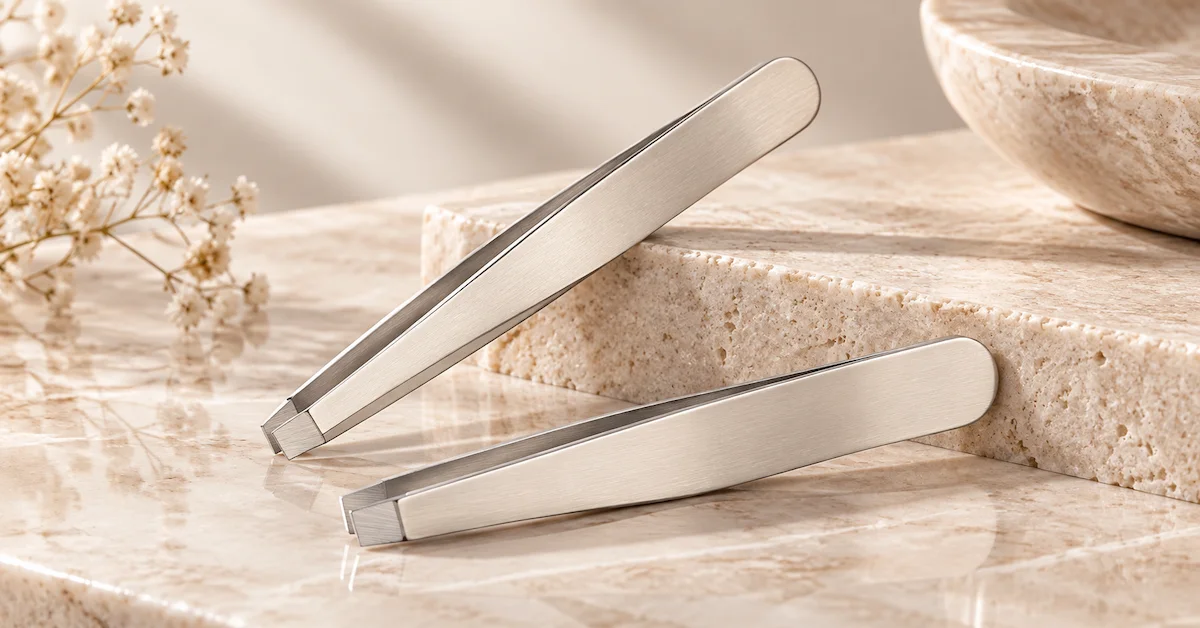
OLIMOR's precision stainless steel tweezers for eyebrows and makeup offer a real reference for the gripping category. The product photograph shows paired tools with slanted tips and visible gripping texture. Confirm the sellable configuration, since a photograph containing more than one tool does not automatically establish that the quotation is for a set.
A straight-looking tool can still require closer review of its tip contact and arm movement. Define the gripping task, inspect the tips under appropriate conditions, and agree on a functional assessment. Neither a decorative finish nor a supplier's broad precision wording replaces a model-specific check.
For a coordinated line, pay attention to how the tool is named. Slant, pointed, and flat-tip descriptions should match the actual configuration and image. If you use one packaging template for several tweezer variants, ensure the model name and illustration identify the correct item.
A purchasing discussion with a stainless steel beauty tools supplier can begin with this material-described reference. It should then move to component materials and supporting records. The listing does not establish the material specification for the scissors and nippers in your proposed range.
Create a Category-Specific Acceptance Matrix
The three examples show why a collection needs separate functional requirements. Rather than copying one inspection paragraph across categories, build a matrix that tells the reviewer what matters for each item. Keep the checks observable and match them to the agreed product use.
| Category | Functional discussion | Appearance and packing discussion | Do not infer from a photo |
|---|---|---|---|
| Beauty scissors | Blade interaction, pivot movement, agreed cutting assessment | Handle edges, finish, logo, blade protection in the pack | Cutting life, alloy grade, or suitability for every task |
| Cuticle nippers | Jaw geometry and contact, joint movement, spring behavior | Surface finish, included protection, presentation of jaws | Universal cleaning compatibility or an absence of injury risk |
| Tweezers | Tip contact, arm movement, agreed gripping assessment | Tip condition, marking, individual versus set packing | Gripping performance or the number of pieces supplied |
Link each row to the relevant drawing, approved sample, or documented requirement. The matrix is a planning tool, not a claim that OLIMOR has already performed the described evaluations. Request the actual evidence available for the chosen configuration and identify any additional assessment your project requires.
ISO 2859-1:2026 addresses lot acceptance sampling by attributes. A sampling framework does not create a category-specific defect list or establish product safety. Agree on defect definitions, inspection responsibilities, and disposition rules separately; do not select an AQL number as a shortcut for defining tool performance.
OEM, ODM, or Private Label: The Route Can Differ Within One Collection
It is reasonable for one range to include a standard model with branding and another item requiring structural development. Identify the route for each SKU rather than forcing the whole project into one commercial label. Scope is more useful than terminology when the supplier prepares a quotation.
When contacting an OEM beauty tools manufacturer, say what you are providing: a drawing, sample, controlled specification, or appearance reference. State which details are fixed and which are open to a feasibility recommendation. A tool borrowed as a visual reference is not the same as a complete engineering specification.
An ODM beauty tools manufacturer discussion can begin with selecting supplier-supported models or adapting a design direction. Ask what remains standard and what changes. Model availability, development responsibility, and rights should still be confirmed in writing.
A private label beauty tools manufacturer inquiry can focus on an established product with your brand presentation. Clarify whether the changes concern logo, finish, packaging, set composition, or instructions. An existing model does not mean the final branded unit needs no review.
If you need a custom beauty tools manufacturer, separate decorative requests from geometry or mechanism changes. A new jaw, pivot arrangement, or handle shape may create different development and verification needs from changing a printed carton. Ask for a scope breakdown before planning the launch calendar.
Custom Logo Beauty Tools: Coordinate the Identity, Not Necessarily the Marking Method
For custom logo beauty tools, a scissor handle can serve as one reference for a branding inquiry. Ask OLIMOR whether your proposed placement and method are feasible on that model; the product page itself is not confirmation of a particular marking option.
The same artwork may require different practical sizes or positions on scissors, nippers, and tweezers. Trying to force an identical logo location across all tools can conflict with available surfaces or handling. Preserve brand recognition through agreed artwork rules while reviewing placement on each actual construction.
Compare decorated samples under consistent viewing conditions. A finish can appear different because of surface geometry and lighting, so clarify the appearance reference and evaluation method. Do not describe the entire collection as color-matched merely because separate renders used the same digital color value.
Keep decoration separate from material claims. A gold-colored tool is not necessarily gold-plated, and a dark appearance does not identify a coating process. Use confirmed terminology in the product listing and retain the approved appearance record for future orders.
Care Instructions and Claims Need Their Own Review
A coordinated range benefits from a consistent instruction layout, but the content must reflect each tool. Scissor pivots, nipper joints and springs, and tweezer tips create different handling and storage considerations. One unsupported care paragraph should not become a range-wide promise.
Ask what cleaning and storage instructions are supported for the selected components and finish. Do not infer compatibility with steam, chemical immersion, or a particular disinfectant from a stainless steel description. If your customers require a defined processing routine, make that requirement explicit during technical review.
For US salon-related distribution, the US Environmental Protection Agency's disinfectant information is a relevant authority reference: antimicrobial products have specified uses and labeling. A disinfectant's registration does not establish that a beauty tool tolerates that product or that any proposed salon procedure satisfies local rules. Product compatibility and operating requirements need separate review.
Review claims with the intended destination market in mind. The European Commission's product safety information provides an official starting point for EU product-safety obligations. Your importer or compliance adviser should identify requirements for the actual tool, intended use, labeling, and supply arrangement. A professional label is not an exemption from those obligations.
Packaging: Make the Range Recognizable Without Hiding the Differences
Use shared typography and a clear brand hierarchy, then identify the tool category and variant prominently. A customer should not need to study a tiny item code to distinguish a pointed scissor from a slant tweezer. Warehouse staff also need an easy way to identify the packed configuration.
Inside the pack, assess how the tool is held, which parts contact the insert, and how it is removed. Pointed blades, nipper jaws, and tweezer tips need configuration-specific discussion. A common outer carton size can be useful only if the internal presentation remains suitable for each tool.
For sets, specify every included item rather than relying on a lifestyle photograph. Confirm whether a pictured pair of tweezers is a set or separate variants. Identify accessories and protective parts in the component list. The complete sellable unit, not just the loose tool, is what your customer receives.
Artwork control matters too. A package revision may change warnings, barcodes, contact details, or language without changing the tool. Record the tool revision and package revision together for the final SKU. This lets the team understand what changed without assuming that every artwork update requires new product development.
What Does a Coordinated Beauty-Tool Range Cost?
Compare prices by complete configuration. One quotation may include branding and retail packing while another covers loose tools only. There is no meaningful collection price until the component models, quantities, finishes, included items, and shipment basis are defined.
Ask the supplier to identify costs that apply once and costs that repeat. Tooling, development, artwork work, and other first-order charges should be explained when relevant. Request a breakdown by model so a more expensive structure is not hidden inside an average price for the whole range.
| Cost or schedule item | Question to ask | Why it matters |
|---|---|---|
| Each tool configuration | Which model, finish, and functional specification are quoted? | Prevents comparison of unlike products |
| Branding and retail packaging | What marking, insert, print, and included protection are covered? | Defines the actual sellable unit |
| Development and tooling | Which charges are one-time and who owns the resulting assets? | Clarifies first-order and reorder economics |
| Category readiness | Can each item be approved and produced on the same timetable? | Exposes dependencies within a combined launch |
| Shipping and inspection | What delivery basis and quality responsibilities are included? | Helps build a complete procurement budget |
MOQ should be confirmed by model and customization scope. Ask whether color, packaging, and tools have separate order constraints. An available quantity for unbranded tweezers does not establish the quantity requirement for custom-printed scissor packaging.
For timing, request a schedule that shows dependencies. One item may use an existing configuration while another awaits structural development or revised artwork. Decide whether partial delivery is useful or whether the launch requires the entire range together. Do not let a single headline lead time conceal unfinished decisions.
Mixed Reorders: How to Avoid Rebuilding the Collection Every Time
Different tools may sell through at different rates. A distributor should ask whether individual items can be reordered and what configuration constraints apply. This is a commercial question for the selected range, not a general promise of mixed-SKU flexibility.
Give every model a stable configuration record that includes the material wording, finish reference, logo artwork, tool specification, package version, and included components. This record lets you order a specific result rather than refer vaguely to the same tools as last time.
When assessing a professional beauty tools factory China project, clarify change notification and substitutions. A replacement spring, revised finish, or new insert may need review even if the sales name remains unchanged. Agree who approves a change and what evidence is required before it reaches a repeat order.
Separate faults by model and shipment in your feedback records. A complaint about a scissor pivot should not disappear into a general range-quality comment. Specific feedback gives both parties a better chance to identify the affected configuration and determine the appropriate corrective action.
A Range Brief You Can Send Without Writing a Full Engineering File
Your initial inquiry does not need to contain every final specification. It should distinguish known requirements from open decisions. Send a category list with real product links, intended market and channel, expected configuration, and questions that still need supplier input.
- Category and reference: identify the scissors, nipper, and tweezer candidates separately.
- Intended customer: explain whether the item is for salon use, salon retail, or distributor stock.
- Brand direction: provide artwork and desired appearance without claiming unconfirmed marking options.
- Pack configuration: specify individual tools or sets and identify required protective parts.
- Commercial scope: give the requested quantity by item, destination, and launch dependencies.
- Evidence and open questions: ask for current specifications, relevant evaluation records, and confirmation of unresolved details.
OLIMOR can then discuss existing models and development scope against a clear brief. For a deeper single-category review, the nail clipper sourcing guide is a related topic; it should not be treated as the specification for the scissors, nippers, or tweezers in this article.
FAQ: Professional Beauty-Tool Range Sourcing
Should all tools use the same material?
Not necessarily. Component materials should suit each tool and be described accurately. A common brand does not justify copying one material specification across the collection. Ask for model-specific materials before approving packaging claims.
Can one finish be used across the range?
Request feasibility by model, then compare decorated samples under agreed conditions. Different surfaces can produce different appearances. A shared digital color reference does not independently prove that finished tools will look identical.
Does professional mean the tools are certified for salon processing?
No. Review the actual intended use, component compatibility, supporting evidence, and applicable market requirements. Do not print sterilization or disinfectant-compatibility claims merely because a tool is described as professional or stainless steel.
Can I mix private-label and custom-developed items?
Discuss a separate development scope for each SKU. A standard tool with a logo can sit alongside a developed design, but quotation, approval, rights, and timing should reflect the difference. Confirm how dependencies affect the combined launch.
How can a distributor protect its branding or custom design?
Agree on use of supplied artwork, confidentiality, tooling ownership, and any requested exclusivity in writing. Logo customization alone does not establish exclusive rights to a catalog shape. Define territory and commercial scope where exclusivity is part of the project.
How do I compare two range quotations?
Compare each model at the same quantity, configuration, marking, packaging, and shipment basis. Separate first-order charges and repeat costs. If the offers contain different tools, keep that difference visible rather than reducing everything to an average unit price.
What if only one category needs replenishment?
Ask about model-specific reorder quantities and packaging constraints before launch. Maintain a controlled specification for each SKU. Do not assume the terms for a combined first order automatically apply to a smaller single-category reorder.
Next Step: Ask for a Range Review With Separate Model Decisions
A professional beauty tools manufacturer is easier to evaluate when the supplier is answering a defined collection brief. Use the linked OLIMOR products as references, describe the role of each category, and identify what you want coordinated across the brand.
Request a model-by-model specification, branding feasibility review, complete packing proposal, and quotation. Keep appearance decisions separate from functional acceptance, and agree how approved configurations will be preserved. That creates a range your purchasing, warehouse, marketing, and customer-support teams can manage using the same factual records.