How to Prevent Ingrown Toenails with Safer Trimming Habits
Ingrown toenails often start with small grooming choices: cutting too short, rounding the corners too deeply, or using a dull tool that tears the nail instead of cutting it cleanly. The best prevention is usually simple. Leave a small free edge, trim mostly straight across, and use a clipper that gives you control rather than forcing the cut.
For home care, the goal is not the shortest possible nail. It is a smooth, predictable edge that grows forward without pressing into the skin. A well-made toenail clipper can make that routine easier. Olimor Beauty offers a stainless steel nail clipper with sharp curved blades, an ergonomic grip, a matte finish, durable construction, and an integrated nail catcher. Those features support cleaner trimming and a tidier workflow for personal grooming, travel kits, or retail assortments.
Below is a practical guide to prevention, tool selection, and care habits that matter most when toenails are prone to becoming ingrown.
What actually causes an ingrown toenail?
An ingrown toenail develops when the edge of the nail presses into or grows into the surrounding skin. The big toe is the most common problem area because it takes more pressure from walking, standing, and shoe contact. Nail shape, foot shape, and pressure all contribute, but trimming habits are often a major trigger.
Common causes include:
- Cutting too short: This removes the nail’s natural protective edge and gives the skin more chance to fold over the corner.
- Rounding the corners too deeply: A sharply narrowed side edge can later dig into soft tissue as it grows.
- Tearing or peeling the nail: This usually leaves a jagged edge that catches on socks or irritates the nail fold.
- Using a dull clipper: A dull blade may crush the nail instead of cutting it cleanly, which can lead to splitting or uneven edges.
- Pressure from footwear: Tight toe boxes and repeated front-of-shoe pressure can push the skin against the nail edge.
If a toe is already red, swollen, draining, or very painful, home trimming is no longer the right first step. People with diabetes, poor circulation, or repeated infections should get medical advice rather than trying to self-correct a painful nail.
The safest way to trim toenails at home
The safest routine is straightforward, but it works best when done patiently. Toenails are thicker than fingernails, so the process should focus on control, not speed.
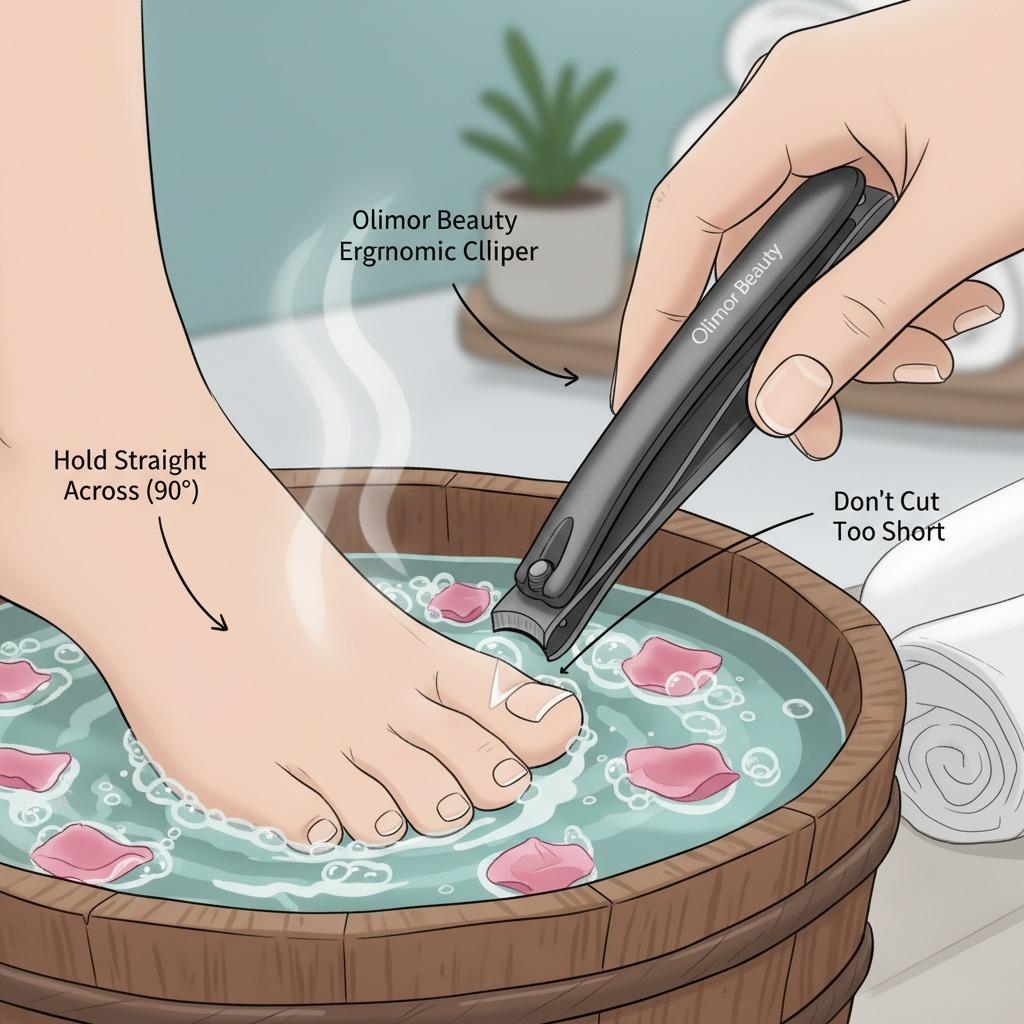
- Start clean. Wash and dry your feet first. Wipe the clipper before use so the tool is ready for a hygienic routine.
- Soften thick nails if needed. If toenails are hard or especially thick, soak them in warm water for a few minutes or trim after bathing.
- Dry the feet well. A dry toe is easier to handle and less slippery, which improves control.
- Trim in small steps. Take off small amounts at a time rather than trying to remove the whole free edge in one cut.
- Cut mostly straight across. Follow the natural line of the nail without carving into the sides.
- Leave a small free edge. Do not cut into the skin line. A little length helps protect the toe as the nail grows.
- Refine only sharp points. If a corner feels rough, lightly smooth it rather than creating a deep rounded side.
This approach reduces the chance of creating a nail edge that later grows inward. It is also easier to repeat consistently, which matters more than occasional aggressive trimming.
Why the right nail clipper makes prevention easier
A good toenail clipper does not replace technique, but it makes good technique more reliable. When the blade cuts cleanly and the handle feels stable, it is easier to stop at the right point and avoid over-trimming.
The Olimor Beauty nail clipper is designed with stainless steel construction, sharp curved blades, and an ergonomic grip. In practice, those features help with three common problems: cutting thick toenails cleanly, holding the tool with control, and keeping the trimming process tidy with the integrated nail catcher.
That matters because a clipper that slips, bends, or crushes the nail can create jagged edges. Those rough edges may snag on socks or irritate the nail fold. A clean cut is usually safer than a forced one.
When comparing nail grooming tools, look beyond appearance. Focus on the way the clipper feels in the hand, how much pressure it requires, and whether it allows you to see the nail edge clearly while trimming. If the tool is too small, too weak, or uncomfortable to control, it may be better suited to fingernails than toenails.
How to choose a toenail clipper: a practical comparison
For people trying to prevent ingrown nails, the best clipper is the one that supports careful trimming instead of rushed trimming. The table below shows the features that matter most and why they help.
| Feature | What to look for | Why it matters |
|---|---|---|
| Blade sharpness | Sharp blades that cut smoothly | Reduces tearing, splitting, and rough nail edges |
| Blade shape | Curved blades with controlled contact | Helps follow the nail edge while still trimming mostly straight |
| Handle comfort | Ergonomic grip and stable hold | Improves control during thicker toenail trimming |
| Material | Stainless steel construction | Durable and easy to wipe clean after use |
| Cleaning convenience | Simple design, easy to empty and dry | Supports hygiene and routine maintenance |
| Portability | Compact, travel-friendly form | Useful for grooming kits and on-the-go care |
| Extra containment | Integrated nail catcher | Collects clippings and keeps the process tidier |
If you are reviewing options across beauty tool products, these features are usually more useful than decorative details. A well-balanced clipper tends to be the better long-term choice for toenail care.
Footwear, moisture, and daily habits that reduce pressure
Trimming habits matter, but so does the environment the nail grows into. Even a carefully trimmed nail may become irritated if the toe is constantly pressed by shoes or softened by trapped moisture.
Helpful daily habits include:
- Choose shoes with enough toe room. A narrow toe box can push the nail edge into the skin.
- Avoid repeated front pressure. If a shoe leaves marks around the big toe, it may be too tight for long wear.
- Wear socks that fit smoothly. Bulky seams or bunching near the toes can add friction.
- Dry feet well after bathing or exercise. Moist skin is easier to irritate.
- Check nails regularly. A quick weekly look can catch uneven edges before they become painful.
These habits are especially relevant for people who stand for long hours, walk frequently, travel often, or wear enclosed shoes most days. In those cases, small pressures add up.
How to maintain a nail clipper for cleaner, safer use
A toenail clipper should stay clean, dry, and sharp enough to make controlled cuts. Maintenance is simple, but it has a real impact on use.
- Remove clippings after each use. Debris left inside the tool can make the next trim less smooth.
- Wipe the clipper clean. A quick wipe after grooming helps keep the tool hygienic.
- Dry it before storage. Storing a tool while damp is not ideal for any metal grooming item.
- Empty the catcher if present. An integrated nail catcher is useful only if it is cleared regularly.
- Check for wear. If the clipper feels dull, misaligned, rusty, or difficult to squeeze, replace it.
For shared household grooming, separate clippers for fingernails and toenails can make routines more organized. For personal kits, the main point is consistency: a clean, sharp tool is easier to control and less likely to damage the nail edge.
Buying for retail, kits, or sourcing: what to evaluate
If you are sourcing nail clippers for retail, gift sets, travel kits, or beauty-tool collections, focus on the practical details that affect customer experience. Buyers generally want a tool that looks neat, feels steady, and performs cleanly in everyday use.
Useful evaluation points include:
- Cutting performance: Does the clipper make a clean cut without excessive force?
- Grip and handling: Is the body comfortable enough for controlled use?
- Ease of cleaning: Can the tool be wiped and stored without hassle?
- Packaging needs: Does it fit the intended set, display, or travel format?
- End-user purpose: Is it intended for general grooming, toenail care, or gift presentation?
For commercial buyers, it is also sensible to ask suppliers for current material and compliance documents relevant to the market. For example, buyers selling into the EU may review REACH-related information, while other markets may have different expectations. Verify current rules, current versions, and supplier paperwork for your specific channel before making procurement decisions.
If you are comparing assortments or building a nail-care lineup, review the current product collections and match the clipper style to the customer need rather than choosing only by price or appearance.
When to seek professional care instead of trimming at home
Home grooming is useful for maintenance, but it has limits. If the nail has already become inflamed, deeply embedded, or repeatedly infected, self-trimming may make the problem worse.
Get professional care if you notice:
- increasing pain around the nail corner
- redness that spreads or worsens
- swelling or drainage
- fever or signs of infection
- recurring ingrown nails on the same toe
- diabetes, poor circulation, or nerve issues
For persistent problems, a podiatrist or other qualified healthcare professional can advise on treatment and prevention. If you are following public-health guidance, check current advice from recognized bodies such as the NHS or CDC and confirm that any guidance matches the current version relevant to your location.
FAQ: toenail trimming, samples, and sourcing questions
Can I request a sample before placing an order?
Sample availability depends on the project and current supply conditions. If you are evaluating the clipper for retail, kits, or private-label planning, ask through the product contact channel for the latest sample policy.
Is there a minimum order quantity?
Minimum order terms can vary by item and customization needs. The safest approach is to confirm the current requirement directly before planning a product run or assortment.
Can the nail clipper be customized?
Customization options depend on the specific project and the level of branding or packaging support needed. Share your intended use, market, and packaging goals to confirm what is available.
How should quality be checked before sourcing?
Review the cutting feel, grip stability, visible finish, and general construction quality. For commercial sourcing, also request the relevant supplier documents for your market and confirm current compliance expectations before ordering.
If you want to discuss product fit for personal care kits, retail display, or sourcing needs, you can contact Olimor Beauty or send an inquiry. A careful trimming routine, paired with a dependable clipper, is usually the simplest way to reduce avoidable ingrown toenail problems.
Tag: