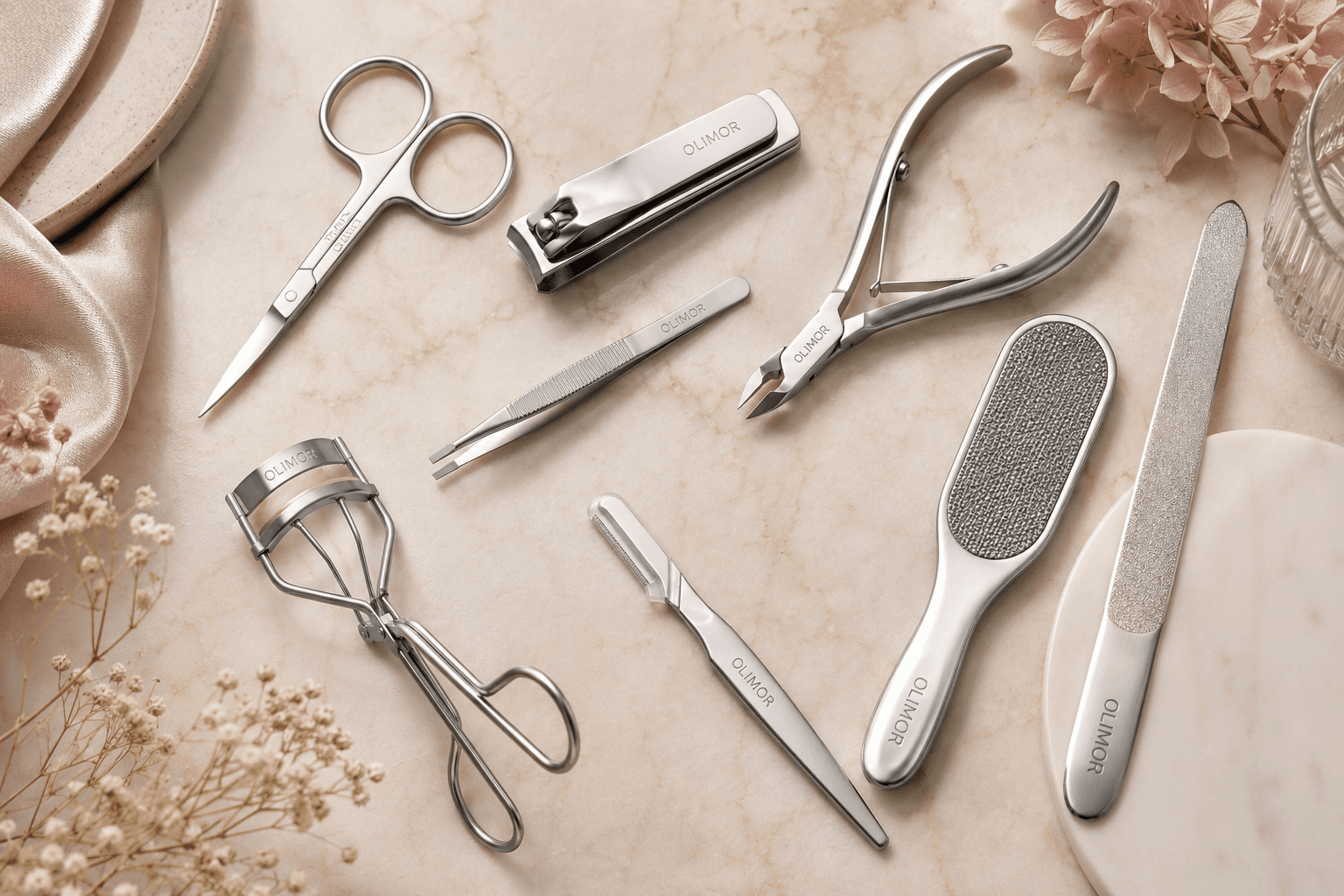
For many buyers, beauty tools look simple at first: nail clippers, cuticle nippers, tweezers, eyelash curlers, eyebrow razors, manicure sets, foot files, tongue scrapers, and facial tools. The real problem appears after products reach customers. A tweezer that cannot grip fine hair, a nipper with weak spring rebound, or a nail clipper that feels rough can quickly become poor reviews, returns, and lost trust. That is why choosing a beauty tools manufacturer is not only a price decision. It is a control decision.
Olimor Beauty is built around this type of detail. The brand offers a wide range of beauty and personal care tools, including Beauty Scissor, Nail Clipper, Nipper, Tweezer, Eyelash Curler, Eyebrow Razor, Manicure Set, Foot File, Tongue Scraper, Facial Tools, Nail Care Tools, and Nail File. Buyers can review the full product range through the Olimor beauty tools product collection. The company’s background also reflects its Yangjiang manufacturing roots, which can be explored on the Olimor About Us page.
Material, Structure, and Finish Decide the Product Level
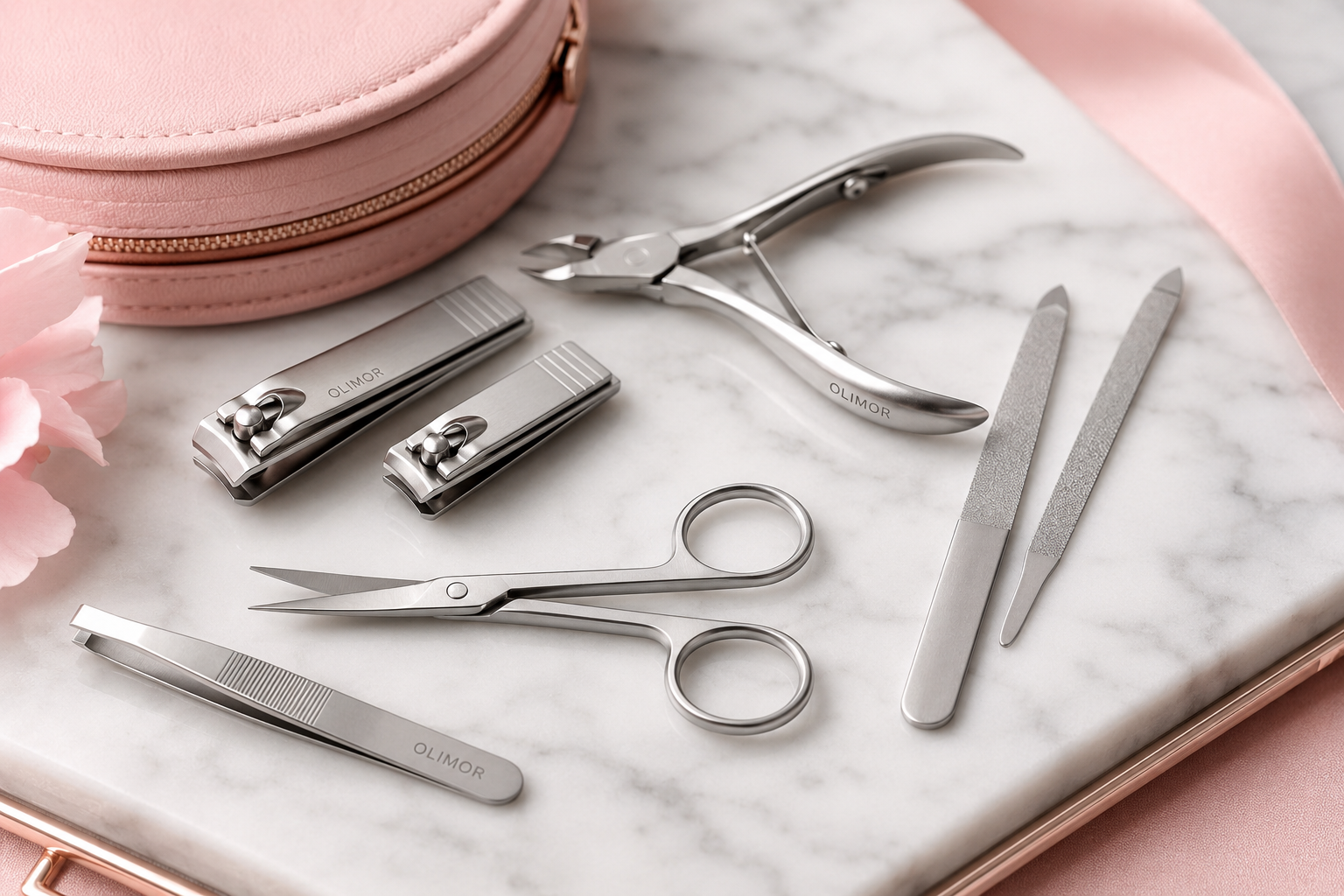
A professional beauty tool begins with material, but material alone is not enough. Stainless steel is commonly used for manicure tools, tweezers, nippers, facial tools, and nail files because buyers need durability, clean appearance, and easier daily maintenance. For B2B orders, this directly affects product life, customer complaints, and reorder stability.
The second layer is structure. A cuticle nipper depends on blade angle, jaw opening, spring tension, and handle comfort. A tweezer depends on tip alignment and grip pressure. An eyelash curler depends on frame curve, pad quality, and pressure distribution. A foot file depends on abrasive surface stability. These details decide whether the product feels professional or cheap.
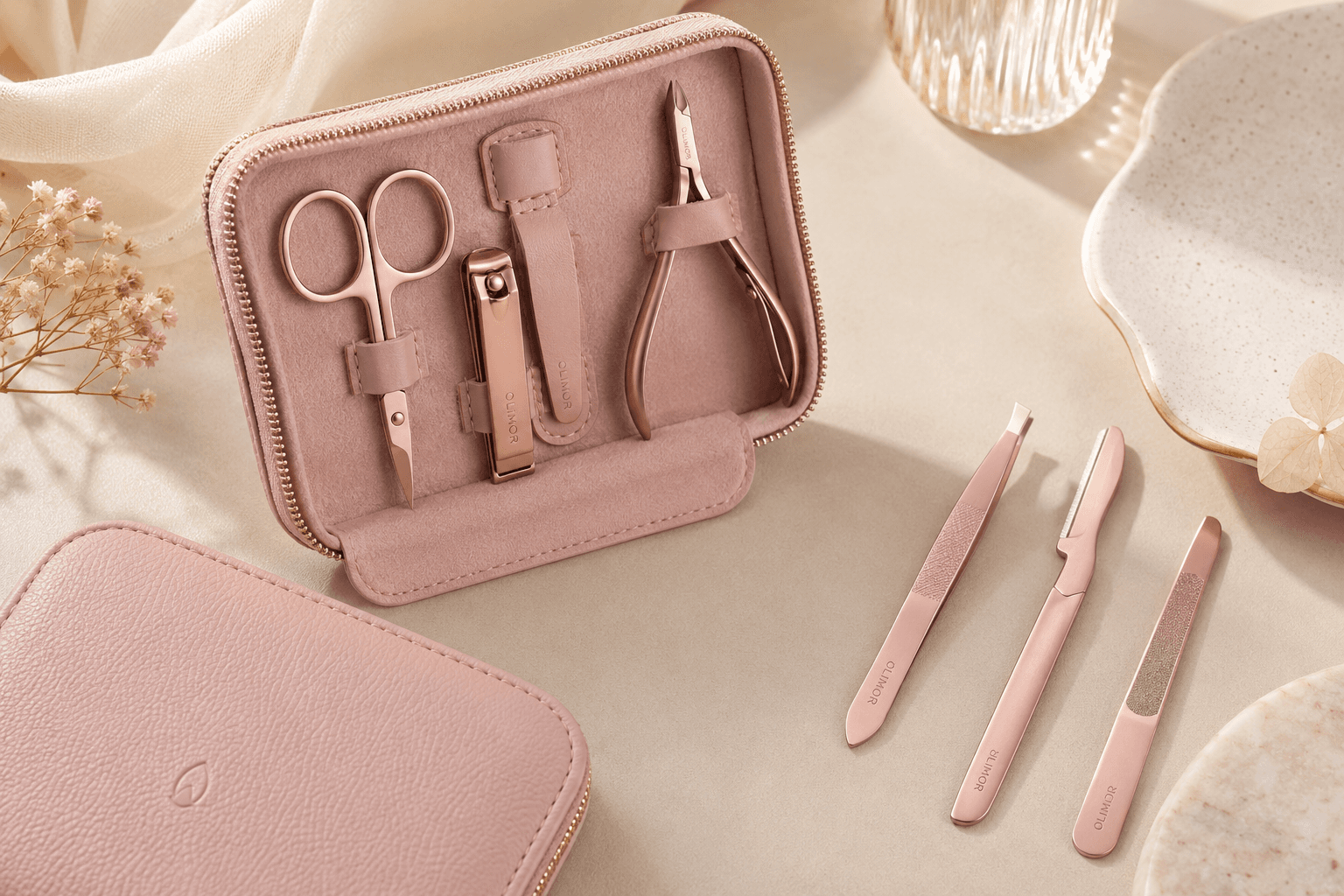
Surface finishing also matters. Mirror polish, matte finish, titanium tone, rose gold, or custom color coating can help a product match retail shelves, ecommerce photos, or private label packaging. Good design makes a tool easier to sell before the customer even opens the package.
What a Beauty Tools Manufacturer Must Control
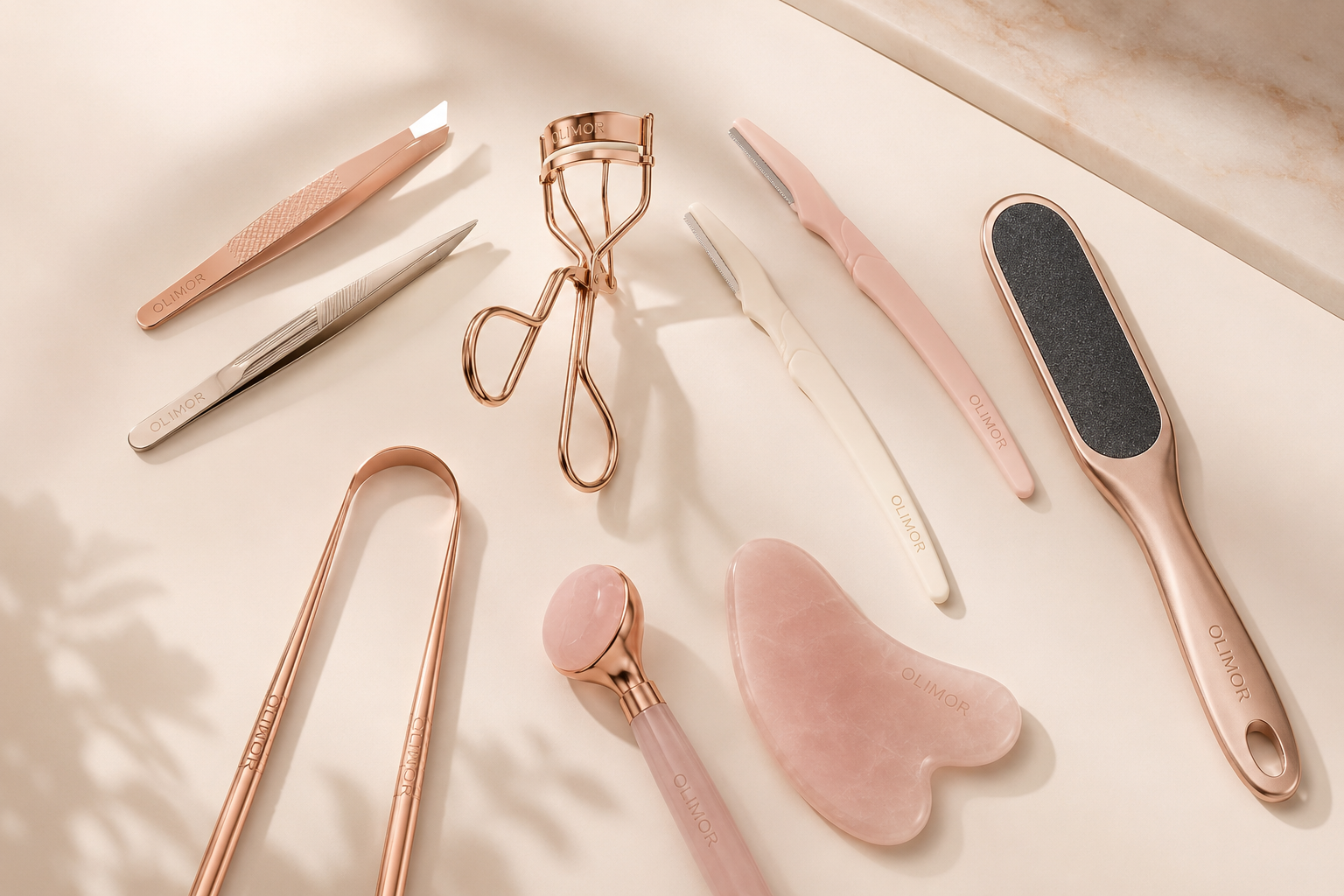
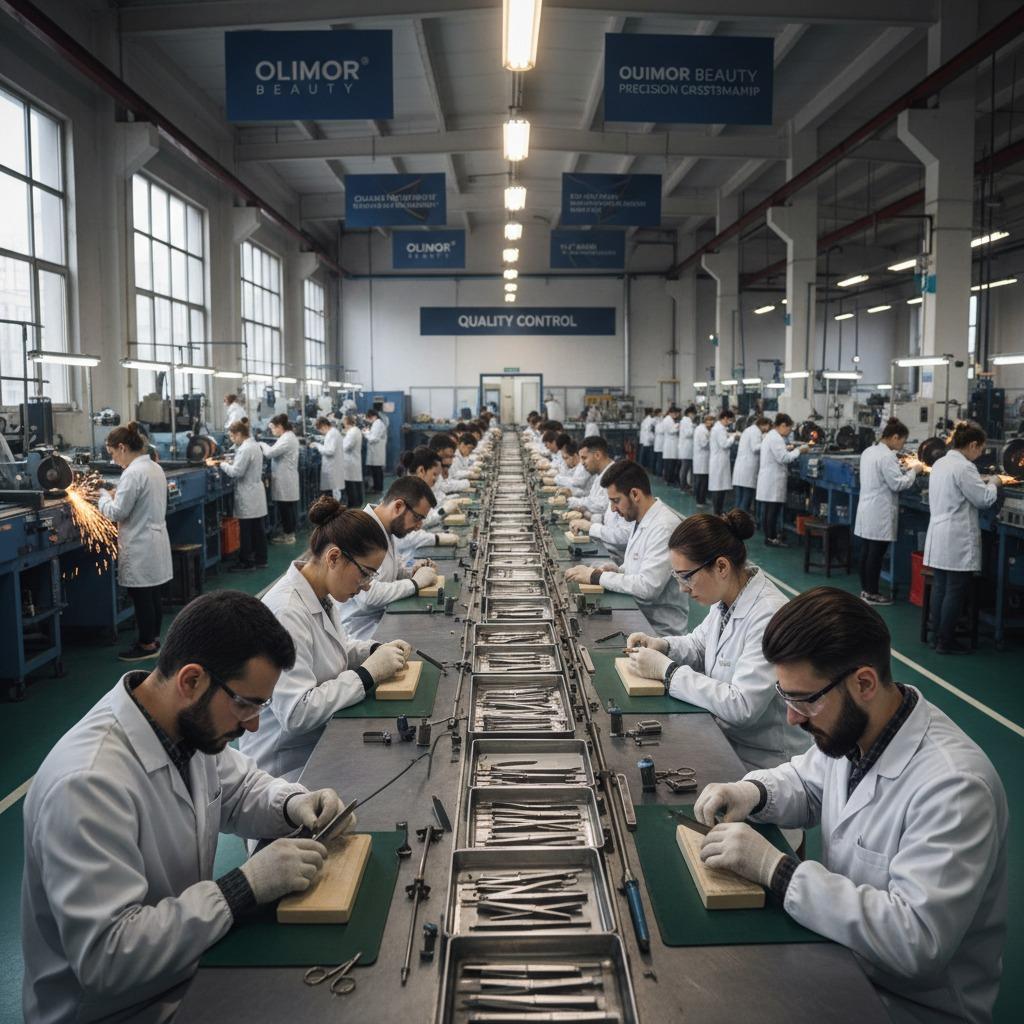
A real beauty tools manufacturer should understand how raw material, tooling, polishing, assembly, inspection, and packaging connect. Olimor’s company information highlights internal quality control from raw materials to final packaging, which is important for products where small differences can be felt immediately during use. Buyers who want to understand the company’s development and production background can visit the Olimor company profile.
For buyers, quality control should include:
| Inspection Point | Why It Matters |
|---|---|
| Raw material check | Helps control durability and corrosion resistance |
| Blade alignment | Affects cutting, trimming, and professional feel |
| Tweezer tip matching | Determines grip accuracy for brow and lash use |
| Spring rebound test | Reduces hand fatigue and improves control |
| Surface finish check | Protects visual consistency for retail orders |
| Packaging inspection | Reduces returns and improves shelf presentation |
| Batch consistency | Keeps repeat orders stable |
This is where many low-cost orders fail. A sample may look acceptable, but bulk production may show uneven coating, loose springs, rough edges, or inconsistent packaging. A professional supplier should prevent these problems before shipment, not explain them after delivery.
Product Lines Should Match Real Sales Channels
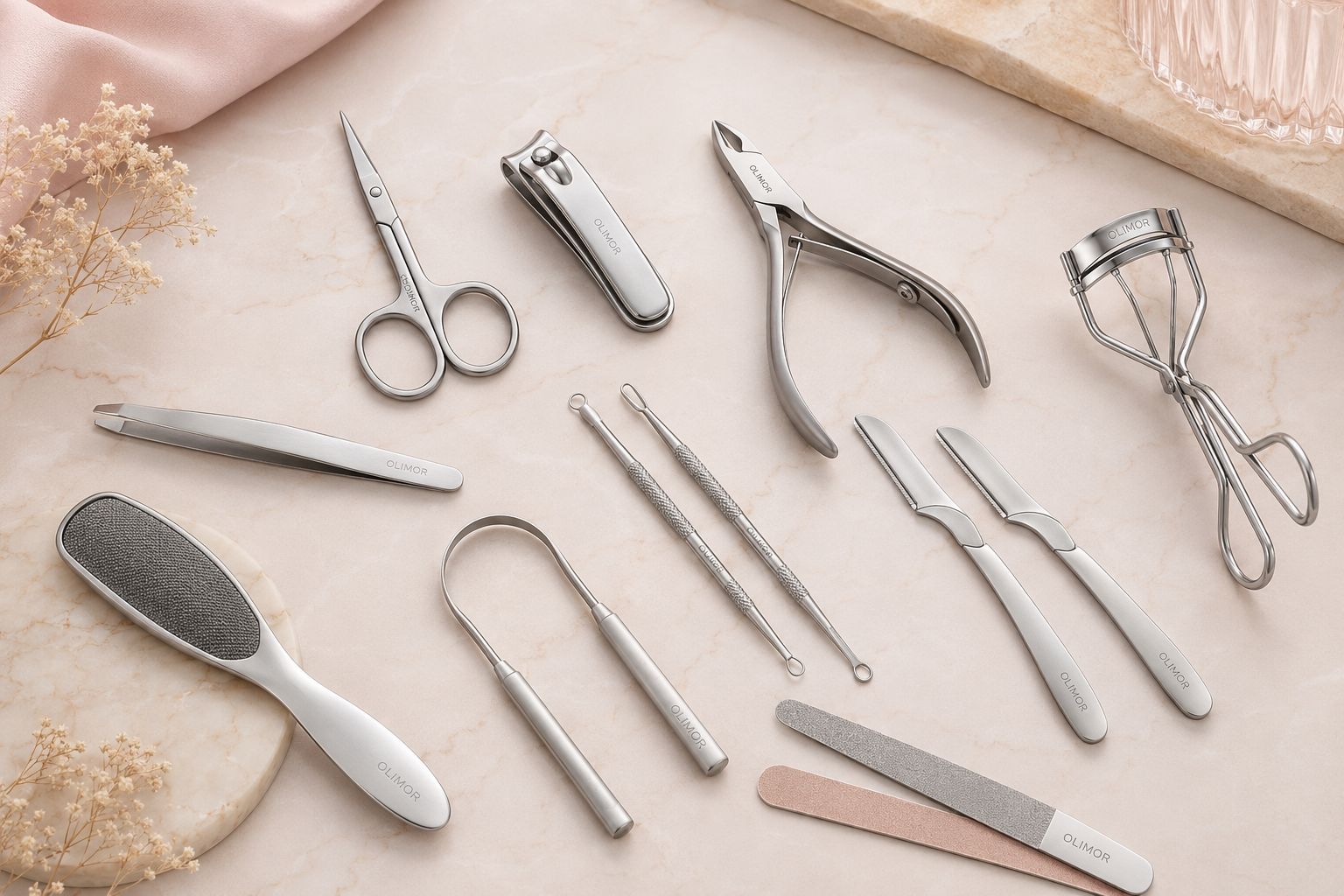
Different customers need different tool combinations. A salon supplier may focus on stainless steel cuticle nippers, nail clippers, nail files, tweezers, foot files, and facial tools. These tools must be comfortable, durable, and easy to clean after repeated use.
A retail buyer needs clearer shelf logic. Eyebrow razors, tweezers, eyelash curlers, manicure sets, and nail care tools are easier to explain to consumers because each product connects to a daily beauty routine. For buyers building product lines, the Olimor products page is a practical starting point for checking available categories and matching tools to sales channels.
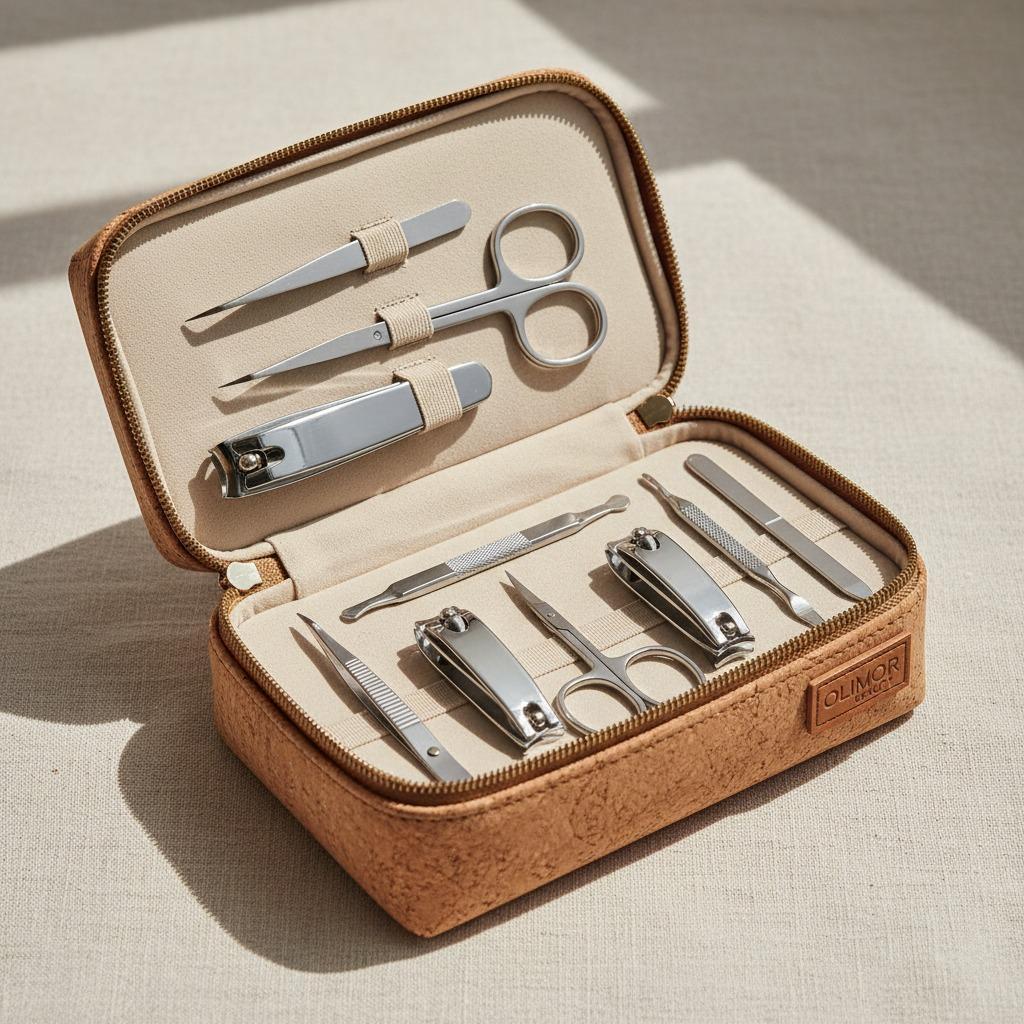
An ecommerce seller should think in bundles. A single nail clipper often competes on price, but an eyebrow grooming kit, travel manicure set, or foot care kit can create stronger perceived value. For private label brands, the first step should not be too many SKUs. A focused line of 5–8 tools with matching finish, packaging, and use logic is usually more practical.
Professional Use Also Requires Safer Tool Thinking
Beauty tools are often used in salons, nail studios, and training environments. The FDA notes that nail products used at home and in salons are generally regulated as cosmetics, and users should follow labeled directions, warning statements, and safe-use guidance carefully. This makes cleaner workflows, stable tool handling, and easier maintenance important when buyers select reusable manicure and beauty tools.
NIOSH also highlights that nail technicians can face health risks from repeated workplace exposure, depending on products and working environments. For reusable tools, buyers should consider smooth surfaces, corrosion-resistant materials, fewer dirt-trapping gaps, and packaging that supports clean storage: NIOSH Nail Technicians Safety Information.
This does not mean beauty tools should be described as medical devices. It means serious beauty brands should choose tool designs that support cleaner, more reliable daily use. For more product education and sourcing topics, buyers can also browse the Olimor blog and FAQ section.
A Reference Case: From Random Tools to a Retail-Ready Line
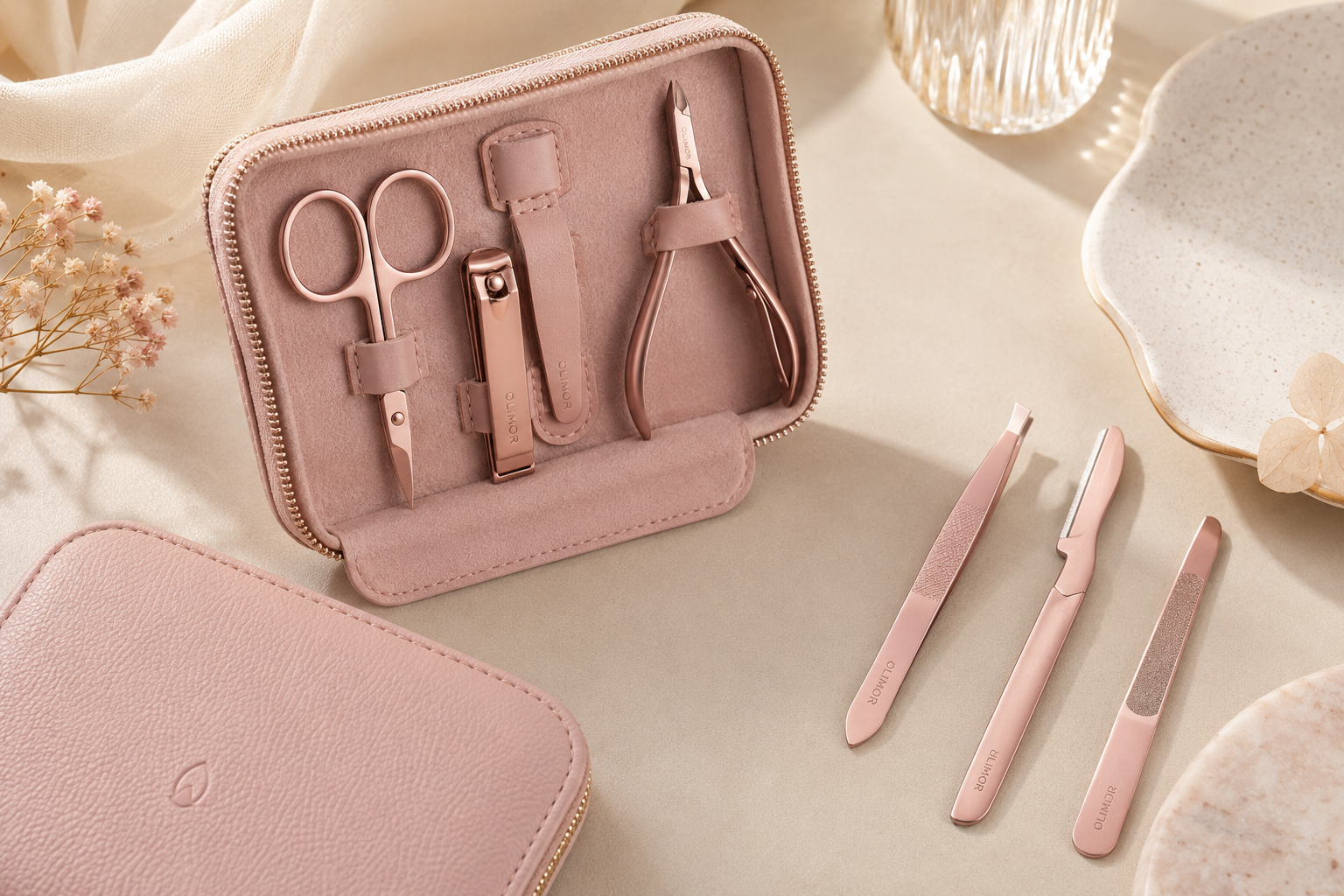
A mid-size beauty retailer wants to launch a private label nail care line. At first, the buyer asks for five separate products: nail clipper, cuticle nipper, nail file, tweezer, and manicure set. The lowest-price supplier sends samples, but each tool feels different. The nipper is sharp but stiff, the tweezer looks good but grips poorly, and the manicure set packaging does not match the single tools.
A better approach starts by dividing the line into three levels: daily home care, salon-grade stainless steel tools, and gift-ready manicure sets. Then the manufacturer adjusts blade finish, spring rebound, tweezer tip alignment, handle comfort, surface color, and packaging format for each channel.
The result is not just a collection of tools. It becomes a product family with clearer positioning, better shelf value, and stronger repeat-order potential.
FAQ
Q1: What products should a beauty brand start with first?
A practical starting line usually includes nail clippers, tweezers, cuticle nippers, eyebrow razors, nail files, and one manicure set. Buyers can compare available categories on the Olimor product page.
Q2: Are stainless steel beauty tools better for B2B supply?
For many nail, brow, and facial care tools, stainless steel is preferred because it supports durability, clean appearance, and easier maintenance. Final quality still depends on finishing, alignment, and inspection.
Q3: Where can buyers find more beauty tool sourcing information?
Buyers can read more product guidance, sourcing topics, and beauty tool articles through the Olimor blog section.
Build a Beauty Tool Line With Better Control
Choosing a beauty tools manufacturer affects how your products feel in the hand, how your retail shelf looks, how customers review your brand, and how easily your product line can grow.
Olimor Beauty focuses on manicure tools, nail clippers, cuticle nippers, tweezers, eyelash curlers, eyebrow razors, manicure sets, foot files, tongue scrapers, facial tools, nail care tools, and nail files. To understand the company’s background, manufacturing direction, and brand story, buyers can visit the Olimor About Us page. To compare product categories and plan a sourcing list, start with the Olimor product collection.
For wholesale, private label, or bulk sourcing requirements, buyers can contact Olimor directly through the official contact page to discuss product selection, packaging, and order details.