Nail clippers for thick nails: a practical review for buyers who need more than a basic trimmer
If you have ever tried to cut dense, curved, or stubborn nails with a standard clipper, you already know why nail clippers for thick nails exist. A regular flat clipper can pinch, slip, or leave a ragged edge when the nail is tougher than average. That is more than an annoyance. It can turn routine grooming into a slow, awkward task, especially for older users, athletes, or anyone dealing with thicker toenails that need a cleaner, more controlled cut.
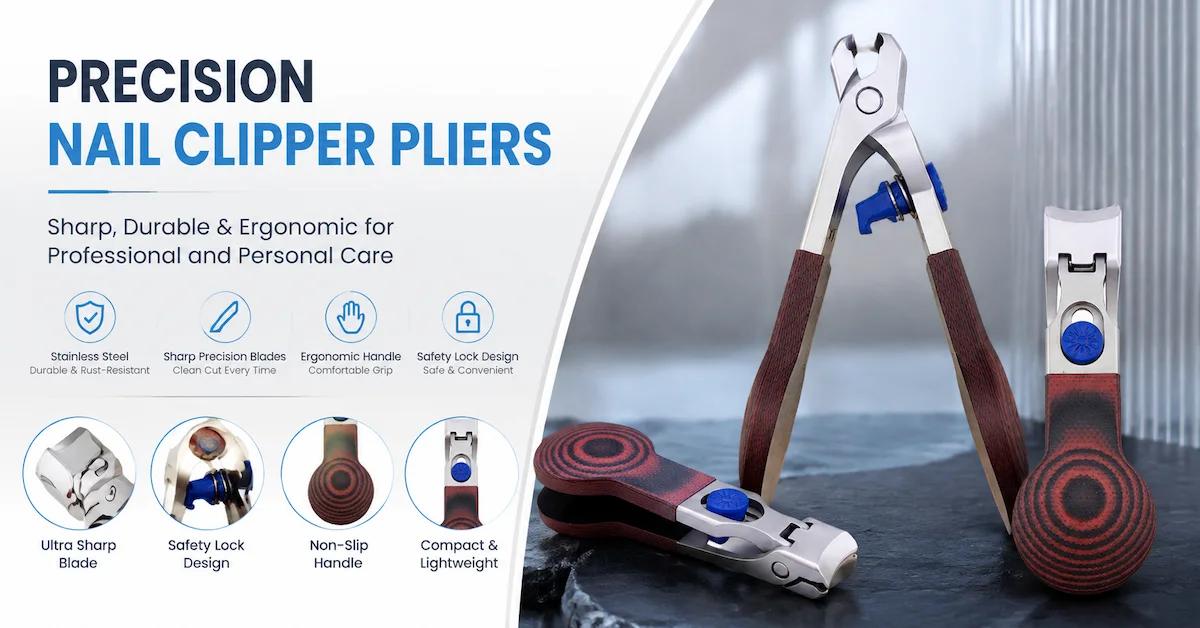
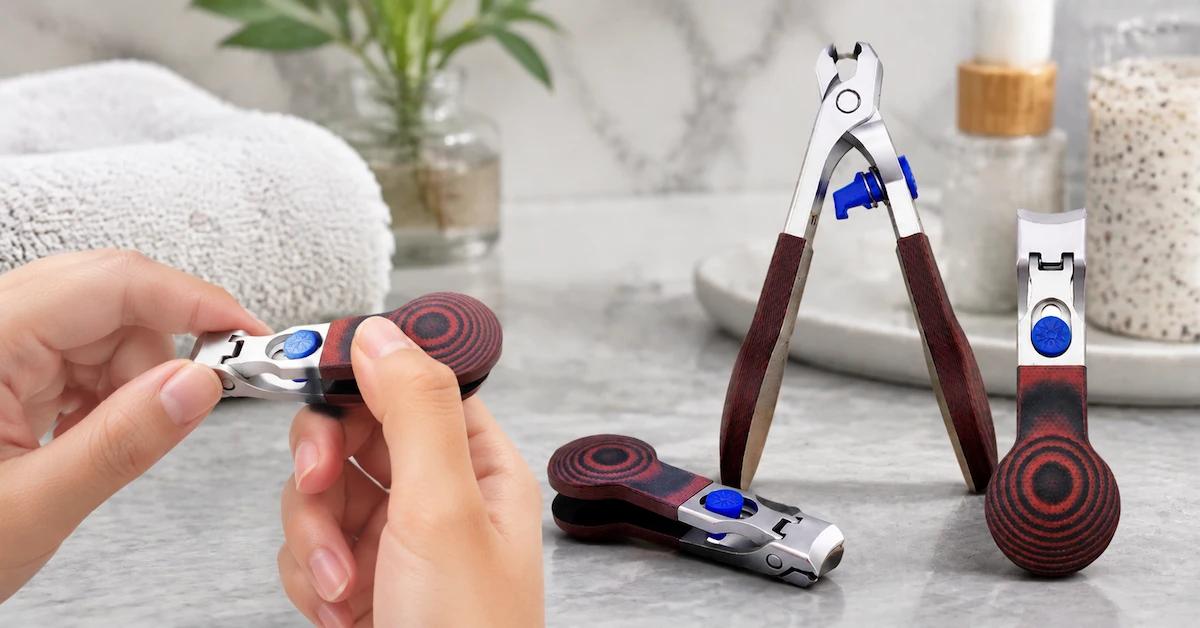
The pliers-style nail clipper in this review sits squarely in that practical category. It is built like a small hand tool, not a cosmetic accessory: long lever arms, a pivot joint, curved cutting jaws, and a safety lock near the hinge. The design is meant to multiply hand force and improve control, which is exactly what buyers usually want when they start searching for heavy duty nail clippers.
What this style of clipper does well
The biggest advantage is leverage. The long handles give the user more mechanical advantage than a compact push-down clipper, so the jaws can close with less strain. That matters when nails are thicker, harder, or simply harder to reach. The plier design also gives many users a better line of sight. Instead of compressing the tool flat against the nail, you can angle it more deliberately and work in smaller, cleaner cuts.
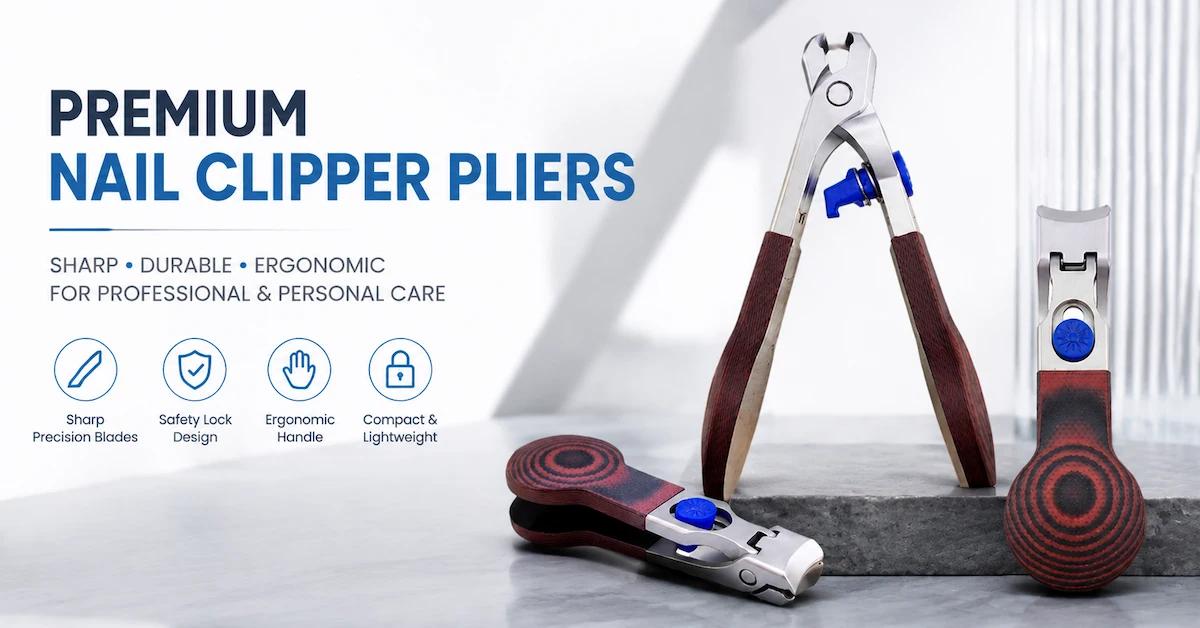
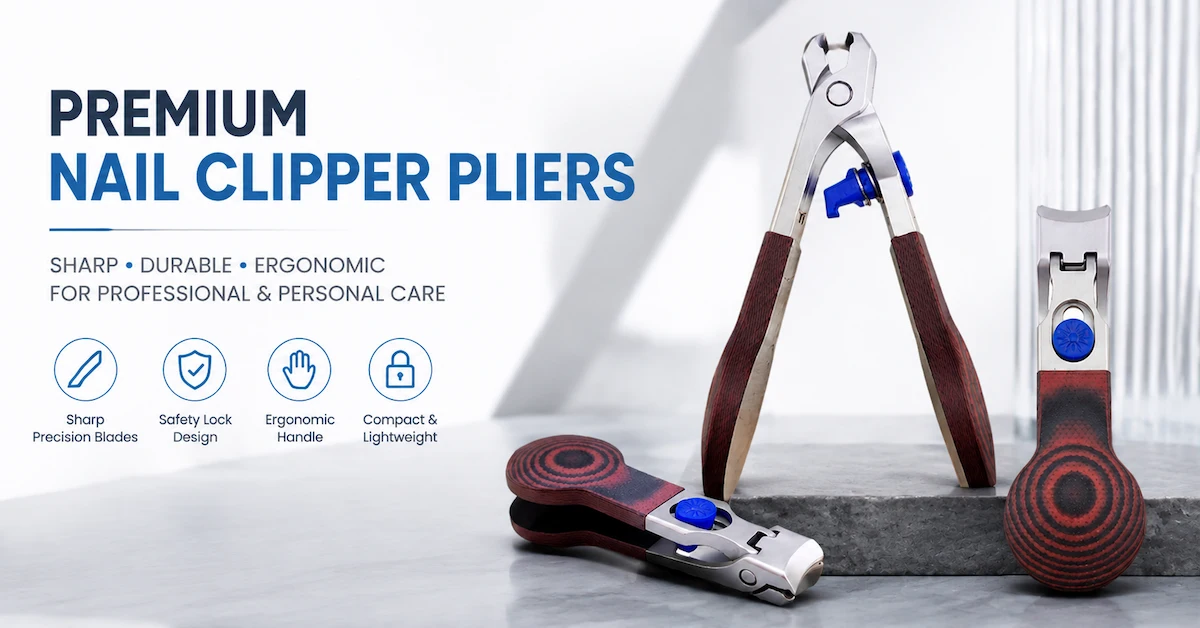
From the supplied product details, this clipper uses a metal body with a polished silver finish and contoured handle ends. The cutting jaws have a narrow, curved profile, which is a useful cue for nail trimming because it helps the tool follow the natural arc of the nail rather than shear across it bluntly. A blue safety lock is visible near the hinge on some views, which adds a small but important convenience for storage and travel.
There is also the matter of grip. The red-and-black textured handle areas appear designed for traction and comfort. On a hand tool like this, the handle is not decorative. If the grip feels uncertain, users tend to overcorrect, and that can make trimming less precise. A more secure handle helps when the nail is thick, the angle is awkward, or the user has limited hand strength.
Quick take: where it fits, and where it does not
This type of tool is best viewed as a grooming instrument for personal care, manicure and pedicure kits, and salon-side maintenance. It is a sensible pick for people who want a compact tool that travels well but still offers more bite than a standard clipper.
It is not, however, a miracle fix for every nail problem. Very hard, heavily thickened, or medically affected nails can still require professional care. Buyers should be careful not to mistake a heavy duty-looking clipper for a medical device. If the nail is painful, infected, deformed, or difficult to cut safely, that is a reason to pause and get proper advice rather than forcing the cut.
Why the plier design matters more than it looks
Some shoppers focus only on blade sharpness, but the shape of the tool is just as important. With pliers-style nail clippers for thick nails, the force path is longer and easier to control. That helps in two ways. First, the user can apply pressure gradually instead of all at once. Second, the tool can often reach a better cutting angle on thicker toenails, where a flat clipper sometimes skids across the surface before it bites.
The long handle-to-jaw geometry also makes the tool more forgiving for hands that are not especially strong. That does not mean it does the work automatically. It still requires a steady grip and a sensible trimming technique. But compared with small, short-handled clippers, it gives the user a far better chance of making a clean cut without excess effort.
Material and build: what the visible details suggest
The product appears to use metal construction, likely stainless steel or a similar corrosion-resistant steel, although the exact grade is not provided. For a grooming tool, that is the right general direction. Metal bodies are easier to clean, usually feel more stable in the hand, and hold up better than flimsy light-duty alternatives. The bright polished or satin silver finish also gives the tool a more hygienic, professional look, though appearance alone does not tell you everything about performance.
The visible pivot joint and safety latch suggest a folding or locking geometry. That is useful in a travel kit and convenient in a salon drawer, but it also means the locking mechanism should be checked before each use. A loose latch is not something to ignore. On any clipper, the first sign of wear is often a small annoyance: the tool does not open cleanly, or the lock feels vague. That is the kind of detail buyers tend to overlook until the tool is in daily use.
The likely manufacturing route, based on the product description, would be metal stamping or forging followed by grinding and polishing, then assembly at the pivot and lock. That is standard enough for this class of hand tool. The handle texture may be overmolded, coated, or printed, but the exact process is not visible here and should not be assumed.
How this compares with other thick toenail clippers
When buyers compare thick toenail clippers, the decision often comes down to three things: leverage, control, and comfort. A basic clipper may be cheaper and familiar, but it usually offers less control on tougher nails. A larger guillotine-style clipper may cut more evenly on some nail types, yet it can feel clumsy if the jaws are not well aligned or if the user has limited hand strength. Pliers-style tools sit in the middle in a useful way. They are compact, but they feel more like a real instrument.
That middle ground is why many users prefer heavy duty nail clippers in plier form. The tool is small enough for a grooming pouch, but it behaves more like a controlled cutter than a squeeze-and-hope accessory. For salon professionals, that can mean quicker clean-up work between appointments. For home users, it can simply mean less frustration on a Sunday evening when the nails have gone too long.
What to look for before buying
Not every clipper labeled as heavy duty is truly suited to thick nails. A buyer should look past the label and check the mechanics.
-
Jaw shape: Curved or narrow jaws are usually easier to guide around the nail edge.
-
Handle length: Longer handles generally mean better leverage, but they should still fit the hand comfortably.
-
Grip surface: Textured or coated handles can improve stability, especially if the user trims in a bathroom or after washing hands.
-
Locking feature: A safety lock is helpful for storage, but it should open and close smoothly.
-
Finish and cleanliness: A corrosion-resistant metal finish is a sensible baseline for grooming tools that will be wiped and handled often.
One practical caution: buyers often assume sharper is always better. In reality, the safest nail tool is one that cuts predictably. A jaw that is too aggressive, too wide, or poorly aligned can remove too much material at once. For thick nails, a cleaner cut in stages is usually more comfortable than trying to sever the whole edge in one squeeze.
Common mistakes users make with thick nail clippers
The first mistake is forcing a cut through the center of a thick nail. That can crack the nail and leave uneven stress at the edges. A better approach is to trim gradually and follow the natural shape of the nail. Another common error is using the same tool for every situation. Some nails need a more delicate touch than a heavy duty clipper provides. A tool like this is meant to solve a specific problem, not replace judgment.
There is also a storage issue that gets ignored. If the safety lock is left engaged while the tool is put away under pressure, the pivot and latch may wear unevenly over time. It is a small point, but these are the kinds of details that separate a tool that feels dependable from one that becomes sticky after a few months.
Who is most likely to benefit from this design?
This plier-style clipper is most relevant for home users who struggle with thicker nails, older adults who want less hand strain, and grooming professionals who need a compact tool for detail work. It also fits travel kits well because the shape is compact and the safety lock helps keep the jaws closed in transit. For salons, the tool may be useful as part of a broader manicure and pedicure setup rather than as the only cutter on the table.
For buyers comparing options across a procurement list, the important question is not whether the tool looks substantial. It is whether the leverage, blade geometry, and handle design actually reduce the effort required to make a neat cut. On that point, the design cues here are encouraging.
FAQ
Are nail clippers for thick nails the same as toenail clippers?
Not always. Some tools are marketed for both fingernails and toenails, while others are better suited to one or the other. Thick toenail clippers usually emphasize leverage and jaw strength, but the exact best use depends on the tool’s shape and the user’s nail condition.
Is a pliers-style clipper better than a standard clipper?
For thick or hard nails, often yes. The extra leverage and more open handling position can make the cut easier to control. For very thin nails, a smaller tool may still feel more precise.
Can I use this at home?
Yes, that is one of its main use cases. The compact form and safety lock make it suitable for home grooming, travel, and basic salon kits.
What should I avoid?
Avoid forcing the tool through painful, infected, or severely deformed nails. A heavy duty-looking clipper is still just a grooming tool, not a substitute for medical treatment when the nail condition is beyond routine trimming.
Final buying thought
If you are choosing nail clippers for thick nails, the best option is usually the one that makes the task calmer, not louder. This pliers-style clipper checks several boxes that matter in real use: leverage, compact storage, a visible safety lock, and a handle shape that appears built for control. It looks practical rather than flashy, which is often a good sign in a hand tool.
For sourcing teams, salon buyers, or product managers evaluating grooming tools, the next step is straightforward: test how the jaws align, how the lock behaves, and how the handle feels under pressure. Those small mechanical details tell you far more than the marketing line about sharp blades ever will.
Tag: