Why thick nails change the buying decision
Anyone shopping for nail clippers for thick nails quickly learns that ordinary pocket clippers are not always enough. Thick toenails, especially on older feet or nails that have hardened over time, tend to resist small cutting edges and can crack if the tool flexes. That is why the real decision is not just “clipper or no clipper,” but which style will give a clean cut without turning grooming into a struggle.
The difference matters at home and in professional settings. A weak tool can leave jagged edges, require repeated squeezing, and make the user press harder than they should. That is uncomfortable at best and risky at worst. For salons, spas, and grooming kits, the right tool also affects speed, hygiene perception, and whether the kit feels worth using again.
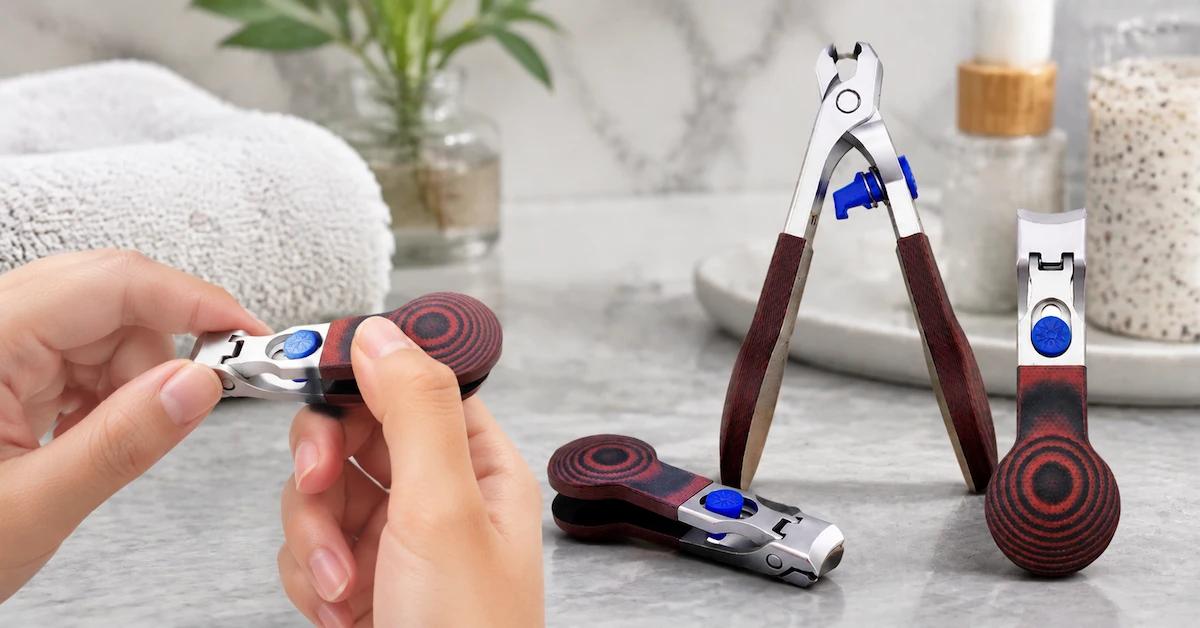
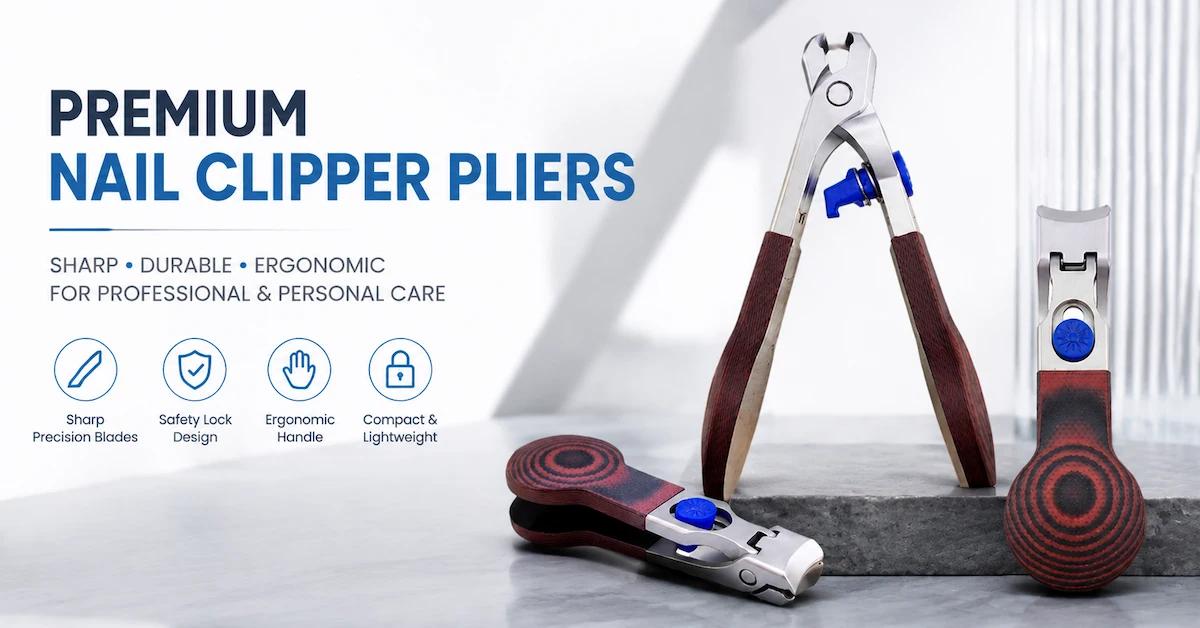
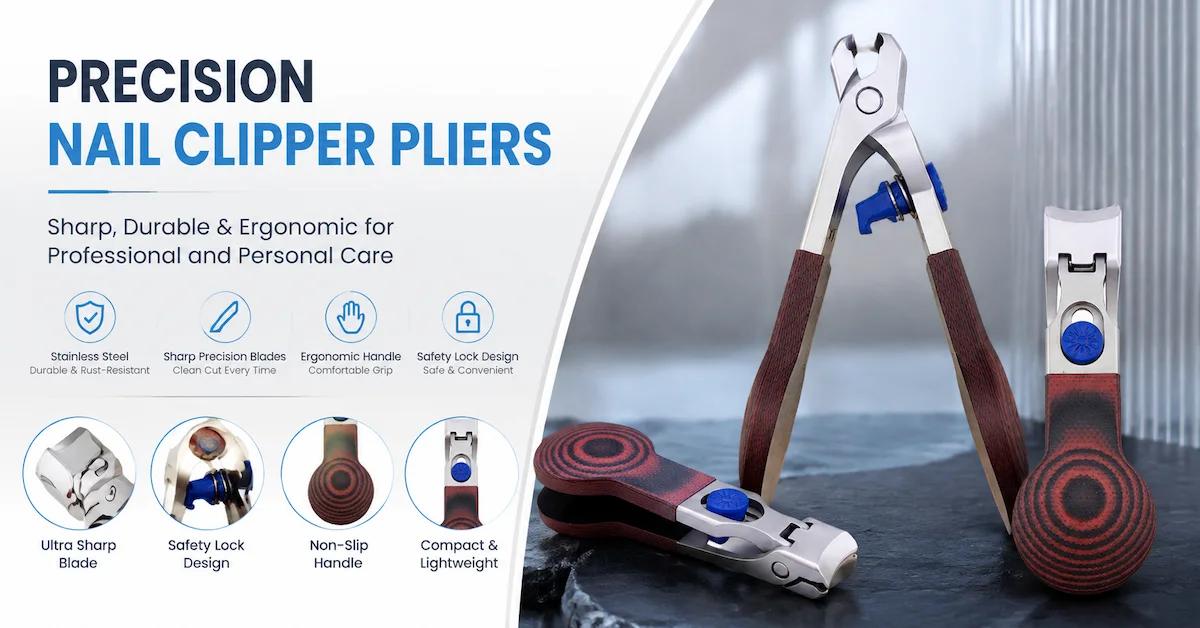
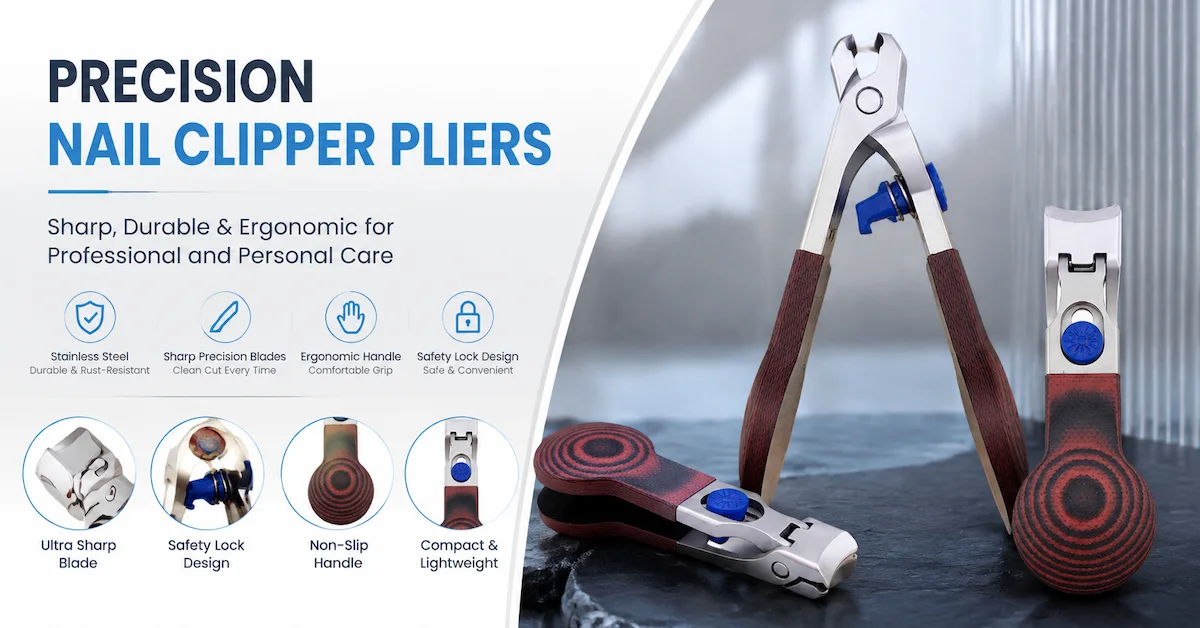
The product style described here is a manual precision nail clipper plier: two long lever handles, a pivot joint, angled cutting jaws, and a safety lock near the head or handle area. It is a compact hand tool, built around stainless steel with a polished finish and a non-slip grip surface. In practical terms, that design is meant to do one thing well: give the user more control when trimming tougher nails.
What makes a clipper better for thick nails
For thicker nail material, geometry matters as much as material. A standard lever clipper relies on a short squeeze and a shallow cutting action. A plier-style design creates a different mechanical advantage. The longer handles can make the tool easier to close with steady pressure, while the angled jaws can help the user approach the nail more naturally, especially on toenails that are harder to reach.
That is where stainless steel nail clippers often earn their keep. Stainless steel gives the tool a solid feel, resists rust in normal personal-care use, and tolerates repeated cleaning better than cheaper metals or thin plated parts. It also supports sharper, more durable cutting edges when the jaws are properly ground. A polished metallic finish is not just cosmetic; it usually signals a tool built for repeat use rather than a throwaway trinket.
The handle design matters too. A dark textured grip surface can be a small but meaningful detail when hands are wet, lotion is present, or the user is working in a salon sink area. A safety lock is another practical feature. It keeps the jaws closed during storage and makes the tool less awkward in a kit or travel pouch. Small detail, yes, but the sort that saves frustration later.
Plier-style nail nippers versus ordinary clippers
Many buyers compare wide jaw nail clippers with plier-style nippers and assume they solve the same problem. They overlap, but not completely. A wide jaw helps capture more of the nail edge in one pass, which is useful when the nail is broad or thick. A plier-style body adds leverage and can feel more controlled for users who need a firmer grip.
For personal grooming, the choice often comes down to hand strength and comfort. If the user has limited grip strength or wants a tool that opens and closes smoothly with less effort, plier-style precision nail clipper pliers are worth a close look. If the main concern is simple reach across a broad toenail, a wide jaw can be the detail that prevents multiple tiny cuts. In some cases, the best tool is the one that combines both ideas: leverage plus a wider cutting opening.
That said, buyers should be realistic. A tool described as durable and rust-resistant is still not a cure-all for extremely thick, deformed, or painful nails. If nails are unusually discolored, split, or difficult to trim, the issue may be medical rather than cosmetic. At that point, a podiatrist or other qualified professional is the safer route.
How to use nail clippers for thick nails without tearing the edge
The most common mistake is trying to take off too much in one squeeze. Thick nails are better managed with short, controlled cuts. Soften the nail first if possible, since warm water can make trimming easier and reduce stress on the nail plate. Dry the foot carefully afterward so the tool does not slip.
Hold the clipper with the jaws aligned to the edge of the nail, not at an angle that twists the cut. With plier-style cutters, the long handles make it tempting to rush, but the cleanest result usually comes from steady pressure rather than force. If the nail is especially broad, work across the edge in small sections. That is slower, but it is also what prevents the common “split down the middle” problem that many people blame on the nail itself.
For toenails, trim straight across when possible and avoid cutting too deeply into the corners. Rounded corners may look neat on some fingers, but on toes they can encourage ingrown edges. That is a small caution worth repeating because it comes up often in home grooming and in salon work. A neat trim is not the same thing as a narrow trim.
Practical handling notes
Before trimming, check that the safety lock is released fully and that the jaws move smoothly. If the tool is folded or locked halfway, the first squeeze can feel odd and may cause the user to miss the nail edge. After trimming, wipe away residue and close the lock before putting the tool back into a case or drawer.
In a salon or spa, the handle texture and compact body can also make a difference during repeated use. A tool that is comfortable for one trim may still become annoying after twenty clients if the grip is slippery or the pivot loosens. This is where the quality of the joint and the feel of the handles matter as much as the sharpness of the blades.
What sourcing teams and retailers should check
For sourcing managers, the product brief should focus on the functional details the end user can feel immediately. The pivot should close cleanly without wobble. The cutting edges should meet evenly. The lock should be intuitive, not stiff or loose. The grip should stay in place rather than peeling or feeling slick after a little use. Those are the details buyers notice after the first week, not the brochure claims.
Retailers should also think about how the product is described on shelf or online. The phrase nail clippers for thick nails sets expectations, but the tool should be presented honestly as a grooming aid rather than a medical instrument. If the clipper is aimed at personal care sets, travel kits, or salon retail shelves, the messaging should emphasize control, comfort, and clean trimming. If the product is positioned as one of several stainless steel nail clippers in a range, then the difference should be clear: this one is the heavier-duty, more precise option.
One useful buying cue is the jaw opening. Buyers often ignore it until they try to fit the tool over a broad toenail and discover it is too narrow. That is why the wider-cutting geometry often matters more than a polished finish in real use. A neat-looking tool that cannot get the job done is a shelf ornament.
Common mistakes people make with thicker nails
The first mistake is using a tiny fingernail clipper on a thick toenail and forcing the cut. The second is cutting after the nail has become brittle and dry, which increases cracking. The third is ignoring the lock and grip design, then wondering why the tool feels awkward in a damp bathroom. These are small errors, but they add up.
Another common issue is overconfident trimming. If a nail is especially thick, cutting it all at once can send pressure into the surrounding skin and leave a rough edge. A better approach is to work in stages and finish with a file if needed. That is basic care, but it is still where a lot of people go wrong.
Cleaning and storage
Because this style of tool is made with stainless steel, routine cleaning is straightforward. Wipe off residue after use, dry the jaws and pivot area, and store the clipper in a clean, dry place. The safety lock helps keep the tool closed, which reduces accidental contact with the blades and makes storage tidier in drawers, bathroom kits, or salon tool rolls.
If the handle has a coated or overmolded grip, avoid harsh chemicals unless the manufacturer specifically allows them. A practical cleaner and a dry cloth usually handle normal personal-care use. In a professional setting, hygiene protocols may be stricter, but the core idea remains the same: clean, dry, store, repeat.
FAQ for buyers and users
Are these clippers only for toenails?
Not necessarily. The tool is suitable for fingernails or toenails, but most people will find the leverage and jaw shape especially helpful on thicker toenails.
Do stainless steel nail clippers always mean better performance?
Not automatically, but stainless steel is a strong baseline because it supports durability and rust resistance in normal grooming use. Grinding, jaw alignment, and handle comfort still matter.
What is the advantage of wide jaw nail clippers?
A wider jaw can cover more of the nail edge in one pass, which is useful on broad or thick nails and can reduce the number of cuts needed.
Is a plier-style tool harder to use?
Usually no. Many users find the long handles easier to control than short lever clippers, especially if the nail is tough or the hand needs more leverage.
A sensible next step for buyers
If you are comparing nail clippers for thick nails for home use, salon stock, or grooming kits, look for a stainless-steel plier-style design with a secure pivot, a dependable safety lock, and a grip that stays steady in the hand. The best tool is not necessarily the flashiest one. It is the one that cuts cleanly, feels controlled, and does not demand a second attempt.
For sourcing or private-label planning, that means treating jaw geometry, handle comfort, and storage safety as core specifications rather than afterthoughts. A well-made clipper may look simple, but in personal care tools, simple is often where the quality shows up first.
Tag: