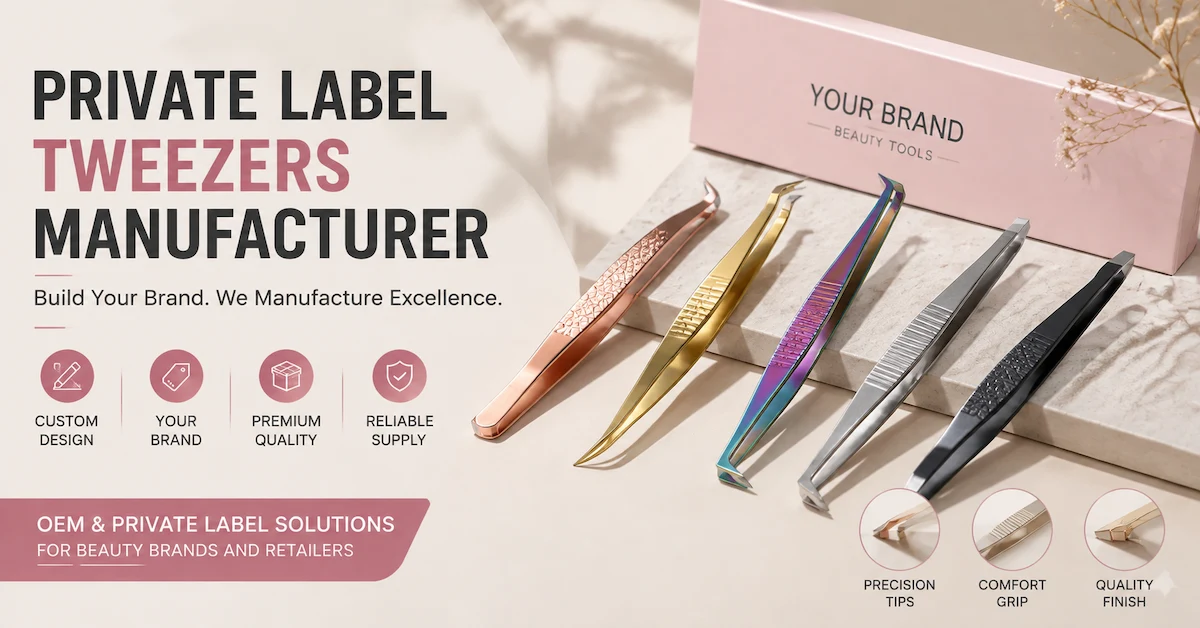
A lash tweezer supplier is not just selling a small metal tool. For salons, training academies, and private-label beauty brands, the supplier is shaping day-to-day work on the treatment bed. When the tweezers are off by a little, the whole service feels slower: pickup is awkward, isolation slips, and the artist ends up fighting the tool instead of building a clean set. That is why sourcing eyelash tools deserves more attention than it often gets.
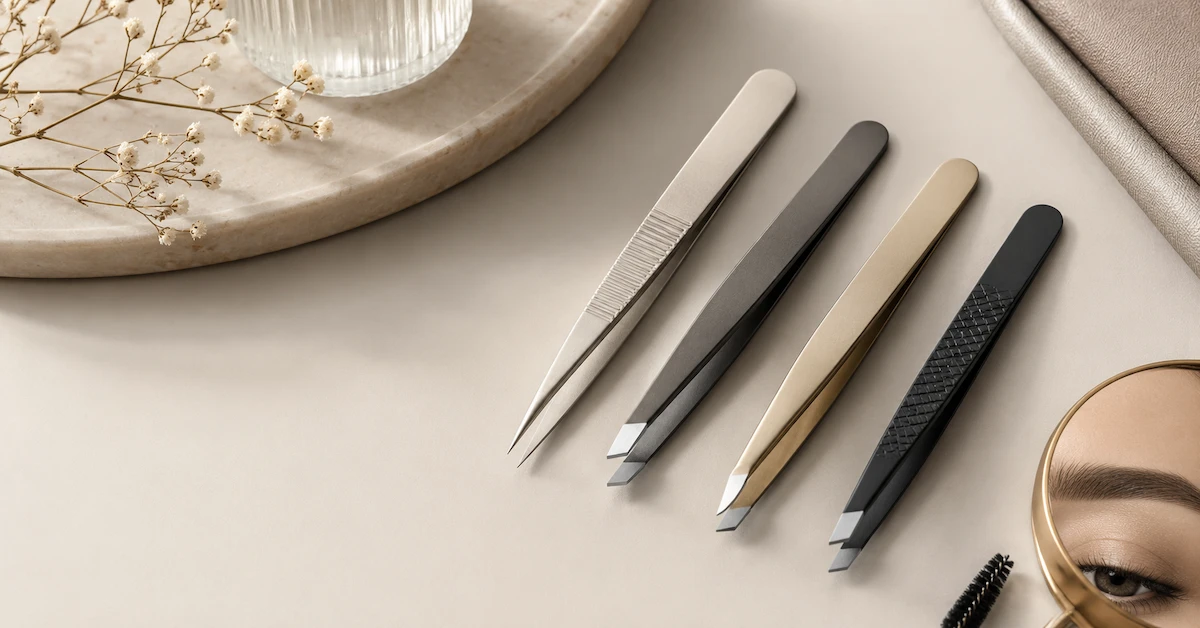
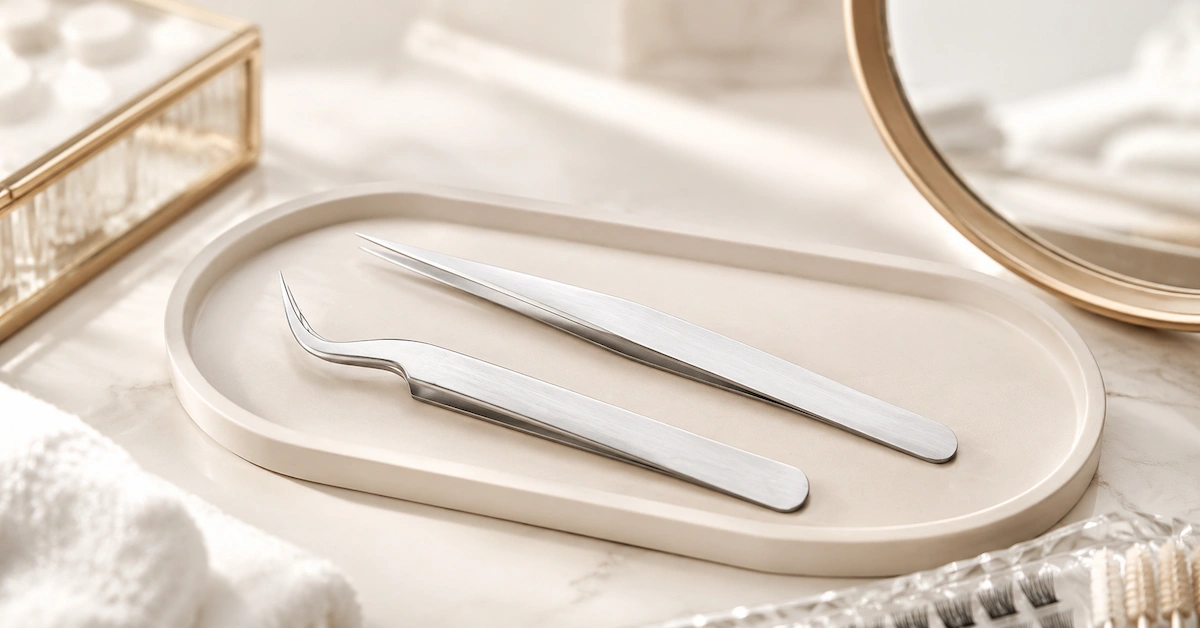
The product in question here is a two-piece eyelash extension tweezer set with different tip shapes. One tip appears straight or lightly angled, which makes it useful for isolation or general pickup. The other appears curved at the working end, which suits more precise placement work. Both tools look like slim metal tweezers with a brushed silver finish, most likely stainless steel, though exact material grade is not something to assume without documentation. For buyers, the practical question is simple: does the supplier provide a tool set that helps technicians work faster and more consistently, or just another generic beauty accessory?
Why this product category matters in the lash market
Eyelash extension work depends on small, repeatable movements. The hand posture is static, the eye area is sensitive, and the extensions themselves are tiny. That means tweezer geometry matters more than a casual shopper might think. A difference in tip shape can affect how well a lash artist isolates a natural lash, how confidently they pick up an extension, and how much hand fatigue builds over a long appointment.
For procurement teams, this is also a category where product consistency matters. Professional lash tweezers are not just aesthetic items for retail shelves. They are working tools used in services that need speed, control, and a dependable feel. A salon may buy in volume for staff use, while a distributor may want an eyelash tweezer wholesale program that can be packed into kits or sold through training channels. In both cases, the supplier’s ability to keep the tool structure consistent is as important as the finish.
Quick reference: what this two-piece set suggests
The visible product features point to a fairly standard but useful professional configuration:
- Two different tip geometries in one set
- Slim handles for detailed hand work
- Fine pointed ends for precision tasks
- Uniform brushed metallic finish
- Likely stainless-steel construction based on appearance
That combination is attractive because it covers two common lash tasks without overcomplicating the kit. One tool can support isolation or pickup, while the other can support placement or angle-sensitive work. It is a practical pairing rather than a flashy one, which is usually what professional buyers prefer once they move past retail packaging.
Understanding the likely manufacturing approach
The exact process is not provided, so it should be treated cautiously. Still, cosmetic tweezers like these are typically produced through metal forming, followed by tip grinding or precision shaping, and then surface finishing. If the base material is stainless steel, the supplier may also use polishing or brushing to create the matte-silver look shown here.
That matters because manufacturing quality shows up in use. Even when two tweezers look almost identical in a product photo, small differences in forming, alignment, and finishing can change the user experience. A slight mismatch at the tip can reduce control. Rough edges can snag. A finish that looks clean but feels slippery in the hand can frustrate technicians.
Buyers do not always get a full engineering spec sheet from a lash tweezer supplier, and that is normal in this category. But they should still ask for the basics: what metal is used, what finishing method is applied, how the tips are controlled during production, and whether the supplier can keep a repeated shape from batch to batch.
How to evaluate eyelash tweezer wholesale options
When comparing suppliers, it helps to look beyond the catalog photo. A set like this may look simple, but the real purchase decision usually comes down to whether it performs the same way every time.
1. Tip geometry
The two tips should serve clearly different jobs. If the angles are too similar, the set adds little value. Buyers should ask for close-up images or samples showing the working ends from multiple angles. In lash work, a few degrees can matter more than people expect.
2. Handle feel and balance
Slim tweezers are useful only if they sit naturally in the hand. If the body feels too light, some technicians lose confidence in the grip. If it feels too heavy, the wrist notices it by the end of the day. There is no universal preference here, which is why samples matter.
3. Finish quality
A brushed silver surface can look professional and reduce the visual noise of fingerprints, but it should also be even. Uneven finishing can be a clue that the production line is inconsistent. For salon buyers, this may seem cosmetic; for a distributor, it can affect how the product is perceived at retail.
4. Packaging and set composition
The visible product suggests a two-piece assortment. That can work well for training kits, starter sets, or bundled retail programs. Still, buyers should confirm whether the supplier can support different set configurations if their market requires it. Some clients want a matched pair for professional use; others want a mixed set for entry-level users.
Where this type of tool fits best
This is clearly a beauty tool first, and that is where its strongest commercial fit lies.
- Eyelash extension salons
- Lash training academie
- Cosmetology starter kits
- Private-label beauty lines
- Professional retail channels
There is also a broader category of precision pickup tasks where fine tweezers can be useful, but for sourcing decisions the beauty application is the one that should guide specification. That is where the value proposition is easiest to judge and where quality differences become obvious during daily use.
Common mistakes buyers make with lash tool sourcing
One mistake is treating all tweezers as interchangeable. They are not. A straight-tip isolation tool and a curved placement tool may look like minor variations, but in service they perform different jobs. Buying the wrong shape for the wrong task leads to slower work and more hand strain.
Another mistake is focusing only on price. In eyelash tweezer wholesale programs, the cheapest option is often cheap for a reason: inconsistent grinding, bland finish, or poor repeatability. That does not always show up in a product photo. It shows up in feedback from technicians, which is usually much more expensive to fix later.
A third issue is ignoring sample testing. A sourcing manager may approve a design based on appearance and packaging, then find that the tools do not suit the hand feel of the technicians who actually use them. That kind of mismatch is common in beauty hardware. It is avoidable, but only if the buyer involves the end user early.
Questions to ask a lash tweezer supplier before placing volume orders
You do not need a laboratory report for every beauty tool, but you do need enough information to reduce risk. A practical buyer checklist would include:
- What is the base metal?
- Is the finish brushed, polished, plated, or coated?
- Can the supplier provide matched samples from the same batch?
- Are both tip shapes available as individual SKUs if needed?
- Can the supplier support custom packaging for salon, retail, or training use?
Those questions sound basic, but they separate serious supply partners from simple trading listings. For a beauty brand or distributor, that distinction matters because product returns on small tools can still damage trust.
What this kind of set helps a buyer decide
At a practical level, this article helps a buyer decide whether a two-piece lash tweezer set belongs in their assortment, what to look for in samples, and how to evaluate a lash tweezer supplier without relying on marketing language. The main decision is not whether the tool looks elegant. It is whether the tip shapes, feel, and finish match the work being done in the salon or training room.
If you are sourcing for a professional channel, ask for product samples, confirm the tip geometry, and check whether the supplier can keep the finish consistent across a larger order. If you are building a retail or training bundle, think about how the two-piece set will be presented to the end user. A well-chosen pair of professional lash tweezers can make a kit feel deliberate instead of generic.
FAQ
Are these tweezers only for eyelash extensions?
That is the clearest use case. They may also suit other fine pickup tasks, but beauty work is the main application.
Why offer two tip shapes in one set?
Because lash artists often need different tools for isolation and placement. A mixed set can cover more of the workflow.
Should I buy by appearance alone?
No. Appearance gives clues, but samples and supplier communication are more reliable than a product image.
Is stainless steel guaranteed?
Not from appearance alone. The brushed metallic finish suggests stainless steel, but buyers should confirm the material specification with the supplier.
Next step for buyers
If you are building a salon supply line or evaluating an eyelash tweezer wholesale program, start with a sample order and compare the working feel of both tip shapes. That is usually the fastest way to tell whether a product is technically suitable or merely acceptable on paper. A dependable lash tweezer supplier should be able to answer basic material and packaging questions, provide consistent samples, and support the specific use case you are buying for.