In-House Nail Clipper Mold Development: What It Means for Better Nail Clippers

For a nail clipper, small differences in shape can decide whether the tool feels controlled, cuts cleanly or becomes frustrating after repeated use. The curve of the cutting edge, the spacing between the upper and lower jaws, the lever geometry and the way the parts sit together are all influenced by tooling decisions made long before the finished product reaches a manicure kit or retail shelf. That is why in-house nail clipper mold development matters for brands, distributors and beauty tool buyers who need reliable products rather than generic-looking items with uncertain consistency.
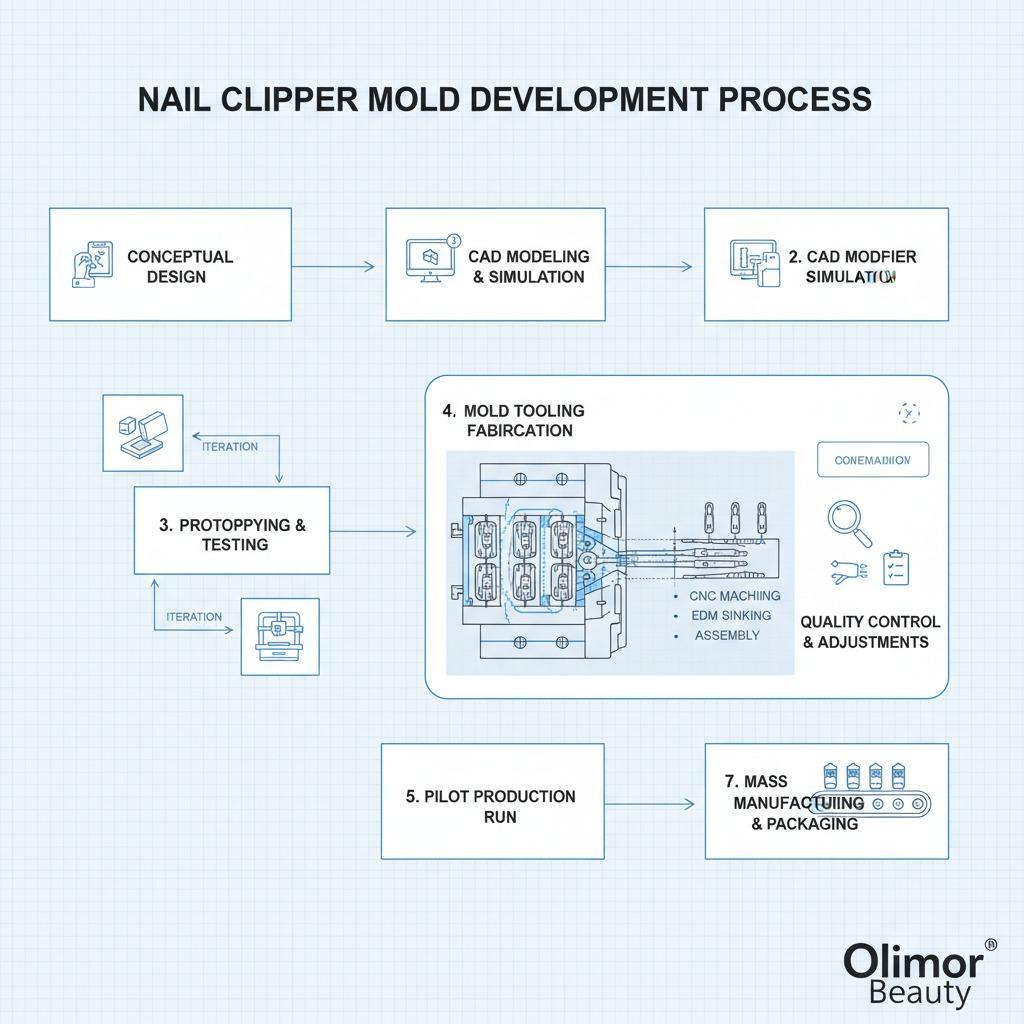
At Olimor Beauty, in-house mold development is part of the way nail clippers are planned and refined. Instead of treating the mold as a separate, one-time purchase, the mold is considered alongside product function, user comfort, surface finish and assembly requirements. This approach helps connect design intent with manufacturing reality. For buyers comparing nail clipper options or reviewing broader beauty tool products, understanding the role of mold development makes it easier to judge whether a product is built for dependable use or only designed to look acceptable in a catalog photo.
Why the Mold Matters in a Nail Clipper
A nail clipper appears simple, but it is a high-contact grooming tool that depends on alignment. The two cutting edges must meet correctly. The lever must transfer pressure smoothly. The body must resist twisting during use. If the molded or formed parts vary too much, the clipper may pinch, split nails, feel loose or require excessive pressure.
Mold development affects several practical details:
- Cutting alignment: The upper and lower jaws need a controlled relationship so the edge closes evenly across the nail.
- Ergonomic handling: Body width, lever height and finger contact points influence comfort, especially for repeated use.
- Assembly consistency: Parts that are shaped accurately are easier to assemble with stable movement and fewer adjustments.
- Surface quality: A well-prepared mold supports cleaner contours and reduces avoidable cosmetic defects.
- Long-term repeatability: Once a mold is validated, production can better maintain the approved shape from batch to batch.
These factors are important for retail brands, salon supply programs, promotional kits and private label projects. Even when a buyer is not requesting a highly customized design, the mold behind the product still determines much of the user experience.
What In-House Mold Development Adds to the Process
In-house mold development means that the product team can keep design review, mold planning, trial feedback and adjustment closer together. This does not remove the need for careful inspection, but it can make the route from problem identification to correction more direct. When a trial sample shows that a lever feels awkward or a cutting profile needs refinement, the discussion can happen with the tooling perspective included from the beginning.
For nail clippers, this is especially valuable because function is not judged only by a drawing. A sample may measure correctly and still feel uncomfortable. Another sample may look attractive but require too much force. Mold development done with close product feedback allows the team to consider both measurable dimensions and practical handling.
In-house work also helps protect design intention. A buyer may want a compact clipper for travel, a larger clipper for toenails, or a finish suitable for a gift set. Each direction has implications for mold structure, part thickness, leverage and assembly. When tooling decisions are separated from product use, compromises may be made without enough attention to the final user. A more integrated process reduces that risk.
Precision Benefits Buyers Can Actually Evaluate
Precision should not be treated as a vague selling word. Buyers can evaluate it through the behavior of the finished clipper. A well-developed mold contributes to precision, but the result should be visible and testable in samples. During sourcing, it is helpful to examine several pieces, not just one carefully selected sample.
| Evaluation point | What to check | Why it matters |
|---|---|---|
| Jaw closure | Look at whether both cutting edges meet evenly from side to side. | Uneven closure can cause tearing, slipping or incomplete cuts. |
| Lever action | Open and close the lever repeatedly and compare resistance across samples. | Stable lever feel suggests better part consistency and assembly control. |
| Body symmetry | Check whether the clipper sits straight and does not twist under pressure. | Twisting reduces control and can make cutting less comfortable. |
| Edge finish | Inspect for burrs, rough contact points or inconsistent edge appearance. | Rough edges affect safety, comfort and perceived quality. |
| Surface details | Review visible contours, polishing areas and any decorative features. | Clean surfaces help support retail presentation and brand trust. |
This kind of review is more useful than relying only on broad claims. If a nail clipper is intended for a beauty set, travel kit or professional retail channel, repeated handling tests and visual inspection across multiple samples provide a clearer picture of mold and manufacturing discipline.
How Mold Decisions Influence Comfort and Use Cases
Different users hold nail clippers in different ways. Some use the thumb and index finger with light pressure; others prefer a firmer grip. A compact clipper may be convenient in a pouch but harder to use for thicker nails. A wider lever may feel steadier, but it can change the appearance and packaging fit. These are not only design questions; they are mold development questions.
For everyday fingernail trimming, buyers often look for a clipper that is easy to control, not too bulky and smooth around the hand-contact areas. For toenail use, leverage and jaw opening may become more important. For giftable beauty tools, the surface finish and overall silhouette carry more weight. In each case, the mold must support the intended function.
A practical sourcing discussion should therefore begin with use case. Before reviewing samples, define whether the clipper is meant for:
- Daily personal grooming in a bathroom or vanity kit.
- Travel sets where compact size and protective packaging matter.
- Retail beauty assortments where appearance and consistency affect repeat purchase.
- Professional or salon-adjacent use where frequent handling increases the need for comfort.
- Private label programs that require a clear balance of finish, function and cost control.
Once the intended use is clear, mold and sample evaluation become more focused. A product that is acceptable for a basic travel kit may not be the right choice for a premium grooming set, and a heavy-feeling clipper may not suit a compact beauty collection.
Material and Finish Considerations Without Guesswork
The original product focus includes stainless steel nail clippers, a common choice because stainless steel is associated with corrosion resistance and a clean grooming-tool appearance when properly selected and finished. However, material alone does not guarantee a good clipper. Heat treatment, edge preparation, polishing, assembly and packaging conditions also affect the final result. When exact material grades or process details are not listed, buyers should use a neutral checklist instead of assuming all stainless steel tools perform the same way.
Useful questions for a nail clipper program include: Does the sample show clean edge contact? Are exposed surfaces smooth enough for hand contact? Does the clipper retain a stable feel after repeated opening and closing? Is the finish appropriate for the target sales channel? Are there sharp burrs near the file, lever or hinge area? These observations help buyers compare options without needing to overstate specifications that have not been confirmed.
Packaging should also be considered early. A clipper with a polished finish may need protection against rubbing during transport. A compact clipper for a kit may require specific placement so the lever does not move freely inside the package. Mold development and packaging are separate tasks, but they meet in the final customer experience.
Quality Control Points Connected to In-House Tooling
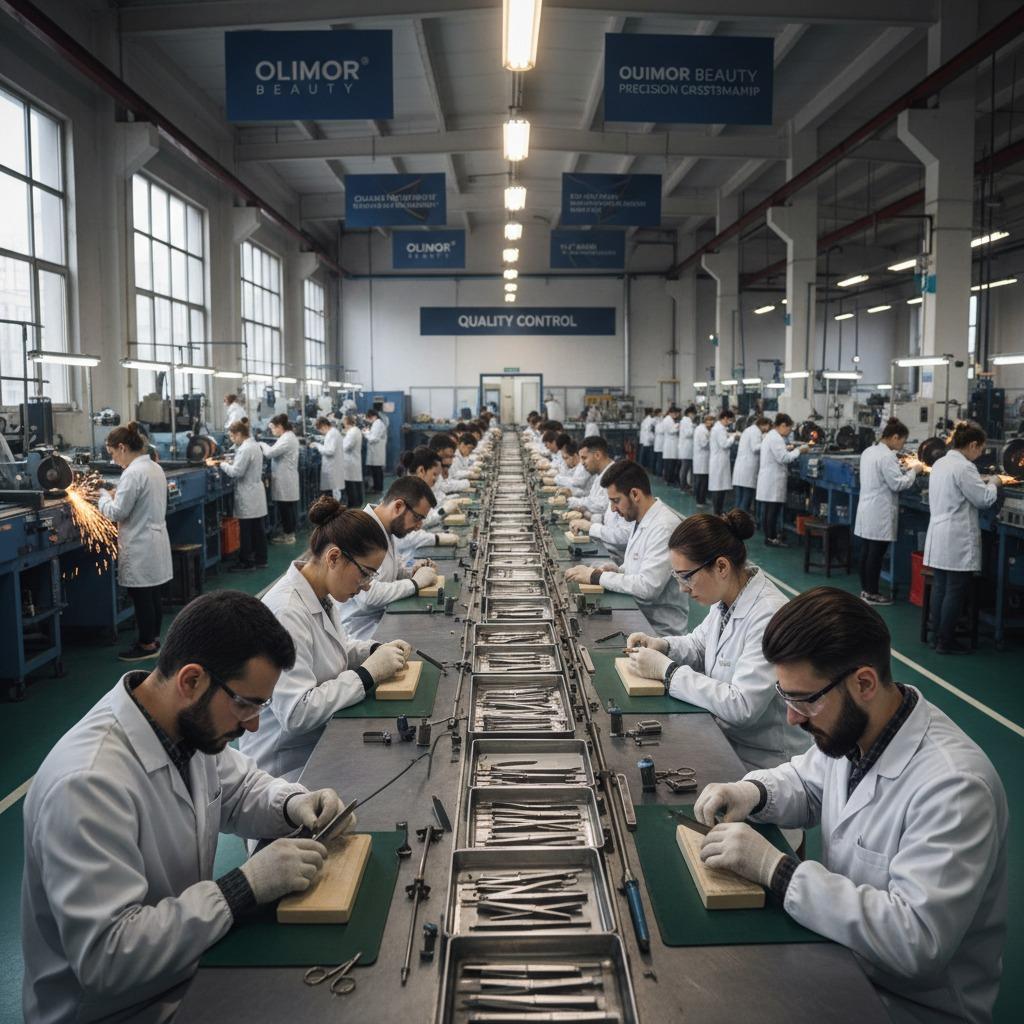
In-house mold development is most valuable when it is paired with structured quality review. The mold can support consistency, but production still needs inspection at meaningful points. For nail clippers, this often includes checking incoming material condition, part dimensions, surface quality, edge behavior, assembly movement and final appearance.
Buyers do not need to manage every factory detail, but they should know which characteristics are critical. Cutting performance, safe handling surfaces and consistent lever action deserve more attention than decorative claims. If branding or private label work is involved, logo placement and finish durability should be reviewed on actual samples rather than only on artwork.
Olimor Beauty presents nail clippers as part of a wider beauty tool category, so buyers can also compare how the clipper fits with related grooming items. Reviewing product collections can help teams think in terms of sets, retail positioning and user scenarios rather than one isolated tool. If a program requires a sourcing conversation, buyers can send an inquiry with target use, packaging needs and sample evaluation priorities.
Choosing a Nail Clipper Supplier with Mold Capability
When selecting a supplier, mold capability should be discussed in practical terms. The goal is not simply to hear that tooling exists, but to understand how tooling supports consistent product function. A good conversation covers sample approval, adjustment handling, expected appearance standards, packaging compatibility and quality checkpoints. This is especially important for buyers who plan repeat orders, because a first shipment is only successful if later production remains aligned with the approved sample.
It is also useful to separate what is fixed from what may be adjustable. Some design elements are tied closely to existing tooling, while others may be refined through finish, packaging or accessory choices. Clear communication at the beginning reduces wasted sampling time and helps both sides focus on realistic product goals.
In-house nail clipper mold development gives Olimor Beauty a stronger foundation for connecting design, tooling and production review. For buyers, the benefit is a more informed path to evaluating precision grooming tools: inspect the cut, feel the lever, compare samples and match the clipper to its intended use. To discuss a nail clipper project or compare available options, contact Olimor with your product requirements and target market details.
Tag: