
Custom Logo Tweezers: A Private Label Sourcing Guide
A logo should be added only after the tweezer tip, tension, finish and intended use are approved. Private label buyers need one controlled specification covering the working tool, decoration, packaging and inspection checkpoints.
Custom logo tweezers should begin with an approved working tool, not with artwork alone.
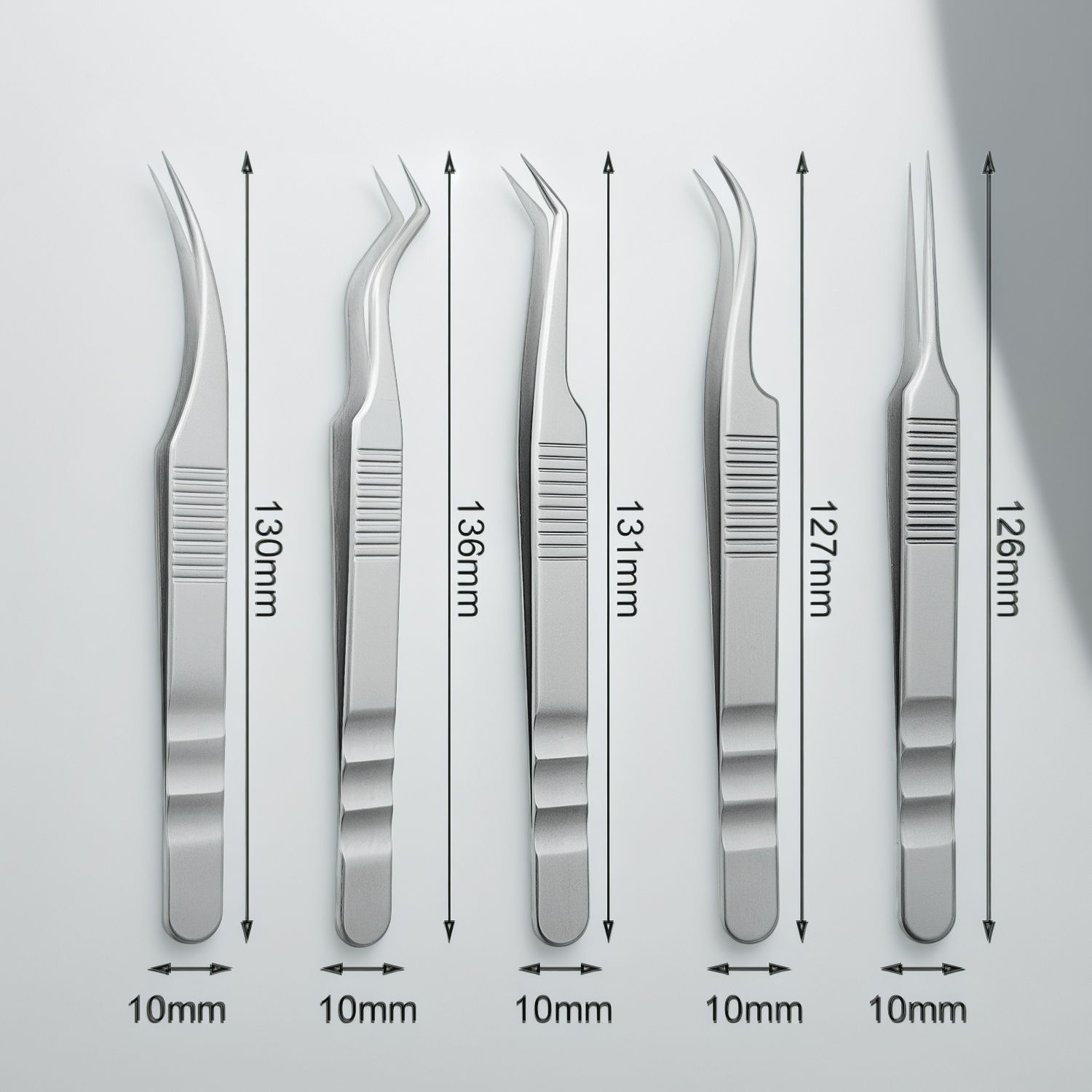
What Makes Custom Logo Tweezers Different from Standard Tweezers?
A standard tweezer is usually chosen as an individual grooming item. A custom logo tweezer is selected as part of a wider brand experience. It may be sold in a retail pack, included in a brow-care kit, offered as a salon accessory or used as a promotional beauty tool. Because of that, both performance and presentation matter.
The logo should not be treated as a decorative afterthought. Its placement, size, color and durability affect how the finished tool is perceived. If the branding is too large, it can look unbalanced. If it is placed where fingers apply pressure, it may wear faster. If the logo color clashes with the metal finish, the tool may look less refined even when the tweezer itself is well made.
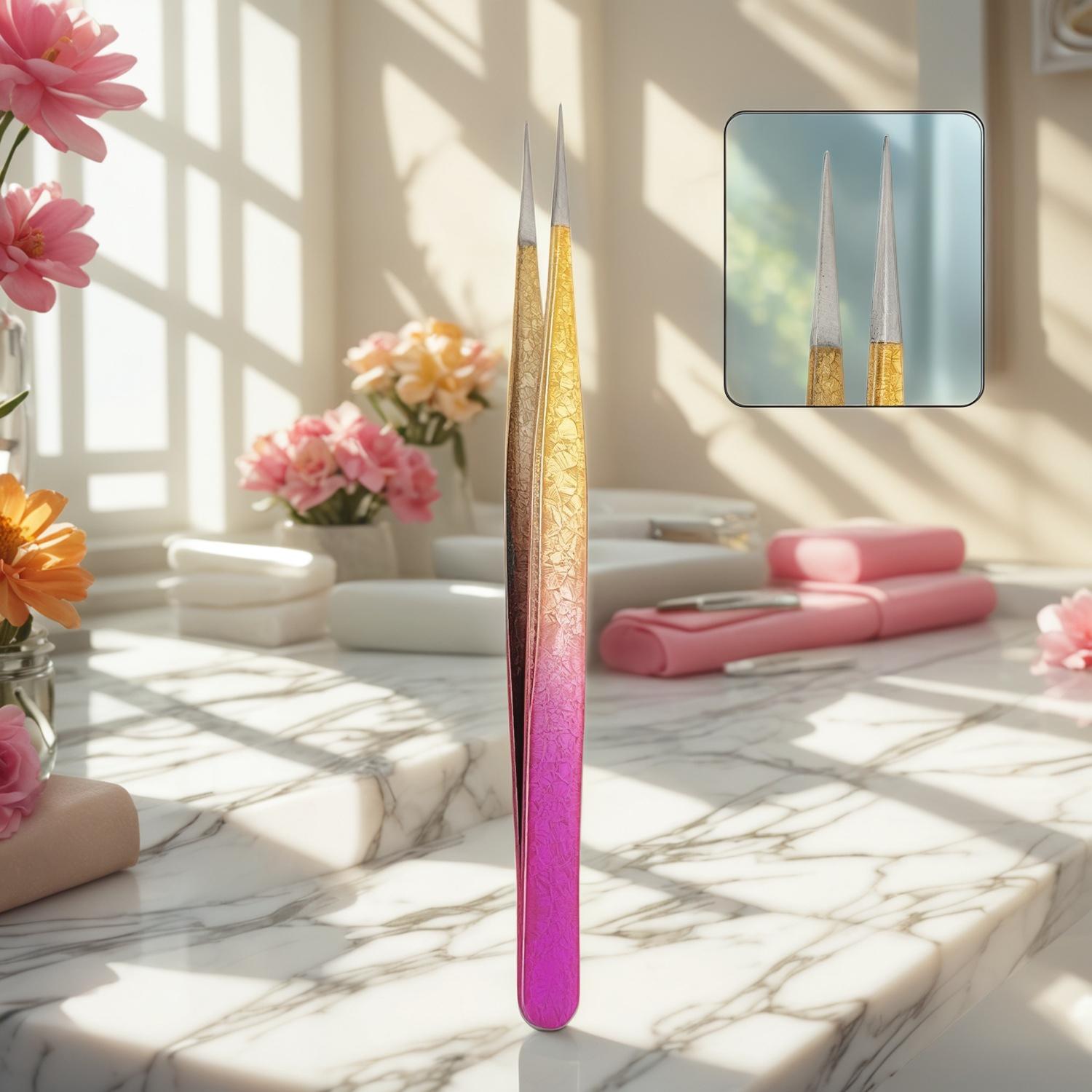
The original Olimor Beauty range has included designs such as Gradient Precision Tweezers with a gold-to-pink gradient and brushed metallic finish. A decorative finish like this can help a product stand out, but the buyer should still start with function: the tweezer must align properly, close evenly and grip hair without excessive force.
Core Product Details Buyers Should Evaluate
The supplied Olimor tweezer details provide a useful starting specification: stainless steel body, 115 mm length, 14 g weight, pointed tips, textured grips and a silver rust-resistant finish. Each feature affects sourcing decisions in a practical way.
- Stainless steel construction: Stainless steel is widely used for beauty tools because it suits regular handling and routine cleaning. Buyers should still inspect the actual finish, edge quality and visible consistency on samples.
- 115 mm length: This size offers enough body for a controlled hold while remaining compact for retail packaging, beauty pouches and travel grooming kits.
- 14 g lightweight feel: A light tweezer can be convenient for repeated salon use, detail work and portable kits. It should still feel stable rather than flimsy.
- Pointed tips: Pointed tips are suitable for precise pickup, lash-related tasks, fine grooming and detailed craft use. They require careful alignment checks because small tip defects can affect grip.
- Serrated or textured grips: Grip texture helps users maintain control, especially when hands may be affected by lotion, sanitizer, makeup residue or long working sessions.
- Silver rust-resistant finish: A clean silver finish is versatile for professional and retail programs. Buyers should evaluate logo contrast and how the surface looks under store, studio or photography lighting.
These specifications should be treated as the beginning of the buying brief, not the whole decision. A good sample review also includes tension, tip meeting, surface smoothness, packaging fit and branding readability.
Key Selection Criteria for Branded Tweezers
When comparing custom logo tweezers, it is useful to separate appearance from working performance. A good sourcing decision considers both. The following criteria can help buyers review samples more consistently:
- Tip style: Slanted tips are commonly used for eyebrow shaping and general grooming. Pointed tips are better suited to detailed work, while flat tips may be selected for broader gripping needs.
- Tip alignment: The two tips should meet evenly without visible gaps. Poor alignment leads to slipping, cutting hair instead of gripping it or requiring repeated attempts.
- Grip tension: The arms should offer enough resistance for control but not so much that the user experiences hand fatigue during repeated use.
- Surface finish: Brushed, polished or colored finishes should look even, with no rough edges, patchy color or obvious marks that weaken the retail impression.
- Logo readability: The logo must be clear at the actual tool size. Fine lines and small lettering may need adjustment before production.
- Edge comfort: Outer edges should feel smooth in the hand. A tweezer may have precise tips but still feel unpleasant if the body edges are too sharp.
- Packaging fit: If the tweezers will be packed in a pouch, blister card, box or kit, confirm that the product dimensions suit the intended presentation.
Choosing Tip Styles for Different Beauty Use Cases
The most suitable tweezer depends on how your customers will use it. A salon buyer may prioritize control and durability. A retail buyer may need an attractive finish that photographs well and fits a beauty kit. A brow brand may care most about clean hair removal and tip precision.
For eyebrow shaping, slanted tweezers are often the easiest option for a wide audience because the angled edge can grip individual hairs while still covering enough surface for efficient grooming. This makes them a practical choice for retail lines and salon resale.
For precision tasks, a pointed tip can be helpful, but it requires more careful handling and may not be the best first choice for every consumer. If your product is aimed at professionals or experienced users, pointed styles may be worth considering. If the audience is broad, a slanted or slightly angled style may reduce misuse and returns.
For gift sets, travel kits or entry-level beauty accessories, the tool should be easy to understand immediately. In that case, a comfortable shape, clean closing action and simple logo placement may matter more than a highly specialized tip.
Choosing Custom Logo Tweezers by Use Case
There is no single best tweezer for every buyer. A lash-focused brand may prioritize precise pointed tips and controlled closure. A retail beauty kit buyer may focus on packaging fit, finish consistency and perceived value. A salon supplier may care most about comfort, cleaning practicality and grip texture. The following comparison helps clarify selection priorities.
| Use Case | Main Selection Focus | Branding and Sourcing Check |
|---|---|---|
| Professional brow studio | Tip alignment, controlled tension, textured grip and comfortable repeated handling | Test samples with real grooming tasks before approving the logo position. |
| Lash or detail beauty kit | Pointed tips, fine pickup ability and stable hand control | Use a small, clear mark that does not distract from tip orientation. |
| Retail beauty set | Clean finish, smooth edges, clear logo and packaging compatibility | Compare the tweezer logo with the box, pouch or tray design for a coordinated look. |
| Travel grooming set | Compact 115 mm size, light 14 g feel and safe storage format | Confirm the tweezer fits the planned pouch, insert or travel box without movement damage. |
| Promotional beauty program | Useful function, visible branding and consistent presentation | Choose simplified artwork if the full logo becomes too small on the handle. |
| Distributor assortment | Balanced performance, versatile silver finish and repeatable supply | Discuss sample approval, artwork control and reorder consistency with the supplier. |
Buyers planning a wider beauty range can compare related tools through Olimor beauty tool products and review broader beauty tool collections when developing complete retail or private-label assortments.
Logo Placement, Finish and Brand Presentation
Branding a tweezer requires attention to scale. Unlike a mirror, brush handle or cosmetic bag, the visible branding area is narrow. A logo that looks strong on a website header may become illegible on a metal tweezer arm. Buyers should prepare artwork in a clean format and consider simplified versions for small surfaces.
A well-planned logo position usually avoids the highest friction zones. The outer arm is often a logical area because it remains visible when the tweezer is displayed and does not usually interfere with the closing action. However, the best placement depends on the tweezer shape, finish and packaging orientation.
Color contrast is another practical detail. A dark logo may show clearly on a lighter metallic finish, while a light logo may stand out on a darker coated surface. For gradient or brushed finishes, check the logo against the full color range, not just one part of the tool. If the background shifts from gold to pink, for example, the same logo color may appear stronger in one area and weaker in another.
Treat customization as a feasibility ladder. Logo position and a basic finish direction can be discussed from artwork and a standard sample, but tip geometry, closing tension, surface treatment and packaging fit need a physical sample. Approving the decoration before the working tool is settled creates avoidable rework.
Quality Checks to Request Before Approving Production
Before approving a custom logo tweezer for production, buyers should create a clear review checklist. This reduces subjective decisions and helps internal teams compare samples fairly. The table below outlines useful checkpoints.
| Check area | What to review | Why it matters |
|---|---|---|
| Tip closure | Tips meet evenly along the gripping area | Improves hair grip and reduces slipping |
| Spring tension | Arms open and close smoothly | Affects comfort during repeated use |
| Logo appearance | Artwork is centered, readable and consistent | Protects brand presentation |
| Surface condition | No rough edges, scratches or uneven finish | Supports retail quality and user comfort |
| Packaging compatibility | Tool fits the insert, pouch or display format | Prevents last-minute packing issues |
Use separate approval gates instead of treating one sample as proof of everything:
- Approve the functional base tool for tip contact, tension and handling.
- Approve the decorated sample for finish, logo scale, placement and contrast.
- Approve the retail-packed sample for tip protection, fit and presentation.
- Keep the final approved sample, artwork and revision record together as the production reference.
It is also helpful to test the sample in real handling conditions. Open and close it repeatedly, use it at different angles and check whether the logo remains visually balanced when held naturally. A product can look good flat on a desk but feel awkward in use if the body shape, tension or finish has not been considered carefully.
Quality Inspection Checklist for Custom Logo Tweezers:
- Inspect from several angles: View the pointed tips from the front, side and top to catch misalignment that may not show in one view.
- Review sample consistency: Inspect more than one sample where possible so decisions are not based on a single best piece.
How Retailers and Salons Can Plan a Better Supplier Brief
A strong supplier brief saves time and reduces misunderstanding. Instead of asking only for “custom logo tweezers,” describe the intended user, sales channel and preferred look. For example, a salon chain may need a practical tweezer for staff use and resale, while an online retailer may prioritize product photography, packaging consistency and a finish that matches a beauty collection.
Your brief can include the following points:
- The intended use, such as eyebrow shaping, professional grooming, gift sets or retail beauty kits.
- The preferred tip style, or a request to compare suitable styles during sampling.
- The desired finish direction, such as brushed metal, polished metal or a colored surface.
- Logo artwork and guidance on acceptable size, placement and color.
- Packaging requirements, if the tweezers must fit an existing box, pouch or insert.
- Any market-specific labeling or handling requirements your company needs to meet.
Match the pack to the sales channel. A salon tool may need a reusable sleeve or case, a retail item may need a card or box with clear product information, and a kit insert must prevent the tips from striking other tools. The buyer should approve protection and presentation together on the packed sample.
If you are still comparing product categories, you can review Olimor beauty tool products to consider how tweezers may fit with other beauty accessories. Buyers building a wider retail range can also explore product collections for ideas on grouping tools by use case, finish or customer segment.
Private Label and Wholesale Sourcing Questions
- Can the supplier provide pre-production samples with the actual logo position and finish?
- How should the artwork be prepared for a small metal surface?
- What sample checks are recommended for pointed tip alignment and grip tension?
- Can the supplier maintain consistent logo placement across repeat orders?
- What packaging options are compatible with a 115 mm tweezer?
- How are visual defects, burrs, surface marks and obvious tip misalignment handled before shipment?
Maintenance Guidance for End Users
Good care instructions can improve customer satisfaction and reduce avoidable complaints. Tweezers should be kept clean and dry after use. If they are used in a professional setting, the cleaning process should follow the salon’s hygiene procedures and local requirements. For consumer retail packs, simple care guidance can be included on the packaging or insert.
End users should avoid dropping tweezers on hard surfaces because the tips can be knocked out of alignment. They should also avoid using precision tweezers for non-beauty tasks such as prying open containers, removing staples or handling hard craft materials. Misuse can damage the tip edge and reduce gripping performance.
Storage matters as well. A sleeve, cap or pouch helps protect fine tips from bending and keeps the tool clean inside a cosmetic bag. If your branded tweezer is part of a kit, consider whether the packaging protects the tips during transit and after purchase.
Working with Olimor Beauty on Custom Logo Tweezers
Olimor Beauty supports buyers looking for custom logo tweezers with attention to tool function, surface presentation and practical sourcing communication. As a tweezers exporter and beauty tool supplier, the goal is to help businesses make choices that match their market rather than select a generic item without context.
For the best result, begin with your target audience and the role the tweezer will play in your product range. A professional brow tool, a retail grooming accessory and a branded promotional item may all need different decisions on tip shape, finish and packaging. Clear priorities at the start make sampling and approval much more efficient.
Custom logo tweezers work best when branding and usability are developed together. A clean logo, comfortable hand feel, precise tip closure and suitable finish all contribute to a product that customers will keep using. For beauty brands, salons and retailers, that combination is what turns a small tool into a reliable part of a professional beauty assortment.
Build the OEM Specification Beyond the Logo
The merged OEM article adds the functional controls that must precede artwork approval: tip style, tip contact, closing tension, handle feel, material, finish and intended application. Logo position and packaging should be reviewed on an approved physical sample because decoration can look different on curved, brushed or coated surfaces.
The purchase specification should identify what is fixed after sample approval and how changes will be handled. It should also separate functional defects, visual finish defects, logo defects and packaging defects so final inspection is unambiguous. Keep the approved artwork, finish reference, dimensions, sample photos, packaging dieline and change notes in one approval record so later revisions can be compared with the same baseline.
Cost Factors Without Guesswork
Custom logo tweezer cost can vary, but responsible buyers should avoid assuming a price before the specification is clear. Cost is usually influenced by the base tweezer design, material and finish expectations, logo method, artwork complexity, packaging, order quantity, inspection requirements and shipping arrangement. A simple logo on a standard silver tweezer may be easier to quote than a custom color, special packaging and multiple artwork placements.
The most reliable way to control cost is to reduce uncertainty early. Confirm the target use, choose a practical logo version, decide whether the tweezer is sold alone or in a kit and agree on sample review criteria before requesting a final quotation. This helps prevent late changes that can affect production planning and approval timing.
FAQ: Custom Logo Tweezers for Beauty Buyers
Can I request samples before placing a larger order?
Sample review is a practical step for custom logo tweezers because buyers need to check tip alignment, grip tension, finish quality and logo readability. Contact Olimor with your artwork and intended use so the sample discussion can focus on the right details.
Is there a fixed MOQ for custom logo tweezers?
MOQ can depend on the product configuration, logo requirement, packaging and production plan. Buyers should ask for the current MOQ based on their specific custom logo project rather than relying on a general estimate.
What customization details should I prepare?
Prepare the logo file, a simplified mark if available, preferred placement, packaging idea, target sales channel and any quality concerns. This helps the supplier judge whether the design is suitable for the narrow tweezer surface.
What quality checks matter most for pointed tweezers?
Tip alignment, even closure, controlled tension, smooth edges, consistent finish and readable logo placement are the most important checks. For professional brow or lash use, test the sample as a working tool before judging the branding.
Can lead time be confirmed before ordering?
Lead time depends on sample approval, customization, packaging and order details. Buyers should confirm the current schedule with Olimor after the specification and artwork are reviewed.
Which tip style should a brand choose?
Match the tip to the intended task and user; do not select a shape only because it photographs well.
Where should a logo be placed?
Choose an area that remains legible without changing grip comfort or interfering with tip inspection.
What is the most important repeat-order reference?
Keep the approved sample, artwork version and measurable acceptance points tied to the purchase specification.
Can the supplier choose the tip shape?
They can propose options, but the buyer should approve the shape against the intended task and sample result.
What if the logo reduces grip?
Move or resize it and approve a new marked sample before production.
How are custom repeat orders controlled?
Keep the approved tool, artwork, finish and packaging references with the purchase specification.
Which marking method is best?
The choice depends on material, finish, desired appearance and durability; test the actual combination.
Can the tool and packaging use separate approvals?
They can have separate records, but production release should verify that the approved tool fits and remains protected in the approved pack.
What should a reorder cite?
Reference model, finish, artwork revision, marking method, pack file and retained sample.
Can I request samples before placing a bulk order?
Sample availability depends on the selected tweezer style, customization method and project details. Ask the supplier what can be sampled, whether the sample shows final decoration and how sample approval affects the production order.
Is there a minimum order quantity for personalized tweezers?
MOQ varies by product style, finish, logo method and packaging requirement. Confirm the MOQ for the exact specification rather than assuming one quantity applies to every custom tweezer project.
What customization options should I discuss first?
Start with tip type, finish, logo placement and packaging. These decisions affect both usability and presentation. Artwork details should be reviewed after the functional tweezer choice is clear.
Where should a logo sit on tweezers?
Use a flat visible area that does not disrupt grip or obscure required product information.
Can artwork approval replace a marked sample?
No. A physical marked sample shows contrast, position and interaction with the chosen finish.
What makes a branded tweezer retail ready?
It needs consistent function, approved appearance, protected tips, accurate labeling and a stored reorder reference.
Can a logo be added after the tool is approved?
Yes, but the marked sample still needs a finish and rub review before release.
Should a brand use the same logo position on every tweezer?
Only when the working platform and grip area are the same; confirm placement by model.
What proves repeatability?
A retained approved sample plus a documented inspection of multiple production units.
Prepare a Clear RFQ
Review the Olimor tweezer range, compare the OEM and private label guidance, and then send a custom tweezer brief. Include the intended user, target market, product dimensions or reference, finish, logo, packaging, sample quantity and inspection expectations so the response can be based on the actual project.
Choose the Right Tweezer Style for the Use Case
Before discussing logo placement or packaging, define how the tweezer will be used. Different tip shapes serve different tasks, and choosing the wrong style can lead to poor user experience even if the material and finish look attractive. A distributor may need several styles, while a focused brand may only need one highly reliable design.
- Slant tip tweezers: commonly selected for brow grooming because the angled edge gives visibility and control when gripping individual hairs.
- Pointed tip tweezers: useful for very fine precision tasks, but they require careful handling and consistent tip finishing.
- Straight tip tweezers: suitable for general gripping tasks and some professional kit applications where a flat contact area is preferred.
- Curved or specialty tips: often considered for lash-related work or other detailed beauty applications where the working angle matters.
When selecting a style, consider the skill level of the end user. A tool intended for trained lash artists can prioritize fine control, while a retail grooming tweezer should balance precision with safe, comfortable everyday handling. If your brand sells to both professionals and consumers, separating products by application can make the line easier to explain and easier to sell.
Understanding Bulk Tweezers Price Versus Real Value
Bulk tweezers price is important, especially for distributors and brands working toward a target margin. However, the cheapest option can become expensive if the order contains inconsistent tips, rough finishes, weak packaging or products that do not match the approved sample. A more useful comparison is total value: the balance of unit cost, usable quality, customization reliability and customer satisfaction.
When comparing quotations, make sure you are comparing the same product details. Two tweezers may look similar in a photo but differ in material, finish, tip finishing process, packaging, inspection requirements or logo method. These differences can affect both cost and user experience. A quote without clear specifications may appear attractive but create problems later when expectations are not aligned.
The following table shows practical factors that influence value beyond the listed unit price:
| Factor | Why it matters for business buyers |
|---|---|
| Tip consistency | Directly affects gripping performance and the user’s trust in the tool. |
| Surface finish | Influences appearance, hand feel and perceived quality in retail or professional kits. |
| Logo execution | Determines whether the branding looks clean, durable and aligned with your packaging. |
| Packaging protection | Helps reduce scratches, bent tips and presentation issues during shipping and storage. |
| Reorder control | Supports consistent inventory when distributors or retailers place repeat orders. |
For many buyers, paying attention to these points is more valuable than negotiating only on price. A dependable product that supports repeat sales often produces better long-term results than a low-cost order that requires extra sorting or customer service.
Branding and Packaging Decisions for Custom Tweezers
Custom tweezers for business should reflect the position of your brand. A minimalist professional brand may prefer a clean finish with discreet logo placement. A retail beauty line may need packaging that communicates the tip type, intended use and care instructions clearly. A distributor may want neutral designs that can fit several sales channels.
Before production, prepare artwork and product information carefully. Confirm logo size, placement and contrast on the selected finish. If the tweezer will be sold in packaging, make sure the packaging text does not overpromise. Clear claims such as “slant tip brow tweezer” or “precision grooming tool” are usually more useful than vague promotional language. If the product is part of a kit, the tweezer should visually match the other tools, cartons or inserts.
Packaging should also protect the tweezer tips. Even a well-made tweezer can perform poorly if the tips are bent or scratched during transit. For professional and retail buyers, a protective sleeve, insert or suitable inner packaging may be worth considering as part of the complete product plan.
Write a Custom Tweezers RFQ That Can Be Inspected
- Name the application, tip format, grip area and required access.
- Specify how contact, spring tension, finish and marking will be reviewed on samples.
- List unit pack, insert, carton and reorder-identification requirements alongside the tool.
Start With the Real Use Case, Not Just the Logo
The first sourcing question should be simple: what task will the customer use the tweezer for most often? A tweezer designed for brow shaping may not be the best option for lash application, ingrown hair removal or general grooming. When buyers focus only on the printed logo or surface color, they may overlook the working end of the tool, where performance is decided.
For brow shaping, buyers often look for a stable hand feel and tips that can isolate fine hairs without excessive pressure. For lash placement, the preferred shape may depend on whether the user applies strip lashes, clusters or individual lashes. For retail sets, a versatile shape may be more appropriate than a highly specialized professional style. If the tweezer will be sold as part of a kit, consider how it pairs with the rest of the assortment shown in your beauty tool products.
Before confirming a custom logo order, build a short use case profile. Include the user type, primary task, expected price position, packaging format and whether the item is intended for daily professional use or occasional personal grooming. This helps align product design with the buyer’s actual market rather than choosing a generic tweezer with a logo added at the end.
Tip Shape and Alignment Are the Core Quality Factors
A tweezer can look attractive in photography and still perform poorly if the tips are misaligned. Tip contact, tension and finish should be reviewed before cosmetic details. The supplied article notes the importance of technical precision, ergonomic stainless steel construction and ultra-fine tips; these are useful selection points, but they should be translated into a buyer’s inspection process.
Different shapes support different tasks. The table below gives a practical comparison for sourcing discussions:
| Tip style | Typical use | What to check |
|---|---|---|
| Slant tip | Brow shaping and everyday grooming | Even edge contact, comfortable tension and clean hair grip |
| Point tip | Fine detail work | Sharp, symmetrical tips and protective packaging to prevent damage |
| Flat tip | General holding tasks or beauty kits | Parallel tip closure and no rough edges |
| Angled or specialty tip | Lash application or professional tasks | Hand position, visibility and repeatable control during use |
For custom logo tweezers, ask for representative pre-production samples if your order involves a new finish, new decoration method or packaging that could affect the product. A sample should be tested with actual tasks, not only reviewed under office lighting. Check whether the tweezer grabs fine hairs or lash fibers cleanly, whether the tension causes hand fatigue, and whether the surface finish remains comfortable when held for several minutes.
Quality Checklist for Custom Logo Tweezer Orders
Before approving bulk production, use a checklist that balances appearance and function. The goal is not to create unnecessary complexity, but to make sure the final product matches the promise of your brand.
- Tip contact: The tips should meet evenly and hold fine hairs or lash fibers without sliding.
- Tip finish: Edges should feel clean, with no burrs or rough points that could scratch skin.
- Tension: The tweezer should open and close smoothly without feeling too stiff or too loose.
- Surface finish: Color, coating or texture should look consistent across the visible area.
- Logo accuracy: Check size, orientation, clarity, spelling and color against approved artwork.
- Grip comfort: Confirm that textured or decorative areas support control without discomfort.
- Packaging protection: Tips should be protected during transport and retail handling.
- Carton labeling: Confirm item details so warehouse teams can identify the order correctly.
This checklist is useful for salons ordering branded retail stock, lash brands building application kits and distributors adding a beauty tool to an existing catalogue. It also helps separate true quality issues from subjective style preferences, which makes production feedback clearer.
Match the Tweezer Tip Shape to the Main Use
The first selection decision should be tip shape. Logo placement and packaging matter, but the tip style determines the core user experience. If the tweezer will be used mainly for brows, a different design may be appropriate than for detail craft work or lash-related support.
Slanted tips for general eyebrow grooming
Slanted tweezers are often the most versatile choice for salons and retail grooming kits. The angled edge can follow the brow line while still giving the user a broader contact area than a fine point. For bulk order tweezers intended for general consumer use, a slanted style is usually easier to position as an everyday grooming tool.
Pointed tips for detail work
Pointed tweezers can help with very fine detail tasks, but they require more careful handling. They may be better suited to trained users, controlled professional environments or specialized kits rather than general promotional gifts. If pointed tips are selected, packaging and care instructions should help protect the tip from damage.
Flat tips for wider grip contact
Flat tips can be useful where a wider gripping surface is preferred. They are less focused on isolated fine hairs but may suit certain grooming, craft or kit applications. Buyers should test whether the flat edge closes evenly and whether it matches the intended task.
Curved or specialty tips for specific concepts
Curved or specialty tweezers may support a particular beauty or craft function. They can help a retail set feel more specialized, but they should not be chosen only for novelty. The user should understand why the shape exists and how to use it safely and effectively.
Material, Grip, Cleaning and Everyday Maintenance
For the selected model, confirm the steel specification, tip alignment, handle finish, cleanability and grip on a physical sample. Do not transfer general feature claims to a personalized order until the supplier documents them for that exact product.
Grip deserves special attention in personalized projects. A glossy or decorative finish may look appealing, but the tweezer still needs to remain secure when the user applies light pressure. Textured surfaces, shaped bodies or thoughtful ergonomic design can help reduce slipping during brow shaping or detail work. Lightweight construction may reduce hand fatigue during repeated use, while a stable body helps the tool feel controlled.
Maintenance instructions should be simple and practical. Tweezers should be cleaned after use, dried properly and stored so that the tips are protected. Dropping the tool may affect alignment even when the body looks unchanged. For retail kits, a brief care insert can reduce misuse and improve the buyer’s experience.
- Wipe the tips and body after use to remove residue.
- Dry the tweezer thoroughly before storing it.
- Protect the tips in a pouch, tray or fitted package.
- Avoid using eyebrow tweezers for hard pulling, prying or tasks that may bend the tips.
- Inspect tip alignment regularly in salon and training environments.
Quality Inspection Checklist Before Approving a Custom Order
Personalized tweezers need two kinds of inspection: functional inspection and visual inspection. A tool with accurate branding can still fail if the tips do not grip. A tool that performs well can still create commercial problems if the engraving is off-center, the color differs from the approved sample or the packaging does not protect the tips.
Before moving from sample approval to a larger program, review the tweezer under realistic conditions. Handle it as a salon professional or consumer would. Open and close it repeatedly. Test the grip on fine hair or similar small fibers. Check whether the body remains comfortable and whether the finish is easy to wipe clean.
Practical pre-order checklist
- Use case: Confirm whether the tweezer is for salon use, retail kits, training kits, gifting or promotional distribution.
- Tip closure: Check that the tips meet evenly and grip without visible gaps.
- Tension: Make sure the opening and closing feel controlled, not too loose or uncomfortably stiff.
- Grip: Hold the tweezer with dry hands and during simulated use to assess slipping.
- Surface finish: Review color, polish, coating appearance or engraving clarity against the approved direction.
- Logo position: Confirm the mark is readable, centered as required and away from functional edges.
- Cleaning: Wipe the sample and check whether residue is easy to remove.
- Packaging: Confirm the tool does not shift excessively and that the tips are protected.
- Documentation: Ask the supplier for current product, material, artwork and order documents relevant to the project.
If the tweezers will be part of a larger private-label or retail beauty program, align the inspection checklist with the rest of the kit. Packaging dimensions, insert fit, barcode placement, care instructions and visual consistency can all affect the final product even when the tweezer itself is acceptable.
Factory Direct Sourcing: Benefits and Realistic Questions
Factory direct sourcing can make customization more efficient because discussions about finish, logo, packaging and inspection are closer to production. The original market angle highlights Olimor Beauty as a tweezers exporter and long-term supplier, with factory-direct offerings and quality assurance from raw materials to packaging. For buyers, the advantage is not simply cost control; it is the ability to align technical expectations with branding requirements before production moves forward.
That said, factory direct does not remove the need for a disciplined specification process. Custom logo tweezers should be treated as both a beauty tool and a branded product. A buyer should confirm which visual details are essential, which can be adjusted for production stability and how finished goods will be checked. The best preparation is a clear brief rather than a vague request for a “premium” tweezer.
- Define the user: Professional lash artist, retail consumer, salon client, gift recipient or craft user.
- Confirm the tweezer type: Tip shape, tension, grip area and suitability for the intended task.
- Choose the visual direction: Stainless steel appearance, gradient ombre effect, floral grip or another available design direction.
- Plan logo visibility: Size, placement, color contrast and whether the logo should appear on packaging as well.
- Review protection: Tip covers, sleeves, cards or boxes that help prevent damage and support presentation.
- Set inspection priorities: Tip alignment, surface finish, logo clarity, packaging condition and quantity accuracy.
If your project involves a defined launch window, a retail set or a promotional campaign, share the core requirements early through send an inquiry. A concise brief helps clarify what is possible for the desired style, presentation and timing.
Use Four Approval Gates for Custom Logo Tweezers
- Gate one: confirm tip geometry and full contact for the intended task.
- Gate two: check tension, arm symmetry and surface finish across several samples.
- Gate three: approve logo size, method, contrast and rub resistance on the actual finish.
- Gate four: verify tray, sleeve or card protects the tips and keeps the model identifiable.
Tag: