
Nail Clipper Factory Audit Guide for B2B OEM Sourcing
A useful nail clipper factory audit verifies how a supplier turns an approved specification into repeatable product, not whether its showroom contains attractive samples. Buyers should trace blade alignment, lever action, finish, marking, packaging and change control from the RFQ through the production sample.
The audit should end with named evidence, owners and acceptance limits. A factory claim without a drawing, sample record or inspection method is not an approval basis.
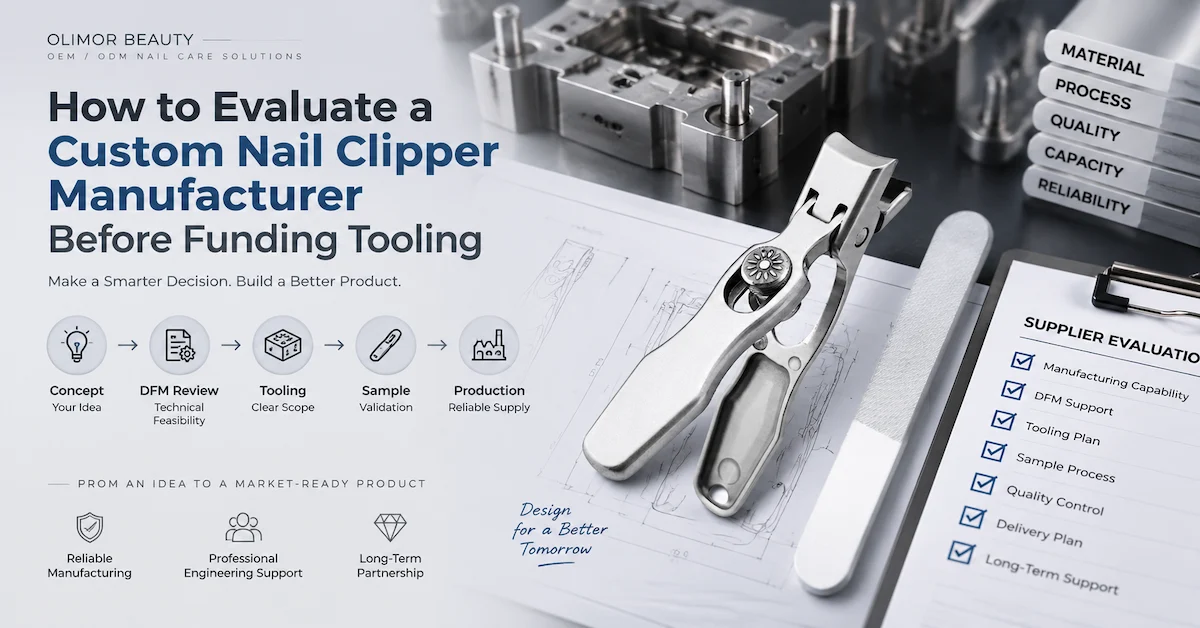
Start With the Commercial Job
Define who will use the clipper, where it will be sold and how it will be packaged before discussing a logo. A compact fingernail clipper for a travel kit has different handling and pack-space requirements from a toenail model sold as a standalone retail tool. The brief should state the intended nail type, target channel, pack format, finish direction and any dimensional constraints.
This first step prevents a common sourcing error: comparing quotations for products that look similar but solve different jobs. Ask each shortlisted factory to quote the same controlled specification and identify every assumption or exception.
Choose the Right Development Route
The word "custom" can describe several different projects. Record which route is being quoted so development cost, approval work and risk are comparable.
| Route | Practical starting point | Evidence to request |
|---|---|---|
| Stock product with private label | Existing clipper, approved finish and packaging choices | Current sample, marking layout and pack specification |
| Modified existing design | Existing platform with selected functional or visual changes | Change list, feasibility review and revised sample |
| ODM development | Supplier platform adapted around a documented buyer brief | Design inputs, revision history and approval gates |
| New OEM design | New geometry, components or tooling | DFM review, tooling scope, ownership terms and validation plan |
Do not assume that a new color, logo or box has no functional effect. A finish can change contact surfaces, a mark can sit in a high-wear area, and a retail tray can load the lever or blade during transport.
Audit the Product as a Cutting System
A nail clipper is a small assembly. Its body, cutting edges, pivot, pin and lever must work together. Review the drawing or controlled specification for the characteristics that affect the user:
- cutting-edge contact across the working width;
- blade curve and opening for the intended nail type;
- lever travel, stability and operating feel;
- pivot security and unwanted side movement;
- burr control on all handled surfaces;
- finish coverage and acceptable appearance variation;
- cleanliness and protection before packing.
The selected material grade and hardness target must be supplied for the chosen SKU. "Stainless steel" alone is not enough to compare offers, and this guide does not assign a grade to an Olimor product without a product record.
Follow a Sample Ladder
One sample labeled "final" is not a development system. Use a sequence that separates functional decisions from decoration and packaging.
- Reference sample: confirms general format, size and use case.
- Functional sample: confirms cutting contact, lever behavior, edges and assembly.
- Appearance sample: confirms finish, color range, logo position and visible workmanship.
- Packaging sample: confirms pack fit, product restraint, tip protection and label content.
- Production sample: confirms that the released specification can be repeated with production materials and processes.
Photograph and label every approved sample. Keep a signed or otherwise controlled approval record that states which attributes are accepted and which remain open. If a later sample changes one attribute, the record should show whether related checks must be repeated.
Review DFM and Tooling Boundaries
For a modified or new design, ask the supplier to explain how the body, lever, pivot and cutting edges will be formed, assembled and finished. A design-for-manufacture review should identify tight features, cosmetic surfaces, tool-access limits, coating or polishing risks and measurements that need fixtures or gauges.
Tooling discussions should identify what is new, who owns it, how revisions are approved and what happens if a component changes. Do not approve tooling from a rendering alone. Link tooling release to a reviewed drawing and a list of critical characteristics.
Build an Audit Trail Around Failure Modes
The factory should be able to show how likely defects are prevented or detected. Use a short matrix during the audit.
| Failure mode | Buyer check | Factory evidence to request |
|---|---|---|
| Uneven cutting contact | View closure and test several samples | Defined alignment check and disposition rule |
| Rough non-cutting edge | Handle every side under good light | Deburring and final visual inspection method |
| Unstable lever or pivot | Cycle and compare multiple units | Assembly control and sample records |
| Finish inconsistency | Compare visible and recessed areas | Approved range, lot check and rework rule |
| Logo wear or poor placement | Review actual marked sample | Artwork approval and marking process record |
| Damage in transit | Inspect packed sample after handling test | Packaging specification and validation record |
The audit does not need a complicated document for every point. It does need a repeatable method, a responsible person and a record that can be matched to the order.
Compare Cost on the Same Scope
Unit price is only one part of an OEM program. Separate product cost from tooling, development samples, finish setup, marking, packaging, inspection and freight assumptions. Ask what drives the quoted MOQ instead of accepting a generic number. A finish batch, printed package or component purchase may each have a different constraint.
Confirm the current MOQ, lead time and price breaks for the selected Olimor SKU and customization plan in the current quotation. Do not copy these terms from another article, model or general factory statement.
Check Packaging as a Product Requirement
Packaging must identify, protect and present the clipper. Confirm that the product cannot move in a way that damages the lever, finish or cutting edge. Review barcode space, warning or care text, country-of-origin marking and language requirements with the responsible market team.
Test the actual product in the actual tray, pouch, card or box. A digital dieline cannot show how much force the pack applies to the tool or whether the product rubs against a printed surface in transit.
Questions to Put in the Audit Record
- Which drawing and sample define the current product revision?
- Which characteristics are checked during production and before shipment?
- How are nonconforming units separated and recorded?
- How are changes to materials, tooling, finish or packaging approved?
- Which measurements require a fixture or reference sample?
- How are marked and packed samples linked to buyer approval?
- Which facts still need buyer confirmation before the order is released?
FAQ
Does a factory audit prove every future shipment will be identical?
No. An audit shows whether controls and evidence exist at the time reviewed. Purchase specifications, approved samples, inspections and change control are still required for each program.
Should a buyer approve the cheapest sample?
Approve the sample that meets the documented use, quality and packaging requirements. Compare total scope and evidence before comparing unit price.
Can Olimor provide a fixed MOQ and sample schedule for every clipper?
These terms depend on the selected model, finish, branding and packaging. Confirm the current MOQ and sample schedule for the chosen configuration in the project quotation.
What should a remote factory review show?
It should show the named SKU at relevant stations, the current inspection documents and the route used for nonconforming parts. Edited promotional footage cannot replace a live, product-specific review.
Does one good sample prove bulk consistency?
No. Development samples establish the intended result. The order still needs an agreed production sampling and release plan based on the clipper's risks and the buyer's requirements.
Which commercial fields remain project-specific?
MOQ, tooling charges, sample timing, production timing, carton data and inspection services depend on the model, finish, logo, pack and quantity. They must be recorded in the current quotation.
What should an OEM drawing control?
Control the dimensions and interfaces that affect jaw geometry, edge contact, lever movement, grip and package fit.
Can a supplier change material or finish after approval?
Any proposed change should be documented, reviewed and resampled before it is accepted for production.
What MOQ or sample lead time applies?
Both depend on the exact design, process, packaging and quantity; request project-specific confirmation from Olimor.
Prepare the RFQ
Review the Olimor nail clipper range, compare the OEM and private label resources, and send an OEM nail clipper RFQ. Include the use case, reference product, dimensions, finish, artwork, pack format, sample quantity and required inspection evidence.
Inspect Cutting Geometry and Assembly
Review blade contact, lever geometry, pivot security, handle comfort and any catcher or lock. Operate several units repeatedly and compare the cutting edges under consistent light. Record gaps, burrs, rough movement, loose components and variation between samples. A claim such as precision or heavy duty is not an acceptance criterion until the buyer defines the test.
Use a sample ladder: reference, functional, appearance, packaging and production sample. Label each approval and state what changed. If the factory changes material, tooling, grinding route, finish or component source, require written notice and decide which checks must be repeated.
Trace One Nail Clipper Through Production
Choose the quoted model and ask the factory to show how its identity is maintained at each step. Incoming material and purchased levers, pins or catchers should connect to a purchase or receiving record. Formed parts should connect to the applicable tool or fixture and a first-piece decision. Grinding and assembly records should show who checked the unit, what was observed and how an out-of-limit result was handled. The packed carton should still carry an item reference that purchasing can match to the order.
This trace does not require the supplier to disclose unrelated customer information. A redacted record, live product walk-through and the buyer's sample can still demonstrate whether the written route is used. If a station cannot identify the revision being produced, note the gap before discussing branding or unit price.
Review the Factory Evidence Package
Ask for evidence that answers a specific purchasing question:
| Buyer question | Useful product-specific evidence |
|---|---|
| Which clipper is being quoted? | Drawing or specification revision, item code and labeled sample |
| How is blade contact judged? | Work instruction, approved reference and completed check record |
| What controls the lever and pivot? | Component specification, assembly check and nonconformance route |
| How is the finish released? | Approved range sample and inspection criteria for visible surfaces |
| How is the product protected? | Packed sample, tray or pouch specification and carton identification |
Before approval, ask Olimor to provide the records applicable to the selected model, including the material declaration, controlled dimensions, tooling responsibility, inspection frequency and record-retention period. Review completed records rather than a blank checklist, because only completed records show how the process was applied.
Why Nail Clipper OEM Quality Is Harder Than It Looks
A nail clipper is a compact mechanical product. Its performance depends on the relationship between several small parts: the cutting edges, rivet or pin, lever, base plate, surface finish, and grip design. If one part is poorly controlled, the whole tool feels cheap. Buyers often discover this only after shipment, when customer reviews mention dull blades, rough edges, awkward ergonomics, or clippers that require too much pressure.
In an OEM project, quality must be defined in practical terms. “Sharp” should mean the tool creates a clean cut on natural nails without crushing or splitting. “Comfortable” should mean the lever is easy to press and the grip does not slide during use. “Good finish” should mean visible surfaces are smooth, consistent in color, and free from burrs that could scratch fingers or packaging. These points sound basic, but they are the standards that separate a useful grooming item from a disposable giveaway.
For brands that previously experienced inconsistent supplier quality, switching to a more structured nail clipper bulk supplier can help reduce variation across orders. Olimor Beauty works in the beauty tools category and can discuss nail clipper OEM requirements such as stainless steel construction, ergonomic handling, modern finishes, non-slip grip concepts, and lever-action usability for both left- and right-handed users. Exact specifications should be confirmed during sampling and quotation so that both sides share the same quality target.
Key Product Decisions Before Requesting a Quote
Before comparing suppliers, prepare a clear product brief. A vague request such as “send price for nail clipper” usually results in a price list, not a suitable private label solution. The more specific the brief, the easier it is to compare factories fairly and avoid hidden compromises.
- Target user: Decide whether the clipper is for everyday home use, travel kits, salon retail, men’s grooming, family sets, or promotional packs.
- Cutting purpose: Confirm whether the product is intended for fingernails, toenails, or a mixed grooming set. Toenail clippers generally need a stronger structure and wider jaw.
- Material direction: Stainless steel is commonly preferred for durability and corrosion resistance, but the final material and finish should match the price level and product positioning.
- Grip and lever feel: If the design includes a non-slip grip, textured surface, or coated handle, define the expected hand feel and appearance before sampling.
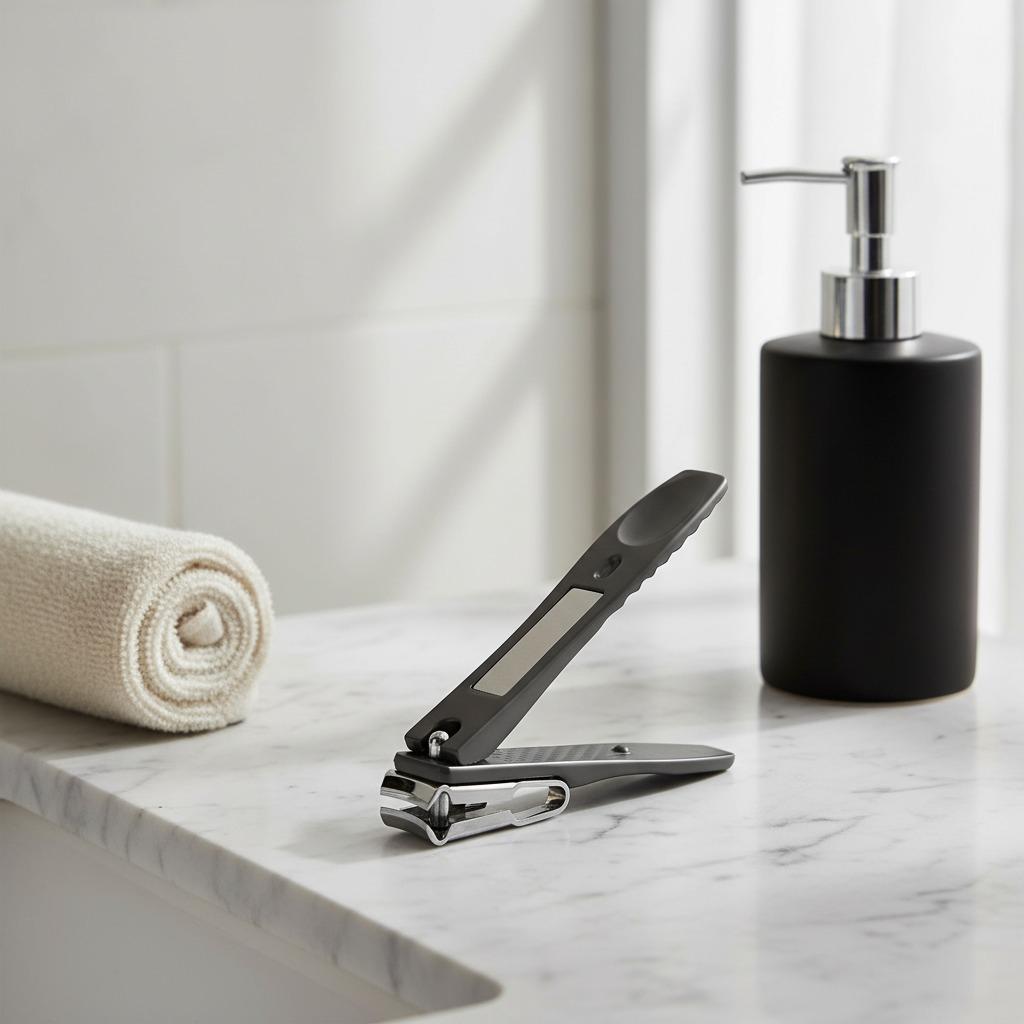
- Finish and color: A modern black finish can create a sleek retail appearance, but color consistency, coating durability, and scratch visibility should be reviewed on samples.
- Packaging: Decide whether the clipper will be sold in a blister card, paper box, pouch, travel kit, or multi-piece grooming set.
- Branding: Confirm whether the logo will appear on the clipper, packaging, instruction insert, or outer carton.
These details help a manufacturer understand the commercial purpose behind the tool. A travel nail clipper sold near checkout counters has different priorities from a premium grooming accessory included in a full manicure kit.
How to Evaluate a China Nail Clipper Manufacturer
When comparing nail clipper OEM suppliers, price matters, but it should not be the first filter. A slightly lower unit cost can disappear quickly if the tool produces returns, customer complaints, or inconsistent repeat shipments. A better evaluation process looks at product knowledge, sampling discipline, communication, and production controls.
| Evaluation area | What to check | Why it matters |
|---|---|---|
| Blade performance | Cutting edge alignment, sharpness, and smooth cutting action | Determines whether the clipper cuts cleanly or causes nail splitting |
| Ergonomics | Lever pressure, grip stability, edge comfort, and use by either hand | Affects daily user satisfaction and repeat purchase potential |
| Surface finish | Color consistency, burr removal, polish quality, coating appearance | Supports retail presentation and reduces complaints about rough handling |
| Assembly consistency | Lever movement, rivet tightness, jaw opening, spring-back feel | Prevents variation between samples and bulk production |
| Packaging control | Artwork accuracy, barcode placement, insert fit, carton protection | Protects the product and supports smooth retail or e-commerce handling |
| Order flexibility | Sampling process, staged ordering options, and bulk planning | Helps brands launch carefully before scaling larger wholesale nail clipper runs |
This type of checklist makes supplier conversations more concrete. Instead of only asking whether quality is “good,” buyers can request sample review around defined performance points. If you are comparing related grooming categories at the same time, Olimor’s product collections can help you think about how nail clippers may fit with tweezers, manicure accessories, or personal care sets.
Tag: