

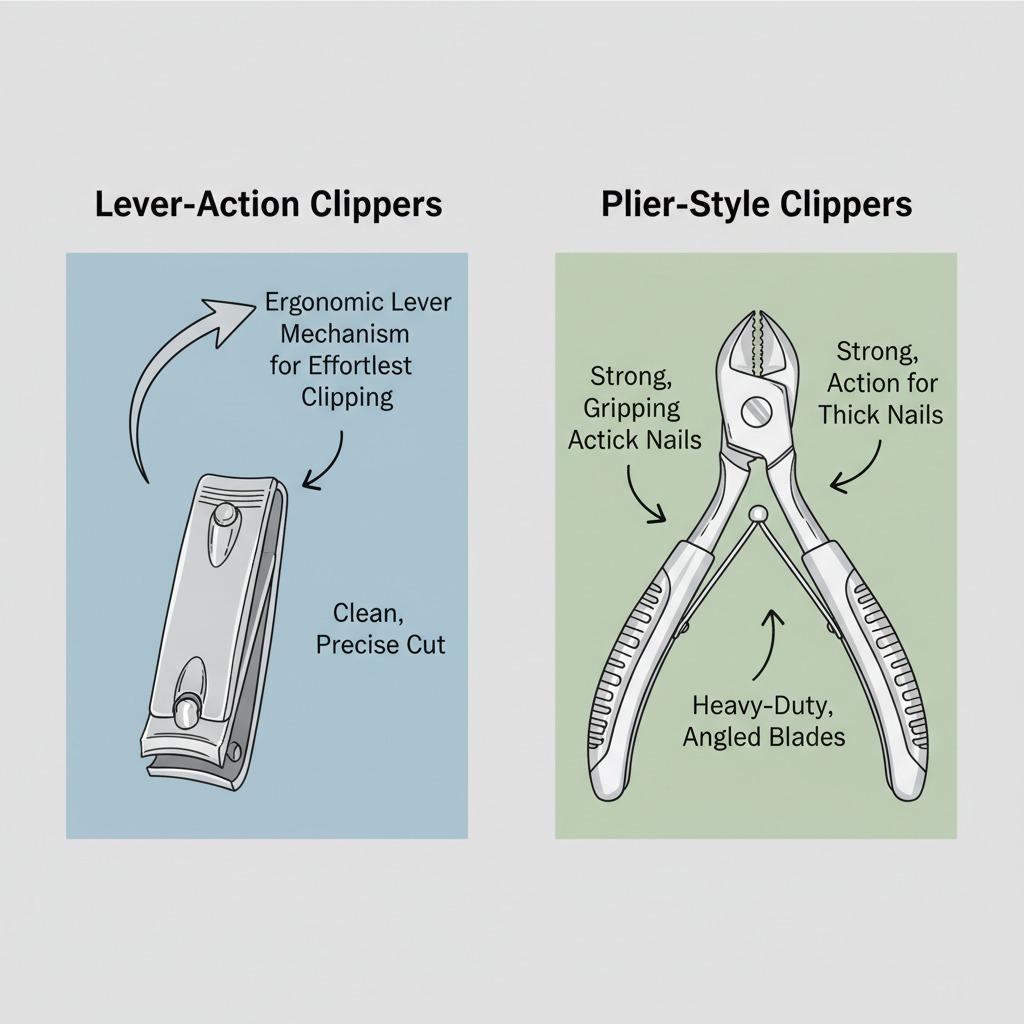
Lever-Action vs Plier-Style Nail Clippers: Buyer Guide
Lever-action vs plier-style nail clippers serve different handling and access needs. Lever models suit compact everyday trimming, while plier-style designs can offer a larger grip and a different approach angle; buyers should validate both against the intended nail type and user group.
What Is a Lever-Action Nail Clipper?
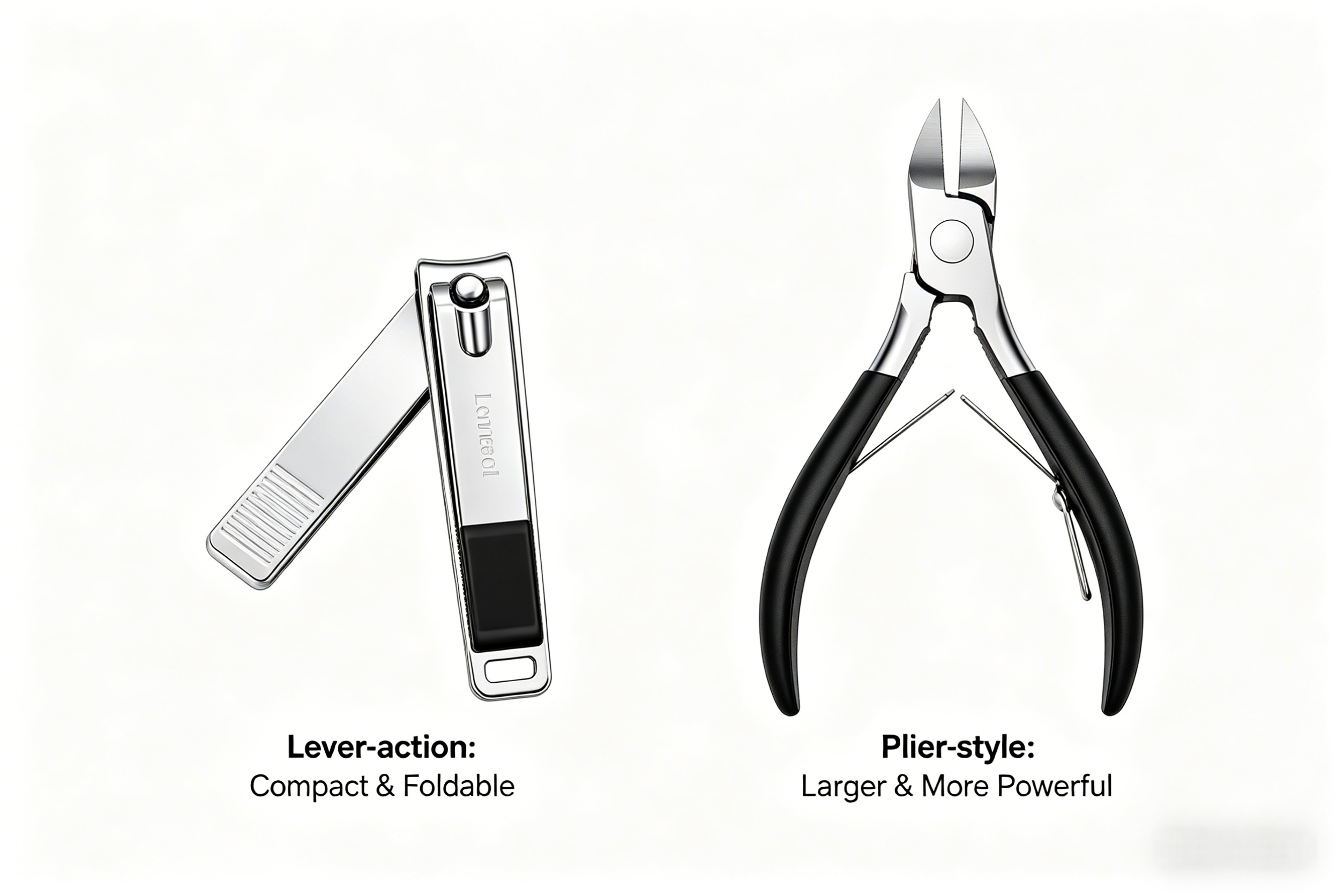
A lever-action nail clipper uses a hinged lever to press the cutting jaws together. It is usually compact, foldable, and easy to store in a drawer, pouch, travel bag, or basic manicure set. Many lever-action designs also include a small fold-out nail file, although the presence and shape of that file can vary by product.
The main advantage is convenience. A lever-action clipper is quick to understand, familiar to most users, and suitable for routine trimming of normal fingernails. It also works well for compact retail packaging because the flat folded shape takes up little space. For brands building everyday grooming assortments, this style is often the simplest choice because it meets the expectations of a wide audience.
However, lever-action clippers are not always the best option for very thick toenails or users who want maximum grip stability. The short lever gives enough force for typical nails, but it can feel less controlled when the nail is dense, curved, or difficult to position. In those cases, users may press harder, which can lead to uneven cuts or discomfort if the clipper is not aligned properly.
What Is a Plier-Style Nail Clipper?
A plier-style nail clipper has two handles that close like small pliers. This structure gives the user more leverage and a more open view of the cutting edge. Plier-style clippers are commonly associated with professional grooming and salon-style nail care because they can provide stronger cutting action and better control for toenails or thicker nails.
The handles make a noticeable difference. Instead of pressing down on a small top lever, the user squeezes with the hand, which can feel steadier during careful trimming. The larger body may also be easier for some users to grip, especially when working slowly across a toenail edge. For professional or semi-professional kits, this can support a more controlled grooming process.
The tradeoff is size and learning curve. A plier-style clipper is bulkier than a folded lever-action clipper, so it is less convenient for travel pouches or minimalist manicure sets. It may also require more attention to blade placement, especially for users accustomed to traditional clippers. For retail buyers, this style can appear more specialized, which is useful when targeting consumers who already know they need a stronger toenail tool.
Side-by-Side Comparison for Real Use
The best nail clipper is not simply the sharpest or the largest. It is the tool that matches the nail type, hand comfort, storage needs, and expected use environment. The table below summarizes the practical differences between lever-action and plier-style designs.
| Selection Factor | Lever-Action Nail Clipper | Plier-Style Nail Clipper |
|---|---|---|
| Overall design | Compact, foldable body with a press-down lever | Pliers-like body with two squeeze handles |
| Portability | Excellent for travel, drawers, and small kits | Less portable because of the larger handle shape |
| Best routine use | Everyday fingernail trimming and quick touch-ups | Toenails, thicker nails, and more controlled trimming |
| Cutting power | Good for normal nails | Stronger leverage for tough nails |
| User familiarity | Very familiar to most household users | May require a short adjustment period |
| Grip and control | Moderate control with a small gripping area | Better hand control due to longer handles |
| Product positioning | Everyday grooming, travel, basic manicure kits | Professional-style grooming, toenail care, premium kits |
Choosing by Nail Type and User Scenario
For normal fingernails, a lever-action clipper is usually the most practical option. It is quick, compact, and easy to use without instruction. This makes it suitable for home bathrooms, office drawers, travel toiletry bags, and general retail sets. If the user trims nails frequently and prefers a small tool, the lever-action design is usually enough.
For toenails, especially those that are thicker or harder, plier-style clippers are often easier to control. The stronger squeeze action helps the user avoid forcing the blade through the nail. This does not mean a plier-style tool should be used carelessly; toenails should still be trimmed gradually, with small cuts across the edge rather than one aggressive cut. But the design is better suited to slow, deliberate trimming.
For elderly users or anyone with reduced hand comfort, the decision is more personal. Some may prefer the familiar lever-action shape, while others may find the larger handles of plier-style clippers easier to hold. Buyers selecting products for broad consumer groups should consider handle shape, edge alignment, and how easily the tool can be controlled with dry hands.
- Choose lever-action for compact storage, travel kits, normal fingernails, and simple daily grooming.
- Choose plier-style for stronger leverage, toenail trimming, thicker nails, and professional-style control.
- Consider offering both when building a complete nail care set for different trimming needs.
- Prioritize grip comfort if the product is intended for older users or longer grooming sessions.
What Buyers Should Check Before Sourcing Nail Clippers
For brands and distributors, choosing between lever-action and plier-style nail clippers is not only a design preference. The product must meet the expectations of the sales channel. A compact lever-action clipper may be ideal for impulse retail, travel sets, and basic nail kits. A plier-style clipper may be better suited for a professional grooming assortment or a toenail-focused product.
When comparing samples, review details that influence the user experience. The blades should meet evenly when closed. The cutting edge should feel controlled rather than rough. The lever or handle should move smoothly without excessive looseness. Surface finishing also matters because nail clippers are handled often and may be stored in humid bathrooms.
Packaging is another practical concern. Lever-action clippers fit easily into slim cards, pouches, and compact sets. Plier-style clippers may require more space and protection around the handles or cutting head. If you are planning a broader manicure or pedicure range, compare how each tool fits alongside files, pushers, scissors, or tweezers in the same package.
Olimor Beauty supplies beauty tool options for different grooming needs. Buyers can review related beauty tool products or browse product collections to compare nail care tools within a wider assortment. For custom sourcing projects, prepare clear requirements for intended use, packaging format, target channel, and preferred finish before you send an inquiry.
Safe Use and Maintenance for Longer Tool Life
Good nail clipper performance depends on both design and care. Even a well-made clipper can feel uncomfortable if used on wet, slippery hands, positioned at the wrong angle, or allowed to collect nail dust and moisture. For a cleaner cut, trim after washing and drying the hands or feet, when nails are slightly softened but the tool can still be held securely.
- Clean the cutting edges after each use to remove nail debris.
- Dry the tool before storage, especially if it is kept in a bathroom.
- Use small, controlled cuts rather than forcing the blade through a wide nail section.
- Do not share personal nail tools without proper cleaning, particularly in professional settings.
- Store the clipper in a pouch, case, or dry compartment to protect the cutting edge.
For salons, sanitation procedures should follow local hygiene rules and the tool material should be evaluated for the intended cleaning process. For household users, routine cleaning and dry storage are often enough to keep the clipper pleasant to use. If the cutting edge becomes misaligned, dull, or damaged, replacement is usually safer than continuing to force the tool.
Final Recommendation: Match the Clipper to the Job
Lever-action and plier-style nail clippers both have a clear place in nail care. Lever-action clippers are compact, familiar, and convenient for normal fingernails and everyday use. Plier-style clippers offer more leverage and control for toenails, thicker nails, and professional-style grooming. Many users benefit from owning both: one small clipper for quick trimming and one stronger tool for more careful pedicure work.
For retail and sourcing decisions, the right choice depends on the audience. A travel-friendly grooming kit may call for a lever-action clipper. A toenail care set or professional grooming range may benefit from a plier-style option. If you are planning a nail tool assortment and need help comparing practical product directions, you can contact Olimor with your target use case and packaging goals.
What Precision Means in a Nail Clipper
Precision is not only about having a sharp edge. A precise nail clipper brings several factors together: the cutting edges meet evenly, the lever gives controlled pressure, and the tool allows the user to see and guide the cutting line. When those elements are missing, a clipper may crush the nail, leave rough edges, or require multiple passes over the same area.
Professional nail clippers are often reviewed more favorably when they make clean cuts with minimal force. This matters for fingernails, which are often shaped carefully, and for toenails, which may be thicker and require more leverage. A clean cut also reduces the amount of filing needed afterward. For personal users, that means a faster grooming routine. For salons, it supports consistent service and helps the technician work with confidence.
When evaluating a clipper for precision, look closely at these points:
- Edge alignment: The upper and lower cutting edges should meet evenly across the arc.
- Cutting feel: The action should feel smooth rather than loose, sticky, or uneven.
- Lever control: The handle should provide enough pressure without forcing the hand into an awkward angle.
- Visibility: The cutting head should let the user see where the edge contacts the nail.
- Finish after cutting: The nail edge should be clean enough that only light filing is needed.
Buyer FAQ
Which style is better for a compact retail kit?
Lever-action clippers are usually easier to pack compactly, but the choice should follow the target user's trimming needs.
Does a plier handle guarantee more cutting performance?
No. Jaw geometry, edge contact, pivot movement and user control must be checked together.
What should a comparison sample record?
Record opening width, grip comfort, cutting feel, edge contact, finish and cleaning access under the same test conditions.
Prepare the lever-action vs plier-style nail clippers sourcing brief
For a lever-action vs plier-style nail clippers project, send the intended user, sales channel, target functions, finish, packaging and inspection priorities in one brief. When comparing lever-action vs plier-style nail clippers, review the relevant beauty tool products, compare suitable product collections, and use send an inquiry to discuss a sample and quotation.
Tag:
Related articles
- Manicure & Nail Tools
- OEM & Private Label Solutions
Manicure Scissors Manufacturer: Private Label Guide
- Manicure & Nail Tools
- Manufacturing & OEM Solutions
Travel Manicure Kit Manufacturer: Retail-Ready Buyer Guide
- Manicure & Nail Tools
- Manufacturing & OEM Solutions